
BuddhistCatholicContemplativeEvangelicalGeneral ChristianHinduJewishLatter-day SaintMuslimNew VisionsProgressive Christian
Beliefs
- Buddhist
- Catholic
- Contemplative
- Evangelical
- General Christian
- Hindu
- Jewish
- Latter-day Saint
- More Voices
- Muslim
- New Visions
- Pagan
- Progressive Christian
Topics
- Religion News
- Food and Religion
- Sports and Religion
- Religious Art
- Religious Music and Entertainment
- Religious Events
- History and Religion
- Style and Religion
- Politics and Religion
- Women in Religion
- Recreation Outdoors and Religion
- Business Finance and Religion
- Careers Workplace and Religion
- Education and Religion
- Family Parenting and Religion
- Health Fitness and Religion
- Home and Religion
- Relationships and Religion
- Technology and Religion
- Travel and Religion
Columnists
- Buddhist Columnists
- Business Finance and Religion Columnists
- Careers Workplace and Religion Columnists
- Catholic Columnists
- Contemplative Columnists
- Education and Religion Columnists
- Evangelists Columnists
- Family Parenting and Religion Columnists
- General Christian Columnists
- Health Fitness and Religion Columnists
- Hindu Columnists
- History and Religion Columnists
- Home and Religion Columnists
- Jewish Columnists
- More Voices Columnists
- Latter Day Columnists
- Muslim Columnists
- New Visions Columnists
- Nonreligious Columnists
- Pagan Columnists
- Politics and Religion Columnists
- Progressive Columnists
- Recreation Outdoors and Religion Columnists
- Relationships and Religion Columnists
- Religion News Columnists
- Religious Art Columnists
- Religious Events Columnists
- Religious Music and Entertainment Columnists
- Sports and Religion Columnists
- Style and Religion Columnists
- Technology and Religion Columnists
- Travel and Religion Columnists
- Women in Religion Columnists
Resource Library
- 2026 Calendar
- Library of World Religions
- The 100 Most Holy Places on Earth
- Patheos Answers
- Podcasts
- Videos
- Faith Leaders Database
- Anglican Episcopalian
- Bahai
- Baptist
- Buddhism
- Christianity
- Confucianism
- Eastern Orthodoxy
- Hinduism
- Holiness and Pentecostal
- ISKCON
- Islam
- Judaism
- Lutheran
- Methodist
- The Church of Jesus Christ of Latter-day Saints
- New Age
- Paganism
- Presbytarian and Reformed
- Protestantism
- Religion Behind the Scenes
- Roman Catholic
- Scientology
- Shia Islam
- Sikhism
- Sufism
- Sunni Islam
- Taoism
- Zen
- See all religions
Research Tools
 Ad-Free & Subscriber Log-In Subscription Support
Ad-Free & Subscriber Log-In Subscription Support
Follow Patheos 

- Trending:
- Forgiveness
- |
- Marriage
- |
- Consciousness
- |
- Death Penalty
- |
- Election
- |
- Halloween

- Home
- Evangelical
- the book
the book
Last updated on: April 24, 2022 at 11:00 am by Rev. Jared V. Ingle
the book 2022-04-22T00:21:12-04:00 Rev. Jared V. Ingle
Patheos Explore the world's faith through different perspectives on religion and spirituality! Patheos has the views of the prevalent religions and spiritualities of the world.
I consulted online Stanford and Fuller libraries, as well as a smidgen of articles. However, I have drawn the information about Thomas from seminary studies. Again those are not exactly at my fingertips, but I’ve read over 800 words for one project.
A mentor taught me to pray the Lord’s Prayer. I gathered the mentor was Pentecostal with an Independent Wesleyan bent. At times, we did somewhat of a prayer of examen. At one point, the direct question at hand was, “Was it willful sin?,” a dead give-away for Wesleyan Theology, right?
I’ve decided on the Classical Greek lit. book format, and then perhaps I’ll offer more teachings on each sub-book little by little. The language may be a little more contemporary though.
This work ranks at a 11-12th grade reading level. It is also gauged at an 8 mins 44 secs reading time, however it is a true longread.[1]
Book I | Enjoy the Flow of Practices
i. in many of the conversations, there was a question at hand
1. I was instructed to pray the Our Father every day, with focus. Pay attention particularly to what word, words, or phrase may have meaning in the moment. Consider this whole longread a prayer exercise, not only an instructional guide. May my prayers have this sort of freedom to explore the dark corners of my mind with regularity.
2. I would repeat the phrase to the mentor when a conversation was possible.
3. After praying attention to what aspects of the Lord’s prayer were important on a given day, I would pray the price to seek further meaning.
4. Now the mentor has a firm commitment to Scripture. For example, the only commentary our Lord offers on the prayer in any Passage is about the cycle of forgiveness (see Matt vi.14-15). We must learn, if we want forgiveness to be free to flow. We also do not overemphasize forgiveness and love to the point of forgetting the propitiation of Christ as a model of atonement.
5. There are different opinions about whether or not the other commentary is connected or not (Lk xi) and the preceding verses in Matthew are only telling us what prayer isn’t. The question in Luke could be about the conjunction Then at the beginning of verse 5. Are there time lapses between the prayer and the following discussion?
6. There are various feelings, thoughts, aspirations, sensory-type reaction one can have while praying such a prayer under guidance as a learning practice (stirrings as Julian of Norwich might say). Some enjoy incense in prayer services. These movements of the interior life were not so often analyzed by rationale a couple short centuries ago.
7. In fact, they are not as often analyzed and criticized in this post-critical era as one may expect. Our postmodern philosophies and post-critical Theologies have brought us back into contact with pre-modern societies who simply may have missed our die-hard pursuit of rational modernism in first world countries preceding the propitiation model, even though we are not experts on Anselm.
ii. recently, The Department of State has announced a realignment with India economically and with the military
1. There are various ways of picking up, discerning, or sharing information in both countries, to be sure.
2. Without directly quoting, there is a form of a minor Indus religion celebrating a lamb. It seems a lot like the Christ Event, although untraceable historically. India also has some sort of shrines to this lamb and reportedly one to the Apostle Thomas. I’ve submitted work to ecclesial communities UpNorth from my 2nd masters (M.T.S.) about primitive liturgies, including one attributed to Thomas.
3. We at least know he took a northeast turn. The Liturgy of Addai and Mari is more than likely birthed out of a community of faith in NE Turkey/ancient-Persia pioneered by Thomas, maybe on his way to India up and around the Fertile Crescent.
4. We’re pointing out other types of connection with God. There are ways and means we seem to have forgotten at times/eras.
5. This is with every hope that Jesus is not considered an idol.
iii. however, times have changed when nations are realigning who previously have had little in common with or without war related clairvoyance, prophetic, sensory, or intelligence gathering
1. If I can be honest, the disciplines of very ancient Buddhism are more similar to those of very early Christian monastic orders and nunneries than some of the spiritual formation popularizers we witness today in Christian circles.
2. The tradition about Thomas may lead one to the spurious Gospel, one I do not at all endorse.
Neither am I endorsing ancient Buddhism, which is good in one way, because it never claimed to be a religion anyway. It was a way of reordering one’s life.
3. Don’t even get me started on speculating about what the ancient religions of New Zealand could have been like, since there is a ratio of 2:1 sheep to humans. They’re not far from India, a supply chain perhaps like Bethlehem and the sheep gate in the Temple; conjecture.
iv. I would like to visit someday to see the Lord of the Rings sets that were filmed there, still in-tact as some sort of amusement park resort
1. J.R.R. Tolkien is the author of LOTR, The Hobbit, The Simarillion prequel (which is like a long sad song).
2. He was a philologist. Did Tolkien have the gift of languages? If so, would he admit it as an Oxford Don?
What type of pressure is there in society at any given time to suppress such obvious gifts as those the Indus-America alliance may produce, or the symbolism and linguistic, narrative masterpieces of Tolkien? Tolkien fully developed three languages, not only that of the elves. I have my sources, give or take a fully developed language.
3. There are similar narratives about Father Marquette UpNorth in NW Michigan, who traveled north to Mackinac Island, and around the Upper Penninsula where there is a city bearing his name. He translated a number of languages in the region.
v. now, ever heard of Swedish Baptists?
1. I have a friend who talked to my brother Ryan eye to eye just recently, and really saw some similarities between us. He holds a M.Div. from Fuller (i.e. dubbed the Harvard of the West at times).
He is Assemblies of God as well. When he moved into the central time zone upnorth he had no real connection with the Assemblies per se; applied for a lot of jobs with the wish of staying in the denomination.
2. He acquainted himself with the Swedish Baptists. The Swedish Baptists are from the Pietists era, pretty early on in America history.
3. After the Great War, this denomination adopted English, after already establishing many ecclesial communities all over the region with indigenous peoples as well, or so I have the impression at this point in the conversation.
Book II | Why is this important?
i. what does all of this mean to us?
1. Sometimes, “give us this day our daily bread,” is not only bread we measure out carefully from our spiritual stores (amount of Bible chapters on a schedule or catching up double-time; honors readings; New Music Friday Christian on Spotify; podcast favorites).
2. At times I believe we accept a scarcity mindset, as Melyssa Griffen and Sunny Lenarduzzi talk about. We ration out our daily bread. We should consider an abundance mindset every once in awhile. They’ve said it so many times, I won’t directly quote them.
I added the application to daily bread. They are not really like prosperity Gospel people either. They have accolades from the highest realms of the business world in America.
3. What if our Father wants us to feast at His table at times?
4. Isn’t this in line with a thriving faith helping us get a new take on spiritual practices (i.e. gift of languages, the symbolic, the processes of discerning the people face)?
ii. it is as if the Spirit looks at us at times with a sly grimace and quirks, “I think you’re holding back”
1. Give us today our daily bread is not a commitment to starve. There are cults that take money and only give what they thing peoples should have to barely stay alive.

This is not a vow of poverty either, although many Christians throughout history have committed to such.
2. In one transliteration, the phrase is offered with 4 emphases, a couple overlapping in Matthew and Luke, because the Aramaic is so beautiful at times translated into Koine Greek.
3. In advance of emphasis #3, it may be helpful to tie-in Matthew xi.19-21. We’re not simply talking about physical food, but also about storing up nourishment for the interior life. This is also the shared bread of community, not only personal food.
The heart forms an attachment to treasure, and perhaps to certain merchants a person trades with. Bartering can become a free exchange of foods in this case until certain channels really open up and a fresh market is established offering new nourishment to the region.
For example, I may be too well along in life to launch a church plant. Yet I can imagine the people who have made difficult, yet successful choices in a new community. Successful people seem to have similar holistic and physical dynamics at work (a scarcity versus abundance communal mindset of the heart).
4. Oddly enough, in a really physical sense, there is a parallel socio-sexual theory specifically about females having an innate propensity to fall in love with people who give them good orgasms, but we’re not going to talk about that. I’m not sure the kids are in bed. This longread is like good music to drift out to sleep to anyway.
5. In the Lord’s Prayer, the terminology I have been attempting to illustrate is succinctly stated with 4 emphases (New Living Translation).
- Give us each day the food we need
- “ “ “ our food for the day
- “ “ “ our food for tomorrow
- Give us today the food we need
Book III | a weigh-in from a Greek Father
i. Origen || sainted, then un-sainted if that’s a word, then sainted again, linked our daily bread to the Lord’s Table and to the Word of God
1. This illustrates the point precisely, because no matter our views about the Table, we’re obeying an injunction from our Lord.
2. It is, in my opinion, a blessed ordinance. An ordinance is generally a term used in court, not a court of law, but a regent’s court. The ordinance is a command, that garners favor from the regent.
3. At the very least, we can assert at the fore when we approach the Table, it is a blessed obedience. This may sound a little like Quakerism.
4. We partake of the body and bread (water and juice depending on the congregation) and I personally could do it every week, perhaps multiple times per week.
5. Origen also refers to the Word as not only something we learn about (in a Western, educational, didactic format) but as something that strengthens our interior life with rich symbolism.
‘The scriptures, then, are the daily bread for which Christians are taught to pray; to accept eating as a metaphor for reading is to acknowledge that whenever the scriptures speak of tasting, hearing or seeing God, they are not only imparting what we might call a spiritual sense to these words, but appealing to our own spiritual senses.” (de principiis I.I.9)
6. Although it’s not in the format of an earlier prayer like The Liturgy of Addai and Mari, the Fuller grad could reformat it into a reading (or readings) and an antiphon.
ii. If people don’t like Origen, I’m somewhat limited in the dialogue at this point
1. It could have been the Metropolitan of the UK, Oxford Don Kallistos Ware, who once wrote, “If reading Origen’s views on the sacrament is wrong, I don’t want to be rite.”
That was a little punny, right? The reply, “I’ve been drinking coffee all morning.”
2. I may be paraphrasing, but I know someone like him said something like it.
3. The vast majority of my personal library is in an air-conditioned keep. I may have access to some of his audio from a Free-Methodist series of visiting lectures though.
iii. I’m writing at 11, mostly from memory
Give us each day our food for tomorrow, an abundance of daily bread, an overflow, whether through Word, symbolism, song, metaphor, whatever. May we learn to stay ahead enjoying the flow.
May we feast at the Table instead of acting like the runt of the spiritual litter.
For me when I was raising purebreds or partial mixes, like my black lab|pit bull, I treated my pets as if they were my kids. I know it sounds silly, but I do still recall those times vividly. No dog left behind, and in gang|raw leadership language later, there was my visible crew, and then there were my dogs, so named at times. It’s great to know who is trustworthy, and who offers various securities of sorts. Every one of my dogs are worth my brooding parental attention.
I want to be able to say to people – and I know it sounds silly – but I do say in so many ways, “It’s family.” I pray they don’t ask me if I talk to my pets though.
May we not deprive ourselves of any gift, to assist us in communications; deep stirrings in the interior life opening a free flow, an exchange on necessary levels, but also on much higher levels.
notes:
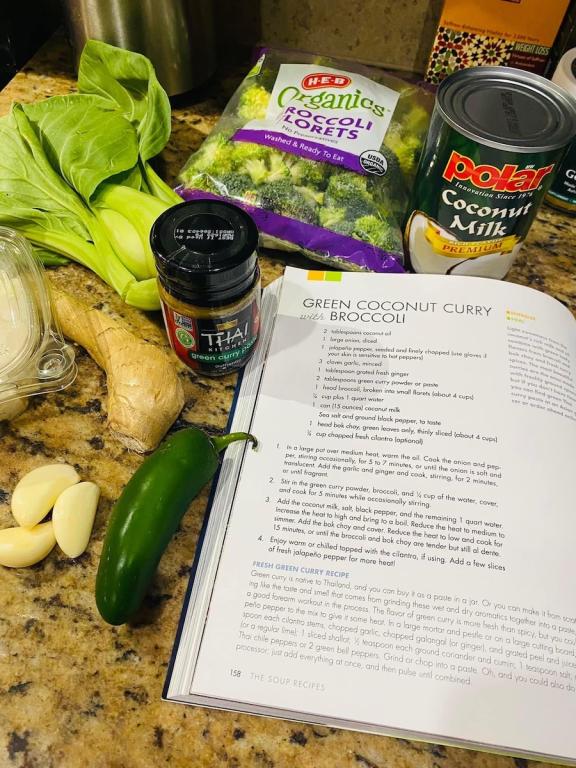
[1] Here’s a good tool for wordcounts, how many times words occur, and reading level. This work ranks at a 11-12th grade reading level | WordCounter CLICK [2] pic credit: Ann Hutyra | Green Coconut Curry with Broccoli | 01.30.22 | phone chat with author
Title offered by the consultant with the M.Div. from Fuller. I wasn’t the one doing the teaching anyway. You see, the book really had nothing to do with the title anyway.
Meet Jared CLICK
LinkedIn CLICK
Previous Post

April 18, 2022
part of Wm Taylor's net catch in Frisco from the sermon
Next Post

April 25, 2022 editorial: make potatoes & a man shows up (10 mins)
Browse Our Archives
Select a Category Communion Cruz Ingle Crystal Ingle Early Church Engaging Culture Ethics & Society Family Formation History In Dialogue Jared & Crystal Kingdom of God Majority World Church Mateo Ingle Messenger College Mission Narrative Pentecostal Church of God Prayer Shepherding The Sermon The Writings Theology Theology & Psychology Traverse City Uncategorized Vernell Ingle Word Study
Select a Month October 2026 September 2026 August 2026 July 2026 June 2026 May 2026 March 2026 February 2026 January 2026 December 2025 October 2025 September 2025 August 2025 July 2025 June 2025 May 2025 April 2025 March 2025 February 2025 January 2025 December 2024 November 2024 October 2024 September 2024 August 2024 July 2024 June 2024 May 2024 April 2024 March 2024 February 2024 January 2024 December 2023 November 2023 October 2023 September 2023 August 2023 July 2023 June 2023 May 2023 April 2023 March 2023 February 2023 January 2023 December 2022 November 2022 October 2022 September 2022 August 2022 July 2022 June 2022 May 2022 April 2022 March 2022 February 2022 January 2022 December 2021 November 2021 October 2021 September 2021 August 2021 July 2021 June 2021 May 2021 April 2021 March 2021 February 2021 January 2021 December 2020 November 2020 October 2020 September 2020 August 2020 July 2020 June 2020 May 2020 April 2020 March 2020 February 2020 January 2020 December 2019 November 2019 October 2019 September 2019 August 2019 July 2019 June 2019 May 2019 April 2019 March 2019 February 2019 January 2019 December 2018 November 2018 October 2018 September 2018 August 2018 July 2018 June 2018 May 2018 April 2018 March 2018 February 2018 May 2017 March 2017 March 2014 February 2013 January 2013 October 2012 July 2012 May 2012 April 2012 March 2012 February 2012 January 2012 December 2011 August 2010
Follow Us!
TAKE THE
Religious Wisdom Quiz
In Hebrews, Abel's blood spoke, but what does Jesus' blood speak?
Select your answer to see how you score.
The same message as Abel's Words of warning Words of judgment A better word than the blood of Abel
Related posts from Jared Ingle

Continuing to Pray for the Future Wife

Fully Human vs. Sub-Human | Children vs. Dogs

TRENDING AT PATHEOS Evangelical

The REST of Your Life: A Creative Wrestles...
This week I had a conversation with a good friend from church....

How the author of the world's best hymn...
I've been working with John Newton for a while now. This makes...

Long before this Lectio Divina, Psalm 130 - the song - started...

What About the Trees? Another Living Parable
After I finished writing the last article about falling leaves as a...

Why Classical Education Is a Conversation, Not a...
Come and Read: Joy in Classical Education When I was a little...

Cornell University has received a great deal of negative publicity and intense...
view all Evangelical blogs
Ad-Free & Subscriber Log-In Subscription Support
- About Us
- 2026 Calendar
- Videos
- Podcasts
- Library of World Religions
- Faith In Media Tracker
- Advertise With Us
- Write for Us
- Privacy Policy
- Terms of Service
- Do Not Sell My Data
- Contact Us
- Radiant Digital
- Manage Newsletter Subscriptions
- Unsubscribe From Notifications
- Sitemap
Copyright 2008-2026, Patheos. All rights reserved.
Subscription Support Ad-Free & Subscriber Log-In
Follow Patheos