
BuddhistCatholicContemplativeEvangelicalGeneral ChristianHinduJewishLatter-day SaintMuslimNew VisionsProgressive Christian
Beliefs
- Buddhist
- Catholic
- Contemplative
- Evangelical
- General Christian
- Hindu
- Jewish
- Latter-day Saint
- More Voices
- Muslim
- New Visions
- Pagan
- Progressive Christian
Topics
- Religion News
- Food and Religion
- Sports and Religion
- Religious Art
- Religious Music and Entertainment
- Religious Events
- History and Religion
- Style and Religion
- Politics and Religion
- Women in Religion
- Recreation Outdoors and Religion
- Business Finance and Religion
- Careers Workplace and Religion
- Education and Religion
- Family Parenting and Religion
- Health Fitness and Religion
- Home and Religion
- Relationships and Religion
- Technology and Religion
- Travel and Religion
Columnists
- Buddhist Columnists
- Business Finance and Religion Columnists
- Careers Workplace and Religion Columnists
- Catholic Columnists
- Contemplative Columnists
- Education and Religion Columnists
- Evangelists Columnists
- Family Parenting and Religion Columnists
- General Christian Columnists
- Health Fitness and Religion Columnists
- Hindu Columnists
- History and Religion Columnists
- Home and Religion Columnists
- Jewish Columnists
- More Voices Columnists
- Latter Day Columnists
- Muslim Columnists
- New Visions Columnists
- Nonreligious Columnists
- Pagan Columnists
- Politics and Religion Columnists
- Progressive Columnists
- Recreation Outdoors and Religion Columnists
- Relationships and Religion Columnists
- Religion News Columnists
- Religious Art Columnists
- Religious Events Columnists
- Religious Music and Entertainment Columnists
- Sports and Religion Columnists
- Style and Religion Columnists
- Technology and Religion Columnists
- Travel and Religion Columnists
- Women in Religion Columnists
Resource Library
- 2026 Calendar
- Library of World Religions
- The 100 Most Holy Places on Earth
- Patheos Answers
- Podcasts
- Videos
- Faith Leaders Database
- Anglican Episcopalian
- Bahai
- Baptist
- Buddhism
- Christianity
- Confucianism
- Eastern Orthodoxy
- Hinduism
- Holiness and Pentecostal
- ISKCON
- Islam
- Judaism
- Lutheran
- Methodist
- The Church of Jesus Christ of Latter-day Saints
- New Age
- Paganism
- Presbytarian and Reformed
- Protestantism
- Religion Behind the Scenes
- Roman Catholic
- Scientology
- Shia Islam
- Sikhism
- Sufism
- Sunni Islam
- Taoism
- Zen
- See all religions
Research Tools
 Ad-Free & Subscriber Log-In Subscription Support
Ad-Free & Subscriber Log-In Subscription Support
Follow Patheos 

- Trending:
- Forgiveness
- |
- Marriage
- |
- Consciousness
- |
- Death Penalty
- |
- Election
- |
- Halloween

- Home
- Evangelical
- John Calvin | continental reformer from France
John Calvin | continental reformer from France
Last updated on: April 3, 2022 at 6:20 am by Rev. Jared V. Ingle
John Calvin | continental reformer from France 2022-04-02T18:21:55-04:00 Rev. Jared V. Ingle
Patheos Explore the world's faith through different perspectives on religion and spirituality! Patheos has the views of the prevalent religions and spiritualities of the world.
There are Catholic philosophers, mystics, and leaders on the continent; especially from the 1,400’s onward; some from France, England, and Spain. Also some of them are prominent women. There are publications on the relational aspects of God’s nature.
For those who think I run to the Church Fathers too often, and for those who think I only deal out tiny blurbs on social networks, here is a longread (from memory) on some historical reflections on John Calvin who is the Continental Reformer arising from France.
I believe yesterday was International Fact-Checking Day, but I would pit the libraries I have access to against Wikipedia any day, the great socio-cultural compendium of our particular time. Message me if need be. I always appreciate professors who genuinely consider other viewpoints, even if a question arises in the middle of a lecture.
Martin Luther quotes the Early Church Fathers very often, as does John Calvin, perhaps the Latin Fathers moreso than the Primitive Church.
Huldrych Zwingli is coached by Erasmus. Both remain faithful to the church, reforming from within.
Erasmus writes the Textus Receptus Latin Bible translation, used by the church, and later as a basis for the King James Version.
Luther writes a treatise called On the Babylonian Captivity of the Church, among other works received by countless faith tribes today, including churches who are at odds in the era of the Continental Reformation. This is a work that delineates where the church is at, and how reform is needed on the continent. It also has an uncanny past and present, now and not yet, quality to it.
i. striding over a couple hurdles
There are Catholic philosophers, mystics, and leaders on the continent; especially from the 1,400’s onward; some from France, England, and Spain. Also some of them are prominent women. There are publications on the relational aspects of God’s nature.
Now, in light of developments during Vatican II and the Reformation 500th Anniversary, there is a growing renewal between ecclesial communities that are at odds during the Reformation.
It may not be a return to complete common ground yet, but it is better than nothing.
Our baptisms are all recognized, if proper discipleship or catechesis has taken place.
Furthermore, there are intentional hints, if one reads the language on the Lutheran site, the Vatican documents, and in canonical law; about next steps toward a reconciliation at the table with all the implications. This is a goal yet to be seen on a grand scale.
ii. on predestination
Luther basically says, “We’re all just wild asses that the Lord rides” (pardon my French or German). It’s transliteration, possibly from Latin; because I have a very difficult read in the library; and I know German shares a lot of English terminology.
Calvin is outside of France and starts following the call because a minister calls him into his version of the perfect will of God. He sends Calvin into mid- north Europe for a season of transition, and then he comes back to form the utopian society of Geneva.
Basically, Geneva becomes so perfect that people are excommunicated from other sects of Christianity, and eventually there are rumors of martyrs as well, as we see with John Wycliffe (the Morning Star of the English Reformation).
Perhaps this is one of the reasons, although there are a few political reasons (and politics is not a bad way of dealing with church polity at times), that Britain opts for a via media. It is rumored that the Wesley brothers study the Greek Fathers (Primitive Church) as their primary preference for Theological inquiry. If so, they could be drawing from earlier wells than Luther and Calvin.
iii. who are the Greek Fathers?
The list is definitely incomplete, but these are some I have read or know about. Really, the great Greek classic literature age lasts until the fall of the library in Athens after A.D. 500. I would say Church Theology is strong, with not a lot of contravariances with Reformation Theology, until A.D. 400.
Consider reading Perpetua and Felicita; Justin; Hermes; Clement; and Clement of Alexandria for early reads. John disciples Polycarp who disciples Irenaeus of Lyons (Gaul, France). Actual disciples and lady|s travel to Spain, then to France, perhaps around Montpellier as an entry point. There are Christian communities launched upnorth in France as well. Tradition holds that one of the Marys from the Gospel is among this troupe that traverses the Mediterranean as mariners. Is this one of the seedbeds for the mystics who come out of France, Spain, and even Britain (like Joan de Arc, Teresa of Avila, and Julian of Norwich)?
There are other lines of history and succession. All of these Patristics are well respected, some moreso in various ancient Christian circles. However, their reformative leadership has been felt throughout their time, and until ours.
They all live before Sarapion, who is on the dawn of the era of leaders like Nicholas, Jerome, Constantine, Augustine, the Cappodocian Fathers, Macrina, etc. Even Athanasias passes away between the two Nicene councils, after holding a regional Synod of his own on the Sonship of Christ and the Trinity, in cooperation with his fellows, and the Cappadocian Fathers.
iv. the contributions of Augustine
Then there is Augustine, who some claim to be the predecessor of predestination (a cardinal Continental Reformed doctrine if there ever was one). However, can everyone agree with Augustine? With all due respect, he doesn’t even speak Greek.
There are various opinions about City of God.
Confessions, especially if somebody has a well-translated recent version, is really a collection of the reflections of a Bishop looking back, to lift us up.
Nonetheless, there are some themes that are not in line with the Greek Fathers in his work either. If I could make my own confession, I don’t speak Greek. It’s not that it’s all Greek to me. I have good study tools, really good ones. However, it’s always transliteration; well I’m getting better; actually I’m quite good at it.
Augustine’s confessions are not confessions in the way we think of the word today, i.e. spewing our sins to people we may or may not trust. Confessions are ways of praising God per se for bringing us through; making a way when there seems to be no way; and offering our true testimonies, etc.
Perhaps Augustine’s mom and Ambrose should be studied a little more.
Perhaps one could also look at the strong possibility that Augustine could have penned Confessions as a Bishop at large in Africa. Why do some of these Bishops who have so much freedom upnorth, all of a sudden go off grid at times? There are deep studies and deep dives for inquiries like that, but Augustine was already a world traveler, philosopher, and orator in the empire before meeting Bishop Ambrose.
v. France, all points North, & possibly East?
John Calvin may be a world traveler as well. He is a genius for sure, writes “The Institutes” at about 28-ish.
Prior to this landmark achievement, he is commissioned by a minister over the Swiss border as he’s exiting France. He stays with the minister for awhile who mentors him. He heads north, to the best of our knowledge, making reformations in the interior of the continent.
There is some suggestive evidence that Calvin could have traveled east as well.

koszecz | budapest | coffee collection | 15, Aug, 2015 | pixabay
That’s a square dedicated to him in Budapest and there’s his icon.
I really can’t speak to the issue. I can say that revisionist history, as we know it, could have begun as early as the 1930’s (perhaps in the wake of the Great War, I really don’t know).
Although I do disagree with what some forms of Calvinism have become as a philosophy since that era, I truly admire Calvin’s brilliance and tenacity to spread the Gospel.
I know it is so yesteryear to say this, but I always have an issue with Calvinists who think they have some sort of special grace to be predestined to persevere to be greater Calvinist scholars than Calvin.
vi. rumours of rumblings in Calvin’s Geneva
It is thought that Geneva becomes a homogeneous institution when Calvin is finally fading. His cohort (or monolith – not a great term) is the only small group making all the decisions. People are detained or excommunicated, arguably some Christians who only have diverging points of doctrine, not all are heterodox.
Forgive me, but it’s nearly dark or totolitarian later-on in his story. There is not a balance of power when all the branches of societal or church cohorts are never up for re-election. At least this is one of the founding principles in some of the Americas. If one has the ability to remain aloof in a seat of power like a never-ending oligarchy, whether in church or society, then there is the possibility that the plebeians will see bad things happen.
vii. does Calvin’s Geneva become just another witch-hunt?
What about the pre-reformation thinkers per se natural law Thomists, mystics, Christian leaders of nation-states ampærsand monastic communal predecessors (male & female) of various forms of higher education, i.e. places like Geneva, etc.?
I have no problem per se with France, or other nearby allies, & the educational reformers who continue to the north after the Continental Reformation, &c.
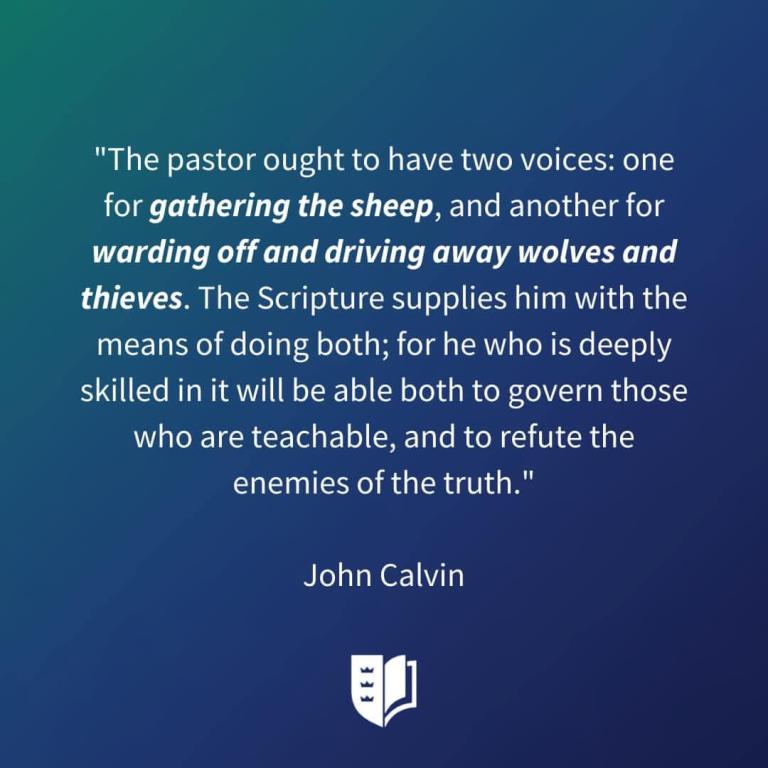
Your preacher or professor may have repeated a quote like this, so it’s something you’ve possibly heard…
John Calvin educational GIF
but I ask, are all wolves bad if they’re part of the created order?
Don’t some sheep have horns?
It’s semantics at times because the Continental Reformers have their own ways and means of Catechesis. Do modern reformers call it Catechesis?
Calvin is only a couple steps away from transubstantiation as well. Are the newer generations of reformers comfortable with that?
Forget the almighty T.U.L.I.P. for now, because I think Calvin’s lines of succession articulated it, not him. I could be mistaken.
viii. Did this article choose me? Did I choose this article?
Will anybody solve the dilemma of what God does in advance? There are obviously various ideas.
Is Augustine surprised when he possibly flees Milan? Remember he is considered to be one of the founding fathers of the doctrine of predestination. Does he just say as he leaves town, “Well, I didn’t see that one coming!”?
Asked in another way right now…
If you’re the type of person who likes to read a lot of blogs, then maybe the question is:
“Did your eyes choose to read this article?”…
or…
“Did some kind of algorithm, e-mail list, A.I., or the Patheos Evangelical Columnists list, place the writing before your eyes?”
CTA | whether you’ve chosen… or whether you’ve been chosen…
[& I could see this all going on for a very long time]
…the idea of Biblical engagement with the readings is neither new to Christianity, nor to global religions throughout time.
I’m offering an invitation today to peer into my current Bible reading practices with my FREE plan and annotations.
CLICK HERE
- Bible Reading daté par procuration
- The designers include three components each day: 1) worship 2) word and 3) wisdom.
- Used with permission, paginated to fold and staple.
For other writings of this nature visit History or Mission
God is not too transcendent to speak through His Word today; and not removed from your everyday walk or the trajectory of your pedagogy.
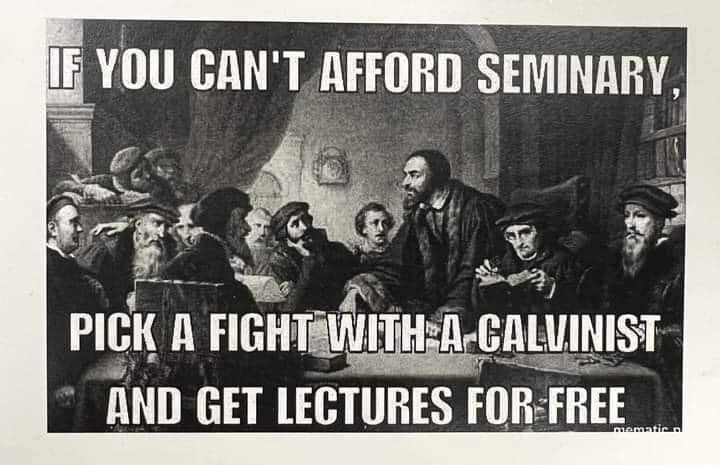
Read it for yourself, or in Christian community, or God may send somebody to speak the word over your life, despite doctrinal differences that are fun to discuss for years to come…
Calvinist Education Conference GIF
I guess it’s better than nothing.
Previous Post
March 28, 2022
Bible Reading daté par procuration
Next Post

April 7, 2022 Tea Time | cold weather chaos & Palm Sunday
Browse Our Archives
Select a Category Communion Cruz Ingle Crystal Ingle Early Church Engaging Culture Ethics & Society Family Formation History In Dialogue Jared & Crystal Kingdom of God Majority World Church Mateo Ingle Messenger College Mission Narrative Pentecostal Church of God Prayer Shepherding The Sermon The Writings Theology Theology & Psychology Traverse City Uncategorized Vernell Ingle Word Study
Select a Month October 2026 September 2026 August 2026 July 2026 June 2026 May 2026 March 2026 February 2026 January 2026 December 2025 October 2025 September 2025 August 2025 July 2025 June 2025 May 2025 April 2025 March 2025 February 2025 January 2025 December 2024 November 2024 October 2024 September 2024 August 2024 July 2024 June 2024 May 2024 April 2024 March 2024 February 2024 January 2024 December 2023 November 2023 October 2023 September 2023 August 2023 July 2023 June 2023 May 2023 April 2023 March 2023 February 2023 January 2023 December 2022 November 2022 October 2022 September 2022 August 2022 July 2022 June 2022 May 2022 April 2022 March 2022 February 2022 January 2022 December 2021 November 2021 October 2021 September 2021 August 2021 July 2021 June 2021 May 2021 April 2021 March 2021 February 2021 January 2021 December 2020 November 2020 October 2020 September 2020 August 2020 July 2020 June 2020 May 2020 April 2020 March 2020 February 2020 January 2020 December 2019 November 2019 October 2019 September 2019 August 2019 July 2019 June 2019 May 2019 April 2019 March 2019 February 2019 January 2019 December 2018 November 2018 October 2018 September 2018 August 2018 July 2018 June 2018 May 2018 April 2018 March 2018 February 2018 May 2017 March 2017 March 2014 February 2013 January 2013 October 2012 July 2012 May 2012 April 2012 March 2012 February 2012 January 2012 December 2011 August 2010
Follow Us!
TAKE THE
Religious Wisdom Quiz
Who is described as "a beloved physician" and accompanied Paul?
Select your answer to see how you score.
Silas Mark Titus Luke
Related posts from Jared Ingle


The Old Day is Ending | Renewal has...
May This Sunday Prayer Encourage You

TRENDING AT PATHEOS Evangelical

How the author of the world's best hymn...
I've been working with John Newton for a while now. This makes...

Long before this Lectio Divina, Psalm 130 - the song - started...

What About the Trees? Another Living Parable
After I finished writing the last article about falling leaves as a...

Why Classical Education Is a Conversation, Not a...
Come and Read: Joy in Classical Education When I was a little...

Falling Leaves: A Living Parable on Letting Go
I’ve spent the vast majority of my life in the southeast corner...

Cornell University has received a great deal of negative publicity and intense...
view all Evangelical blogs
Ad-Free & Subscriber Log-In Subscription Support
- About Us
- 2026 Calendar
- Videos
- Podcasts
- Library of World Religions
- Faith In Media Tracker
- Advertise With Us
- Write for Us
- Privacy Policy
- Terms of Service
- Do Not Sell My Data
- Contact Us
- Radiant Digital
- Manage Newsletter Subscriptions
- Unsubscribe From Notifications
- Sitemap
Copyright 2008-2026, Patheos. All rights reserved.
Subscription Support Ad-Free & Subscriber Log-In
Follow Patheos