
BuddhistCatholicContemplativeEvangelicalGeneral ChristianHinduJewishLatter-day SaintMuslimNew VisionsProgressive Christian
Beliefs
- Buddhist
- Catholic
- Contemplative
- Evangelical
- General Christian
- Hindu
- Jewish
- Latter-day Saint
- More Voices
- Muslim
- New Visions
- Pagan
- Progressive Christian
Topics
- Religion News
- Food and Religion
- Sports and Religion
- Religious Art
- Religious Music and Entertainment
- Religious Events
- History and Religion
- Style and Religion
- Politics and Religion
- Women in Religion
- Recreation Outdoors and Religion
- Business Finance and Religion
- Careers Workplace and Religion
- Education and Religion
- Family Parenting and Religion
- Health Fitness and Religion
- Home and Religion
- Relationships and Religion
- Technology and Religion
- Travel and Religion
Columnists
- Buddhist Columnists
- Business Finance and Religion Columnists
- Careers Workplace and Religion Columnists
- Catholic Columnists
- Contemplative Columnists
- Education and Religion Columnists
- Evangelists Columnists
- Family Parenting and Religion Columnists
- General Christian Columnists
- Health Fitness and Religion Columnists
- Hindu Columnists
- History and Religion Columnists
- Home and Religion Columnists
- Jewish Columnists
- More Voices Columnists
- Latter Day Columnists
- Muslim Columnists
- New Visions Columnists
- Nonreligious Columnists
- Pagan Columnists
- Politics and Religion Columnists
- Progressive Columnists
- Recreation Outdoors and Religion Columnists
- Relationships and Religion Columnists
- Religion News Columnists
- Religious Art Columnists
- Religious Events Columnists
- Religious Music and Entertainment Columnists
- Sports and Religion Columnists
- Style and Religion Columnists
- Technology and Religion Columnists
- Travel and Religion Columnists
- Women in Religion Columnists
Resource Library
- 2026 Calendar
- Library of World Religions
- The 100 Most Holy Places on Earth
- Patheos Answers
- Podcasts
- Videos
- Faith Leaders Database
- Anglican Episcopalian
- Bahai
- Baptist
- Buddhism
- Christianity
- Confucianism
- Eastern Orthodoxy
- Hinduism
- Holiness and Pentecostal
- ISKCON
- Islam
- Judaism
- Lutheran
- Methodist
- The Church of Jesus Christ of Latter-day Saints
- New Age
- Paganism
- Presbytarian and Reformed
- Protestantism
- Religion Behind the Scenes
- Roman Catholic
- Scientology
- Shia Islam
- Sikhism
- Sufism
- Sunni Islam
- Taoism
- Zen
- See all religions
Research Tools
 Ad-Free & Subscriber Log-In Subscription Support
Ad-Free & Subscriber Log-In Subscription Support
Follow Patheos 

- Trending:
- Forgiveness
- |
- Marriage
- |
- Consciousness
- |
- Death Penalty
- |
- Election
- |
- Halloween

- Home
- Evangelical
- happy hell-oween 2021
happy hell-oween 2021
Last updated on: November 22, 2021 at 9:25 pm by Rev. Jared V. Ingle
happy hell-oween 2021 2021-11-22T21:25:56-05:00 Rev. Jared V. Ingle
Patheos Explore the world's faith through different perspectives on religion and spirituality! Patheos has the views of the prevalent religions and spiritualities of the world.
The term hell is actually a transliteration of the term gahenna. The term is often used by our Lord. This is often where we get the idea of fire and such types of torment.
Various Christian universities are teaming up to offer the largest online Dante reading community in history. We are reading the Divine Comedy through next Easter. There is plenty of time to catch up and I urge you to do so.
If you are wary of great works like Dante’s because of the nuances of translation and ye olde English, I advise you to watch this one video. For each small Canto (chapter/poem) one of the professors from the institution introduces us to what we find. Our eyes are opened to the proper interpretation of the small Canto, literary nuances, historical significance, Theological truths, etc.
Watch the video and visit the site 100daysofdante.com
i. Dante’s Inferno, Canto 20
I admit, I saved this piece for now because… well it is Halloween and I find it interesting. Please know I am not speaking directly against Halloween observances in general. I believe Christian churches and Christian families should use a little old fashioned discernment when choosing what parties to attend.
If you would rather see/read a lighthearted piece on Halloween CLICK HERE
Also, this is a longread, a category of blogs more like regular articles. I am not trying to expound all my knowledge. Rather, I have encountered groups with real questions. You would be surprised what a hot topic hell is (no pun intended) even among Christians in our day.
Now, here are a couple questions we can approach Dante with, and this article
How would desperately evil witches and astrologers face everlasting torment?
What type of torment would fit their crime?
Inferno, Canto 20 with Frederic Putnam
Frederic Putnam of Templeton Honors College reflects on Canto 20 of Dante’s Inferno.
Now take a quick moment to read Canto 20 CLICK HERE
Although this is not common English, we have the great advantage of Frederic Putnam who offers a play-by-play account of what we witness in this Canto. There are a couple aspects of this Canto which resonate with me.
First, as one example I have seen palm readers on the streets, selling their “prophecies” to people in the crowd for money. In Dante’s depiction of hell, their heads are deformed and necks are wretched backwards… forever backwards.
I will leave you to read Dante’s vivid detail, but it seems both fitting and chilling to me. They will never be able to gaze forward into the future again, something they feebly attempted over and over again on earth. All their prophecy and plans have come to nought.
Second, they are silenced. For those who have truly encountered the chaos of someone who is being used as a pawn by the enemy to stir up trouble, it sometimes seems loud and chaotic. There is always something upsetting the apple cart. When the problem is addressed at the root, there is often peace and quiet again in the community… silence. Now the witches who stumble along in hell have no ability to communicate, to prophesy, to stir up dissension, etc.
ii. absurdity: a talk with a clinician
You have no reason to believe what I am sharing, and I have no reason to offer proof. In fact I feel obligated, more by my ministerial cloak than by my sociological criteria for confidentiality, to refrain from offering too much proof at all.
Nonetheless, I once again feel the gentle tug of the Holy Spirit to proceed with caution. After all, the Patheos Content Team brought me on because of my background with Pneumatology and my ministry in the Spirit. If you do not like what I have to say, at least they might.
A clinical professional was speaking to me about such matters. I was never told whether or not the person was a Christian believer and I knew better than to ask. I was simply honored someone would open up to me.
Apparently, the professional had been working with some patients who were witches. They admitted they were witches.
The clinician used various tests to assess their ailments, and also implemented holistic approaches. However x-rays were a standard part of the protocol.
The clinician put some x-rays up on the light box (display) for me to view, then pointed out their necks. The younger witches were experiencing an abnormal straightening of the discs in the neck, losing the natural curvature. Some of the older withes had neck problems beyond repair, discs fused together, straightened and stiff necks, etc.
You may wonder what else there was to the conversation, but it really was pastoral privilege. However, I will tie it in for our purposes.
iii. what does the Bible teach about the neck?
There is a term used in a major sermon in the New Testament, Stephen’s address to the Jewish leaders (many of whom are responsible for stirring up the mob to crucify Jesus Christ). Stephen calls them stiffnecked (Acts 7.51). This term is not used very often, but it is also found in Exodus, Deuteronomy, and 2 Chronicles.
The meaning is the same in both Testaments, but not quite the same as our general use of the term today. Stiffnecked means stubborn and obstinate. In the Old Testament, the term usually refers to those Israelites who rebelled against Moses. They died in the wilderness as a consequence. Therefore, stiffnecked is a little heavier term in Biblical context than the way we use it. It can mean a person who is not only stubborn, but also hardened against God.
This may not be all the Bible teaches about the neck, but we are chasing a thought.
iv. why is this important?
One of my favorite Proverbs is:
Whoever remains stiff-necked after many rebukes
will suddenly be destroyed – without remedy. Proverbs 29.1, NIV
If I remember right, an older translation reads: Whoever stiffens his neck after many rebukes will have it cut off, and that without remedy. I could be wrong. It is difficult to find those older, less politically correct Bibles. In this passage, the Biblical word for stiffnecked is the same as in the other passages.
In another passage, Samuel the Seer (Prophet… not witch) must confront King Saul.
This is an important point. There are some who truly hear from God and others who are trying to make something happen on their own.
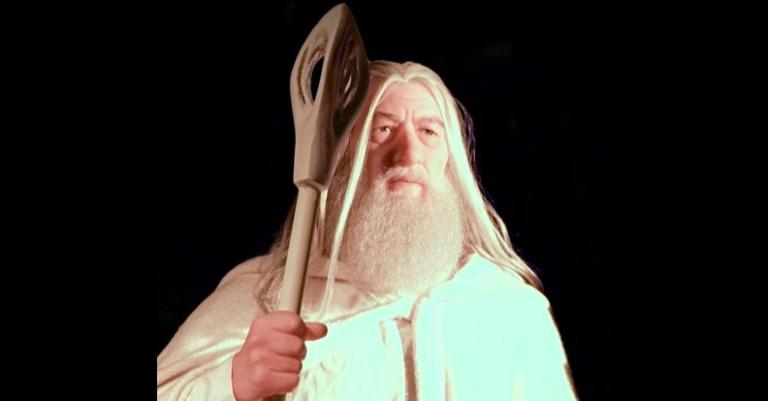
Dennis Jarvis | Gandalf | 08.22.17 | creative commons
I am not really the judge, but I am sure both types of people will stand before God for one type of reward or another
King Saul has taken his own self-made detour, invoking God in an unholy way, a problem not uncommon for witches. Saul is trying to make something happen.
Samuel pronounces judgment:
For rebellion is as the sin of witchcraft, And stubbornness is as iniquity and idolatry. 1 Samuel 15.23, KJV
Do you see it? Stubbornness is listed among the sins of rebellion, witchcraft, iniquity, and idolatry. We have to remember something. A few short generations earlier in Israel’s history, the Hebrews were commissioned by God to rid the land of pagans who were practicing these very sins.
Now King Saul is practicing the same type of sorcery?! His judgement is swift. His kingdom falls to David. He dies in battle after consulting a witch, if everything else isn’t weird enough.
I do not have all the answers. I still have questions.
Is there something to Dante’s understanding of the wrenched neck the witches have, always looking backwards in hell?
What about the x-rays the clinician showed me of the stiff necks of witches?
Is there something real to the word stiffnecked in Scripture?
v. what about Dante’s Inferno, is there anything to it?
I think there is, if we look at it through the a couple historical lenses.
First, Dante’s writings are said to be the very influential to C.S. Lewis. I think this piece of information should gain respect for Dante from many Evangelicals.
Second, I have come to see the works of people like Dante, Lewis, Tolkien, etc. as works of art. Every detail is not Canon. However, each detail can be inspired by our love for the Canon and our walk with Christ. Why not place these Christian great works in the category of a historical hymn and give it the same respect? After all, Dante’s work is poetry. It is Christian art and symbolism, something the iconoclasts constantly attempt to strip the church of.
vi. making a quick case for punishment/s in hell
Like Dante, anyone can make a case for various parts of hell from the sayings of Jesus Christ our Lord.
1) The term hell is actually a transliteration of the term gahenna. The term is often used by our Lord. This is often where we get the idea of fire and such types of torment. Jesus says some will:
be thrown into hell, where their worm never dies, and the fire is never quenched. Mark 9.47.b-48, NRSV
2) We often understand the fiery concept of hell, but there is another aspect of hell Jesus is teaching. He says, their worm never dies*.* In other words, there will be a constant snacking, and the person in hell is the snack.
this is quite a gruesome picture, but no one seems to question Christ’s teaching on hell
In actuality, one King of Israel in Acts allows the people to worship him. Here is what happens:
And immediately, because he had not given the glory to God, an angel of the Lord struck him down, and he was eaten by worms and died. Acts 12.23
There are two aspects of this next type of torment (Matthew 8.12; 22.13; 25:30).
The heirs of the kingdom will be thrown into the outer darkness, where there will be weeping and gnashing of teeth.
3) God will thrust some into outer darkness, put them outside His gates, an everlasting separation. Many scholars claim this will be the worst form of punishment in hell, to have known God, but now to be separated from Him.
4) There is the weeping and gnashing of teeth. This may speak of people who are very cognizant of what they have missed. For the rest of eternity, they will be in unspeakable sorrow because they turned away from what God offered through His Son.
vii. are there various levels of hell, as Dante suggests?
I cannot say, but I can say Jesus gives us different word pictures to help us understand. One thing He seems to be pointing out is, hell is a place we never want to go. I think this is part of Dante’s intent as well.
There are multiple terms in both the Hebrew and the New Testament for hell, or hellish places/aspects of the underworld. The study has fascinated me. It is one I have devoted quite a bit of time to before.
I only hope to offer something of interest here, for the sake of causing Christians to consider our Commission to reach the lost; and perhaps help the lost consider the slippery slope they could be on.
Previous Post
October 26, 2021
Demons at the Lord's Table?
Next Post

November 3, 2021 on community | the Preacher of Ecclesiastes
Browse Our Archives
Select a Category Communion Cruz Ingle Crystal Ingle Early Church Engaging Culture Ethics & Society Family Formation History In Dialogue Jared & Crystal Kingdom of God Majority World Church Mateo Ingle Messenger College Mission Narrative Pentecostal Church of God Prayer Shepherding The Sermon The Writings Theology Theology & Psychology Traverse City Uncategorized Vernell Ingle Word Study
Select a Month October 2026 September 2026 August 2026 July 2026 June 2026 May 2026 March 2026 February 2026 January 2026 December 2025 October 2025 September 2025 August 2025 July 2025 June 2025 May 2025 April 2025 March 2025 February 2025 January 2025 December 2024 November 2024 October 2024 September 2024 August 2024 July 2024 June 2024 May 2024 April 2024 March 2024 February 2024 January 2024 December 2023 November 2023 October 2023 September 2023 August 2023 July 2023 June 2023 May 2023 April 2023 March 2023 February 2023 January 2023 December 2022 November 2022 October 2022 September 2022 August 2022 July 2022 June 2022 May 2022 April 2022 March 2022 February 2022 January 2022 December 2021 November 2021 October 2021 September 2021 August 2021 July 2021 June 2021 May 2021 April 2021 March 2021 February 2021 January 2021 December 2020 November 2020 October 2020 September 2020 August 2020 July 2020 June 2020 May 2020 April 2020 March 2020 February 2020 January 2020 December 2019 November 2019 October 2019 September 2019 August 2019 July 2019 June 2019 May 2019 April 2019 March 2019 February 2019 January 2019 December 2018 November 2018 October 2018 September 2018 August 2018 July 2018 June 2018 May 2018 April 2018 March 2018 February 2018 May 2017 March 2017 March 2014 February 2013 January 2013 October 2012 July 2012 May 2012 April 2012 March 2012 February 2012 January 2012 December 2011 August 2010
Follow Us!
TAKE THE
Religious Wisdom Quiz
How did God speak to Moses at the burning bush?
Select your answer to see how you score.
Through wind Symbols from the fire Through lightning By name
Related posts from Jared Ingle

Fully Human vs. Sub-Human | Children vs. Dogs


Being Real vs. Hyper-Spiritual Jargon
TRENDING AT PATHEOS Evangelical

How the author of the world's best hymn...
I've been working with John Newton for a while now. This makes...

Long before this Lectio Divina, Psalm 130 - the song - started...

What About the Trees? Another Living Parable
After I finished writing the last article about falling leaves as a...

Why Classical Education Is a Conversation, Not a...
Come and Read: Joy in Classical Education When I was a little...

Falling Leaves: A Living Parable on Letting Go
I’ve spent the vast majority of my life in the southeast corner...

Cornell University has received a great deal of negative publicity and intense...
view all Evangelical blogs
Ad-Free & Subscriber Log-In Subscription Support
- About Us
- 2026 Calendar
- Videos
- Podcasts
- Library of World Religions
- Faith In Media Tracker
- Advertise With Us
- Write for Us
- Privacy Policy
- Terms of Service
- Do Not Sell My Data
- Contact Us
- Radiant Digital
- Manage Newsletter Subscriptions
- Unsubscribe From Notifications
- Sitemap
Copyright 2008-2026, Patheos. All rights reserved.
Subscription Support Ad-Free & Subscriber Log-In
Follow Patheos