
BuddhistCatholicContemplativeEvangelicalGeneral ChristianHinduJewishLatter-day SaintMuslimNew VisionsProgressive Christian
Beliefs
- Buddhist
- Catholic
- Contemplative
- Evangelical
- General Christian
- Hindu
- Jewish
- Latter-day Saint
- More Voices
- Muslim
- New Visions
- Pagan
- Progressive Christian
Topics
- Religion News
- Food and Religion
- Sports and Religion
- Religious Art
- Religious Music and Entertainment
- Religious Events
- History and Religion
- Style and Religion
- Politics and Religion
- Women in Religion
- Recreation Outdoors and Religion
- Business Finance and Religion
- Careers Workplace and Religion
- Education and Religion
- Family Parenting and Religion
- Health Fitness and Religion
- Home and Religion
- Relationships and Religion
- Technology and Religion
- Travel and Religion
Columnists
- Buddhist Columnists
- Business Finance and Religion Columnists
- Careers Workplace and Religion Columnists
- Catholic Columnists
- Contemplative Columnists
- Education and Religion Columnists
- Evangelists Columnists
- Family Parenting and Religion Columnists
- General Christian Columnists
- Health Fitness and Religion Columnists
- Hindu Columnists
- History and Religion Columnists
- Home and Religion Columnists
- Jewish Columnists
- More Voices Columnists
- Latter Day Columnists
- Muslim Columnists
- New Visions Columnists
- Nonreligious Columnists
- Pagan Columnists
- Politics and Religion Columnists
- Progressive Columnists
- Recreation Outdoors and Religion Columnists
- Relationships and Religion Columnists
- Religion News Columnists
- Religious Art Columnists
- Religious Events Columnists
- Religious Music and Entertainment Columnists
- Sports and Religion Columnists
- Style and Religion Columnists
- Technology and Religion Columnists
- Travel and Religion Columnists
- Women in Religion Columnists
Resource Library
- 2026 Calendar
- Library of World Religions
- The 100 Most Holy Places on Earth
- Patheos Answers
- Podcasts
- Videos
- Faith Leaders Database
- Anglican Episcopalian
- Bahai
- Baptist
- Buddhism
- Christianity
- Confucianism
- Eastern Orthodoxy
- Hinduism
- Holiness and Pentecostal
- ISKCON
- Islam
- Judaism
- Lutheran
- Methodist
- The Church of Jesus Christ of Latter-day Saints
- New Age
- Paganism
- Presbytarian and Reformed
- Protestantism
- Religion Behind the Scenes
- Roman Catholic
- Scientology
- Shia Islam
- Sikhism
- Sufism
- Sunni Islam
- Taoism
- Zen
- See all religions
Research Tools
 Ad-Free & Subscriber Log-In Subscription Support
Ad-Free & Subscriber Log-In Subscription Support
Follow Patheos 

- Trending:
- Forgiveness
- |
- Marriage
- |
- Consciousness
- |
- Death Penalty
- |
- Election
- |
- Halloween

- Home
- Evangelical
- gleaning Last Days truths from the Tabernacle and Ark
gleaning Last Days truths from the Tabernacle and Ark
Last updated on: June 7, 2021 at 6:07 pm by Rev. Jared V. Ingle
gleaning Last Days truths from the Tabernacle and Ark 2021-06-07T18:07:58-04:00 Rev. Jared V. Ingle
Patheos Explore the world's faith through different perspectives on religion and spirituality! Patheos has the views of the prevalent religions and spiritualities of the world.
Place inside the Ark the stone tablets inscribed with the terms of the covenant, which I will give to you. Then put the atonement cover on top of the Ark. I will meet with you there.
I’ve been asked to teach back-to-back weeks on the Last Days, End Times, the Apocalypse, Eschatology, etc. I’m developing this series of articles to develop the materials. I have a lot of source materials. However, I’m not going to footnote it to death, you know.
To read the first article in the series, on the Theology of covenant and the Last Days CLICK HERE
i. about hermeneutics
I took a lot of time to set up the first article. If you’d like to know more about how I’m approaching these writings, visit the above article.
In all fairness, I can say that in the last few hundred years we have developed a very scientific approach to Biblical interpretation in Western civilization (Western Europe and America).
This is an era when scholars still respect traditional hermeneutics, homiletics, and perhaps even Theology proper. However, there is pushback from postcritical scholars when other methods are not allowed at the table of Biblical interpretation.
One of the newer methods of interpretation attempts to recapture the narrative, rather than parsing every word in the original language. Once again, I take another path to get to this point in the previous article, but the outcome is the same.
ii. “Let the Story speak for itself!”
If indeed recounting the Story is where we are headed, a primary mode of communication, even among the younger generations, then I need to adjust my preaching/teaching style.
One of my seminaries uses The Homiletical Plot: The Sermon as Narrative Art Form, by Eugene L. Lowry.
To view the book on the publisher’s page CLICK HERE
If you’re locked in a particular form of hermeneutics and homiletics, and your approach could use a little deconstructionism, I recommend Eugene Lowry. If you want to bridge the communication gap, then pick up this small book, read it, experiment with it in a sermon here and there, reread it, keep it handy as a reference tool, etc.
To let the story speak for itself with this series: 1) I’m basically offering a little context for each passage, 2) sharing a small portion of the passage, and 3) making a Last Days application.
iii. Mosaic Covenant
Up until this point, God’s covenants with His people have been centered around altars and agreements. However, covenants or treaties in the ancient Near East (aNE) definitely involve palace throne rooms, and usually temples. Covenants and treaties are considered spiritual agreements, not only treaties between a couple nations.
Have the people of Israel build me a holy sanctuary so I can live among them. You must build this Tabernacle and its furnishings exactly according to the pattern I will show you. Exodus 25.8-9
This holy place is called a “sanctuary.” Sanctuary typically means a place that is set apart for something holy. It’s a term that used to be a name for churches, but it’s not used as much anymore.
The holy place is also called a “Tabernacle,” capital T-. There is a simple meaning for Tabernacle. It means dwelling place. The Tabernacle is the place where God chooses to dwell with the people of God.
iv. Tabernacle
Why is this visible dwelling place, this particular part of Moses’ covenant, important for Israel at the moment?
Israel has been in bondage in Egypt for 400 years. As slaves, they have built the massive temples to the Egyptian gods and emperors.
In 400 years no Pharaoh ever said, “You know, you Israelites are doing a great job building all my cities and tabernacles! I’m going to devote about 50 years to build a temple for your God.”
The Tabernacle is important because God saw His people slaving away for 400 years to build temples for Egypt’s false gods and their massive idols. So the one true God will now touch down and dwell with His people in a visible location, the Tabernacle.
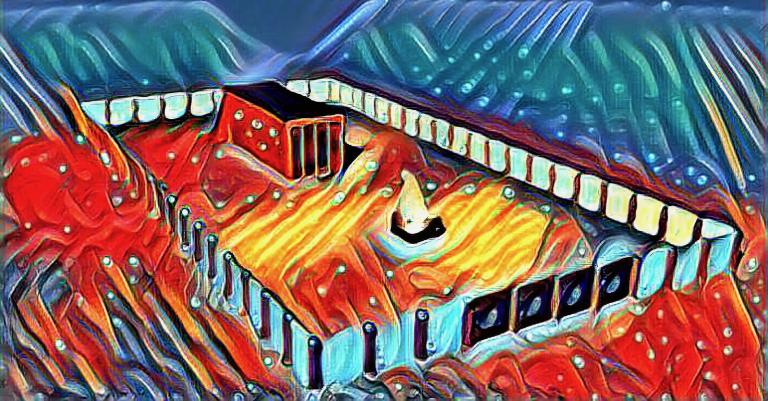
Aleksig6 | Artistic depiction of the Biblical Tabernacle (Mishkan) | 06.02.20 | creative commons
There is now a place for Israel to treat, to make treaties with God, to commune with Him.
v. Ark of the Covenant
Place inside the Ark the stone tablets inscribed with the terms of the covenant, which I will give to you. Then put the atonement cover on top of the Ark. I will meet with you there and talk to you from above the atonement cover between the gold cherubim that hover over the Ark of the Covenant. From there I will give you my commands for the people of Israel. Exodus 25.21-22
This is important, and not only because of Raiders of the Lost Ark. It’s important because usually when a general treaty is made in the aNE between two empires, a footstool is involved. In the throneroom of the commanding emperor the two leaders formalize the treaty document. It is then stored in the leading emperor’s footstool
The Ark of the Covenant is the point where God touches down on Earth. In effect, it’s like a visible footstool in His much grander, much larger, unseen throneroom. Within that footstool, “the stone tablets” are kept. These are the 10 Commandments, the visible treaty between Israel and God.
The Israelites would easily recognize the imagery of the Ark of the Covenant in comparison to other aNE treaties and footstools.
vi. How can we apply this to the Last Times?
First, there is something unique about the covenant language of the Hebrew Bible. Covenants don’t necessarily end, ever.
Have you ever been the victim of broken trust, broken promises? God’s covenants have now remained firm for thousands of years.
Second, God establishes the fact that He will meet with Israel. In fact, this is the first official shared space between man and God since the Garden of Eden. God will Tabernacle-with them them, dwell with them. It is a mobile structure as He moves with His people, leading them into their promised land, as they let Him.
God offers to do this for His people for all ages. What or where is your promised land?
Third, as with Israel in captivity, God sees you and longs to do something for you. This is not prosperity Gospel. However, there are some people who suffer, simply slaving away for others, without fully stepping into all that God has for them. It’s not always by choice. It may be by necessity. Sometimes others just take advantage of a victim who they call a “servant-leader,” or something like that. This is a story for those people, all those who need to find sanctuary with God, until the end of time.
Please don’t play the martyr. Do you really know if you’re that person who is seeking sanctuary?
Previous Post

June 5, 2021
providing online counseling
Next Post

June 9, 2021 2nd Temple Judaism, Black Panther, & Ezekiel's Third Temple
Browse Our Archives
Select a Category Communion Cruz Ingle Crystal Ingle Early Church Engaging Culture Ethics & Society Family Formation History In Dialogue Jared & Crystal Kingdom of God Majority World Church Mateo Ingle Messenger College Mission Narrative Pentecostal Church of God Prayer Shepherding The Sermon The Writings Theology Theology & Psychology Traverse City Uncategorized Vernell Ingle Word Study
Select a Month October 2026 September 2026 August 2026 July 2026 June 2026 May 2026 March 2026 February 2026 January 2026 December 2025 October 2025 September 2025 August 2025 July 2025 June 2025 May 2025 April 2025 March 2025 February 2025 January 2025 December 2024 November 2024 October 2024 September 2024 August 2024 July 2024 June 2024 May 2024 April 2024 March 2024 February 2024 January 2024 December 2023 November 2023 October 2023 September 2023 August 2023 July 2023 June 2023 May 2023 April 2023 March 2023 February 2023 January 2023 December 2022 November 2022 October 2022 September 2022 August 2022 July 2022 June 2022 May 2022 April 2022 March 2022 February 2022 January 2022 December 2021 November 2021 October 2021 September 2021 August 2021 July 2021 June 2021 May 2021 April 2021 March 2021 February 2021 January 2021 December 2020 November 2020 October 2020 September 2020 August 2020 July 2020 June 2020 May 2020 April 2020 March 2020 February 2020 January 2020 December 2019 November 2019 October 2019 September 2019 August 2019 July 2019 June 2019 May 2019 April 2019 March 2019 February 2019 January 2019 December 2018 November 2018 October 2018 September 2018 August 2018 July 2018 June 2018 May 2018 April 2018 March 2018 February 2018 May 2017 March 2017 March 2014 February 2013 January 2013 October 2012 July 2012 May 2012 April 2012 March 2012 February 2012 January 2012 December 2011 August 2010
Follow Us!
TAKE THE
Religious Wisdom Quiz
Who interpreted Pharaoh’s dreams in Egypt?
Select your answer to see how you score.
Aaron Moses Daniel Joseph
Related posts from Jared Ingle


Fully Human vs. Sub-Human | Children vs. Dogs


TRENDING AT PATHEOS Evangelical

How the author of the world's best hymn...
I've been working with John Newton for a while now. This makes...

Long before this Lectio Divina, Psalm 130 - the song - started...

What About the Trees? Another Living Parable
After I finished writing the last article about falling leaves as a...

Why Classical Education Is a Conversation, Not a...
Come and Read: Joy in Classical Education When I was a little...

Falling Leaves: A Living Parable on Letting Go
I’ve spent the vast majority of my life in the southeast corner...

Cornell University has received a great deal of negative publicity and intense...
view all Evangelical blogs
Ad-Free & Subscriber Log-In Subscription Support
- About Us
- 2026 Calendar
- Videos
- Podcasts
- Library of World Religions
- Faith In Media Tracker
- Advertise With Us
- Write for Us
- Privacy Policy
- Terms of Service
- Do Not Sell My Data
- Contact Us
- Radiant Digital
- Manage Newsletter Subscriptions
- Unsubscribe From Notifications
- Sitemap
Copyright 2008-2026, Patheos. All rights reserved.
Subscription Support Ad-Free & Subscriber Log-In
Follow Patheos