
BuddhistCatholicContemplativeEvangelicalGeneral ChristianHinduJewishLatter-day SaintMuslimNew VisionsProgressive Christian
Beliefs
- Buddhist
- Catholic
- Contemplative
- Evangelical
- General Christian
- Hindu
- Jewish
- Latter-day Saint
- More Voices
- Muslim
- New Visions
- Pagan
- Progressive Christian
Topics
- Religion News
- Food and Religion
- Sports and Religion
- Religious Art
- Religious Music and Entertainment
- Religious Events
- History and Religion
- Style and Religion
- Politics and Religion
- Women in Religion
- Recreation Outdoors and Religion
- Business Finance and Religion
- Careers Workplace and Religion
- Education and Religion
- Family Parenting and Religion
- Health Fitness and Religion
- Home and Religion
- Relationships and Religion
- Technology and Religion
- Travel and Religion
Columnists
- Buddhist Columnists
- Business Finance and Religion Columnists
- Careers Workplace and Religion Columnists
- Catholic Columnists
- Contemplative Columnists
- Education and Religion Columnists
- Evangelists Columnists
- Family Parenting and Religion Columnists
- General Christian Columnists
- Health Fitness and Religion Columnists
- Hindu Columnists
- History and Religion Columnists
- Home and Religion Columnists
- Jewish Columnists
- More Voices Columnists
- Latter Day Columnists
- Muslim Columnists
- New Visions Columnists
- Nonreligious Columnists
- Pagan Columnists
- Politics and Religion Columnists
- Progressive Columnists
- Recreation Outdoors and Religion Columnists
- Relationships and Religion Columnists
- Religion News Columnists
- Religious Art Columnists
- Religious Events Columnists
- Religious Music and Entertainment Columnists
- Sports and Religion Columnists
- Style and Religion Columnists
- Technology and Religion Columnists
- Travel and Religion Columnists
- Women in Religion Columnists
Resource Library
- 2026 Calendar
- Library of World Religions
- The 100 Most Holy Places on Earth
- Patheos Answers
- Podcasts
- Videos
- Faith Leaders Database
- Anglican Episcopalian
- Bahai
- Baptist
- Buddhism
- Christianity
- Confucianism
- Eastern Orthodoxy
- Hinduism
- Holiness and Pentecostal
- ISKCON
- Islam
- Judaism
- Lutheran
- Methodist
- The Church of Jesus Christ of Latter-day Saints
- New Age
- Paganism
- Presbytarian and Reformed
- Protestantism
- Religion Behind the Scenes
- Roman Catholic
- Scientology
- Shia Islam
- Sikhism
- Sufism
- Sunni Islam
- Taoism
- Zen
- See all religions
Research Tools
 Ad-Free & Subscriber Log-In Subscription Support
Ad-Free & Subscriber Log-In Subscription Support
Follow Patheos 

- Trending:
- Forgiveness
- |
- Marriage
- |
- Consciousness
- |
- Death Penalty
- |
- Election
- |
- Halloween

- Home
- Evangelical
- imago Dei: Relationship with God
imago Dei: Relationship with God
Last updated on: May 4, 2019 at 10:23 pm by Rev. Jared V. Ingle
imago Dei: Relationship with God 2019-05-04T22:23:33-04:00 Rev. Jared V. Ingle
Patheos Explore the world's faith through different perspectives on religion and spirituality! Patheos has the views of the prevalent religions and spiritualities of the world.
What do you think of when you hear the phrases image of God or imago Dei?
Are they just Christianese euphemisms that have become commonplace?
This series opens up the discussion again. It is based on previous research, but has been revised based on the dialogue I had with Professor Brian Edgar.[1] The interdisciplinary questions at hand are: what exactly is our interior life, and do we have the ability to have relationship with God?
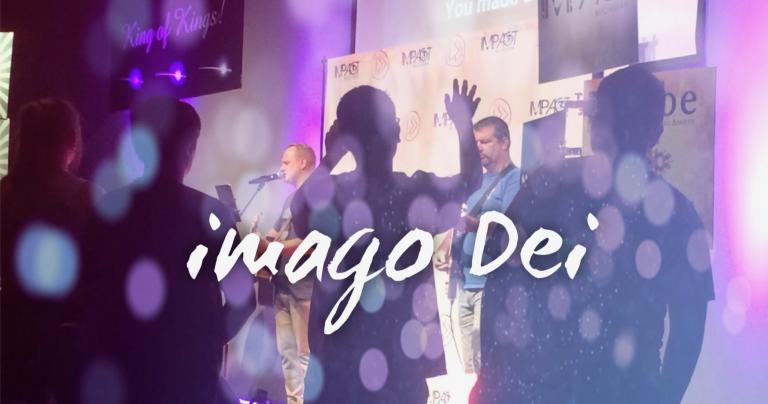
JVI | Cruz worshipping | PCG Michigan District Convention | 09.22.17
Relationship With God
Throughout time, we have often considered the concept of imago Dei with regard to our relationship with God. “The imago may be best understood not in terms of something humans possess, or a description of our place in the order of creation, but as expressing a particular relationship and responsibility to God.”[2]
Relationship with God is not just a Judeo-Christian construct, but also an idea found in many religions. Christians are specifically known for, “having a distinctive kind of relationship with God and to some degree growing towards the likeness of God.”[3] In fact, John Wesley often equates the imago Dei with his understanding of sanctification and holiness.
i. Fall, Sin, and Redemption
Fallen humanity poses a unique question for man. Does man lose the image of God? “Those created with the status of God’s image no longer measure up to the standard of what God’s image should look like.” The image is still there, albeit marred.
After the flood, God makes a new covenant with Noah. Genesis 9.6 is among the decrees: “Whoever sheds man’s blood, By man his blood shall be shed; For in the image of God He made man.” This shows that fallen man retains the imago Dei. Noah had seen the digression of man that grieved the Lord (Genesis 6.5-7). Somehow humanity’s interior life, one of the aspects of us that images God, became corrupt because, “every inclination of the thoughts of their hearts was only evil continually.” There is also a hint at our fallen nature or image in the story of Adam’s family.
“And Adam lived one hundred and thirty years, and begot a son in his own likeness, after his image, and named him Seth” (Genesis 5.3).
Perhaps we no longer pass on the imago Dei in the purest sense, but rather the image of fallen man. This is one of the issues that scholars are raising when speaking against human cloning. “Cloning is inherently despotic, for it seeks to make one’s children . . . after one’s own image . . . and their future according to one’s will.”[4]
Because of sin, man fell. Because of the fall, man sins. “‘Sin,’ then, is inhabiting the muck and executing the ways of a religious and moral climate set against God; it is present as an ethos of unrestrained immorality and craving that cannot but shape persons in its own likeness.”[5] Sin itself, apart from the fallen nature, corrupts the image of God.
Mitchell portrays the fallen nature in terms of alienation from God. This separation must be bridged by redemption. “They must recognize the hopelessness of their alienation, give up all attempts to improve their situation through their own (futile) efforts, and invite God to re-create them in the image of God-revealed-in-Jesus-Christ.”[6] The fallen and sinful image only finds redemption in Jesus Christ our Lord.
ii. Reductionism vs. The Soul
Evolutionary psychology might suggest that human beings are nothing but survival machines for their genes . . . that we are ‘nothing but’ our central nervous systems . . . that the mind is ‘nothing but’ a computer program . . . strong reductionist claims are always speculative, and no more that an act of scientific faith.[7]
Against the complexity of the human person stands the reductionist, the monist, the naturalist, etc. “Naturalists hold to a view of a human person known as physicalism, asserting that a person is no more than his or her biological parts.”[8] This view is really based on empiricism, or science that only adheres to what is verifiable.
Joel Green sees the inner man as a whole. In one case, he references the soul in Deuteronomy 6.5 to support the entirety of one’s being.[9] However, he ignores the words heart and might that occur in the same verse. He mentions them elsewhere as parallelisms. Jesus eventually quotes this verse and adds mind, also translated understanding (Matthew 22.37; Mark 12.30, 33; Luke 10.27).
The question is whether or not these different words point to distinct traits of the interior life, or if they are simply parallel thoughts like synonyms.
Although there are Christians who are monists, many react against reductionism, holding to the belief in a soul or spirit or both. “Within Christian theological anthropology, human beings are corporeal beings – ensouled bodies – made in the image of their Creator.”[10] These diverging views are as old as the clash between Jewish and Greek thought. Though the Jew may have believed in a spirit man, his view of human nature was much more holistic than the Hellenistic separation of body and spirit.
For those who hold a dualistic or tripartite view of man, the danger is that the spirit world is elevated over against the material. “Though Christianity wants to insist that human beings are spiritual creatures, in the sense of being made in the image of God and having a conscious relationship to God, it has no reason to deny that we are also natural creatures.”[11]
There are questions left to be answered for those with a monistic, dualistic, or tripartite view. Earlier in my studies, I held a tripartite view. However, now I believe that such distinctions are probably more artificial or perhaps functional. I still believe there are different parts of the inner man. Yet there is also a holism to the Hebrew literature that has been eclipsed by classic Greco-Roman philosophy, and even cults that unduly separated the physical from the spirit realm.
If there is no clear answer from the academie, then perhaps an answer does not need to be sought. In some mysterious way, we image God. In some mysterious way, the Trinity operates. Can we fully explain either the parts of the imago Dei, or all the ways the Persons of the Trinity operate?
iii. Neurotheology or Spiritual Neuroscience
“With the turn of the new millennium an area of study known variously as ‘neurotheology’ or ‘spiritual neuroscience’ has emerged in the interstices between psychology, spirituality, and neuroscience.”[12] The object of study in this new field is embodied spirituality and even embodied conversion.
In a couple of cases, researches took brain scans of Tibetan monks and Franciscan nuns during prayer exercises, charting the areas of the brain that were active. Interestingly, “A single emission computed tomography (SPECT) study demonstrated changes in cerebral activity (particularly, the frontal lobes, parietal lobes, and left caudate) during glossolalia.”[13]
What Neurotheology is telling us is that the brain is active in new and surprising ways during “spiritual” encounters.
There is a basis for dialogue about the spiritual through these observations. As one who grew up in a faith tradition that encourages glossolalia (speaking in tongues), I find it interesting that this phenomenon would stimulate new types of brain activity. In classical Pentecostalism, glossolalia is an activity in which we yield our voice to the Holy Spirit. Do we lose control? No, but do we yield and participate with the Spirit in some unique way? We most certainly do.
Scientific studies of the brain show that glossolalia produces a reaction within us that we are incapable of producing on our own.
Certainly we are more than the sum total of our biological parts, as a true reductionist would say.
Certainly there is an aspect of our interior life that is capable of connecting with the spirit realm.
We are created for relationship with God.
notes:
[1] adapted from Jared V. Ingle, “imago Dei: At the Intersection of Science and Human Nature” (paper presented in, The Human Person: Multi-Disciplinary Perspectives, Asbury Theological Seminary, May 8, 2011).
imago Dei: Qualities and Nature
[2] Christopher Southgate, Michael Robert Negus, and Andrew Robinson, “Theology and evolutionary biology,” in God, Humanity and the Cosmos, ed. Christopher Southgate (New York: T & T Clark International, 2005), 159. [3] Fraser Watts, “Psychology and theology,” in God, Humanity and the Cosmos, ed. Christopher Southgate (New York: T & T Clark International, 2005), 194. [4] C. Ben Mitchell, Edmund D. Pellegrino, Jean Bethke Elshtain, John F. Kilner, and Scott B. Rae, Biotechnology and the Human Good (Washington D.C.: Georgetown University Press, 2007), 103. [5] Joel B. Green, Body, Soul, and Human Life: The Nature of Humanity in the Bible (Grand Rapids, MI: Baker Academic, 2008), 89. [6] Mitchell et al., 75. [7] Watts, 194. [8] Mitchell et al., 34. [9] Green, 64 [10] Mitchell et al., 103. [11] Watts, 196. [12] Green, 107. [13] Ibid.
Previous Post

May 2, 2019
Prophetic: Speak the Mind of God
Next Post

May 10, 2019 imago Dei: Relationship with Others
Browse Our Archives
Select a Category Communion Cruz Ingle Crystal Ingle Early Church Engaging Culture Ethics & Society Family Formation History In Dialogue Jared & Crystal Kingdom of God Majority World Church Mateo Ingle Messenger College Mission Narrative Pentecostal Church of God Prayer Shepherding The Sermon The Writings Theology Theology & Psychology Traverse City Uncategorized Vernell Ingle Word Study
Select a Month October 2026 September 2026 August 2026 July 2026 June 2026 May 2026 March 2026 February 2026 January 2026 December 2025 October 2025 September 2025 August 2025 July 2025 June 2025 May 2025 April 2025 March 2025 February 2025 January 2025 December 2024 November 2024 October 2024 September 2024 August 2024 July 2024 June 2024 May 2024 April 2024 March 2024 February 2024 January 2024 December 2023 November 2023 October 2023 September 2023 August 2023 July 2023 June 2023 May 2023 April 2023 March 2023 February 2023 January 2023 December 2022 November 2022 October 2022 September 2022 August 2022 July 2022 June 2022 May 2022 April 2022 March 2022 February 2022 January 2022 December 2021 November 2021 October 2021 September 2021 August 2021 July 2021 June 2021 May 2021 April 2021 March 2021 February 2021 January 2021 December 2020 November 2020 October 2020 September 2020 August 2020 July 2020 June 2020 May 2020 April 2020 March 2020 February 2020 January 2020 December 2019 November 2019 October 2019 September 2019 August 2019 July 2019 June 2019 May 2019 April 2019 March 2019 February 2019 January 2019 December 2018 November 2018 October 2018 September 2018 August 2018 July 2018 June 2018 May 2018 April 2018 March 2018 February 2018 May 2017 March 2017 March 2014 February 2013 January 2013 October 2012 July 2012 May 2012 April 2012 March 2012 February 2012 January 2012 December 2011 August 2010
Follow Us!
TAKE THE
Religious Wisdom Quiz
What did God rest from on the seventh day?
Select your answer to see how you score.
Creating the animals Creating light Creating the world Creating the sea
Related posts from Jared Ingle

Fully Human vs. Sub-Human | Children vs. Dogs


Table of Contents | The Fruit of the...
TRENDING AT PATHEOS Evangelical

How the author of the world's best hymn...
I've been working with John Newton for a while now. This makes...

Long before this Lectio Divina, Psalm 130 - the song - started...

What About the Trees? Another Living Parable
After I finished writing the last article about falling leaves as a...

Why Classical Education Is a Conversation, Not a...
Come and Read: Joy in Classical Education When I was a little...

Falling Leaves: A Living Parable on Letting Go
I’ve spent the vast majority of my life in the southeast corner...

Cornell University has received a great deal of negative publicity and intense...
view all Evangelical blogs
Ad-Free & Subscriber Log-In Subscription Support
- About Us
- 2026 Calendar
- Videos
- Podcasts
- Library of World Religions
- Faith In Media Tracker
- Advertise With Us
- Write for Us
- Privacy Policy
- Terms of Service
- Do Not Sell My Data
- Contact Us
- Radiant Digital
- Manage Newsletter Subscriptions
- Unsubscribe From Notifications
- Sitemap
Copyright 2008-2026, Patheos. All rights reserved.
Subscription Support Ad-Free & Subscriber Log-In
Follow Patheos