
BuddhistCatholicContemplativeEvangelicalGeneral ChristianHinduJewishLatter-day SaintMuslimNew VisionsProgressive Christian
Beliefs
- Buddhist
- Catholic
- Contemplative
- Evangelical
- General Christian
- Hindu
- Jewish
- Latter-day Saint
- More Voices
- Muslim
- New Visions
- Pagan
- Progressive Christian
Topics
- Religion News
- Food and Religion
- Sports and Religion
- Religious Art
- Religious Music and Entertainment
- Religious Events
- History and Religion
- Style and Religion
- Politics and Religion
- Women in Religion
- Recreation Outdoors and Religion
- Business Finance and Religion
- Careers Workplace and Religion
- Education and Religion
- Family Parenting and Religion
- Health Fitness and Religion
- Home and Religion
- Relationships and Religion
- Technology and Religion
- Travel and Religion
Columnists
- Buddhist Columnists
- Business Finance and Religion Columnists
- Careers Workplace and Religion Columnists
- Catholic Columnists
- Contemplative Columnists
- Education and Religion Columnists
- Evangelists Columnists
- Family Parenting and Religion Columnists
- General Christian Columnists
- Health Fitness and Religion Columnists
- Hindu Columnists
- History and Religion Columnists
- Home and Religion Columnists
- Jewish Columnists
- More Voices Columnists
- Latter Day Columnists
- Muslim Columnists
- New Visions Columnists
- Nonreligious Columnists
- Pagan Columnists
- Politics and Religion Columnists
- Progressive Columnists
- Recreation Outdoors and Religion Columnists
- Relationships and Religion Columnists
- Religion News Columnists
- Religious Art Columnists
- Religious Events Columnists
- Religious Music and Entertainment Columnists
- Sports and Religion Columnists
- Style and Religion Columnists
- Technology and Religion Columnists
- Travel and Religion Columnists
- Women in Religion Columnists
Resource Library
- 2026 Calendar
- Library of World Religions
- The 100 Most Holy Places on Earth
- Patheos Answers
- Podcasts
- Videos
- Faith Leaders Database
- Anglican Episcopalian
- Bahai
- Baptist
- Buddhism
- Christianity
- Confucianism
- Eastern Orthodoxy
- Hinduism
- Holiness and Pentecostal
- ISKCON
- Islam
- Judaism
- Lutheran
- Methodist
- The Church of Jesus Christ of Latter-day Saints
- New Age
- Paganism
- Presbytarian and Reformed
- Protestantism
- Religion Behind the Scenes
- Roman Catholic
- Scientology
- Shia Islam
- Sikhism
- Sufism
- Sunni Islam
- Taoism
- Zen
- See all religions
Research Tools
 Ad-Free & Subscriber Log-In Subscription Support
Ad-Free & Subscriber Log-In Subscription Support
Follow Patheos 

- Trending:
- Forgiveness
- |
- Marriage
- |
- Consciousness
- |
- Death Penalty
- |
- Election
- |
- Halloween

- Home
- Evangelical
- imago Dei: The Same Yet Different
imago Dei: The Same Yet Different
Last updated on: May 30, 2019 at 11:45 pm by Rev. Jared V. Ingle
imago Dei: The Same Yet Different 2019-05-30T23:45:09-04:00 Rev. Jared V. Ingle
Patheos Explore the world's faith through different perspectives on religion and spirituality! Patheos has the views of the prevalent religions and spiritualities of the world.
The central question of this essay has plagued man ever since the fall.[1] What does it take to be in the image of God without setting myself up as an idol?
You do not have to own a home in Beverly Hills or a recording studio in Nashville to be an idol. If you think you have to be an athlete, talk show host, or any other celebrity, you are wrong.
There are countless ways that we face the tension between the imago Dei and idolatry at the local level. I am going to take a look at idolatry in brief, followed by an example of some tensions in the sciences.
Do we accuse those who serve in the sciences of “playing God”? I would contend that there are many Godly men and women who serve in various scientific fields, both today and throughout history.
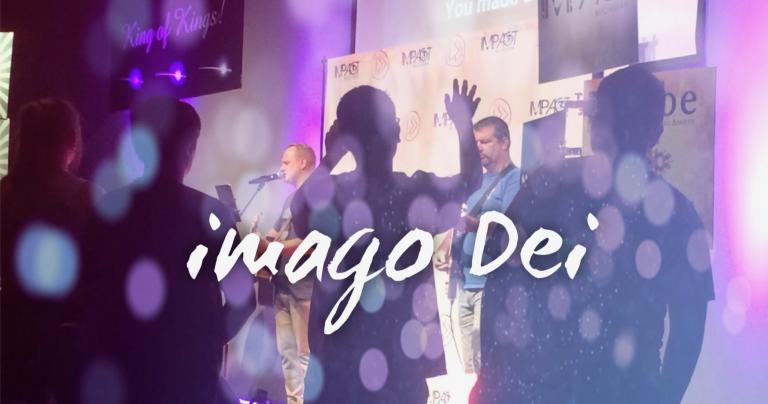
JVI | Cruz Worshipping | MichPCG Convention | 09.22.17
The Same Yet Diffferent
A tselem [image] in the ancient Near East could refer to a statue reminding people of a king’s presence, human beings were created to have a special, personal relationship with God that includes their being God’s representatives in the world.[2]
Here is the paradox. Man is forbidden to form an idol or image of God. However, man is required to be the image of God, to represent God to the world. “Humans are not identical to God while being a real reflection of God.”[3] Man stands between God and creation, and we are neither completely alike nor dissimilar to either.[4]
Secularization
John Hedley Brooke dismisses the secularization model along with other models that attempt to put scientific exploration in a box. However, for the sake of discussion, the secularization model raises a good question. In the context of this post my question is, has our reliance on science freed us from our need for miraculous intervention?
The sciences have led to a secularization of knowledge, new technologies have delivered such power over nature that their exponents are sometimes accused of ‘playing God’. New medicines have removed that direct sense of dependence on God, which in times past found expression in doctrines of providence.[5]
Though the secularization model is faulty in some respects, the question of the lack of the miraculous looms over a modern society that has turned to science rather than to the Spirit.
From the perspective of being image-bearers I would ask, if we do stand between God and creation, then why do we not see His wonders?
I believe that our dependence on science is not at the expense of our dependence upon God. The two should no be diametrically opposed. In fact, I could argue that God uses man as an instrument of scientific exploration, creativity, and even healing.
On the other hand, do we depend on science now, when we used to depend on the miraculous? For instance, would we see more miraculous healings flow through pastors if our nation ever discontinued national healthcare insurance programs?
Easy questions to ask, very difficult to answer
As stated above, from a Theological viewpoint, we are tselem, the image. We use the same word for statues or idols.
In the creative order, we are lower than the angels, yet everything else is subject to us (Psalm 8.3-5; Hebrews 2.5-8). We strike a balance when we take our place in this in-between realm that is carved out for us. Imbalance occurs when we try to play God, or when we demote ourselves to the same level as animals.
This question of the imago Dei is one that Christians in the scientific disciplines cannot easily dismiss. Then again, some of us have a foot in the realm of the soft sciences (i.e. anthropology, psychology, social science, etc.). We may have a greater responsibility as we integrate a true humanistic theory with Theology.
notes:
[1] I am adapting this series from Jared V. Ingle, “imago Dei: At the Intersection of Science and Human Nature” (paper presented in, The Human Person: Multi-Disciplinary Perspectives, Asbury Theological Seminary, May 8, 2011).
[2] C. Ben Mitchell et al., Biotechnology and the Human Good (Washington D.C.: Georgetown University Press, 2007), 71. [3] Paul D. Murray and David Wilkinson, “The significance of the theology of creation within Christian tradition: Systematic considerations,” in God, Humanity and the Cosmos, ed. Christopher Southgate (New York: T&T Clark International, 2005), 45. [4] Joel B. Green, Body, Soul, and Human Life: The Nature of Humanity in the Bible (Grand Rapids, MI: Baker Academic, 2008), 62. [5] John Hedley Brooke, “Learning from the past,” in God, Humanity and the Cosmos, ed. Christopher Southgate (New York: T&T Clark International, 2005), 72.
Previous Post
May 28, 2019
Prayer Series, Vernell Ingle: Blessing on this House
Next Post

June 4, 2019 Prayer Series: Continue to Transform Us
Browse Our Archives
Select a Category Communion Cruz Ingle Crystal Ingle Early Church Engaging Culture Ethics & Society Family Formation History In Dialogue Jared & Crystal Kingdom of God Majority World Church Mateo Ingle Messenger College Mission Narrative Pentecostal Church of God Prayer Shepherding The Sermon The Writings Theology Theology & Psychology Traverse City Uncategorized Vernell Ingle Word Study
Select a Month October 2026 September 2026 August 2026 July 2026 June 2026 May 2026 March 2026 February 2026 January 2026 December 2025 October 2025 September 2025 August 2025 July 2025 June 2025 May 2025 April 2025 March 2025 February 2025 January 2025 December 2024 November 2024 October 2024 September 2024 August 2024 July 2024 June 2024 May 2024 April 2024 March 2024 February 2024 January 2024 December 2023 November 2023 October 2023 September 2023 August 2023 July 2023 June 2023 May 2023 April 2023 March 2023 February 2023 January 2023 December 2022 November 2022 October 2022 September 2022 August 2022 July 2022 June 2022 May 2022 April 2022 March 2022 February 2022 January 2022 December 2021 November 2021 October 2021 September 2021 August 2021 July 2021 June 2021 May 2021 April 2021 March 2021 February 2021 January 2021 December 2020 November 2020 October 2020 September 2020 August 2020 July 2020 June 2020 May 2020 April 2020 March 2020 February 2020 January 2020 December 2019 November 2019 October 2019 September 2019 August 2019 July 2019 June 2019 May 2019 April 2019 March 2019 February 2019 January 2019 December 2018 November 2018 October 2018 September 2018 August 2018 July 2018 June 2018 May 2018 April 2018 March 2018 February 2018 May 2017 March 2017 March 2014 February 2013 January 2013 October 2012 July 2012 May 2012 April 2012 March 2012 February 2012 January 2012 December 2011 August 2010
Follow Us!
TAKE THE
Religious Wisdom Quiz
Who said: "Do not merely listen to the word, and so deceive yourselves. Do what it says"?
Select your answer to see how you score.
Jesus Peter James Paul
Related posts from Jared Ingle

Fully Human vs. Sub-Human | Children vs. Dogs


Table of Contents | The Fruit of the...
TRENDING AT PATHEOS Evangelical

How the author of the world's best hymn...
I've been working with John Newton for a while now. This makes...

Long before this Lectio Divina, Psalm 130 - the song - started...

What About the Trees? Another Living Parable
After I finished writing the last article about falling leaves as a...

Why Classical Education Is a Conversation, Not a...
Come and Read: Joy in Classical Education When I was a little...

Falling Leaves: A Living Parable on Letting Go
I’ve spent the vast majority of my life in the southeast corner...

Cornell University has received a great deal of negative publicity and intense...
view all Evangelical blogs
Ad-Free & Subscriber Log-In Subscription Support
- About Us
- 2026 Calendar
- Videos
- Podcasts
- Library of World Religions
- Faith In Media Tracker
- Advertise With Us
- Write for Us
- Privacy Policy
- Terms of Service
- Do Not Sell My Data
- Contact Us
- Radiant Digital
- Manage Newsletter Subscriptions
- Unsubscribe From Notifications
- Sitemap
Copyright 2008-2026, Patheos. All rights reserved.
Subscription Support Ad-Free & Subscriber Log-In
Follow Patheos