
BuddhistCatholicContemplativeEvangelicalGeneral ChristianHinduJewishLatter-day SaintMuslimNew VisionsProgressive Christian
Beliefs
- Buddhist
- Catholic
- Contemplative
- Evangelical
- General Christian
- Hindu
- Jewish
- Latter-day Saint
- More Voices
- Muslim
- New Visions
- Pagan
- Progressive Christian
Topics
- Religion News
- Food and Religion
- Sports and Religion
- Religious Art
- Religious Music and Entertainment
- Religious Events
- History and Religion
- Style and Religion
- Politics and Religion
- Women in Religion
- Recreation Outdoors and Religion
- Business Finance and Religion
- Careers Workplace and Religion
- Education and Religion
- Family Parenting and Religion
- Health Fitness and Religion
- Home and Religion
- Relationships and Religion
- Technology and Religion
- Travel and Religion
Columnists
- Buddhist Columnists
- Business Finance and Religion Columnists
- Careers Workplace and Religion Columnists
- Catholic Columnists
- Contemplative Columnists
- Education and Religion Columnists
- Evangelists Columnists
- Family Parenting and Religion Columnists
- General Christian Columnists
- Health Fitness and Religion Columnists
- Hindu Columnists
- History and Religion Columnists
- Home and Religion Columnists
- Jewish Columnists
- More Voices Columnists
- Latter Day Columnists
- Muslim Columnists
- New Visions Columnists
- Nonreligious Columnists
- Pagan Columnists
- Politics and Religion Columnists
- Progressive Columnists
- Recreation Outdoors and Religion Columnists
- Relationships and Religion Columnists
- Religion News Columnists
- Religious Art Columnists
- Religious Events Columnists
- Religious Music and Entertainment Columnists
- Sports and Religion Columnists
- Style and Religion Columnists
- Technology and Religion Columnists
- Travel and Religion Columnists
- Women in Religion Columnists
Resource Library
- 2026 Calendar
- Library of World Religions
- The 100 Most Holy Places on Earth
- Patheos Answers
- Podcasts
- Videos
- Faith Leaders Database
- Anglican Episcopalian
- Bahai
- Baptist
- Buddhism
- Christianity
- Confucianism
- Eastern Orthodoxy
- Hinduism
- Holiness and Pentecostal
- ISKCON
- Islam
- Judaism
- Lutheran
- Methodist
- The Church of Jesus Christ of Latter-day Saints
- New Age
- Paganism
- Presbytarian and Reformed
- Protestantism
- Religion Behind the Scenes
- Roman Catholic
- Scientology
- Shia Islam
- Sikhism
- Sufism
- Sunni Islam
- Taoism
- Zen
- See all religions
Research Tools
 Ad-Free & Subscriber Log-In Subscription Support
Ad-Free & Subscriber Log-In Subscription Support
Follow Patheos 

- Trending:
- Forgiveness
- |
- Marriage
- |
- Consciousness
- |
- Death Penalty
- |
- Election
- |
- Halloween

- Home
- Evangelical
- Vernell Ingle reflects on the works of C.S. Lewis, pt. 2
Vernell Ingle reflects on the works of C.S. Lewis, pt. 2
Last updated on: August 28, 2018 at 6:09 pm by Rev. Jared V. Ingle
Vernell Ingle reflects on the works of C.S. Lewis, pt. 2 2018-08-28T18:09:45-04:00 Rev. Jared V. Ingle
Patheos Explore the world's faith through different perspectives on religion and spirituality! Patheos has the views of the prevalent religions and spiritualities of the world.
Once again, we enter into the realm of C.S. Lewis, as Vernell Ingle (Dad) reflects on his works. He read the Chronicles of Narnia out loud to my siblings and I when we were young. Furthermore, he developed voices for each character, a dizzying talent. So his readings were fascinating. As a grandpa, he now carries on the tradition with his grandchildren.
This is the third in a series about C.S. Lewis
First of all, I wrote a couple weeks ago about a meeting with Thomas Woodward, the President of the C.S. Lewis Society. I focused on the narrative that led to Lewis’ salvation.
Aslan Acrostic: Dr. Thomas Woodward shares the story of C.S. Lewis
Second, I began sharing Dad’s unique and interactive paper.[1] By the time of this writing in seminary, Vernell had read 13 C.S. Lewis books. Also for this paper, he read 2 Lewis books for a second time, and 3 new Lewis books.
Vernell Ingle reflects on the works of C.S. Lewis
As he reflects, he interacts personally with the works as they intersect with his own life. This is a spiritual formation paper, so he invites us to share the journey.
He organized the project into subsections according to some of Lewis’ works
1) Search for Joy (his autobiography)
2) Natural versus Supernatural (Miracles)
3) Men Without Chests (Abolition of Man)
4) The Stone Table (The Lion, The Witch, and The Wardrobe)
5) Lunatic, Madman, Fiend, or God? (Mere Christianity)
We’ve started the section Search for Joy. So in review we start with the last couple paragraphs from the previous post.
Search for Joy (continued)
At least his parents took Lewis to church. There was an outward form only, but virtually no religious experience occurred in those early years. “I was taught the usual things and made to say prayers and in due time taken to church. I naturally accepted what I was told but I cannot remember feeling much interest in it.”[2]
Lewis claimed that although his childhood was imaginative, it lacked wonder, and he abhorred emotions. He admitted there was both a dislike and a distrust of emotion. This left him with the intellect, so he became an avid reader himself, early on.
He mother died after a period of illness while he was still young. In some ways, he claims this estranged him and his brother from his father. He and his brother drew closer together and their father never fully recovered from the loss.
As a boy he approached God without fear or awe, or at least his idea of God. In his first boarding school he became a believer. It was there that he became acquainted with Christian doctrine, even though he had already believed much of what he heard on Sundays and in school.
 Warren & C.S. Lewis | Brothers and Friends:
the Diaries of Major Warren Hamilton Lewis | 1983
At 13 he and his brother set out to England to attend another boarding school. It was there that he ceased to be a Christian.
There were two things he pointed to that contributed to stripping him of his belief
First, one of the matrons at the school expanded his knowledge through her conversations with him of all kinds of works. It was not her intention to destroy his faith:
“But the result of Miss C.’s conversation did not stop there. Little by little, unconsciously, unintentionally, she loosened the whole framework, blunted all the sharp edges, of my belief. The vagueness, the merely speculative character, of all this occultism began to spread – yes, and to spread deliciously – to the stern truths of the creed.”[3]
Secondly, he readily admitted that he was already anxious to be relieved of the burden of his personal religion. To him it had become an intolerable burden. He read his Bible and prayed, but was informed that he needed to make sure he thought clearly about everything he prayed. This he attempted vigorously until it deprived him of sleep at times. Thus early on, his religious experience became a legalistic weight.
Therefore, he was most happy to shed this faith, also being prompted by intellectual pessimism.[4] After he was relieved of his faith he initially, aggressively pursued sexual temptations. The world became an attraction to him.
His desire was for glitter, swagger, distinction, the desire to be in the know
He confessed, “I began to labor very hard to make myself into a fop, a cad, and a snob.”[5]
Through the years, Lewis plowed into the world of heavy academia with a vengeance. All the while, he became even more pessimistic, but was in turmoil as he attempted to keep the idea of God at bay:
“I was at the time living, like so many Atheists or Antitheists, in a whirl of contradictions. I maintained that God did not exist. I was also very angry with God for not existing. I was equally angry with Him for creating a world.”[6]
His mind was divided into two compartments
There was the imaginative which he called a many-islanded sea of poetry and myth, and the intellect which he called a shallow rationalism. Everything he loved he believed to be imaginary, and everything he believed he thought to be grim and meaningless.[7]
Christianity offered no doors of escape. The externals of Christianity did not appeal to him. The reason being that he admitted to possessing a deep-seated hatred for authority, monstrous individualism, and lawlessness.
He despised interference and Christianity spoke of a great, transcendent Interferer.[8]
Basic Questions:
I would like to share more of the paper this week, however I believe this is where we have to stop.
1. Isn’t this where many of our friends and loved ones have stopped as well? Have you listened to the story of a self-proclaimed agnostic or atheist?
2. Even if Lewis believed in God, can he still ask why? . . . Why was there so much pain? . . . Or why did his mom have to die? . . . And why was there no relief in the forms of Christian religion that he had encountered? Have you listened to the story of an “unbeliever,” then realized that he was a “believer” that was buried alive under pain?
3. If someone carries such great pain, can he trust again in “a great, transcendent Interferer?” For Lewis the atheist, and any unbeliever, how important are their views or perceptions of God?
4. Do you just want to turn the page like I do, to witness the prodigal’s return? Why did I stop at this point in Lewis’ life? Because I believe that we really can’t evangelize the lost until we meet them in their story. Isn’t that what our Lord did? We don’t have to participate in their folly, but how can we lead them to the cross if we don’t even know where they are?
May our eyes and ears be opened this week to the cry of their souls, below the surface of their doubt and disbelief.
[1] Vernell Ingle, “Reflections on the Life and Words of C.S. Lewis,” (paper presented in Spiritual Formation of the Minister, Assemblies of God Theological Seminary, Springfield, MO, August 11, 1998). [2] C.S. Lewis, Surprised By Joy: The Shape of My Early Life (London: Harcourt Brace and Company, 1955), 7.
Amazon: Surprised by Joy
Previous Post

August 14, 2018
SU-18 Pigeon Forge: The Commission and Family (a/v)
Next Post

August 20, 2018 A Distinction in Ancient Literature (a/v)
Browse Our Archives
Select a Category Communion Cruz Ingle Crystal Ingle Early Church Engaging Culture Ethics & Society Family Formation History In Dialogue Jared & Crystal Kingdom of God Majority World Church Mateo Ingle Messenger College Mission Narrative Pentecostal Church of God Prayer Shepherding The Sermon The Writings Theology Theology & Psychology Traverse City Uncategorized Vernell Ingle Word Study
Select a Month October 2026 September 2026 August 2026 July 2026 June 2026 May 2026 March 2026 February 2026 January 2026 December 2025 October 2025 September 2025 August 2025 July 2025 June 2025 May 2025 April 2025 March 2025 February 2025 January 2025 December 2024 November 2024 October 2024 September 2024 August 2024 July 2024 June 2024 May 2024 April 2024 March 2024 February 2024 January 2024 December 2023 November 2023 October 2023 September 2023 August 2023 July 2023 June 2023 May 2023 April 2023 March 2023 February 2023 January 2023 December 2022 November 2022 October 2022 September 2022 August 2022 July 2022 June 2022 May 2022 April 2022 March 2022 February 2022 January 2022 December 2021 November 2021 October 2021 September 2021 August 2021 July 2021 June 2021 May 2021 April 2021 March 2021 February 2021 January 2021 December 2020 November 2020 October 2020 September 2020 August 2020 July 2020 June 2020 May 2020 April 2020 March 2020 February 2020 January 2020 December 2019 November 2019 October 2019 September 2019 August 2019 July 2019 June 2019 May 2019 April 2019 March 2019 February 2019 January 2019 December 2018 November 2018 October 2018 September 2018 August 2018 July 2018 June 2018 May 2018 April 2018 March 2018 February 2018 May 2017 March 2017 March 2014 February 2013 January 2013 October 2012 July 2012 May 2012 April 2012 March 2012 February 2012 January 2012 December 2011 August 2010
Follow Us!
TAKE THE
Religious Wisdom Quiz
Which king rebuilt the high places Solomon had built for foreign gods?
Select your answer to see how you score.
Josiah Jehu Manasseh Hezekiah
Related posts from Jared Ingle
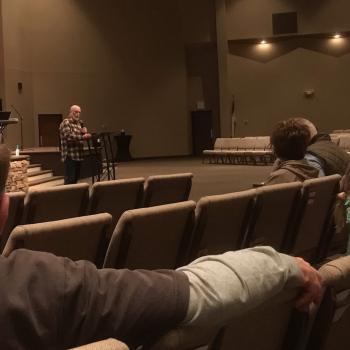
Vernell Ingle | I've Just Called to Encourage...

Why I Am Not a Reformed Protestant

2 Timothy 1.7 | Scripture Interpreted in Community,...

Purity of Heart | Guest Post, Vernell Ingle
TRENDING AT PATHEOS Evangelical

How the author of the world's best hymn...
I've been working with John Newton for a while now. This makes...

Long before this Lectio Divina, Psalm 130 - the song - started...

What About the Trees? Another Living Parable
After I finished writing the last article about falling leaves as a...

Why Classical Education Is a Conversation, Not a...
Come and Read: Joy in Classical Education When I was a little...

Falling Leaves: A Living Parable on Letting Go
I’ve spent the vast majority of my life in the southeast corner...

Cornell University has received a great deal of negative publicity and intense...
view all Evangelical blogs
Ad-Free & Subscriber Log-In Subscription Support
- About Us
- 2026 Calendar
- Videos
- Podcasts
- Library of World Religions
- Faith In Media Tracker
- Advertise With Us
- Write for Us
- Privacy Policy
- Terms of Service
- Do Not Sell My Data
- Contact Us
- Radiant Digital
- Manage Newsletter Subscriptions
- Unsubscribe From Notifications
- Sitemap
Copyright 2008-2026, Patheos. All rights reserved.
Subscription Support Ad-Free & Subscriber Log-In
Follow Patheos