
BuddhistCatholicContemplativeEvangelicalGeneral ChristianHinduJewishLatter-day SaintMuslimNew VisionsProgressive Christian
Beliefs
- Buddhist
- Catholic
- Contemplative
- Evangelical
- General Christian
- Hindu
- Jewish
- Latter-day Saint
- More Voices
- Muslim
- New Visions
- Pagan
- Progressive Christian
Topics
- Religion News
- Food and Religion
- Sports and Religion
- Religious Art
- Religious Music and Entertainment
- Religious Events
- History and Religion
- Style and Religion
- Politics and Religion
- Women in Religion
- Recreation Outdoors and Religion
- Business Finance and Religion
- Careers Workplace and Religion
- Education and Religion
- Family Parenting and Religion
- Health Fitness and Religion
- Home and Religion
- Relationships and Religion
- Technology and Religion
- Travel and Religion
Columnists
- Buddhist Columnists
- Business Finance and Religion Columnists
- Careers Workplace and Religion Columnists
- Catholic Columnists
- Contemplative Columnists
- Education and Religion Columnists
- Evangelists Columnists
- Family Parenting and Religion Columnists
- General Christian Columnists
- Health Fitness and Religion Columnists
- Hindu Columnists
- History and Religion Columnists
- Home and Religion Columnists
- Jewish Columnists
- More Voices Columnists
- Latter Day Columnists
- Muslim Columnists
- New Visions Columnists
- Nonreligious Columnists
- Pagan Columnists
- Politics and Religion Columnists
- Progressive Columnists
- Recreation Outdoors and Religion Columnists
- Relationships and Religion Columnists
- Religion News Columnists
- Religious Art Columnists
- Religious Events Columnists
- Religious Music and Entertainment Columnists
- Sports and Religion Columnists
- Style and Religion Columnists
- Technology and Religion Columnists
- Travel and Religion Columnists
- Women in Religion Columnists
Resource Library
- 2026 Calendar
- Library of World Religions
- The 100 Most Holy Places on Earth
- Patheos Answers
- Podcasts
- Videos
- Faith Leaders Database
- Anglican Episcopalian
- Bahai
- Baptist
- Buddhism
- Christianity
- Confucianism
- Eastern Orthodoxy
- Hinduism
- Holiness and Pentecostal
- ISKCON
- Islam
- Judaism
- Lutheran
- Methodist
- The Church of Jesus Christ of Latter-day Saints
- New Age
- Paganism
- Presbytarian and Reformed
- Protestantism
- Religion Behind the Scenes
- Roman Catholic
- Scientology
- Shia Islam
- Sikhism
- Sufism
- Sunni Islam
- Taoism
- Zen
- See all religions
Research Tools
 Ad-Free & Subscriber Log-In Subscription Support
Ad-Free & Subscriber Log-In Subscription Support
Follow Patheos 

- Trending:
- Forgiveness
- |
- Marriage
- |
- Consciousness
- |
- Death Penalty
- |
- Election
- |
- Halloween

- Home
- Evangelical
- Cruz, Coffee, & Stormtroopers: A Christian Response to the Hero’s Journey
Cruz, Coffee, & Stormtroopers: A Christian Response to the Hero’s Journey
Last updated on: March 10, 2018 at 5:44 pm by Rev. Jared V. Ingle
Cruz, Coffee, & Stormtroopers: A Christian Response to the Hero’s Journey 2018-03-10T17:44:53-05:00 Rev. Jared V. Ingle
Patheos Explore the world's faith through different perspectives on religion and spirituality! Patheos has the views of the prevalent religions and spiritualities of the world.
This is a little bit of family fun that was completely improvised. Like most loud families, we get into moments like this and we all try to upstage each other to see who can force the most laughs.
By the end we discover Cruz’s faith is richer because of Star Wars Stormtroopers?! To be fair, I don’t know many preachers whose spirituality is not informed by coffee, especially a smooth espresso roast.
So this should be a fun video, no matter if you like coffee, Stormtroopers, or just good family banter. I have taken the opportunity to write a piece that I’ve wanted to share for quite some time. Enjoy the family fun! If you have a coffee break, enjoy my piece on the myth behind Star Wars.
Video: Cruz, Coffee, & Stormtroopers
https://www.youtube.com/watch?v=1EhjI7Gv_R4
The new Star Wars Episodes are tracking the story of a Stormtrooper who defects and joins the Rebel Alliance, known as Finn. Some aspects of his story that might seem familiar for a good reason.

i. One of the key plots in Star Wars is the Hero’s Journey
1. Star Wars is based on a mythological framework. Carl Jung was a psychologist and a contemporary of Sigmund Freud. They both were fathers of psychology. However, Jung also studies anthropology and spirituality. He proposes that there are common stories and characters in various myths worldwide.
2. Joseph Campbell takes Jung’s ideas, and traces a common myth that he believes is found in various histories, the Hero’s Journey. This is easy to find on the internet. Because these sites may often be spiritual in nature, I would recommend exploring reputable sites, at least ones with an .edu at the end of the address.
3. It is “common knowledge,” but it may not be well-known, that Campbell and George Lucas consult together at the end of the first movies (Episodes IV-VI). Once Jung and Campbell are better understood, variations of this plot and its archetypes (characters) are repeatedly visible in Star Wars. Bear in mind that Jung, Campbell, and Lucas consider these myths to be a universal or global stories.
4. What are the implications of such a grand-scale framework for categorizing all of the myths and spiritual stories in the world, including The Story of our Lord? This question is difficult to answer because there are so many different world views. I will just explore a couple of answers that are actually at odds, although many people find themselves somewhere in between.
ii. There is a reality in our age known as pluralism
1. Pluralism should not be confused with the polytheism of the ancient world, when many deities were worshipped. Polytheism could be multiple religions over a vast area like the ancient Roman Empire. It could also mean many deities in one religion, like the Greek Pantheon. The key is that each ancient territory usually adopts a primary religion.
2. “Religious pluralism, on the other hand, is the belief that the differences between the religions are not a matter of truth and falsehood, but of different perceptions of the one truth; that to speak of religious beliefs as true or false is inadmissible. Religious belief is a private matter” (note 1). Religious pluralism is different than polytheism, because we are no longer seeing a predominant regional religion. We’re seeing many religions rise, many forms of spirituality, including people classified as “nones” (no religion).
3. Pluralism postulates that every religion is special, so the unintended consequence is that no religion is. Pluralism fits with frameworks like Campbell’s Hero’s Journey and Star Wars. Almost everything that I have stated so far is being taught in our public schools and colleges. I became aware of this in seminary. There is a Christian response that should be considered.
iii. There is a phenomenon known as preparatio evangelica
1. There is evidence over time of other cultures that seem to be prepped to receive the Full Gospel. This phenomenon is as old as Christianity. Some of the Early Church Fathers compare the truths in the Greek philosophies with those of the Hebrews and Primitive Church. A preparatio evangelica is “God’s work in the pre-Christian heart that prepares a person to receive and respond to the gospel message” (note 2). This should not be confused with the protoevangelium, the first Gospel message found in Genesis 3.15.
Whole people groups are often ready to receive the Gospel before any Christians reach them. For instance, although there are many differences between Muslims, Jews, and Christians, there is at least one similarity. Islam emerges after Christianity and Judaism as one of the earliest monotheistic faiths (believing in one deity). In the ancient world, a one-deity religion is rare. So is a monotheistic religion experiencing a preparatio evangelica?
2. Then there is the question of ancient writings that are not scriptural (non-canonical). Other books are quoted in the Bible. Numbers has a quote from the Book of the Wars of the Lord. Joshua and David quote from the Book of Jashur. Matthew and Luke are using some source that Mark does not use, the Quelle (the source or “Q”), or an Apostolic Tradition. Jude quotes from a couple of outside sources. His story of the fight between the archangel Michael and the devil is from the book the Assumption of Moses. His account of Enoch’s sermon is from the book of 1 Enoch.
John uses the term Logos, perhaps expanding on the Greek philosophy of the Ephesian known as Heraclitus, who teaches the wisdom of Logos nearly 500 years earlier (note 3). Paul not only quotes the Greeks when he preaches on Mars Hill, but at least 4 times in the NT.
3. If these quotes are in the Bible, then we must conclude that the quotes become inspired, like any other verses of the Bible! That does not mean that the books the quotes come from are sacred or canonical (note 4). If God can use quotes from uninspired writings (songs, histories, philosophies, etc.) to point people to the True Story, then can He do the same today?
iv. Is the Hero’s Myth a type of preparatio evangelica
1. The philosophy of pluralism looks at these cultural stories that seem similar to ours, and places us all on an equal plain. Pluralism uses Finn, Star Wars, and the Hero’s Journey to declare that Christianity is just another common myth – a retelling of the Hero’s Journey. Are we so jaded in the West (Western Europe and America), to think that our philosophies can explain away Christianity?
2. About 1/3 of the earth’s population is now Christian. Billions have gravitated to our Story. They have not forgotten their stories, myths, philosophies, and histories. In fact, many of their truths have helped them to recognize ours, as if charting a course toward their true harbor in the Christian faith. Think about it personally. Would anyone ever ask you to forget your personal testimony? No, it is the journey that led you to the Cross.
Pluralism says Jesus is just another example of the Hero’s Journey (probably a form of the “scapegoat” archetype).
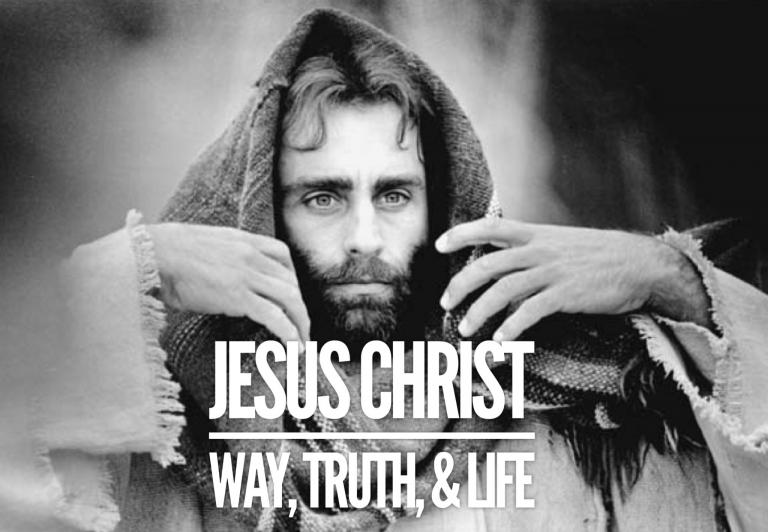
The Spirit’s preparatio evangelica allows people groups to discover glimpses of truth, that often prepare them to receive the True Story (The Way, The Truth, The Life).
note 1: Lesslie Newbigin, The Gospel in a Pluralist Society (Grand Rapids, MI: Wm. B. Eerdmans, 1989), 14.
note 2: This section adapted primarily from Timothy C. Tennent, Theology in the Context of World Christianity: How the Global Church is Influencing the Way We Think About and Discuss Theology (Grand Rapids, MI: Zondervan, 2007), 44, 53, 56-59, 282.
note 3: Daniel W. Graham, “Heraclitus,” in The Stanford Encyclopedia of Philosophy (Fall 2015), ed. Edward N. Zalta, accessed March 3, 2018, https://plato.stanford.edu/entries/heraclitus/.
note 4: Tennent, 58.
Previous Post

March 2, 2018
On Praying Together
Next Post

March 18, 2018 Drawing Near to God
Browse Our Archives
Select a Category Communion Cruz Ingle Crystal Ingle Early Church Engaging Culture Ethics & Society Family Formation History In Dialogue Jared & Crystal Kingdom of God Majority World Church Mateo Ingle Messenger College Mission Narrative Pentecostal Church of God Prayer Shepherding The Sermon The Writings Theology Theology & Psychology Traverse City Uncategorized Vernell Ingle Word Study
Select a Month October 2026 September 2026 August 2026 July 2026 June 2026 May 2026 March 2026 February 2026 January 2026 December 2025 October 2025 September 2025 August 2025 July 2025 June 2025 May 2025 April 2025 March 2025 February 2025 January 2025 December 2024 November 2024 October 2024 September 2024 August 2024 July 2024 June 2024 May 2024 April 2024 March 2024 February 2024 January 2024 December 2023 November 2023 October 2023 September 2023 August 2023 July 2023 June 2023 May 2023 April 2023 March 2023 February 2023 January 2023 December 2022 November 2022 October 2022 September 2022 August 2022 July 2022 June 2022 May 2022 April 2022 March 2022 February 2022 January 2022 December 2021 November 2021 October 2021 September 2021 August 2021 July 2021 June 2021 May 2021 April 2021 March 2021 February 2021 January 2021 December 2020 November 2020 October 2020 September 2020 August 2020 July 2020 June 2020 May 2020 April 2020 March 2020 February 2020 January 2020 December 2019 November 2019 October 2019 September 2019 August 2019 July 2019 June 2019 May 2019 April 2019 March 2019 February 2019 January 2019 December 2018 November 2018 October 2018 September 2018 August 2018 July 2018 June 2018 May 2018 April 2018 March 2018 February 2018 May 2017 March 2017 March 2014 February 2013 January 2013 October 2012 July 2012 May 2012 April 2012 March 2012 February 2012 January 2012 December 2011 August 2010
Follow Us!
TAKE THE
Religious Wisdom Quiz
How did God speak to Moses at the burning bush?
Select your answer to see how you score.
Through wind Symbols from the fire Through lightning By name
Related posts from Jared Ingle

Fully Human vs. Sub-Human | Children vs. Dogs


Being Real vs. Hyper-Spiritual Jargon

The Business of Doing New Things
TRENDING AT PATHEOS Evangelical

How the author of the world's best hymn...
I've been working with John Newton for a while now. This makes...

Long before this Lectio Divina, Psalm 130 - the song - started...

What About the Trees? Another Living Parable
After I finished writing the last article about falling leaves as a...

Why Classical Education Is a Conversation, Not a...
Come and Read: Joy in Classical Education When I was a little...

Falling Leaves: A Living Parable on Letting Go
I’ve spent the vast majority of my life in the southeast corner...

Cornell University has received a great deal of negative publicity and intense...
view all Evangelical blogs
Ad-Free & Subscriber Log-In Subscription Support
- About Us
- 2026 Calendar
- Videos
- Podcasts
- Library of World Religions
- Faith In Media Tracker
- Advertise With Us
- Write for Us
- Privacy Policy
- Terms of Service
- Do Not Sell My Data
- Contact Us
- Radiant Digital
- Manage Newsletter Subscriptions
- Unsubscribe From Notifications
- Sitemap
Copyright 2008-2026, Patheos. All rights reserved.
Subscription Support Ad-Free & Subscriber Log-In
Follow Patheos