
BuddhistCatholicContemplativeEvangelicalGeneral ChristianHinduJewishLatter-day SaintMuslimNew VisionsProgressive Christian
Beliefs
- Buddhist
- Catholic
- Contemplative
- Evangelical
- General Christian
- Hindu
- Jewish
- Latter-day Saint
- More Voices
- Muslim
- New Visions
- Pagan
- Progressive Christian
Topics
- Religion News
- Food and Religion
- Sports and Religion
- Religious Art
- Religious Music and Entertainment
- Religious Events
- History and Religion
- Style and Religion
- Politics and Religion
- Women in Religion
- Recreation Outdoors and Religion
- Business Finance and Religion
- Careers Workplace and Religion
- Education and Religion
- Family Parenting and Religion
- Health Fitness and Religion
- Home and Religion
- Relationships and Religion
- Technology and Religion
- Travel and Religion
Columnists
- Buddhist Columnists
- Business Finance and Religion Columnists
- Careers Workplace and Religion Columnists
- Catholic Columnists
- Contemplative Columnists
- Education and Religion Columnists
- Evangelists Columnists
- Family Parenting and Religion Columnists
- General Christian Columnists
- Health Fitness and Religion Columnists
- Hindu Columnists
- History and Religion Columnists
- Home and Religion Columnists
- Jewish Columnists
- More Voices Columnists
- Latter Day Columnists
- Muslim Columnists
- New Visions Columnists
- Nonreligious Columnists
- Pagan Columnists
- Politics and Religion Columnists
- Progressive Columnists
- Recreation Outdoors and Religion Columnists
- Relationships and Religion Columnists
- Religion News Columnists
- Religious Art Columnists
- Religious Events Columnists
- Religious Music and Entertainment Columnists
- Sports and Religion Columnists
- Style and Religion Columnists
- Technology and Religion Columnists
- Travel and Religion Columnists
- Women in Religion Columnists
Resource Library
- 2026 Calendar
- Library of World Religions
- The 100 Most Holy Places on Earth
- Patheos Answers
- Podcasts
- Videos
- Faith Leaders Database
- Anglican Episcopalian
- Bahai
- Baptist
- Buddhism
- Christianity
- Confucianism
- Eastern Orthodoxy
- Hinduism
- Holiness and Pentecostal
- ISKCON
- Islam
- Judaism
- Lutheran
- Methodist
- The Church of Jesus Christ of Latter-day Saints
- New Age
- Paganism
- Presbytarian and Reformed
- Protestantism
- Religion Behind the Scenes
- Roman Catholic
- Scientology
- Shia Islam
- Sikhism
- Sufism
- Sunni Islam
- Taoism
- Zen
- See all religions
Research Tools
 Ad-Free & Subscriber Log-In Subscription Support
Ad-Free & Subscriber Log-In Subscription Support
Follow Patheos 

- Trending:
- Forgiveness
- |
- Marriage
- |
- Consciousness
- |
- Death Penalty
- |
- Election
- |
- Halloween

- Home
- Religious Music and Entertainment
- Left Faithful
Left Faithful
Last updated on: December 26, 2018 at 8:08 pm by Chase Padusniak
Left Faithful 2018-12-26T20:08:57-04:00 Chase Padusniak
Patheos Explore the world's faith through different perspectives on religion and spirituality! Patheos has the views of the prevalent religions and spiritualities of the world.
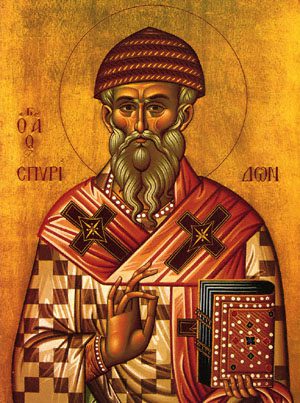
An icon of St. Spyridon, who is notorious for his humility and simplicity. Pubic Domain.
The “Left” in my title is indeed political, though one could also take in the sense of the Left Behind series; it would mean much the same thing. In the American context especially (and I’ve written about this before), to be Christian and on the Left is often to feel left out, or left behind, or, at least, generally alienated. Some would not dare speak their thoughts in a parish-related context or, if they do, they’re carefully guarded.
I’m not, of course, saying that Left Christians (and in my case I am predominantly thinking of Catholics) are oppressed or even really discriminated against—at least not in any overt way. I’m merely speaking of an atmosphere or ambience.
This may sound off to those who just went to a Christmas Mass or liturgy that was 200% fuller than the average Sunday service. Aren’t most of those people likely milquetoast centrists or complacent center-leftists? And, of course, aren’t those both part of some horrifying, overarching, totalizing thing called “the Left” by the modern Right-leaning media?
Well, yes—probably. But what I’m interested in exploring in this post is what it means to be “of the Left” and “faithful,” that is, truly affirming of the Creed, steeped in the history and traditions of Christianity while committed to Left-leaning politics. Many might believe this impossible; consider this something of a manifesto for both why its not and why, for many, it’s an unavoidable corollary of belief in the Incarnation, the Resurrection, and the Kingdom of God. For many of us, sympathy with Leftist ideas becomes a necessary extension of righteous faith.
Why bother writing about this? For starters, because there seems to be this idea (and one that, honestly, I cannot hope to change on my own) that Left Christians are theologically inept, that they are wolves in sheep’s clothing with no real commitment to orthodoxy. In addition, I have Christian friends on the Left whose personalities and social media accounts are more saturated by “traditional” forms of devotion than many Right-learners I know. It feels to me as if they are being wronged on account of stereotypes that wave away their faith-filled commitments.
With that out of the way, let’s start with a clarification: “Leftist” and “Liberal” do not mean the same thing. While many in the latter camp might be well-intentioned, they are more likely to be what used to be (and in some circles still are) called “Modernists.” They might be as bad as, say, John Shelby Spong (who denies the Incarnation and the Resurrection, among other things), who might be summed up by this statement of his:
Christianity is, I believe, about expanded life, heightened consciousness and achieving a new humanity. It is not about closed minds, supernatural interventions, a fallen creation, guilt, original sin or divine rescue. (Why We Must Reclaim the Bible from Fundamentalists)
Spong is a textbook humanist, with no real commitment to anything like traditional doctrine. For him, fundamentalists are as much those who accept Original Sin (or Ancestral Sin, not that there’s a difference) as those who accept Young Earth Creationism. He’s not a Marxist, nor does he seem to care about “the common person.” He’s just heterodox—plain and simple. Nothing political about it.
There are, of course, less extreme examples. There are times when Pope Francis’s commitments seem to veer from a legitimately Leftist anti-capitalism to something a bit more simply of the world, that is, liberal. But anyone with ears to hear, I think, can apprehend that the pope accepts the basic doctrines of the Faith. You may disagree with his social and political commitments, that is where, he decides to put emphasis on certain questions, but he is not a heretic—he doesn’t deny the Incarnation or abrogate some other fundamental point of the Creed.
Previous Post
December 23, 2018
Jubilees
Next Post
March 19, 2019 Christianity and Christchurch
Browse Our Archives
Select a Category Academia Culture Politics Reviews Theology Uncategorized
Select a Month October 2026 September 2026 August 2026 July 2026 June 2026 May 2026 April 2026 March 2026 February 2026 January 2026 December 2025 November 2025 October 2025 September 2025 August 2025 July 2025 June 2025 May 2025 April 2025 March 2025 February 2025 January 2025 December 2024 November 2024 October 2024 September 2024 August 2024 July 2024 June 2024 May 2024 April 2024 March 2024 February 2024 January 2024 December 2023 November 2023 October 2023 September 2023 August 2023 July 2023 June 2023 May 2023 April 2023 March 2023 February 2023 January 2023 November 2022 October 2022 September 2022 August 2022 July 2022 June 2022 May 2022 April 2022 March 2022 February 2022 July 2021 December 2020 November 2020 July 2020 May 2020 April 2020 February 2020 January 2020 December 2019 November 2019 October 2019 August 2019 July 2019 April 2019 March 2019 December 2018 August 2018 July 2018 June 2018 May 2018 April 2018 March 2018 January 2018 December 2017 November 2017 September 2017 August 2017 July 2017 June 2017 May 2017 April 2017 March 2017 February 2017 January 2017 December 2016 November 2016 October 2016 September 2016 August 2016 July 2016 June 2016 May 2016 April 2016 March 2016 February 2016
Follow Us!
TAKE THE
Religious Wisdom Quiz
What Christian group celebrates Mass as their primary form of worship?
Select your answer to see how you score.
Lutherans Catholics Baptists Methodists
Related posts from Jappers and Janglers

Apostasy, Scandal, and a Road Well-Trod
Who Founded the Catholic Church?
TRENDING AT PATHEOS Religious Music and Entertainment

Methodist Central Hall and Westminster Abbey
Situated on the same square is Methodist Central Hall and Westminster Abbey. ...

57th Dove Awards Honor Dolly Parton, Crown New...
On gospel music’s biggest night, the 57th annual GMA Dove Awards honored...

The First Eucharistic Controversy: Christ’s Real Presence
For Catholics, the Eucharist is the source and summit of the Christian...

What a Stop Sign Can Teach Us About...
How to Make a Decision When You Can't Hear God Main point:...

Archdiocese Hosts Military Marriage Retreat in Germany
RASTATT, Germany — The transient military lifestyle, with its frequent deployments and...

Nearly every morning, I make the drive to Detroit with my high-school-age...
view all Religious Music and Entertainment blogs
Ad-Free & Subscriber Log-In Subscription Support
- About Us
- 2026 Calendar
- Videos
- Podcasts
- Library of World Religions
- Faith In Media Tracker
- Advertise With Us
- Write for Us
- Privacy Policy
- Terms of Service
- Do Not Sell My Data
- Contact Us
- Radiant Digital
- Manage Newsletter Subscriptions
- Unsubscribe From Notifications
- Sitemap
Copyright 2008-2026, Patheos. All rights reserved.
Subscription Support Ad-Free & Subscriber Log-In
Follow Patheos