
BuddhistCatholicContemplativeEvangelicalGeneral ChristianHinduJewishLatter-day SaintMuslimNew VisionsProgressive Christian
Beliefs
- Buddhist
- Catholic
- Contemplative
- Evangelical
- General Christian
- Hindu
- Jewish
- Latter-day Saint
- More Voices
- Muslim
- New Visions
- Pagan
- Progressive Christian
Topics
- Religion News
- Food and Religion
- Sports and Religion
- Religious Art
- Religious Music and Entertainment
- Religious Events
- History and Religion
- Style and Religion
- Politics and Religion
- Women in Religion
- Recreation Outdoors and Religion
- Business Finance and Religion
- Careers Workplace and Religion
- Education and Religion
- Family Parenting and Religion
- Health Fitness and Religion
- Home and Religion
- Relationships and Religion
- Technology and Religion
- Travel and Religion
Columnists
- Buddhist Columnists
- Business Finance and Religion Columnists
- Careers Workplace and Religion Columnists
- Catholic Columnists
- Contemplative Columnists
- Education and Religion Columnists
- Evangelists Columnists
- Family Parenting and Religion Columnists
- General Christian Columnists
- Health Fitness and Religion Columnists
- Hindu Columnists
- History and Religion Columnists
- Home and Religion Columnists
- Jewish Columnists
- More Voices Columnists
- Latter Day Columnists
- Muslim Columnists
- New Visions Columnists
- Nonreligious Columnists
- Pagan Columnists
- Politics and Religion Columnists
- Progressive Columnists
- Recreation Outdoors and Religion Columnists
- Relationships and Religion Columnists
- Religion News Columnists
- Religious Art Columnists
- Religious Events Columnists
- Religious Music and Entertainment Columnists
- Sports and Religion Columnists
- Style and Religion Columnists
- Technology and Religion Columnists
- Travel and Religion Columnists
- Women in Religion Columnists
Resource Library
- 2026 Calendar
- Library of World Religions
- The 100 Most Holy Places on Earth
- Patheos Answers
- Podcasts
- Videos
- Faith Leaders Database
- Anglican Episcopalian
- Bahai
- Baptist
- Buddhism
- Christianity
- Confucianism
- Eastern Orthodoxy
- Hinduism
- Holiness and Pentecostal
- ISKCON
- Islam
- Judaism
- Lutheran
- Methodist
- The Church of Jesus Christ of Latter-day Saints
- New Age
- Paganism
- Presbytarian and Reformed
- Protestantism
- Religion Behind the Scenes
- Roman Catholic
- Scientology
- Shia Islam
- Sikhism
- Sufism
- Sunni Islam
- Taoism
- Zen
- See all religions
Research Tools
 Ad-Free & Subscriber Log-In Subscription Support
Ad-Free & Subscriber Log-In Subscription Support
Follow Patheos 

- Trending:
- Forgiveness
- |
- Marriage
- |
- Consciousness
- |
- Death Penalty
- |
- Election
- |
- Halloween

- Home
- Religious Music and Entertainment
- Hymns for the Working Class
Hymns for the Working Class
Last updated on: July 6, 2018 at 12:41 pm by Chase Padusniak
Hymns for the Working Class 2018-07-06T12:41:52-04:00 Chase Padusniak
Patheos Explore the world's faith through different perspectives on religion and spirituality! Patheos has the views of the prevalent religions and spiritualities of the world.
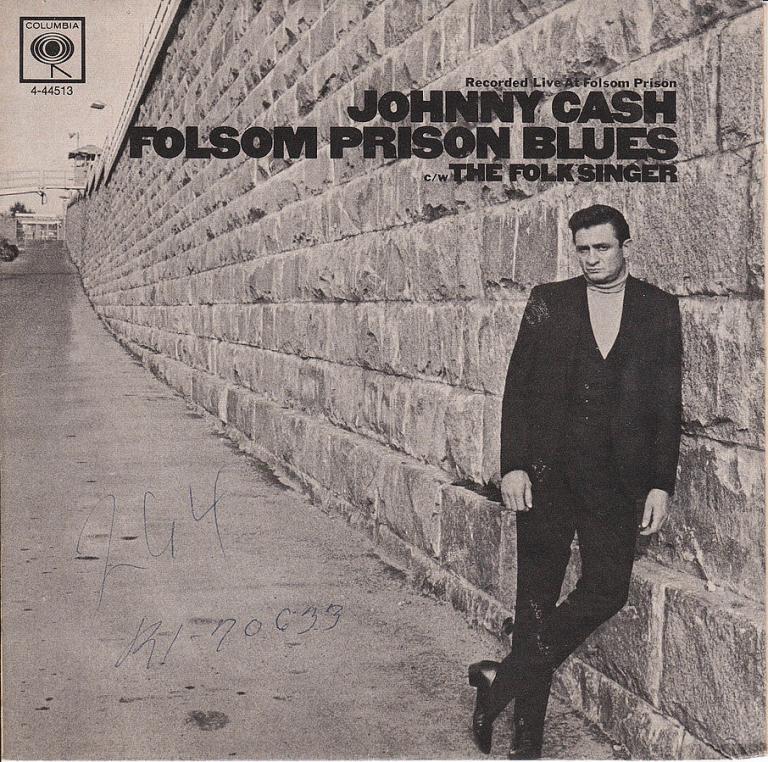
The cover of Johnny Cash’s “Folsom Prison Blues.” Source.

Did Trump win because of the dissatisfaction of the working class? Some say “yea”; some say “nay.” Opinions abound and it’s dizzying. In spite of this vortex of thoughts (also known as the internet), I was struck by a friend’s recent tweet, baldly asking how we (especially those of us who are Christians) can say that workers as such got Trump elected. He wanted to know how, when he knows so many wealthy or middle-class Christians who croon on about Trump’s support by the poor, we can really keep believing this? Is the working class just a justification, ushered by his wealthier supporters?
I confess that, being from a white family of working-class background, I have often found it hard to deny that Trump has some appeal to such people, but I can’t help but feel moved by his challenge. How can we explain Trump’s support by better-off Christians?
For starters, my friend was responding to a piece by First Things’ Matthew Schmitz (whom I also know). Schmitz draws on an existing family model to try and explain religious, working-class support for the president. Red families tend to be hierarchical and prize fertility and rectitude. Blue families tend to prize equality and companionship (but care less about fertility). Both, he says, are unlikely to find Trump palatable because he violates their politics of respectability. To one group he’s objectifying, a misogynist; to the other, he’s unrighteous, even immoral. Schmitz adds a third group, more likely to support Trump: purple families.
A third model can be found among working-class whites, blacks and Hispanics — let’s call it purple. In these families, bonds between mothers and children are prized above those between couples. Unstable relationships are the norm, and fathers quickly end up out of the picture.
The difference among these three family models explains three different reactions to Mr. Trump’s candidacy. Liberal professionals decried his sexism, which violated the prime value of the blue family model: equality. Elite evangelicals decried his infidelity, which ran counter to the red family model’s stress on fidelity.
He goes on to argue that such purple families tend to be Baptist, Evangelical, and/or Pentecostal, hence the president’s support among these groups. This then is supposed to explain his popularity with the “religious working class”—they’re simply more understanding of his family life:
Baffling as it may be to elites, Mr. Trump embodies a real if imperfect model of family values. People familiar with the purple family model tend to view his alienation from his children’s mother as normal and his closeness to his children as exceptional and admirable. I saw this among my acquaintances in Nebraska. Even those from red families were more likely than my acquaintances in New York to know someone who has had a child out of wedlock or is subject to a restraining order.
On the one hand, I’m sympathetic to Schmitz’s point: I know plenty of people who fit the sort of model that he’s talking about—people who are far from doctrinaire conservatives, but who have some (often nostalgic) notion of propriety, tempered by hard lives and a variety of social and individual misfortunes. On the other, I can’t shake Nathan’s: what about this is working class (there is, after all, decent proof that Trump’s support among wealthy whites helped him win)? How can we call this “religious” if it doesn’t care about morality or faith? Can “family models” really be used to explain something this complex?
I can’t say I have an answer, but I do have an idea, one I think worth exploring: the history of folk and country music. A little dive into the past may help to explain how the working class gets used by elites to explain things, and how, on occasion, it’s fought back. There may be, as we shall see, a lesson about Trump and religion in all this.
Previous Post

June 18, 2018
On Judgment
Next Post

July 8, 2018 The Face of God
Browse Our Archives
Select a Category Academia Culture Politics Reviews Theology Uncategorized
Select a Month October 2026 September 2026 August 2026 July 2026 June 2026 May 2026 April 2026 March 2026 February 2026 January 2026 December 2025 November 2025 October 2025 September 2025 August 2025 July 2025 June 2025 May 2025 April 2025 March 2025 February 2025 January 2025 December 2024 November 2024 October 2024 September 2024 August 2024 July 2024 June 2024 May 2024 April 2024 March 2024 February 2024 January 2024 December 2023 November 2023 October 2023 September 2023 August 2023 July 2023 June 2023 May 2023 April 2023 March 2023 February 2023 January 2023 November 2022 October 2022 September 2022 August 2022 July 2022 June 2022 May 2022 April 2022 March 2022 February 2022 July 2021 December 2020 November 2020 July 2020 May 2020 April 2020 February 2020 January 2020 December 2019 November 2019 October 2019 August 2019 July 2019 April 2019 March 2019 December 2018 August 2018 July 2018 June 2018 May 2018 April 2018 March 2018 January 2018 December 2017 November 2017 September 2017 August 2017 July 2017 June 2017 May 2017 April 2017 March 2017 February 2017 January 2017 December 2016 November 2016 October 2016 September 2016 August 2016 July 2016 June 2016 May 2016 April 2016 March 2016 February 2016
Follow Us!
TAKE THE
Religious Wisdom Quiz
True or False: Moses entered the Promised Land before he died.
Select your answer to see how you score.
TRUE FALSE
Related posts from Jappers and Janglers



What is This Quintessence of Dust?
TRENDING AT PATHEOS Religious Music and Entertainment

Catholic Evangelization: Sharing Your Faith Every Day
Welcome back to the Graceful Awakening mini-series called, “From Faith to Mission.” ...

The Pillar of the Boatmen: the Ancient Monument...
The Pillar of the Boatmen is a Romano-Gaulish sculpture that dates from...

In one sense walking into Westminster Abbey is like walking down the...

'Super Scam Me' Exposes AI Jon Bon Jovi...
Leslie Pickett believed she was in a relationship with Jon Bon Jovi....

The Brazilian Remake of Kendricks' 'Flywheel' Opens in...
“Flywheel,” the story that launched the Kendrick Brothers’ filmmaking career is getting...

The Dangers of Gradual Accommodation (Winking at Sin)
Recently, the “law of gradualness” resurfaced during the opening of a weeklong,...
view all Religious Music and Entertainment blogs
Ad-Free & Subscriber Log-In Subscription Support
- About Us
- 2026 Calendar
- Videos
- Podcasts
- Library of World Religions
- Faith In Media Tracker
- Advertise With Us
- Write for Us
- Privacy Policy
- Terms of Service
- Do Not Sell My Data
- Contact Us
- Radiant Digital
- Manage Newsletter Subscriptions
- Unsubscribe From Notifications
- Sitemap
Copyright 2008-2026, Patheos. All rights reserved.
Subscription Support Ad-Free & Subscriber Log-In
Follow Patheos