
BuddhistCatholicContemplativeEvangelicalGeneral ChristianHinduJewishLatter-day SaintMuslimNew VisionsProgressive Christian
Beliefs
- Buddhist
- Catholic
- Contemplative
- Evangelical
- General Christian
- Hindu
- Jewish
- Latter-day Saint
- More Voices
- Muslim
- New Visions
- Pagan
- Progressive Christian
Topics
- Religion News
- Food and Religion
- Sports and Religion
- Religious Art
- Religious Music and Entertainment
- Religious Events
- History and Religion
- Style and Religion
- Politics and Religion
- Women in Religion
- Recreation Outdoors and Religion
- Business Finance and Religion
- Careers Workplace and Religion
- Education and Religion
- Family Parenting and Religion
- Health Fitness and Religion
- Home and Religion
- Relationships and Religion
- Technology and Religion
- Travel and Religion
Columnists
- Buddhist Columnists
- Business Finance and Religion Columnists
- Careers Workplace and Religion Columnists
- Catholic Columnists
- Contemplative Columnists
- Education and Religion Columnists
- Evangelists Columnists
- Family Parenting and Religion Columnists
- General Christian Columnists
- Health Fitness and Religion Columnists
- Hindu Columnists
- History and Religion Columnists
- Home and Religion Columnists
- Jewish Columnists
- More Voices Columnists
- Latter Day Columnists
- Muslim Columnists
- New Visions Columnists
- Nonreligious Columnists
- Pagan Columnists
- Politics and Religion Columnists
- Progressive Columnists
- Recreation Outdoors and Religion Columnists
- Relationships and Religion Columnists
- Religion News Columnists
- Religious Art Columnists
- Religious Events Columnists
- Religious Music and Entertainment Columnists
- Sports and Religion Columnists
- Style and Religion Columnists
- Technology and Religion Columnists
- Travel and Religion Columnists
- Women in Religion Columnists
Resource Library
- 2026 Calendar
- Library of World Religions
- The 100 Most Holy Places on Earth
- Patheos Answers
- Podcasts
- Videos
- Faith Leaders Database
- Anglican Episcopalian
- Bahai
- Baptist
- Buddhism
- Christianity
- Confucianism
- Eastern Orthodoxy
- Hinduism
- Holiness and Pentecostal
- ISKCON
- Islam
- Judaism
- Lutheran
- Methodist
- The Church of Jesus Christ of Latter-day Saints
- New Age
- Paganism
- Presbytarian and Reformed
- Protestantism
- Religion Behind the Scenes
- Roman Catholic
- Scientology
- Shia Islam
- Sikhism
- Sufism
- Sunni Islam
- Taoism
- Zen
- See all religions
Research Tools
 Ad-Free & Subscriber Log-In Subscription Support
Ad-Free & Subscriber Log-In Subscription Support
Follow Patheos 

- Trending:
- Forgiveness
- |
- Marriage
- |
- Consciousness
- |
- Death Penalty
- |
- Election
- |
- Halloween

- Home
- Religious Music and Entertainment
- Married Priests?
Married Priests?
Last updated on: May 16, 2018 at 9:33 pm by Chase Padusniak
Married Priests? 2018-05-16T21:33:32-04:00 Chase Padusniak
Patheos Explore the world's faith through different perspectives on religion and spirituality! Patheos has the views of the prevalent religions and spiritualities of the world.
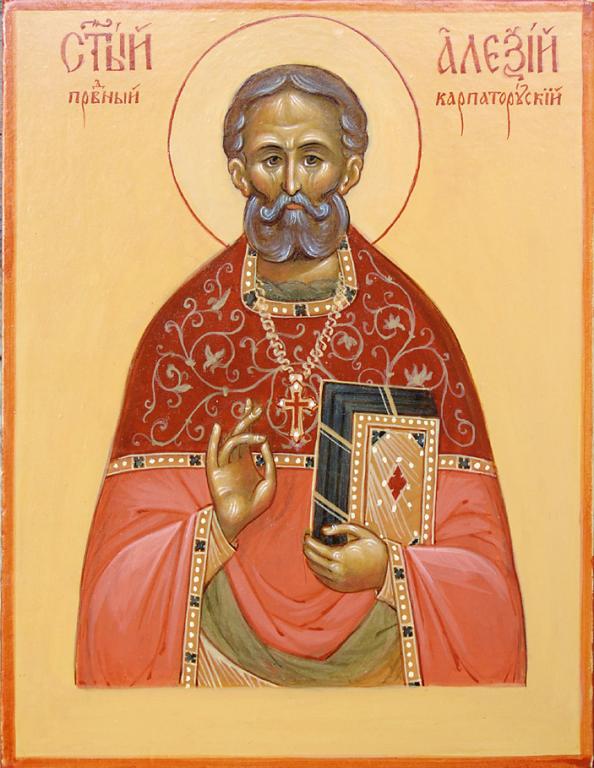
An Icon of Alexis Toth. Public Domain.
Bishop Tobin of Providence is in the news for a recent tweet about the Catholic Church’s stance on female presbyters, abortion, and married priests. Yes, I did just write “married priests” in the same sentence as the other two. This merits attention. In part because it caused a bit of a Twitter debacle; in part, because it reflects something Eastern Catholics know too well: the Latin Church’s penchant for forgetting its non-Roman brethren.
He effectively equates things we know as Catholics to be either intrinsically evil or at minimum undeniably and absolutely vexed with something practiced in the Catholic Church. Not only do Easterners still have married clergy but the West itself has a history of this (more on this below). It should trouble us that, even accidentally, these issues could end up equated, treated as equal threats to a doctrinally-consistent Apostolic Christianity.
Don’t get me wrong: I don’t think Bishop Tobin meant anything offensive by this. I don’t think he’s wholly ignorant of Eastern Catholicism by any stretch. In fact, he has spoken about married clergy before, though with regard to papal comments about the possibility of ordaining married men in the West:
In an interview published Thursday with Germany’s Die Zeit newspaper, Francis stressed that removing the celibacy rule is not the answer to the Catholic Church’s priest shortage. But he expressed an openness to studying whether so-called “viri probati” — or married men of proven faith — could be ordained.
“We must consider if viri probati is a possibility,” he was quoted as saying. “Then we must determine what tasks they can perform, for example, in remote communities.”
The “viri probati” proposal has been around for decades, but it has drawn fresh attention under history’s first Latin American pope thanks in part to his appreciation of the challenges facing the church in places like Brazil, a huge Catholic country with an acute shortage of priests.
“He’s really talking about a very limited concept,” Bishop Tobin said. It probably would not apply here. “I don’t think there’s any place in the U.S. where people are deprived of the sacraments.”
Bishop Tobin also pointed out that the concept of married priests is not new for the Roman Catholic Church, which has allowed married men ordained in Protestant churches to become Catholic priests. (Providence Journal)
Oddly, at the end, he notes allowances for formerly-Protestant clergy, but doesn’t recall the fact that the Western Church once allowed for a married priesthood. Married priests may exist in the West today because of conversion, but its history is substantially more complicated. It’s as if clerical marriage is only imaginable as a sort of very particular concession within incredibly specific parameters—something without a history in the West or current existence in the East.
Byzantine Catholics cannot afford to forget these things, however. It was only in 2014 that Pope Francis “allowed” Eastern Catholics in the U.S. to ordain married men (this was already allowed in most of the rest of the world):
The ability of Eastern-Catholic married clergy to serve in the U.S., Canada and Australia had been suppressed for more than 85 years, since a 1929 Vatican decree called Cum Datum Fuerit.
The 2014 decree signed by Cardinal Sandri related the history of the Eastern-Catholic married priesthood’s suppression, saying it had been granted at the behest of the Latin bishops in North America, who, at that time, believed Eastern married clergy posed a “grave scandal” to their faithful. The Vatican acknowledged that, in North America, as a result of this treatment, “an estimated 200,000 Ruthenian [Eastern-Catholic] faithful became Orthodox.” (The National Catholic Register)
Previous Post

May 15, 2018
Loving Oneself
Next Post
May 22, 2018 What is Catholic Social Teaching?
Browse Our Archives
Select a Category Academia Culture Politics Reviews Theology Uncategorized
Select a Month October 2026 September 2026 August 2026 July 2026 June 2026 May 2026 April 2026 March 2026 February 2026 January 2026 December 2025 November 2025 October 2025 September 2025 August 2025 July 2025 June 2025 May 2025 April 2025 March 2025 February 2025 January 2025 December 2024 November 2024 October 2024 September 2024 August 2024 July 2024 June 2024 May 2024 April 2024 March 2024 February 2024 January 2024 December 2023 November 2023 October 2023 September 2023 August 2023 July 2023 June 2023 May 2023 April 2023 March 2023 February 2023 January 2023 November 2022 October 2022 September 2022 August 2022 July 2022 June 2022 May 2022 April 2022 March 2022 February 2022 July 2021 December 2020 November 2020 July 2020 May 2020 April 2020 February 2020 January 2020 December 2019 November 2019 October 2019 August 2019 July 2019 April 2019 March 2019 December 2018 August 2018 July 2018 June 2018 May 2018 April 2018 March 2018 January 2018 December 2017 November 2017 September 2017 August 2017 July 2017 June 2017 May 2017 April 2017 March 2017 February 2017 January 2017 December 2016 November 2016 October 2016 September 2016 August 2016 July 2016 June 2016 May 2016 April 2016 March 2016 February 2016
Follow Us!
TAKE THE
Religious Wisdom Quiz
What is the small, portable cross worn as a sign of faith and blessing called?
Select your answer to see how you score.
Mitre Tabernacle Crucifix Chalice
Related posts from Jappers and Janglers



The Greatest Christmas Story Ever Told

TRENDING AT PATHEOS Religious Music and Entertainment

The Iron Gates and the Lion of the...
Yesterday, I didn't finish my report about, well, yesterday. So I'll...

Dolly Parton’s Last Song Wins Dove Award with...
Bluegrass band The Grascals, speaking on the red carpet at the 57th...

The Image: On the Horror of Capitalism and...
The Image Then went the Pharisees, and took counsel how they might...

We are approaching the date of our new American national holiday: October...

Letters on Living the Faith by C.S. Lewis
Most of us met C.S. Lewis as a public intellectual. Mere Christianity....

When Halloween Unmasks Married Hearts
Written by Dr. David K. Ewen from Eternal Truth Bible College Behind...
view all Religious Music and Entertainment blogs
Ad-Free & Subscriber Log-In Subscription Support
- About Us
- 2026 Calendar
- Videos
- Podcasts
- Library of World Religions
- Faith In Media Tracker
- Advertise With Us
- Write for Us
- Privacy Policy
- Terms of Service
- Do Not Sell My Data
- Contact Us
- Radiant Digital
- Manage Newsletter Subscriptions
- Unsubscribe From Notifications
- Sitemap
Copyright 2008-2026, Patheos. All rights reserved.
Subscription Support Ad-Free & Subscriber Log-In
Follow Patheos