
BuddhistCatholicContemplativeEvangelicalGeneral ChristianHinduJewishLatter-day SaintMuslimNew VisionsProgressive Christian
Beliefs
- Buddhist
- Catholic
- Contemplative
- Evangelical
- General Christian
- Hindu
- Jewish
- Latter-day Saint
- More Voices
- Muslim
- New Visions
- Pagan
- Progressive Christian
Topics
- Religion News
- Food and Religion
- Sports and Religion
- Religious Art
- Religious Music and Entertainment
- Religious Events
- History and Religion
- Style and Religion
- Politics and Religion
- Women in Religion
- Recreation Outdoors and Religion
- Business Finance and Religion
- Careers Workplace and Religion
- Education and Religion
- Family Parenting and Religion
- Health Fitness and Religion
- Home and Religion
- Relationships and Religion
- Technology and Religion
- Travel and Religion
Columnists
- Buddhist Columnists
- Business Finance and Religion Columnists
- Careers Workplace and Religion Columnists
- Catholic Columnists
- Contemplative Columnists
- Education and Religion Columnists
- Evangelists Columnists
- Family Parenting and Religion Columnists
- General Christian Columnists
- Health Fitness and Religion Columnists
- Hindu Columnists
- History and Religion Columnists
- Home and Religion Columnists
- Jewish Columnists
- More Voices Columnists
- Latter Day Columnists
- Muslim Columnists
- New Visions Columnists
- Nonreligious Columnists
- Pagan Columnists
- Politics and Religion Columnists
- Progressive Columnists
- Recreation Outdoors and Religion Columnists
- Relationships and Religion Columnists
- Religion News Columnists
- Religious Art Columnists
- Religious Events Columnists
- Religious Music and Entertainment Columnists
- Sports and Religion Columnists
- Style and Religion Columnists
- Technology and Religion Columnists
- Travel and Religion Columnists
- Women in Religion Columnists
Resource Library
- 2026 Calendar
- Library of World Religions
- The 100 Most Holy Places on Earth
- Patheos Answers
- Podcasts
- Videos
- Faith Leaders Database
- Anglican Episcopalian
- Bahai
- Baptist
- Buddhism
- Christianity
- Confucianism
- Eastern Orthodoxy
- Hinduism
- Holiness and Pentecostal
- ISKCON
- Islam
- Judaism
- Lutheran
- Methodist
- The Church of Jesus Christ of Latter-day Saints
- New Age
- Paganism
- Presbytarian and Reformed
- Protestantism
- Religion Behind the Scenes
- Roman Catholic
- Scientology
- Shia Islam
- Sikhism
- Sufism
- Sunni Islam
- Taoism
- Zen
- See all religions
Research Tools
 Ad-Free & Subscriber Log-In Subscription Support
Ad-Free & Subscriber Log-In Subscription Support
Follow Patheos 

- Trending:
- Forgiveness
- |
- Marriage
- |
- Consciousness
- |
- Death Penalty
- |
- Election
- |
- Halloween

- Home
- Religious Music and Entertainment
- Christian Anti-Gnosticism
Christian Anti-Gnosticism
Last updated on: May 2, 2018 at 12:28 pm by Chase Padusniak
Christian Anti-Gnosticism 2018-05-02T12:28:16-04:00 Chase Padusniak
Patheos Explore the world's faith through different perspectives on religion and spirituality! Patheos has the views of the prevalent religions and spiritualities of the world.

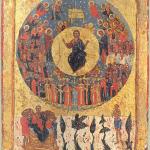
Holy Wisdom (1812). Public Domain.
At this point, “Gnosticism” is as much an accusation as a philosophy, a way anyone might identify him- or herself. Still, if contemporary writers are to be believed, everything from Jordan Peterson’s Jungianism, to New Age spiritualities, to Scientism are forms of a revived Gnosticism; the word does a lot of work. While I have my opinions on these ideas, I’m not terribly interested in how “gnostic” they are. Rather it seems to me (perhaps much like in the early Church) that the term has become a very powerful rhetorical tool. It allows us to categorize something as heresy, or at least as suspicious, from the git-go. That can be useful, but it’s not what I’d like to do here.
Of more interest to me is what we mean by saying that Christianity, in its orthodox version, is anti-Gnostic. What are we supposed to be against? And what does that mean for how we ought to practice the Faith?
Gnosticism, as its use today suggests, can mean a great variety of things; there have been many “gnostic movements.” They are all, however, united by an emphasis on “gnosis,” or a sort of (often secret) knowledge. Here’s a “bishop” of the (contemporary) “Gnostic Church”:
Gnosticism is the teaching based on Gnosis, the knowledge of transcendence arrived at by way of interior, intuitive means. Although Gnosticism thus rests on personal religious experience, it is a mistake to assume all such experience results in Gnostic recognitions. It is nearer the truth to say that Gnosticism expresses a specific religious experience, an experience that does not lend itself to the language of theology or philosophy, but which is instead closely affinitized to, and expresses itself through, the medium of myth. Indeed, one finds that most Gnostic scriptures take the forms of myths. The term “myth” should not here be taken to mean “stories that are not true”, but rather, that the truths embodied in these myths are of a different order from the dogmas of theology or the statements of philosophy. (Stephan A. Hoeller)
This is more-or-less in line with the historical use of the term—both ancient and in older scholarship:
The designation gnosticism is a term of modern scholarship. It was first used by the English poet and philosopher of religion Henry More (1614–87), who applied it to the religious groups referred to in ancient sources as gnostikoi (Greek: “those who have gnosis, or ‘knowledge’ ”). The Greek adjective gnostikos (“leading to knowledge” or “pertaining to knowledge”) was first used by Plato to describe the cognitive or intellectual dimension of learning, as opposed to the practical. By the 2nd century CE, however, the name gnostikoi had been adopted by various Christian groups, some of which used it positively as a self-designation, though others criticized the practice as a presumptuous claim of exclusive access to truth. (Britannica.com)
With these two definitions in mind, it becomes clear that Gnosticism, whatever its other elements (myths, demiurges, hedonism, asceticism, etc.) found its basis in some idea of secret knowledge or learning. Of course, the term is inadequate. We can’t know exactly what all of the various sects we now call “gnostic” believed, but we can say that, as a category of understanding alive for five centuries and rooted in ancient sources, “Gnosticism” might be useful as a study in what orthodox Christians are to avoid.
Previous Post

May 1, 2018
Mary, May, and International Workers' Day
Next Post
May 2, 2018 Merciful God, Wrathful God
Browse Our Archives
Select a Category Academia Culture Politics Reviews Theology Uncategorized
Select a Month October 2026 September 2026 August 2026 July 2026 June 2026 May 2026 April 2026 March 2026 February 2026 January 2026 December 2025 November 2025 October 2025 September 2025 August 2025 July 2025 June 2025 May 2025 April 2025 March 2025 February 2025 January 2025 December 2024 November 2024 October 2024 September 2024 August 2024 July 2024 June 2024 May 2024 April 2024 March 2024 February 2024 January 2024 December 2023 November 2023 October 2023 September 2023 August 2023 July 2023 June 2023 May 2023 April 2023 March 2023 February 2023 January 2023 November 2022 October 2022 September 2022 August 2022 July 2022 June 2022 May 2022 April 2022 March 2022 February 2022 July 2021 December 2020 November 2020 July 2020 May 2020 April 2020 February 2020 January 2020 December 2019 November 2019 October 2019 August 2019 July 2019 April 2019 March 2019 December 2018 August 2018 July 2018 June 2018 May 2018 April 2018 March 2018 January 2018 December 2017 November 2017 September 2017 August 2017 July 2017 June 2017 May 2017 April 2017 March 2017 February 2017 January 2017 December 2016 November 2016 October 2016 September 2016 August 2016 July 2016 June 2016 May 2016 April 2016 March 2016 February 2016
Follow Us!
TAKE THE
Religious Wisdom Quiz
Which parable teaches about praying persistently, like a widow before a judge?
Select your answer to see how you score.
The Sower The Talents The Mustard Seed The Persistent Widow
Related posts from Jappers and Janglers

American Movie: The Beauty of the Chuds



Apostasy, Scandal, and a Road Well-Trod
TRENDING AT PATHEOS Religious Music and Entertainment

Dolly Parton’s Last Song Wins Dove Award with...
Bluegrass band The Grascals, speaking on the red carpet at the 57th...

The Image: On the Horror of Capitalism and...
The Image Then went the Pharisees, and took counsel how they might...

We are approaching the date of our new American national holiday: October...

Letters on Living the Faith by C.S. Lewis
Most of us met C.S. Lewis as a public intellectual. Mere Christianity....

When Halloween Unmasks Married Hearts
Written by Dr. David K. Ewen from Eternal Truth Bible College Behind...

Aristotle. He’s been called the father of logic, the father of the...
view all Religious Music and Entertainment blogs
Ad-Free & Subscriber Log-In Subscription Support
- About Us
- 2026 Calendar
- Videos
- Podcasts
- Library of World Religions
- Faith In Media Tracker
- Advertise With Us
- Write for Us
- Privacy Policy
- Terms of Service
- Do Not Sell My Data
- Contact Us
- Radiant Digital
- Manage Newsletter Subscriptions
- Unsubscribe From Notifications
- Sitemap
Copyright 2008-2026, Patheos. All rights reserved.
Subscription Support Ad-Free & Subscriber Log-In
Follow Patheos