
BuddhistCatholicContemplativeEvangelicalGeneral ChristianHinduJewishLatter-day SaintMuslimNew VisionsProgressive Christian
Beliefs
- Buddhist
- Catholic
- Contemplative
- Evangelical
- General Christian
- Hindu
- Jewish
- Latter-day Saint
- More Voices
- Muslim
- New Visions
- Pagan
- Progressive Christian
Topics
- Religion News
- Food and Religion
- Sports and Religion
- Religious Art
- Religious Music and Entertainment
- Religious Events
- History and Religion
- Style and Religion
- Politics and Religion
- Women in Religion
- Recreation Outdoors and Religion
- Business Finance and Religion
- Careers Workplace and Religion
- Education and Religion
- Family Parenting and Religion
- Health Fitness and Religion
- Home and Religion
- Relationships and Religion
- Technology and Religion
- Travel and Religion
Columnists
- Buddhist Columnists
- Business Finance and Religion Columnists
- Careers Workplace and Religion Columnists
- Catholic Columnists
- Contemplative Columnists
- Education and Religion Columnists
- Evangelists Columnists
- Family Parenting and Religion Columnists
- General Christian Columnists
- Health Fitness and Religion Columnists
- Hindu Columnists
- History and Religion Columnists
- Home and Religion Columnists
- Jewish Columnists
- More Voices Columnists
- Latter Day Columnists
- Muslim Columnists
- New Visions Columnists
- Nonreligious Columnists
- Pagan Columnists
- Politics and Religion Columnists
- Progressive Columnists
- Recreation Outdoors and Religion Columnists
- Relationships and Religion Columnists
- Religion News Columnists
- Religious Art Columnists
- Religious Events Columnists
- Religious Music and Entertainment Columnists
- Sports and Religion Columnists
- Style and Religion Columnists
- Technology and Religion Columnists
- Travel and Religion Columnists
- Women in Religion Columnists
Resource Library
- 2026 Calendar
- Library of World Religions
- The 100 Most Holy Places on Earth
- Patheos Answers
- Podcasts
- Videos
- Faith Leaders Database
- Anglican Episcopalian
- Bahai
- Baptist
- Buddhism
- Christianity
- Confucianism
- Eastern Orthodoxy
- Hinduism
- Holiness and Pentecostal
- ISKCON
- Islam
- Judaism
- Lutheran
- Methodist
- The Church of Jesus Christ of Latter-day Saints
- New Age
- Paganism
- Presbytarian and Reformed
- Protestantism
- Religion Behind the Scenes
- Roman Catholic
- Scientology
- Shia Islam
- Sikhism
- Sufism
- Sunni Islam
- Taoism
- Zen
- See all religions
Research Tools
 Ad-Free & Subscriber Log-In Subscription Support
Ad-Free & Subscriber Log-In Subscription Support
Follow Patheos 

- Trending:
- Forgiveness
- |
- Marriage
- |
- Consciousness
- |
- Death Penalty
- |
- Election
- |
- Halloween

- Home
- Religious Music and Entertainment
- What is Catholic Social Teaching?
What is Catholic Social Teaching?
Last updated on: May 22, 2018 at 1:39 pm by Guest Contributor
What is Catholic Social Teaching? 2018-05-22T13:39:31-04:00 Guest Contributor
Patheos Explore the world's faith through different perspectives on religion and spirituality! Patheos has the views of the prevalent religions and spiritualities of the world.
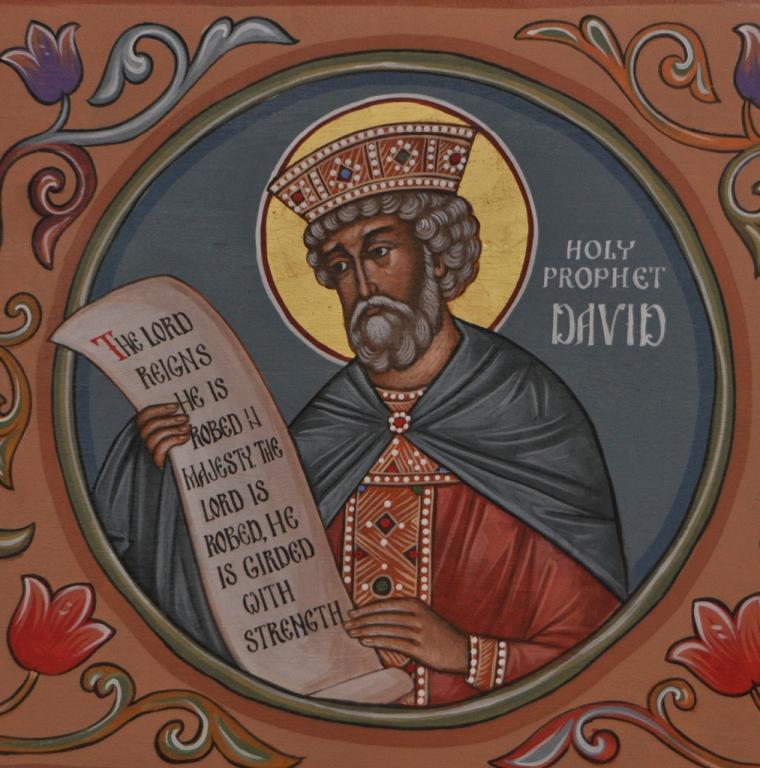
An icon of King David. Flickr.
The following was written by my dear friend, Nathan Smolin, a PhD student in Classics at the University of North Carolina, Chapel Hill.
“I will show to you, O Man, what is good, and what the Lord requires of you: to do justice, and love mercy, and walk humbly with your God.” (Micah 6:8)
“There resides in Us the right and duty to pronounce with supreme authority upon social and economic matters.” -Pope Pius XI, Quadragesimo Anno
This past week, Pope Francis, through the Congregation for the Doctrine of the Faith, released a new document of Catholic Social Teaching: Oeconomicae et pecuniariae quaestiones, “Economic and Monetary Questions.” The document, so far, has garnered very little attention, for a few obvious reasons and a few not so obvious ones. First, and most obviously, is the fact that this is a document about economics—and economics, in our post-modern world, is largely concerned with an immensely complicated financial system run by algorithims, overseen by a small number of technical experts, and having little to do with ordinary people or ordinary life. Then, of course, this is a document written by the Congregation of the Doctrine of the Faith, under the supervision of Pope Francis, rather than by Pope Francis himself, and so it mostly lacks the straightforwardness and address to ordinary life typical of his writings. Both in topic and in manner, then, it is far from popular.
These, then, are the obvious reasons why you may not have heard very much about this document. As for the not-so-obvious ones, first and foremost is the fact that we do not live in a time, after all, when almost anyone actually reads Papal documents as they are released; we live in a time, rather, when Catholics follow, at best, professional lay interpreters of the Church, and, at worst, just CNN. It is the interest, endorsements, or rejection of these people and institutions that are ultimately decisive in the reception of any Papal document. In this case, the treatment of our document by all these experts, and those who listen to them, is largely dictated by the fact that it is a document endorsed by Pope Francis, and about economics, and for both of those reasons something which large numbers of American Catholics have trained themselves to ignore or outright reject simply and as a matter of course.
What makes this document revolutionary, then, is not so much what it adds, but rather what it re-states, yet again, for the hundredth or thousandth or ten thousandth time: that economic affairs are intrinsically ethical, and that each and every economic action, system, institution, and actor must be evaluated and conducted on a moral basis, according to the norm of justice. This particular document authoritatively applies the norms of justice found in Catholic Social Teaching to the contemporary financial system, and in doing so comes up with some decidedly negative judgments of many aspects of that system and the actions of people within it—but none of this should, if we know anything of the history of the Church and the Magisterium, be particularly surprising. It is simply the latest in a long line of similar judgments and applications, by the Holy See, for the past 2000 years.
Many people have made their livings writing and talking about Catholic Social Teaching as a modern phenomenon; and there is a great deal of value in this literature. Still, the popular narrative of Catholic Social Teaching, beginning with Pope Leo XIII’s encyclical Rerum Novarum and continuing through the other Social Encyclicals of the 20th and now 21st century, is in some regards rather deceptive. Many people, including many Catholics, view these encyclicals as radical or innovative acts on the part of the Papacy: the Pope and the Church getting involved in areas they had been previously uninvolved in. Many Catholics, indeed, of whom the most strident, if not always the most eloquent, is John Zmirak, consider Catholic Social Teaching for this reason to be nothing more than a myth, inasmuch as it is nothing more than the Popes’ imprudent attempts to meddle into the essentially prudential and scientific domain of economics, in which they are not experts—let alone authoritative judges—but simply ignorant amateurs like any other.
If we take Catholic Social Teaching in the sense that even some of its modern defenders take it, then these people have a point; if the Popes suddenly, after 1800 years, decided to start discussing economics, then it is not implausible that their intervention in these matters might prove as ill-advised as their famous intervention into astronomy with Galileo.
If we do take this tack, though, then we are rather quickly met with a straightforward reductio ad absurdum; for if this is in truth our position, we will quickly find ourselves entirely unable to understand, let alone interpret, not only the encyclicals and Magisterial acts of the last two centuries, but many other Saints and Doctors and Popes besides. If we take this tack consistently and pervasively and to its logical conclusion, we will be ultimately forced to reject, not just some helpful advice by our “Holy Grandpa,” the Pope, but judgments relating to the very core of our ethical development as persons in society, the very heart of our salvation.
Previous Post
May 16, 2018
Married Priests?
Next Post

May 23, 2018 Religion, Community, Secularity (An Interview)
Browse Our Archives
Select a Category Academia Culture Politics Reviews Theology Uncategorized
Select a Month October 2026 September 2026 August 2026 July 2026 June 2026 May 2026 April 2026 March 2026 February 2026 January 2026 December 2025 November 2025 October 2025 September 2025 August 2025 July 2025 June 2025 May 2025 April 2025 March 2025 February 2025 January 2025 December 2024 November 2024 October 2024 September 2024 August 2024 July 2024 June 2024 May 2024 April 2024 March 2024 February 2024 January 2024 December 2023 November 2023 October 2023 September 2023 August 2023 July 2023 June 2023 May 2023 April 2023 March 2023 February 2023 January 2023 November 2022 October 2022 September 2022 August 2022 July 2022 June 2022 May 2022 April 2022 March 2022 February 2022 July 2021 December 2020 November 2020 July 2020 May 2020 April 2020 February 2020 January 2020 December 2019 November 2019 October 2019 August 2019 July 2019 April 2019 March 2019 December 2018 August 2018 July 2018 June 2018 May 2018 April 2018 March 2018 January 2018 December 2017 November 2017 September 2017 August 2017 July 2017 June 2017 May 2017 April 2017 March 2017 February 2017 January 2017 December 2016 November 2016 October 2016 September 2016 August 2016 July 2016 June 2016 May 2016 April 2016 March 2016 February 2016
Follow Us!
TAKE THE
Religious Wisdom Quiz
Not by might nor by power, but by my Spirit, says the Lord Almighty. What seemingly impossible task will be accomplished?
Select your answer to see how you score.
The Gathering of Israel Completing the temple Rebuilding Jerusalem Defeating Israel's enemies
Related posts from Jappers and Janglers


Apostasy, Scandal, and a Road Well-Trod

500 Days of Paralyzing Anxiety

The Greatest Christmas Story Ever Told
TRENDING AT PATHEOS Religious Music and Entertainment

Methodist Central Hall and Westminster Abbey
Situated on the same square is Methodist Central Hall and Westminster Abbey. ...

57th Dove Awards Honor Dolly Parton, Crown New...
On gospel music’s biggest night, the 57th annual GMA Dove Awards honored...

The First Eucharistic Controversy: Christ’s Real Presence
For Catholics, the Eucharist is the source and summit of the Christian...

What a Stop Sign Can Teach Us About...
How to Make a Decision When You Can't Hear God Main point:...

Archdiocese Hosts Military Marriage Retreat in Germany
RASTATT, Germany — The transient military lifestyle, with its frequent deployments and...

Nearly every morning, I make the drive to Detroit with my high-school-age...
view all Religious Music and Entertainment blogs
Ad-Free & Subscriber Log-In Subscription Support
- About Us
- 2026 Calendar
- Videos
- Podcasts
- Library of World Religions
- Faith In Media Tracker
- Advertise With Us
- Write for Us
- Privacy Policy
- Terms of Service
- Do Not Sell My Data
- Contact Us
- Radiant Digital
- Manage Newsletter Subscriptions
- Unsubscribe From Notifications
- Sitemap
Copyright 2008-2026, Patheos. All rights reserved.
Subscription Support Ad-Free & Subscriber Log-In
Follow Patheos