
BuddhistCatholicContemplativeEvangelicalGeneral ChristianHinduJewishLatter-day SaintMuslimNew VisionsProgressive Christian
Beliefs
- Buddhist
- Catholic
- Contemplative
- Evangelical
- General Christian
- Hindu
- Jewish
- Latter-day Saint
- More Voices
- Muslim
- New Visions
- Pagan
- Progressive Christian
Topics
- Religion News
- Food and Religion
- Sports and Religion
- Religious Art
- Religious Music and Entertainment
- Religious Events
- History and Religion
- Style and Religion
- Politics and Religion
- Women in Religion
- Recreation Outdoors and Religion
- Business Finance and Religion
- Careers Workplace and Religion
- Education and Religion
- Family Parenting and Religion
- Health Fitness and Religion
- Home and Religion
- Relationships and Religion
- Technology and Religion
- Travel and Religion
Columnists
- Buddhist Columnists
- Business Finance and Religion Columnists
- Careers Workplace and Religion Columnists
- Catholic Columnists
- Contemplative Columnists
- Education and Religion Columnists
- Evangelists Columnists
- Family Parenting and Religion Columnists
- General Christian Columnists
- Health Fitness and Religion Columnists
- Hindu Columnists
- History and Religion Columnists
- Home and Religion Columnists
- Jewish Columnists
- More Voices Columnists
- Latter Day Columnists
- Muslim Columnists
- New Visions Columnists
- Nonreligious Columnists
- Pagan Columnists
- Politics and Religion Columnists
- Progressive Columnists
- Recreation Outdoors and Religion Columnists
- Relationships and Religion Columnists
- Religion News Columnists
- Religious Art Columnists
- Religious Events Columnists
- Religious Music and Entertainment Columnists
- Sports and Religion Columnists
- Style and Religion Columnists
- Technology and Religion Columnists
- Travel and Religion Columnists
- Women in Religion Columnists
Resource Library
- 2026 Calendar
- Library of World Religions
- The 100 Most Holy Places on Earth
- Patheos Answers
- Podcasts
- Videos
- Faith Leaders Database
- Anglican Episcopalian
- Bahai
- Baptist
- Buddhism
- Christianity
- Confucianism
- Eastern Orthodoxy
- Hinduism
- Holiness and Pentecostal
- ISKCON
- Islam
- Judaism
- Lutheran
- Methodist
- The Church of Jesus Christ of Latter-day Saints
- New Age
- Paganism
- Presbytarian and Reformed
- Protestantism
- Religion Behind the Scenes
- Roman Catholic
- Scientology
- Shia Islam
- Sikhism
- Sufism
- Sunni Islam
- Taoism
- Zen
- See all religions
Research Tools
 Ad-Free & Subscriber Log-In Subscription Support
Ad-Free & Subscriber Log-In Subscription Support
Follow Patheos 

- Trending:
- Forgiveness
- |
- Marriage
- |
- Consciousness
- |
- Death Penalty
- |
- Election
- |
- Halloween

- Home
- Religious Music and Entertainment
- The Nothingness of Lent
The Nothingness of Lent
Last updated on: February 28, 2017 at 12:20 am by Chase Padusniak
The Nothingness of Lent 2017-02-28T00:20:12-04:00 Chase Padusniak
Patheos Explore the world's faith through different perspectives on religion and spirituality! Patheos has the views of the prevalent religions and spiritualities of the world.

Image from page 482 of Readings and reflections for the Holy Hour; the manifestations of the Divine Presence (1917) by Frederick Albert Reuter. Source: Flickr, no known copyrights.
Lent, East and West, begins with a supposition: we are broken beings in need of forgiveness. Whether it’s the eponymous ashes of the coming Wednesday or the forsaking of meat, dairy, and everything else worth eating practiced by others, the Lenten Season is intended to enjoin repentance among us. And repentance presupposes a need for forgiveness, for healing; in a word, it presupposes brokenness.
And what does Lent work toward? The Cross and the Resurrection, the brutal beating of a first-century Jew, an execution, and the miracle of redemption—a movement from brokenness to wholeness.
Let us pause on the Cross. Christ was incarnate; His taking on of the lowly human condition relates to His death for our sins. His humbling is our forgiveness; His suffering travels alongside our own. What’s more, it sets an example: humility, lowliness, endurance in the face of misunderstanding and pain: these are our lot.
We are to reduce ourselves, our desires, to nothingness, so that we might become like Him; our humbling becomes our exaltation, our smallness and lack, His plenitude in us. Thus St. Athanasius:
Thus it happened that two opposite marvels took place at once: the death of all was consummated in the Lord’s body; yet, because the Word was in it, death and corruption were in the same act utterly abolished.
We approach nothingness so that God might become our everything, so that He might trample death within us and for us. And yet, there is more.
On a certain understanding, our nothingness makes us most like God, who is, at the highest level, beyond conceptualization (goodness beyond goodness, being beyond being; our concepts can grasp at Him, but not fully define Him). Meister Eckhart speaks of this “beyond” as divine nothingness, this desire to be as God (in a positive sense), as the goal of asceticism and of prayer. For him, God is “Nothing” precisely insofar as His truth, while we can approach it, is higher than all “somethings.” We become nothing so as to be like this nothingness. Angelus Silesius sums the matter up well:
God is an utter Nothingness,
Beyond the touch of Time and Place:
The more thou graspest after Him,
The more he fleeth thy embrace.
Lent is thus a call to nothingness, to humiliate ourselves before God so that He might fill us. The whole season is ascetic practice for the work of letting God in, emulating His lowliness so that His will might overtake us, change us, transform us in His holiness. His healing of humanity in the Incarnation, Crucifixion, and Resurrection, is thus reenacted in our own lives. Our wholeness is most truly our nothingness. Again, Silesius calls out to us:
Christ was born a man for me,
for me he died—
Unless I become God
through Him,
His birth is mocked
His death denied.
Let us accept humiliation this Lent; let us become nothing to ourselves, and thereby be as the God who is beyond all things:
Even before I was me, I was God in God;
And I can be once again, as soon as I am dead to myself.
Previous Post

February 26, 2017
Being Forgiven
Next Post
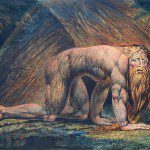
March 1, 2017 Pray at Your Own Peril
Browse Our Archives
Select a Category Academia Culture Politics Reviews Theology Uncategorized
Select a Month October 2026 September 2026 August 2026 July 2026 June 2026 May 2026 April 2026 March 2026 February 2026 January 2026 December 2025 November 2025 October 2025 September 2025 August 2025 July 2025 June 2025 May 2025 April 2025 March 2025 February 2025 January 2025 December 2024 November 2024 October 2024 September 2024 August 2024 July 2024 June 2024 May 2024 April 2024 March 2024 February 2024 January 2024 December 2023 November 2023 October 2023 September 2023 August 2023 July 2023 June 2023 May 2023 April 2023 March 2023 February 2023 January 2023 November 2022 October 2022 September 2022 August 2022 July 2022 June 2022 May 2022 April 2022 March 2022 February 2022 July 2021 December 2020 November 2020 July 2020 May 2020 April 2020 February 2020 January 2020 December 2019 November 2019 October 2019 August 2019 July 2019 April 2019 March 2019 December 2018 August 2018 July 2018 June 2018 May 2018 April 2018 March 2018 January 2018 December 2017 November 2017 September 2017 August 2017 July 2017 June 2017 May 2017 April 2017 March 2017 February 2017 January 2017 December 2016 November 2016 October 2016 September 2016 August 2016 July 2016 June 2016 May 2016 April 2016 March 2016 February 2016
Follow Us!
TAKE THE
Religious Wisdom Quiz
According to 1 John, if we claim to be without sin, what do we do?
Select your answer to see how you score.
Deceive ourselves and the truth is not in us Blaspheme the Holy Spirit Lie to God Mock the sacrifice of Christ
Related posts from Jappers and Janglers

American Movie: The Beauty of the Chuds

Which is the Original Bible? Is it the...

Who Founded the Catholic Church?
TRENDING AT PATHEOS Religious Music and Entertainment

The Brazilian Remake of Kendricks' 'Flywheel' Opens in...
“Flywheel,” the story that launched the Kendrick Brothers’ filmmaking career is getting...

The Dangers of Gradual Accommodation (Winking at Sin)
Recently, the “law of gradualness” resurfaced during the opening of a weeklong,...

The Iron Gates and the Lion of the...
Yesterday, I didn't finish my report about, well, yesterday. So I'll...

Dolly Parton’s Last Song Wins Dove Award with...
Bluegrass band The Grascals, speaking on the red carpet at the 57th...

The Image: On the Horror of Capitalism and...
The Image Then went the Pharisees, and took counsel how they might...

We are approaching the date of our new American national holiday: October...
view all Religious Music and Entertainment blogs
Ad-Free & Subscriber Log-In Subscription Support
- About Us
- 2026 Calendar
- Videos
- Podcasts
- Library of World Religions
- Faith In Media Tracker
- Advertise With Us
- Write for Us
- Privacy Policy
- Terms of Service
- Do Not Sell My Data
- Contact Us
- Radiant Digital
- Manage Newsletter Subscriptions
- Unsubscribe From Notifications
- Sitemap
Copyright 2008-2026, Patheos. All rights reserved.
Subscription Support Ad-Free & Subscriber Log-In
Follow Patheos