
BuddhistCatholicContemplativeEvangelicalGeneral ChristianHinduJewishLatter-day SaintMuslimNew VisionsProgressive Christian
Beliefs
- Buddhist
- Catholic
- Contemplative
- Evangelical
- General Christian
- Hindu
- Jewish
- Latter-day Saint
- More Voices
- Muslim
- New Visions
- Pagan
- Progressive Christian
Topics
- Religion News
- Food and Religion
- Sports and Religion
- Religious Art
- Religious Music and Entertainment
- Religious Events
- History and Religion
- Style and Religion
- Politics and Religion
- Women in Religion
- Recreation Outdoors and Religion
- Business Finance and Religion
- Careers Workplace and Religion
- Education and Religion
- Family Parenting and Religion
- Health Fitness and Religion
- Home and Religion
- Relationships and Religion
- Technology and Religion
- Travel and Religion
Columnists
- Buddhist Columnists
- Business Finance and Religion Columnists
- Careers Workplace and Religion Columnists
- Catholic Columnists
- Contemplative Columnists
- Education and Religion Columnists
- Evangelists Columnists
- Family Parenting and Religion Columnists
- General Christian Columnists
- Health Fitness and Religion Columnists
- Hindu Columnists
- History and Religion Columnists
- Home and Religion Columnists
- Jewish Columnists
- More Voices Columnists
- Latter Day Columnists
- Muslim Columnists
- New Visions Columnists
- Nonreligious Columnists
- Pagan Columnists
- Politics and Religion Columnists
- Progressive Columnists
- Recreation Outdoors and Religion Columnists
- Relationships and Religion Columnists
- Religion News Columnists
- Religious Art Columnists
- Religious Events Columnists
- Religious Music and Entertainment Columnists
- Sports and Religion Columnists
- Style and Religion Columnists
- Technology and Religion Columnists
- Travel and Religion Columnists
- Women in Religion Columnists
Resource Library
- 2026 Calendar
- Library of World Religions
- The 100 Most Holy Places on Earth
- Patheos Answers
- Podcasts
- Videos
- Faith Leaders Database
- Anglican Episcopalian
- Bahai
- Baptist
- Buddhism
- Christianity
- Confucianism
- Eastern Orthodoxy
- Hinduism
- Holiness and Pentecostal
- ISKCON
- Islam
- Judaism
- Lutheran
- Methodist
- The Church of Jesus Christ of Latter-day Saints
- New Age
- Paganism
- Presbytarian and Reformed
- Protestantism
- Religion Behind the Scenes
- Roman Catholic
- Scientology
- Shia Islam
- Sikhism
- Sufism
- Sunni Islam
- Taoism
- Zen
- See all religions
Research Tools
 Ad-Free & Subscriber Log-In Subscription Support
Ad-Free & Subscriber Log-In Subscription Support
Follow Patheos 

- Trending:
- Forgiveness
- |
- Marriage
- |
- Consciousness
- |
- Death Penalty
- |
- Election
- |
- Halloween

- Home
- Religious Music and Entertainment
- Why 2017 Will (Probably) Be Worse
Why 2017 Will (Probably) Be Worse
Last updated on: December 27, 2016 at 7:58 pm by Chase Padusniak
Why 2017 Will (Probably) Be Worse 2016-12-27T19:58:55-04:00 Chase Padusniak
Patheos Explore the world's faith through different perspectives on religion and spirituality! Patheos has the views of the prevalent religions and spiritualities of the world.
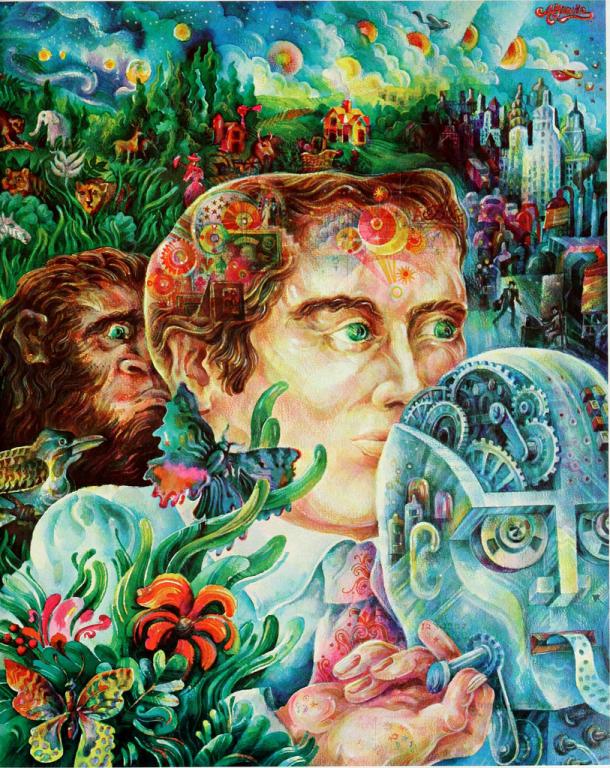
(An image from page 374 of “Bell Telephone Magazine,” 1922. Source: Flickr, Labelled for Reuse).
I’ve been pushing a line on 2016. Last week I wrote about the nasty blend of internet cynicism, real-world nihilism, and rampant desire for structures of meaning that has made 2016 so utterly terrible. There, however, I did not attend to something with enough precision: the internet. Its role should not be underestimated.
What if 2016 is merely the logical conclusion of the cultural influences our increased digital connection has made possible? What if the internet is not just a neutral medium for communication, but itself a complex, morally-loaded instrument with social implications, a thing that cannot be divorced from our economic and cultural moment? It is, perhaps, like George Grant said of artistic media in his own time:
Entertainment is used to keep people happy by identifying life as it is with life as it ought to be. Art in a commercial society is used to enfold us in the acceptance of what we are, not as the instrument of a truth beyond us. (Philosophy in the Mass Age)
And yet, it is not. What we can gather from Grant here is that artistic media are not neutral, but the internet, it is clear, does not exist to enfold us in the way life ought to be. This is no longer the idyllic world of Leave it to Beaver, in which televisions stream to American families how they ought to live.
Rather, the internet works dialectically: companies use it to see what we search for and then outfit our screens with ads reflecting those interests. It’s happening around the borders of this blog post right now. It’s not hard, then, to imagine how radicalization and “fake news” happen. Greater connectivity does not mean listening to more voices; it means a lot of the same ones, and often the over-privileging of our own (as I’ve explored here).
The question remains, though: why do we seek out echo chambers? The answer, alas, also has to do with the internet, specifically the ways in which rooted cultures have been dug up in the past decades. The ability to go online, be distracted, even communicate with someone a world away takes away the need for (already at this point in history highly-eroded) communal bonds. And those local bonds that still do matter (say, to teenagers in high school) are now mediated by popularity contests online—Instagram and Twitter follows, Facebook likes, etc. Those who fail there can always retreat into the internet for a sense of community: Reddit, 4Chan, World of Warcraft (a game on which I spent a lot of time as a kid). In short: we like what we like (or have been conditioned to like) and no longer are forced to confront the other; it’s easier than ever to smother ourselves with our own passions.
Add in the newfound possibility of constant anonymity, our deeply disenchanted cultural moment (itself helped along by the globalization behind the internet), and the breakdown of structures of meaning all around us (we’re turning into Nietzschean Last Men, day by day), and you have a recipe for a cynical hellhole of a year—the necessary outcome of all the contingencies that form digital experience.
Why would we expect 2017 to be any different? What lessons can we say we’ve learned? I am not one for prognostication, but, I must admit, the internal logic of digital culture does not offer a glowing forecast.
Previous Post

December 26, 2016
The Big Tent and the Catholic Church
Next Post

December 28, 2016 Self-Interest: A Bogeyman
Browse Our Archives
Select a Category Academia Culture Politics Reviews Theology Uncategorized
Select a Month October 2026 September 2026 August 2026 July 2026 June 2026 May 2026 April 2026 March 2026 February 2026 January 2026 December 2025 November 2025 October 2025 September 2025 August 2025 July 2025 June 2025 May 2025 April 2025 March 2025 February 2025 January 2025 December 2024 November 2024 October 2024 September 2024 August 2024 July 2024 June 2024 May 2024 April 2024 March 2024 February 2024 January 2024 December 2023 November 2023 October 2023 September 2023 August 2023 July 2023 June 2023 May 2023 April 2023 March 2023 February 2023 January 2023 November 2022 October 2022 September 2022 August 2022 July 2022 June 2022 May 2022 April 2022 March 2022 February 2022 July 2021 December 2020 November 2020 July 2020 May 2020 April 2020 February 2020 January 2020 December 2019 November 2019 October 2019 August 2019 July 2019 April 2019 March 2019 December 2018 August 2018 July 2018 June 2018 May 2018 April 2018 March 2018 January 2018 December 2017 November 2017 September 2017 August 2017 July 2017 June 2017 May 2017 April 2017 March 2017 February 2017 January 2017 December 2016 November 2016 October 2016 September 2016 August 2016 July 2016 June 2016 May 2016 April 2016 March 2016 February 2016
Follow Us!
TAKE THE
Religious Wisdom Quiz
This Gospel alone records seven 'I am' statements from Jesus. Which of these is NOT one of them: the bread of life, the good shepherd, the way and the truth and the life, or the Alpha and Omega?
Select your answer to see how you score.
The bread of life The good shepherd The Alpha and Omega The way and the truth and the life
Related posts from Jappers and Janglers



The Big Circus at Mummy Mountain
TRENDING AT PATHEOS Religious Music and Entertainment

The Real AI Story Is Adoption Without Trust
Artificial intelligence has crossed a political threshold. It is no longer a...

A new article, written by Jeff Lindsay and Gale L. Pooley,...

Swimfan: Forgotten Aughts Pleasures
This is a recovery effort. In 2002, My Big Fat Greek Wedding...

Top Three Anti-Catholic Lies About Catholicism
This is my initial transcript for the video, "THE 3 WORST...

Pope Leo Celebrates Mass for Nurses & Docs...
I don't have any idea how he did it, but Pope Leo...

The Sermon on the Mount, Part I: Matthew...
The Sermon on the Mount, Part I (Matthew 4:12-5:12) St. Matthew moves...
view all Religious Music and Entertainment blogs
Ad-Free & Subscriber Log-In Subscription Support
- About Us
- 2026 Calendar
- Videos
- Podcasts
- Library of World Religions
- Faith In Media Tracker
- Advertise With Us
- Write for Us
- Privacy Policy
- Terms of Service
- Do Not Sell My Data
- Contact Us
- Radiant Digital
- Manage Newsletter Subscriptions
- Unsubscribe From Notifications
- Sitemap
Copyright 2008-2026, Patheos. All rights reserved.
Subscription Support Ad-Free & Subscriber Log-In
Follow Patheos