
BuddhistCatholicContemplativeEvangelicalGeneral ChristianHinduJewishLatter-day SaintMuslimNew VisionsProgressive Christian
Beliefs
- Buddhist
- Catholic
- Contemplative
- Evangelical
- General Christian
- Hindu
- Jewish
- Latter-day Saint
- More Voices
- Muslim
- New Visions
- Pagan
- Progressive Christian
Topics
- Religion News
- Food and Religion
- Sports and Religion
- Religious Art
- Religious Music and Entertainment
- Religious Events
- History and Religion
- Style and Religion
- Politics and Religion
- Women in Religion
- Recreation Outdoors and Religion
- Business Finance and Religion
- Careers Workplace and Religion
- Education and Religion
- Family Parenting and Religion
- Health Fitness and Religion
- Home and Religion
- Relationships and Religion
- Technology and Religion
- Travel and Religion
Columnists
- Buddhist Columnists
- Business Finance and Religion Columnists
- Careers Workplace and Religion Columnists
- Catholic Columnists
- Contemplative Columnists
- Education and Religion Columnists
- Evangelists Columnists
- Family Parenting and Religion Columnists
- General Christian Columnists
- Health Fitness and Religion Columnists
- Hindu Columnists
- History and Religion Columnists
- Home and Religion Columnists
- Jewish Columnists
- More Voices Columnists
- Latter Day Columnists
- Muslim Columnists
- New Visions Columnists
- Nonreligious Columnists
- Pagan Columnists
- Politics and Religion Columnists
- Progressive Columnists
- Recreation Outdoors and Religion Columnists
- Relationships and Religion Columnists
- Religion News Columnists
- Religious Art Columnists
- Religious Events Columnists
- Religious Music and Entertainment Columnists
- Sports and Religion Columnists
- Style and Religion Columnists
- Technology and Religion Columnists
- Travel and Religion Columnists
- Women in Religion Columnists
Resource Library
- 2026 Calendar
- Library of World Religions
- The 100 Most Holy Places on Earth
- Patheos Answers
- Podcasts
- Videos
- Faith Leaders Database
- Anglican Episcopalian
- Bahai
- Baptist
- Buddhism
- Christianity
- Confucianism
- Eastern Orthodoxy
- Hinduism
- Holiness and Pentecostal
- ISKCON
- Islam
- Judaism
- Lutheran
- Methodist
- The Church of Jesus Christ of Latter-day Saints
- New Age
- Paganism
- Presbytarian and Reformed
- Protestantism
- Religion Behind the Scenes
- Roman Catholic
- Scientology
- Shia Islam
- Sikhism
- Sufism
- Sunni Islam
- Taoism
- Zen
- See all religions
Research Tools
 Ad-Free & Subscriber Log-In Subscription Support
Ad-Free & Subscriber Log-In Subscription Support
Follow Patheos 

- Trending:
- Forgiveness
- |
- Marriage
- |
- Consciousness
- |
- Death Penalty
- |
- Election
- |
- Halloween

- Home
- Religious Music and Entertainment
- Confused Catholic Ramblings on Brexit
Confused Catholic Ramblings on Brexit
Last updated on: June 28, 2016 at 8:30 am by Chase Padusniak
Confused Catholic Ramblings on Brexit 2016-06-28T08:30:12-04:00 Chase Padusniak
Patheos Explore the world's faith through different perspectives on religion and spirituality! Patheos has the views of the prevalent religions and spiritualities of the world.
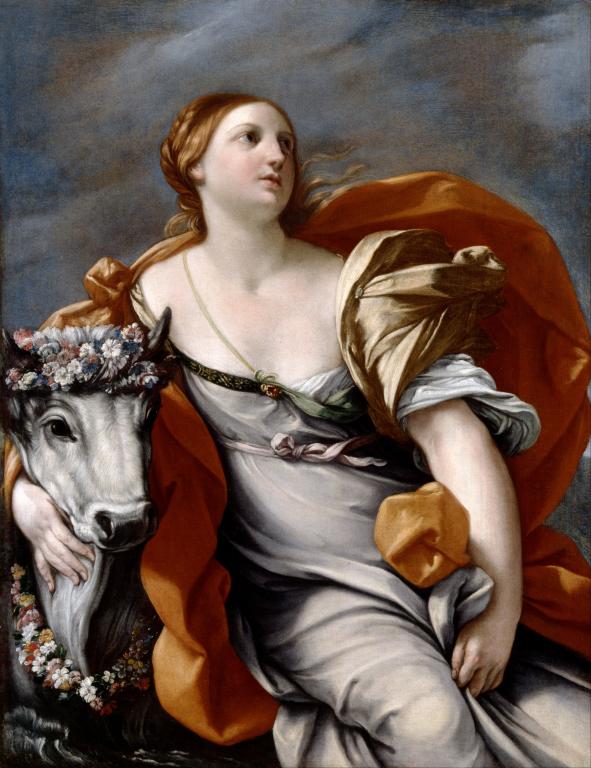
(“Europa and the Bull” by Guido Reni, c. 1640. Source: Wikimedia, Creative Commons License).
The dust is beginning to clear (before the next great explosions of cultural and political competition take place). For a time, I have felt the need to keep silent on the question of Brexit. Forces on the Left and Right left me in a state of paralysis—xenophobia, neoliberalism, secularism, migrant and refugee status, and every other foible of contemporary European politics. What to think?
In what follows, I don’t pretend to offer an answer; the reader ought to know that going in. If anything, the clear-headed decisiveness evinced by so many is what this post is about—we have no idea what’s going to happen, and worse, our pretending such is the case further fractures us, both as Catholics and as informed (or so we think) human beings. Many a laudable attempt has been put forth here at Patheos Catholic (examples here, here, and here), but it is my hope that this one will strike a slightly different chord—less an argument and more an exploration of the most important concerns facing us in the tumultuous and unclear days ahead.
Let’s begin.
I am tired of hearing about sovereignty, independence, and democracy—those buzzwords ringing in the heads of the Leave camp. Catholicism is a tough religion; it demands the impossible (hence that old, oft-heard, little-understood verse about doing all things in Christ). And, contrary to our human instincts, that means standing up just as much—if not more—for the broken, the homeless, and the migrant far ahead of anything like national or ethnic sentiment. Or have we forgotten this?
And he said, “Amen, I say to you, no prophet is accepted in his own native place. Indeed, I tell you, there were many widows in Israel in the days of Elijah when the sky was closed for three and a half years and a severe famine spread over the entire land. It was to none of these that Elijah was sent, but only to a widow in Zarephath in the land of Sidon. Again, there were many lepers in Israel during the time of Elisha the prophet; yet not one of them was cleansed, but only Naaman the Syrian.” (Luke 4:24-27)
In other words, if your desire for sovereignty is a mask (even if only incidentally!) for the mistreatment of God’s chosen—the lowly and broken—your argument fails to fulfill the necessary insanity of Christian logic. There is no Brit, Pole, American, or Syrian in Christ.
No one ever said faith was easy.
On the other hand, I cannot believe that every single Leave voter is a xenophobe, and to listen to the media, one would certainly be inclined to think that this is the case. In a recent interview in Jacobin, Neil Davidson makes just this point:
Finally, it is not the case that everyone who supports Leave is a paid-up racist xenophobe who wants to stop migration. If Remain campaigners really believe that a potential majority of the British working class fall into this category then despair would be the only appropriate response, but they do not, and writing off entire communities off in this way is simply patronizing.
I’m from the northeast of Scotland, where the fishing industry has been devastated by the Common Fisheries Policy. Now, there are certainly valid environmental concerns about overfishing, but to establish a limit with no attempt to find alternative employment for the workers in that industry was always going to be catastrophic for the area, and the people who object to it have a perfectly good case against the EU which has nothing to do with migration.
This man is an avowed socialist, not an apologist for hatred of migrants. And yet, listen!
Most important here is his comment about the woeful lack of faith this position demonstrates in that old bogeyman—the working class (you know, the salt of the earth!). Undoubtedly, unsavory elements in Britain are stoking the flames of resentment; undoubtedly, there is no room for such sentiment among Christians. But the flip side is also true—there is no room in our faith for patronizing the simple folk, whose wisdom often far exceeds that of their “betters.” Do we do them justice by talking down to them, assuming they are merely filled with hate, and not engaging in the difficult work of listening, and then the more difficult work of argument?
Again, have we forgotten?
Consider your own calling, brothers. Not many of you were wise by human standards, not many were powerful, not many were of noble birth. Rather, God chose the foolish of the world to shame the wise, and God chose the weak of the world to shame the strong, and God chose the lowly and despised of the world, those who count for nothing, to reduce to nothing those who are something, so that no human being might boast before God. (1 Corinthians 1:26-29)
These aforementioned issues have dominated media coverage. They are, to some extent, important, but for me, as a Catholic, the following ought to animate the discussion: economic exploitation, migrant and refugee concerns, and the future of religion.
On the first question, I am unabashed admirer of Dorothy Day, of those who have stood in voluntary poverty, open hospitality, and great personal discomfort in the name of God’s least, especially in opposing the unjust systems implemented to exploit His children. That statement speaks for itself, as does the EU’s history—from its actions in Greece and Portugal, to its continued militarization.
In an independent Britain, that future is less clear. People are right to be concerned about UKIP and the possibility of more radical moves against God’s beloved. At the same time, it is easier to imagine Britain’s reforming itself internally than it is to envision the EU experiencing some sort of structural and political resurrection. Again, Neil Davidson’s words are helpful:
However, in spite of these problems, I don’t think that socialists — and certainly revolutionaries — have any choice but to argue for Leave. It is different if you genuinely believe that the EU is essentially a beneficial institution, but if you don’t, then you have to tell the truth about it, what it is for and what it does.
Saying “we know the EU is terrible but this isn’t a good time to leave” is simply setting a trap for yourself.
What happens if Corbyn’s Labour Party wins the next election and then finds that its path to reform is blocked by the EU — do you at that point say, “Er…sorry we didn’t mention this before, but the EU is actually a regime for imposing neoliberal austerity which we should maybe think about leaving”? Why would anyone listen to you then?
Whether you agree with his politics or not, the point is clear enough—the EU provides limited hope for meaningful changes in policy, a non-EU Britain might provide more.
As for the question of migrants, the EU has had a complicated response. Problems galore have arisen (examples here, here, and here). Clearly the future is uncertain. Considering declining birth rates, some seem to see migrants as God’s gift to Europe—assimilate them, turn them into virtually secular last men, and watch the presses continue to print the Euro. And what would that change? It’s patronizing to migrants and a dilution of the radical call of Christian discipleship. We are God’s children called beyond this world, not petty bureaucrats and conspicuous consumers!
But then there’s the clear xenophobia that has arisen in the wake of such movement of peoples. The future of all of this in a post-EU Britain is uncertain.
For my part, I prefer to question the policies, plans, and ideas that have made possible the rise of terrorism—both those active in the West and the Middle East. At any rate, we will only solve the problem by examining its roots, not merely pointing fingers at the disaffected people of East Anglia.
But, then again, I have been quite clear that my goal here is not to provide unwavering answers.
Religion. Religion is not something at home in the EU. This is not the EU’s fault; rather, the EU is an outgrowth of a secular Europe. I don’t see a future for Europe outside of renewed religious sentiment, a passion so sorely misdirected in the age of mass media. The continent must determine how to reclaim its religiosity without succumbing to that old and dangerous conflation of the ethnic and the religious. The rhetoric of “European community” is otherwise hollow.
A bit of reading about Alexandre Kojève is helpful on this point (more here and a primary source here). Again, there are no easy solutions; I merely hope to emphasize how important the connection between the secular and the European has become. A Brexit does not solve this. Lord knows most Leave-voting Britons are not incredibly devout country parsons. But the problem of religion looms large over Europe, especially for those of us who are Catholic (more interesting material here).
Well, that’s that. As I said, I promise no answers, nor solutions. My hope, rather, has been to refocus the question, to clear away some of the detritus of media coverage and to hone in on what should actually be concerning us about this oh-so uncertain future. Many have spoken—in my opinion too quickly—and in the process have left unappreciated the immensity and complexity of the problem.
No one has the answer. Kyrie Eleison.
Previous Post

June 18, 2016
Knowing v. Living the Faith: More Thoughts from Thomas Merton
Next Post

July 3, 2016 On Prayer: Thoughts from Simone Weil
Browse Our Archives
Select a Category Academia Culture Politics Reviews Theology Uncategorized
Select a Month October 2026 September 2026 August 2026 July 2026 June 2026 May 2026 April 2026 March 2026 February 2026 January 2026 December 2025 November 2025 October 2025 September 2025 August 2025 July 2025 June 2025 May 2025 April 2025 March 2025 February 2025 January 2025 December 2024 November 2024 October 2024 September 2024 August 2024 July 2024 June 2024 May 2024 April 2024 March 2024 February 2024 January 2024 December 2023 November 2023 October 2023 September 2023 August 2023 July 2023 June 2023 May 2023 April 2023 March 2023 February 2023 January 2023 November 2022 October 2022 September 2022 August 2022 July 2022 June 2022 May 2022 April 2022 March 2022 February 2022 July 2021 December 2020 November 2020 July 2020 May 2020 April 2020 February 2020 January 2020 December 2019 November 2019 October 2019 August 2019 July 2019 April 2019 March 2019 December 2018 August 2018 July 2018 June 2018 May 2018 April 2018 March 2018 January 2018 December 2017 November 2017 September 2017 August 2017 July 2017 June 2017 May 2017 April 2017 March 2017 February 2017 January 2017 December 2016 November 2016 October 2016 September 2016 August 2016 July 2016 June 2016 May 2016 April 2016 March 2016 February 2016
Follow Us!
TAKE THE
Religious Wisdom Quiz
Why was Moses placed in a basket in the Nile?
Select your answer to see how you score.
As part of a religious ritual To save him from Pharaoh’s decree To send him to another land To hide him from Egyptian soldiers
Related posts from Jappers and Janglers

Apostasy, Scandal, and a Road Well-Trod

Liberalism, or Rule by Technicality
TRENDING AT PATHEOS Religious Music and Entertainment

The Problem with False Prophets
Miller’s Station UMC| 10/18/26| Anchor Verse: Jeremiah 23: 1, 9-23 I...

Emotion in Early Christianity by Andrew Crislip
Andrew Crislip’s Emotion in Early Christianity examines an often overlooked dimension of...

16 Spiritual Touchstones for a More Grounded Life
After decades of spiritual study, here are 16 principles I try...

Catholic Evangelization: Sharing Your Faith Every Day
Welcome back to the Graceful Awakening mini-series called, “From Faith to Mission.” ...

The Pillar of the Boatmen: the Ancient Monument...
The Pillar of the Boatmen is a Romano-Gaulish sculpture that dates from...

In one sense walking into Westminster Abbey is like walking down the...
view all Religious Music and Entertainment blogs
Ad-Free & Subscriber Log-In Subscription Support
- About Us
- 2026 Calendar
- Videos
- Podcasts
- Library of World Religions
- Faith In Media Tracker
- Advertise With Us
- Write for Us
- Privacy Policy
- Terms of Service
- Do Not Sell My Data
- Contact Us
- Radiant Digital
- Manage Newsletter Subscriptions
- Unsubscribe From Notifications
- Sitemap
Copyright 2008-2026, Patheos. All rights reserved.
Subscription Support Ad-Free & Subscriber Log-In
Follow Patheos