
BuddhistCatholicContemplativeEvangelicalGeneral ChristianHinduJewishLatter-day SaintMuslimNew VisionsProgressive Christian
Beliefs
- Buddhist
- Catholic
- Contemplative
- Evangelical
- General Christian
- Hindu
- Jewish
- Latter-day Saint
- More Voices
- Muslim
- New Visions
- Pagan
- Progressive Christian
Topics
- Religion News
- Food and Religion
- Sports and Religion
- Religious Art
- Religious Music and Entertainment
- Religious Events
- History and Religion
- Style and Religion
- Politics and Religion
- Women in Religion
- Recreation Outdoors and Religion
- Business Finance and Religion
- Careers Workplace and Religion
- Education and Religion
- Family Parenting and Religion
- Health Fitness and Religion
- Home and Religion
- Relationships and Religion
- Technology and Religion
- Travel and Religion
Columnists
- Buddhist Columnists
- Business Finance and Religion Columnists
- Careers Workplace and Religion Columnists
- Catholic Columnists
- Contemplative Columnists
- Education and Religion Columnists
- Evangelists Columnists
- Family Parenting and Religion Columnists
- General Christian Columnists
- Health Fitness and Religion Columnists
- Hindu Columnists
- History and Religion Columnists
- Home and Religion Columnists
- Jewish Columnists
- More Voices Columnists
- Latter Day Columnists
- Muslim Columnists
- New Visions Columnists
- Nonreligious Columnists
- Pagan Columnists
- Politics and Religion Columnists
- Progressive Columnists
- Recreation Outdoors and Religion Columnists
- Relationships and Religion Columnists
- Religion News Columnists
- Religious Art Columnists
- Religious Events Columnists
- Religious Music and Entertainment Columnists
- Sports and Religion Columnists
- Style and Religion Columnists
- Technology and Religion Columnists
- Travel and Religion Columnists
- Women in Religion Columnists
Resource Library
- 2026 Calendar
- Library of World Religions
- The 100 Most Holy Places on Earth
- Patheos Answers
- Podcasts
- Videos
- Faith Leaders Database
- Anglican Episcopalian
- Bahai
- Baptist
- Buddhism
- Christianity
- Confucianism
- Eastern Orthodoxy
- Hinduism
- Holiness and Pentecostal
- ISKCON
- Islam
- Judaism
- Lutheran
- Methodist
- The Church of Jesus Christ of Latter-day Saints
- New Age
- Paganism
- Presbytarian and Reformed
- Protestantism
- Religion Behind the Scenes
- Roman Catholic
- Scientology
- Shia Islam
- Sikhism
- Sufism
- Sunni Islam
- Taoism
- Zen
- See all religions
Research Tools
 Ad-Free & Subscriber Log-In Subscription Support
Ad-Free & Subscriber Log-In Subscription Support
Follow Patheos 

- Trending:
- Forgiveness
- |
- Marriage
- |
- Consciousness
- |
- Death Penalty
- |
- Election
- |
- Halloween

- Home
- Religious Music and Entertainment
- On Christianity after Christendom
On Christianity after Christendom
Last updated on: April 24, 2016 at 9:24 pm by Chase Padusniak
On Christianity after Christendom 2016-04-24T21:24:30-04:00 Chase Padusniak
Patheos Explore the world's faith through different perspectives on religion and spirituality! Patheos has the views of the prevalent religions and spiritualities of the world.
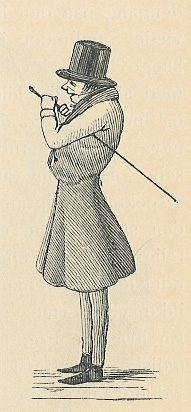
(A caricature of Søren Kierkegaard from The Corsair, a satirical magazine. Source: Wikimedia, Creative Commons License).
I am no alarmist, but there is undeniably something post-Christian about our time and place (the West). Or, perhaps, the better way of putting it is that we are post-Christendom, thrust back into pre-Constantinian days in which to be a Christian is an act of protest, squared off against both the status quo and other philosophical sects bent on challenging the structure of society. As I have argued before, we have much in common with those in the past who formulated, reformulated, and proclaimed the truth of the Gospels to a hostile, though often curious, world. Pauline Christianity might serve as an example:
The message of the cross is foolishness to those who are perishing, but to us who are being saved it is the power of God. For it is written: “I will destroy the wisdom of the wise, and the learning of the learned I will set aside.” Where is the wise one? Where is the scribe? Where is the debater of this age? Has not God made the wisdom of the world foolish? For since in the wisdom of God the world did not come to know God through wisdom, it was the will of God through the foolishness of the proclamation to save those who have faith. For Jews demand signs and Greeks look for wisdom, but we proclaim Christ crucified, a stumbling block to Jews and foolishness to Gentiles, but to those who are called, Jews and Greeks alike, Christ the power of God and the wisdom of God. For the foolishness of God is wiser than human wisdom, and the weakness of God is stronger than human strength. (1 Corinthians 1:18-25)
“Those who are called, Jews and Greeks alike”: that’s us, not compromise candidates, but the better of our foes, transforming the truths of other sects into the Good News—itself a paradox, the proclamation that the divine became man, suffered humiliation and vicious execution, only to redeem mankind, to make us gods through God. But today this is usually phrased in more tepid terms. Some have tried to re-enliven our sense of mission; Chesterton’s Orthodoxy, for example, is something of an attempt to posit the radical alterity and force of Christianity. Today we often hear this put pithily: “Neither Right, nor Left, but Catholic” (an example of this approach here).
Yet, I propose something more direct, less evasive, and, one might say, more confrontational: a politics of proclamation. Once more, Paul’s words surpass any formulation of my own:
[B]y the open declaration of the truth we commend ourselves to everyone’s conscience in the sight of God. And even though our gospel is veiled, it is veiled for those who are perishing, in whose case the god of this age has blinded the minds of the unbelievers, so that they may not see the light of the gospel of the glory of Christ, who is the image of God. For we do not preach ourselves but Jesus Christ as Lord, and ourselves as your slaves for the sake of Jesus. For God who said, “Let light shine out of darkness,” has shone in our hearts to bring to light the knowledge of the glory of God on the face of [Jesus] Christ. (2 Corinthians 4:2-6)
How, then, might we “not preach ourselves but Jesus Christ as Lord, and ourselves as slaves for the sake of Jesus”? I would wager that our ministry is not to the “Right” and to the “Left,” but to post-Christians and Christians post-Christendom (self-identified Christians who do not practice). Respectively, Nietzsche and Kierkegaard provide the framework for this dual mission.
In his critique of Liberalism, Nietzsche goes to pains to show that Liberal (in its classical sense, that is its broad sense—both the Democrats and the Republicans) politics is a cannibalized Christianity, a people engorged with Christian concepts, yet unbelieving. For him, equality, talk of rights, and “selflessness” were merely holdovers from a Christianized people whose desires lacked any theological ground. To overcome Christianity meant to overcome its remaining stain—to quash Liberalism. Here are but a few examples.
It is a clever stroke on the part of Christianity to teach the utter unworthiness, sinfulness, and despicableness of mankind so loudly that the disdain of their fellow-men is no longer possible.” He may sin as much as he likes, he is not essentially different from me,—it is I who am unworthy and despicable in every way,” says the Christian to himself. But even this feeling has lost its sharpest sting, because the Christian no longer believes in his individual despicablcness; he is bad as men are generally, and comforts himself a little with the axiom, “We are all of one kind.” (Human, All Too Human)
[I]t is profoundly related to Christian morality. Strong ages, noble cultures, all consider pity, “neighbor-love,” and the lack of self and self-assurance as something contemptible. Ages must be measured by their positive strength — and then that lavishly squandering and fatal age of the Renaissance appears as the last great age; and we moderns, with our anxious self[-]solicitude and neighbor-love, with our virtues of work, modesty, legality, and scientism—accumulating, economic, machinelike — appear as a weak age. Our virtues are conditional on, are provoked by, our weaknesses. “Equality” as a certain factual increase in similarity, which merely finds expression in the theory of “equal rights,” is an essential feature of decline. The cleavage between man and man, status and status, the plurality of types, the will to be oneself, to stand out—what I call the pathos of distance, that is characteristic of every strong age. The strength to withstand tension, the width of the tensions between extremes, becomes ever smaller today; finally, the extremes themselves become blurred to the point of similarity. (Twilight of the Idols)
My conception of freedom. — The value of a thing sometimes does not lie in that which one attains by it, but in what one pays for it — what it costs us. I shall give an example. Liberal institutions cease to be liberal as soon as they are attained: later on, there are no worse and no more thorough injurers of freedom than liberal institutions. Their effects are known well enough: they undermine the will to power; they level mountain and valley, and call that morality; they make men small, cowardly, and hedonistic — every time it is the herd animal that triumphs with them. Liberalism: in other words, herd-animalization. (Twilight of the Idols)
The Christian and the anarchist: both are decadents; both are incapable of any act that is not disintegrating, poisonous, degenerating, blood‐sucking; both have an instinct of mortal hatred of everything that stands up, and is great, and has durability, and promises life a future…Christianity was the vampire of the imperium Romanum…overnight it destroyed the vast achievement of the Romans: the conquest of the soil for a great culture that could await its time…the notion of a “beyond” is the death of life. Nihilist and Christian: they rhyme…and they do more than rhyme [in German these words rhyme: Nihilist und Christ, das reimt sich, das reimt sich nicht bloss]. (The Antichrist)
War to the death against depravity: depravity is Christianity…Every participation in divine service is an assassination attempt on public morality. One should be more severe toward Protestants than toward Catholics, more severe toward liberal Protestants than toward the orthodox. The criminal character of a Christian increases when he approaches knowledge [Wissenschaft]. The criminal of criminals is consequently the philosopher. (The Antichrist)
This reality asserts itself more and more every day: Liberalism seeks to validate conceptions like “equal rights” without a grounding in the imago Dei (Nietzsche would laugh at memes such as this one, as if equality of similarity of skeletal structure has any influence on true equality). I cannot take the time to argue for Nietzsche’s claim, but one might say it is not far from Christianity to the Declaration of Independence. And if we look around us, we see this in groundless claims of equality that ignore the reality of essential difference: the ultimate unknowability of others’ obvious disparities in strength, intellect, and health, and the painful reality of selfishness. Nietzsche predicts just the society toward which such de-Christianized Christianity must lead:

When I came to men for the first time, then did I commit the hermit folly, the great folly: I appeared on the market-place. And when I spoke to all, I spoke to none. In the evening, however, rope-dancers were my companions, and corpses; and I myself almost a corpse. With the new morning, however, there came to me a new truth: then did I learn to say: “Of what account to me are market-place and rabble and rabble-noise and long rabble-cars!” You higher men, learn this from me: On the market-place no one believes in higher men. But if you will speak there, very well! The rabble, however, blinks: “We are all equal.” “You higher men,”- so blinks the rabble—“there are no higher men, we are all equal; man is man, before God- we are all equal!” Before God! Now, however, this God has died. Before the rabble, however, we will not be equal. You higher men, away from the market-place! Before God! Now however this God has died! You higher men, this God was your greatest danger. Only since he lay in the grave have you again arisen. Now only comes the great noontide, now only does the higher man become master! Have you understood this word, O my brothers? You are frightened: do your hearts turn giddy? [D]oes the abyss here yawn for you? [D]oes the hell-hound here yelp at you? Well! Take heart! [Y]ou higher men! Now only travails the mountain of the human future. God has died: now do we desire the Superman [Übermensch] to live. (Thus Spoke Zarathustra)
To be honest, I find myself convinced: many of our contemporaries draw upon Christian ideas while rejecting the revelations that make such ideas possible. On the one hand, then, we must speak to this reality—reclaim the radical nature of our principles, and not allow the world to forget that its desires for universal love, couched in the language of rights, has its inception in our Faith, cannot exist apart from that faith. To say “all human beings are equal,” to say “man is required to love,” these are difficult proclamations, but what is harder is to declare: “such equality depends upon a created world, such love hinges upon the death and Resurrection of an ancient Jew.”
On the other hand, we have the phenomenon of tepid Christianity, what I have termed Christians post-Christendom. For Catholics, this is not news: contraception use is common among self-identified Catholics, weekly Mass attendance is low, and some are pro-choice. Søren Kierkegaard foresaw this problem long ago. In his eyes, 19th-century Denmark was a largely “Christian,” but had become so comfortable with that designation, most people did not bother to live in the radical way that the Faith demands. Some of his many works, under many pseudonyms, were attempts to demonstrate the difficulty that is Christianity, that it is not a label to be applied lightly:
I have never fought in such a way as to say: I am the true Christian, others are not Christians. No, my contention has been this: I know what Christianity is, my imperfection as a Christian I myself fully recognize — but I know what Christianity is. And to get this properly recognized must be, I should think, to every man’s interest, whether he be a Christian or not, whether his intention is to accept Christianity or to reject it. But I have attacked no one as not being a Christian, I have condemned no one…And I myself have from the first clearly asserted, again and again repeated, that I am ‘without authority’. My tactics were, by God’s aid, to employ every means to make it clear what the requirement of Christianity truly is — even though not one single person should be induced to enter into it, and though I myself might have to give up being a Christian (in which case I should have felt obliged to make open admission of the fact). On the other hand, my tactics were these: instead of giving the impression, in however small a degree, that there are such difficulties about Christianity that an apology for it is needed if men are to be persuaded to enter into it, rather to represent it as a thing so infinitely lofty, as in truth it is, that the apology belongs in another place, is required, that is to say, of us for the fact that we venture to call ourselves Christians, or it transforms itself into a contrite confession that we have God to thank if we merely assume to regard ourselves as a Christian. But neither must this ever be forgotten: Christianity is just as lenient as it is austere, just as lenient, that is to say, infinitely lenient. When the infinite requirement is heard and upheld, heard and upheld in all its infinitude, then grace is offered, or rather grace offers itself, and to it the individual, each for himself, as I also do, can flee for refuge. (The Point of View of My Work as an Author)
In this book, originating in the year 1848, the requirement for being a Christian is forced up by the pseudonymous author to the supreme ideality. Yet the requirement should indeed be stated, presented, and heard. From the Christian point of view, there ought to be no scaling down of the requirement, nor suppression of it…instead of a personal admission and confession. The requirement should be heard…and I understand what is said as spoken to me alone—so that I might learn not only to resort to grace but to resort to it in relation to the use of grace. (Practice in Christianity)
Like Nietzsche he thought the dominance of Christian culture, that is Christendom, had led to this issue:
When Christianity came into the world the task was simply to proclaim Christianity. The same is the case wherever Christianity is introduced into a country the religion of which is not Christianity. In “Christendom” the situation is a different one. What we have before us is not Christianity but a prodigious illusion, and the people are not pagans but live in the blissful conceit that they are Christians. So if in this situation Christianity is to be introduced, first of all the illusion must be disposed of. (Attack upon Christendom)
Is not “Christendom” the most colossal attempt at serving God, not by following Christ, as He required, and suffering for the doctrine, but instead of that, by “building the sepulchers of the prophets and garnishing the tombs of the righteous.” (Attack upon Christendom)
Such a phenomenon seems to be the opposite of what Nietzsche describes (what I have called post-Christianity), yet both are rooted In Christendom, and both are, I contend, the two biggest challenges to our (comfortable) Western Christianity today. What we must do is proclaim the Gospel as the Gospel, to recognize that the Good News is itself a politics, itself an attack upon the attempts to secularize Christian ideas or identify as a Christian without holding to the Faith. It is our very otherness, the radical nature of our mission that ought to propel us in an age that feels it has moved past our quaint beliefs. Yet, we can never stop reminding our time how much it owes us, and yet how far it has fallen (as have we!). Our age is thus not so much post-Christian as post-Christendom; it is a time in which a reassertion of Christianity in its alterity is necessary, a time in which proclamation of the Gospel is itself an act of reformulation and subversion. For many centuries, we controlled the culture; now we are free, free once more to challenge cultural norms, to recognize what Kierkegaard calls the “crucifixion of the intellect,” to proclaim once more the newness and difficulty of the Good News.
Previous Post
April 17, 2016
Idolatrous Traditionalism: A Postscript
Next Post

April 24, 2016 Short Skirts at the Tabernacle
Browse Our Archives
Select a Category Academia Culture Politics Reviews Theology Uncategorized
Select a Month October 2026 September 2026 August 2026 July 2026 June 2026 May 2026 April 2026 March 2026 February 2026 January 2026 December 2025 November 2025 October 2025 September 2025 August 2025 July 2025 June 2025 May 2025 April 2025 March 2025 February 2025 January 2025 December 2024 November 2024 October 2024 September 2024 August 2024 July 2024 June 2024 May 2024 April 2024 March 2024 February 2024 January 2024 December 2023 November 2023 October 2023 September 2023 August 2023 July 2023 June 2023 May 2023 April 2023 March 2023 February 2023 January 2023 November 2022 October 2022 September 2022 August 2022 July 2022 June 2022 May 2022 April 2022 March 2022 February 2022 July 2021 December 2020 November 2020 July 2020 May 2020 April 2020 February 2020 January 2020 December 2019 November 2019 October 2019 August 2019 July 2019 April 2019 March 2019 December 2018 August 2018 July 2018 June 2018 May 2018 April 2018 March 2018 January 2018 December 2017 November 2017 September 2017 August 2017 July 2017 June 2017 May 2017 April 2017 March 2017 February 2017 January 2017 December 2016 November 2016 October 2016 September 2016 August 2016 July 2016 June 2016 May 2016 April 2016 March 2016 February 2016
Follow Us!
TAKE THE
Religious Wisdom Quiz
Which prophet's father was a priest named Buzi?
Select your answer to see how you score.
Daniel Hosea Joel Ezekiel
Related posts from Jappers and Janglers

American Movie: The Beauty of the Chuds



TRENDING AT PATHEOS Religious Music and Entertainment

Catholic Evangelization: Sharing Your Faith Every Day
Welcome back to the Graceful Awakening mini-series called, “From Faith to Mission.” ...

The Pillar of the Boatmen: the Ancient Monument...
The Pillar of the Boatmen is a Romano-Gaulish sculpture that dates from...

In one sense walking into Westminster Abbey is like walking down the...

'Super Scam Me' Exposes AI Jon Bon Jovi...
Leslie Pickett believed she was in a relationship with Jon Bon Jovi....

The Brazilian Remake of Kendricks' 'Flywheel' Opens in...
“Flywheel,” the story that launched the Kendrick Brothers’ filmmaking career is getting...

The Dangers of Gradual Accommodation (Winking at Sin)
Recently, the “law of gradualness” resurfaced during the opening of a weeklong,...
view all Religious Music and Entertainment blogs
Ad-Free & Subscriber Log-In Subscription Support
- About Us
- 2026 Calendar
- Videos
- Podcasts
- Library of World Religions
- Faith In Media Tracker
- Advertise With Us
- Write for Us
- Privacy Policy
- Terms of Service
- Do Not Sell My Data
- Contact Us
- Radiant Digital
- Manage Newsletter Subscriptions
- Unsubscribe From Notifications
- Sitemap
Copyright 2008-2026, Patheos. All rights reserved.
Subscription Support Ad-Free & Subscriber Log-In
Follow Patheos