
BuddhistCatholicContemplativeEvangelicalGeneral ChristianHinduJewishLatter-day SaintMuslimNew VisionsProgressive Christian
Beliefs
- Buddhist
- Catholic
- Contemplative
- Evangelical
- General Christian
- Hindu
- Jewish
- Latter-day Saint
- More Voices
- Muslim
- New Visions
- Pagan
- Progressive Christian
Topics
- Religion News
- Food and Religion
- Sports and Religion
- Religious Art
- Religious Music and Entertainment
- Religious Events
- History and Religion
- Style and Religion
- Politics and Religion
- Women in Religion
- Recreation Outdoors and Religion
- Business Finance and Religion
- Careers Workplace and Religion
- Education and Religion
- Family Parenting and Religion
- Health Fitness and Religion
- Home and Religion
- Relationships and Religion
- Technology and Religion
- Travel and Religion
Columnists
- Buddhist Columnists
- Business Finance and Religion Columnists
- Careers Workplace and Religion Columnists
- Catholic Columnists
- Contemplative Columnists
- Education and Religion Columnists
- Evangelists Columnists
- Family Parenting and Religion Columnists
- General Christian Columnists
- Health Fitness and Religion Columnists
- Hindu Columnists
- History and Religion Columnists
- Home and Religion Columnists
- Jewish Columnists
- More Voices Columnists
- Latter Day Columnists
- Muslim Columnists
- New Visions Columnists
- Nonreligious Columnists
- Pagan Columnists
- Politics and Religion Columnists
- Progressive Columnists
- Recreation Outdoors and Religion Columnists
- Relationships and Religion Columnists
- Religion News Columnists
- Religious Art Columnists
- Religious Events Columnists
- Religious Music and Entertainment Columnists
- Sports and Religion Columnists
- Style and Religion Columnists
- Technology and Religion Columnists
- Travel and Religion Columnists
- Women in Religion Columnists
Resource Library
- 2026 Calendar
- Library of World Religions
- The 100 Most Holy Places on Earth
- Patheos Answers
- Podcasts
- Videos
- Faith Leaders Database
- Anglican Episcopalian
- Bahai
- Baptist
- Buddhism
- Christianity
- Confucianism
- Eastern Orthodoxy
- Hinduism
- Holiness and Pentecostal
- ISKCON
- Islam
- Judaism
- Lutheran
- Methodist
- The Church of Jesus Christ of Latter-day Saints
- New Age
- Paganism
- Presbytarian and Reformed
- Protestantism
- Religion Behind the Scenes
- Roman Catholic
- Scientology
- Shia Islam
- Sikhism
- Sufism
- Sunni Islam
- Taoism
- Zen
- See all religions
Research Tools
 Ad-Free & Subscriber Log-In Subscription Support
Ad-Free & Subscriber Log-In Subscription Support
Follow Patheos 

- Trending:
- Forgiveness
- |
- Marriage
- |
- Consciousness
- |
- Death Penalty
- |
- Election
- |
- Halloween

- Home
- Religious Music and Entertainment
- Idolatrous Traditionalism: A Postscript
Idolatrous Traditionalism: A Postscript
Last updated on: April 17, 2016 at 9:56 pm by Chase Padusniak
Idolatrous Traditionalism: A Postscript 2016-04-17T21:56:26-04:00 Chase Padusniak
Patheos Explore the world's faith through different perspectives on religion and spirituality! Patheos has the views of the prevalent religions and spiritualities of the world.
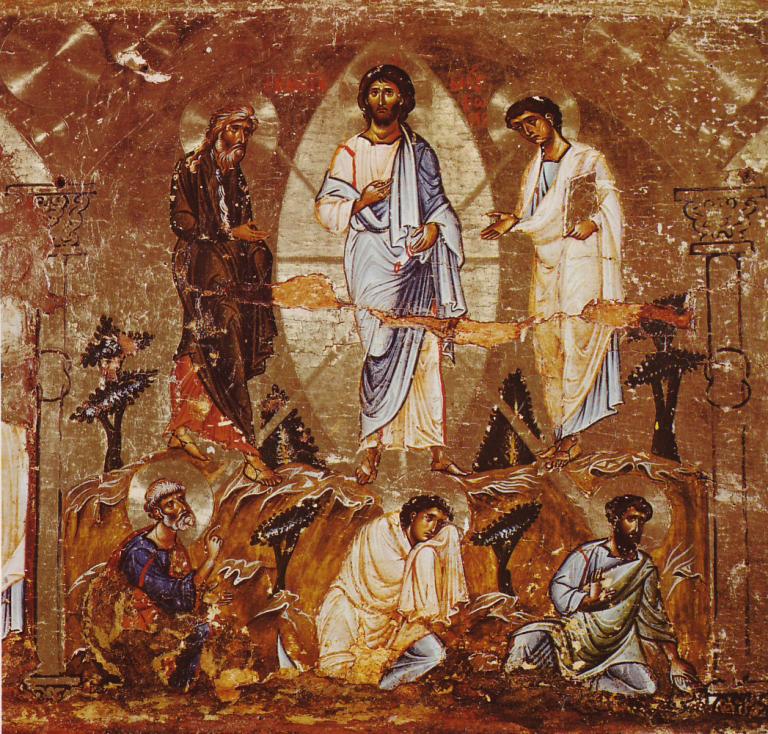
(An Icon of the Transfiguration of Christ, from Mount Sinai, 12th century. Source: Wikimedia, Creative Commons License).
My last post, “Rigid Traditionalism is Idolatry,” has elicited quite the reaction, more so than I had expected. Thankfully, support has outweighed outrage, but anger has still reared its ugly head. Unfortunately, as a graduate student, I don’t have the time to bicker for hours on Twitter (I’m not sure anyone does), nor do I have the time to moderate and respond to every comment on the piece. And so, I’ve decided to write this brief note as a final post-scriptum to what’s taken place. For reasons of length and time, it cannot be exhaustive, but I do hope it will encapsulate my feelings at this point and time, and suggest my desire to stimulate discussion as opposed to devolve into character assassination and meaningless insult.
Almost every negative reaction has entirely missed the point. As I said to one Twitter interlocutor: you’re missing the forest through the trees. I’ll use two example to illustrate this. First, many have commented on an error in the original text that mentioned my older friends recalling pre-Vatican II Masses as uninvolved clouds of incense. The supposed flaw in my logic is that Low Masses (mostly the subject of my discussion) do not use incense. Checkmate, or so many have thought. But there are two problems with this line of argumentation. First, there were non-Low Masses before Vatican II; these could easily have involved incense, but failed to engross the congregation. If this will not be granted, there’s an easier answer: I wasn’t quoting anyone in particular and simply used a poetic flourish that didn’t fit (hence my amending it). There are no quotation marks on the page; I was merely collating a series of chats with friends and colleagues using my own words. The problem, then, is not with the truth of their recollection, but simply with my style (and I am more than happy to take the blame). In short, it has no bearing on my actual argument.
The second example is even more suggestive of how badly the post has been misread. Several people have gone out of their way to point to the difference between “priests who can marry” and “men who can marry and then become priests.” This is a fair distinction (and my original statements in the piece were ambiguous): in the East, men must marry before they are ordained. Fair enough. The problem is that this has absolutely no bearing on my point. If the thesis of my post, as stated, is to get people to think historically, that is, not to reify or idolize one particular period, then this distinction is uninteresting. I was not arguing for the reintroduction of a married priesthood. I was merely indicating that the Church’s history is dynamic, that it involves manifest pastoral changes. At one point, in the West, men who were priests could also have wives. That should be of interest as we discuss the history of our Faith! The exact nature of marriage and the priesthood is not the point. All a reader is supposed to take away is the fact of historical difference and malleability.
In short, while I’ve appreciated everyone’s interested attention to my language, such points have no bearing on the actual stakes of my article. At best, they are helpful for dialogue and more rigorous historical thinking; at worst, they are distractions, mere attempts to obfuscate the importance of the Church’s historicity.
Anyone who takes my piece as an argument for specific pastoral policy decisions has gone too far. Not only do I say just as much in the post but I also (and anyone who actually has read the other things I have written knows this) have a history of defending what we might see as “more rigorous” practices. Again, the point is that we cannot reify the Church. No argument for particular changes was made.
And so, these misreadings trouble me, because despite praising the FSSP and ICKSP, endlessly making clear that I was not talking about all traditionalists (#notalltrads, one might say), and signposting my point over and over, people have gotten upset. Part of this might stem from my perceived lack of focus, i.e. my not naming names as to the exact traditionalists I had in mind. Reading the post, it’s not hard to see that I provide links to occasional (if not repeat) offenders. Bracketing groups like the SSPX and full schismatics (who are obviously implicated), I had in mind anyone who wantonly assaults the pope at every turn, anyone who shows him no charity. But, more importantly, I had in mind those who denigrate those who do not attend the Latin Mass, who accept or float about the condemnation of churchgoing Catholics not of their own kind, even if they do not openly say such things.
And, if you were offended, know that such was never my intent. But, as a friend reminded me, one who takes offense at the mere mention of idolatry, and who responds with limited charity, may, in fact, be an idolater. If you have truly not made an idol out of the customs to which I have drawn attention, then my mention of the Church’s historicity should elicit a desire for dialogue and not insult, not a tarrying in unimportant details, but a robust conversation about which customs and pastoral manifestations, in line with the Faith, are best for our age. We are all sinners, all called by our Lord to tear the beams from our eyes, to smash the idols we have made for ourselves in striving to worship the triune God.
I have received a few warm responses from Latin traditionalist friends. Such reactions have brought me joy, joy in the knowledge that Catholics, whether overtly traditional, Novus Ordo goers, Byzantines, or others, can have a frank conversation about the diversity contained within, and always modified by, the unity of the Church. I pray that such discussions might be more common as we move forward.
In leaving you, (and I do ask you to pray for me, whoever might read this) I wish to quote David Bentley Hart, an Eastern Orthodox theologian, whose erudition is, I think, far above my own paygrade. May this piece serve as my final word (at least for the time being) on this subject. Ad majorem Dei gloriam! Slaveety Yoho:
I am obviously talking about a certain kind of ecclesial extremist, of the sort who can imagine no version of the Catholic faith that does not conform in every detail to the practices and prejudices [of his desired form of the Faith…] and all of our churches contain such persons. Of course, in almost every case, the great irony of such persons—whether they be ultramontanist Catholics or what we call the “ultra-Orthodox”—is that what they generally take to be the immemorial heritage of the Catholic faith is the distinctly modern form of the church […] Thus when a certain kind of militantly conservative Catholic priest is heard to claim that the celibate priesthood was the universal practice of the early church, established by Christ in his apostles, and that therefore even married Catholic priests of the Eastern rites possess defective orders, the historically astute among us should recognize that such a delusion is possible only for a person having no understanding of the priesthood more sophisticated than his pristine boyish memories of Fr O’Reilly’s avuncular geniality, and the shining example of his contented bachelorhood, and the calm authority with which he presided over the life of the parish church of St Anne of Green Gables. And when this same priest ventures theological or ecclesiological opinions, it is almost certain that what he takes to be apostolic Catholicism will turn out to be a particular kind of post-Tridentine Baroque Catholicism, kept buoyantly afloat upon ecclesiological and sacramental principles of an antiquity no hoarier than 1729.
Previous Post
April 15, 2016
Rigid Traditionalism is Idolatry
Next Post
April 22, 2016 On Christianity after Christendom
Browse Our Archives
Select a Category Academia Culture Politics Reviews Theology Uncategorized
Select a Month October 2026 September 2026 August 2026 July 2026 June 2026 May 2026 April 2026 March 2026 February 2026 January 2026 December 2025 November 2025 October 2025 September 2025 August 2025 July 2025 June 2025 May 2025 April 2025 March 2025 February 2025 January 2025 December 2024 November 2024 October 2024 September 2024 August 2024 July 2024 June 2024 May 2024 April 2024 March 2024 February 2024 January 2024 December 2023 November 2023 October 2023 September 2023 August 2023 July 2023 June 2023 May 2023 April 2023 March 2023 February 2023 January 2023 November 2022 October 2022 September 2022 August 2022 July 2022 June 2022 May 2022 April 2022 March 2022 February 2022 July 2021 December 2020 November 2020 July 2020 May 2020 April 2020 February 2020 January 2020 December 2019 November 2019 October 2019 August 2019 July 2019 April 2019 March 2019 December 2018 August 2018 July 2018 June 2018 May 2018 April 2018 March 2018 January 2018 December 2017 November 2017 September 2017 August 2017 July 2017 June 2017 May 2017 April 2017 March 2017 February 2017 January 2017 December 2016 November 2016 October 2016 September 2016 August 2016 July 2016 June 2016 May 2016 April 2016 March 2016 February 2016
Follow Us!
TAKE THE
Religious Wisdom Quiz
What was the primary beverage in biblical times?
Select your answer to see how you score.
Beer Wine Milk Water
Related posts from Jappers and Janglers

American Movie: The Beauty of the Chuds

Apostasy, Scandal, and a Road Well-Trod

Which is the Original Bible? Is it the...
TRENDING AT PATHEOS Religious Music and Entertainment

Methodist Central Hall and Westminster Abbey
Situated on the same square is Methodist Central Hall and Westminster Abbey. ...

57th Dove Awards Honor Dolly Parton, Crown New...
On gospel music’s biggest night, the 57th annual GMA Dove Awards honored...

The First Eucharistic Controversy: Christ’s Real Presence
For Catholics, the Eucharist is the source and summit of the Christian...

What a Stop Sign Can Teach Us About...
How to Make a Decision When You Can't Hear God Main point:...

Archdiocese Hosts Military Marriage Retreat in Germany
RASTATT, Germany — The transient military lifestyle, with its frequent deployments and...

Nearly every morning, I make the drive to Detroit with my high-school-age...
view all Religious Music and Entertainment blogs
Ad-Free & Subscriber Log-In Subscription Support
- About Us
- 2026 Calendar
- Videos
- Podcasts
- Library of World Religions
- Faith In Media Tracker
- Advertise With Us
- Write for Us
- Privacy Policy
- Terms of Service
- Do Not Sell My Data
- Contact Us
- Radiant Digital
- Manage Newsletter Subscriptions
- Unsubscribe From Notifications
- Sitemap
Copyright 2008-2026, Patheos. All rights reserved.
Subscription Support Ad-Free & Subscriber Log-In
Follow Patheos