
BuddhistCatholicContemplativeEvangelicalGeneral ChristianHinduJewishLatter-day SaintMuslimNew VisionsProgressive Christian
Beliefs
- Buddhist
- Catholic
- Contemplative
- Evangelical
- General Christian
- Hindu
- Jewish
- Latter-day Saint
- More Voices
- Muslim
- New Visions
- Pagan
- Progressive Christian
Topics
- Religion News
- Food and Religion
- Sports and Religion
- Religious Art
- Religious Music and Entertainment
- Religious Events
- History and Religion
- Style and Religion
- Politics and Religion
- Women in Religion
- Recreation Outdoors and Religion
- Business Finance and Religion
- Careers Workplace and Religion
- Education and Religion
- Family Parenting and Religion
- Health Fitness and Religion
- Home and Religion
- Relationships and Religion
- Technology and Religion
- Travel and Religion
Columnists
- Buddhist Columnists
- Business Finance and Religion Columnists
- Careers Workplace and Religion Columnists
- Catholic Columnists
- Contemplative Columnists
- Education and Religion Columnists
- Evangelists Columnists
- Family Parenting and Religion Columnists
- General Christian Columnists
- Health Fitness and Religion Columnists
- Hindu Columnists
- History and Religion Columnists
- Home and Religion Columnists
- Jewish Columnists
- More Voices Columnists
- Latter Day Columnists
- Muslim Columnists
- New Visions Columnists
- Nonreligious Columnists
- Pagan Columnists
- Politics and Religion Columnists
- Progressive Columnists
- Recreation Outdoors and Religion Columnists
- Relationships and Religion Columnists
- Religion News Columnists
- Religious Art Columnists
- Religious Events Columnists
- Religious Music and Entertainment Columnists
- Sports and Religion Columnists
- Style and Religion Columnists
- Technology and Religion Columnists
- Travel and Religion Columnists
- Women in Religion Columnists
Resource Library
- 2026 Calendar
- Library of World Religions
- The 100 Most Holy Places on Earth
- Patheos Answers
- Podcasts
- Videos
- Faith Leaders Database
- Anglican Episcopalian
- Bahai
- Baptist
- Buddhism
- Christianity
- Confucianism
- Eastern Orthodoxy
- Hinduism
- Holiness and Pentecostal
- ISKCON
- Islam
- Judaism
- Lutheran
- Methodist
- The Church of Jesus Christ of Latter-day Saints
- New Age
- Paganism
- Presbytarian and Reformed
- Protestantism
- Religion Behind the Scenes
- Roman Catholic
- Scientology
- Shia Islam
- Sikhism
- Sufism
- Sunni Islam
- Taoism
- Zen
- See all religions
Research Tools
 Ad-Free & Subscriber Log-In Subscription Support
Ad-Free & Subscriber Log-In Subscription Support
Follow Patheos 

- Trending:
- Forgiveness
- |
- Marriage
- |
- Consciousness
- |
- Death Penalty
- |
- Election
- |
- Halloween

- Home
- Religious Music and Entertainment
- Easter: A Weekly Sabbath
Easter: A Weekly Sabbath
Last updated on: March 26, 2016 at 1:25 pm by Chase Padusniak
Easter: A Weekly Sabbath 2016-03-26T13:25:29-04:00 Chase Padusniak
Patheos Explore the world's faith through different perspectives on religion and spirituality! Patheos has the views of the prevalent religions and spiritualities of the world.
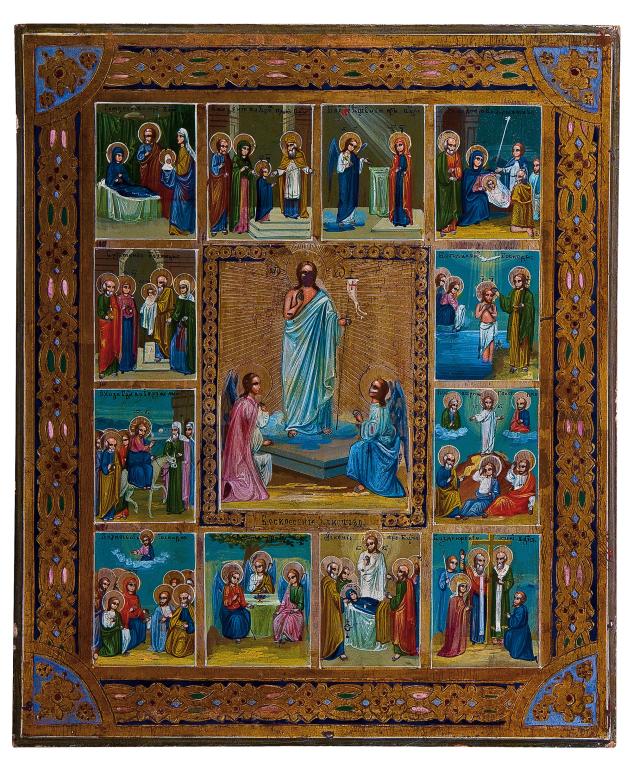
(An icon of the Resurrection, from Russia c. 1900. Source: Wikimedia, Creative Commons License).
Easter is upon us! A once-a-year festival, it reminds us of, and celebrates, Christ’s victory over death, the central tenet of Christian belief: He is risen! And yet, it is a more than annual feast. In fact, part of its true significance is embedded in a process most, if not all, Christians realize, but fail to recognize: that every Sunday is a celebration of the Resurrection, that every week we are called to remember His glorious Resurrection. As Dorothy C. Bass has put it: “For Christians, every Sunday is Easter Sunday, a time to gather together with song and prayer, to hear the Word proclaimed, and to recognize Christ in the breaking of the bread.”
This should lead us to ask: what does Sabbath mean to us? I know very few Christians (myself included) who take seriously the notion of Sunday rest and joy, who remember the Resurrection throughout their day and not just at Liturgy. Helpfully enough, I spent most of this Triduum reading Abraham Joshua Heschel’s classic, The Sabbath, which attempts both to explain the institution and to explain away its negative associations.
In his book, Heschel makes clear that the Jewish Sabbath is not just a day laden with rules; it is not the dour day we associate with the Puritans. Instead, the Sabbath is a joyful time, a time when married couples are expected to (and praised for) having sex, when people wear their finest clothes, eat their most wholesome foods, and refuse to worry or in any way exhibit negative, worldly emotions. As Heschel writes, “it is a sin to be sad on the Sabbath.”
The entire day is intended to be a foretaste of eternity, or for Christians, of the Kingdom. The day should be filled with practices that reflect its joyful nature: just as on Easter Sunday we come together, so should each Sunday reflect this same spirit, in whatever way makes the most sense for a given family. I recall that in my past, the Italian side of my family would assemble every week for a Sunday dinner, a beautiful tradition, if I do say so myself.
Obviously, we as Christians do not observe the Sabbath as do Jews, but we have much to learn from our Jewish brothers and sisters, chief among them that the Sabbath is a spirit, a feeling, as much as a singular set of rules. How wonderful would our Sundays be if we refused to handle money? If we ate together after strolling in the park? If we invited others from our community, especially the marginalized and downtrodden, to dine with us? If we went to Church together and did not let the spirit end there, but prayed throughout the day?
There could be no better way to interweave Easter into our lives, to joy in Christ’s Resurrection, His victory over death. As a graduate student, I understand this is not easy. Most weekends I attend Liturgy alone. I use Sundays to catch up on work. I let worries enter my mind far too often. But the Sabbath exists to give us respite, to demonstrate that we are in the world but not of it, not beholden to the getting and spending of secular life. It affords us time to experience the bliss of the Kingdom, of relaxation and prayer, of service to others, the very things of which our daily toil robs us.
And so, in wishing you a Happy Easter, I pray that we will be able to reinterpret and reinvigorate our notion of Sabbath. Sunday is more than day for church attendance; it is a time in which we might experience Easter every weekend of the year, a way of indelibly marking ourselves for God, of saying “Christ is risen. Glorify Him!”
Previous Post
March 26, 2016
Beyond Good and Evil: A Triduum Reflection
Next Post

April 1, 2016 A Christian Defense of the "Useless Liberal Arts Degree"
Browse Our Archives
Select a Category Academia Culture Politics Reviews Theology Uncategorized
Select a Month October 2026 September 2026 August 2026 July 2026 June 2026 May 2026 April 2026 March 2026 February 2026 January 2026 December 2025 November 2025 October 2025 September 2025 August 2025 July 2025 June 2025 May 2025 April 2025 March 2025 February 2025 January 2025 December 2024 November 2024 October 2024 September 2024 August 2024 July 2024 June 2024 May 2024 April 2024 March 2024 February 2024 January 2024 December 2023 November 2023 October 2023 September 2023 August 2023 July 2023 June 2023 May 2023 April 2023 March 2023 February 2023 January 2023 November 2022 October 2022 September 2022 August 2022 July 2022 June 2022 May 2022 April 2022 March 2022 February 2022 July 2021 December 2020 November 2020 July 2020 May 2020 April 2020 February 2020 January 2020 December 2019 November 2019 October 2019 August 2019 July 2019 April 2019 March 2019 December 2018 August 2018 July 2018 June 2018 May 2018 April 2018 March 2018 January 2018 December 2017 November 2017 September 2017 August 2017 July 2017 June 2017 May 2017 April 2017 March 2017 February 2017 January 2017 December 2016 November 2016 October 2016 September 2016 August 2016 July 2016 June 2016 May 2016 April 2016 March 2016 February 2016
Follow Us!
TAKE THE
Religious Wisdom Quiz
In which garden did Jesus pray before His arrest?
Select your answer to see how you score.
Gethsemane Paradise Golgotha Eden
Related posts from Jappers and Janglers

American Movie: The Beauty of the Chuds



Which is the Original Bible? Is it the...
TRENDING AT PATHEOS Religious Music and Entertainment

Letters on Living the Faith by C.S. Lewis
Most of us met C.S. Lewis as a public intellectual. Mere Christianity....

When Halloween Unmasks Married Hearts
Written by Dr. David K. Ewen from Eternal Truth Bible College Behind...

Aristotle. He’s been called the father of logic, the father of the...

Methodist Central Hall and Westminster Abbey
Situated on the same square is Methodist Central Hall and Westminster Abbey. ...

57th Dove Awards Honor Dolly Parton, Crown New...
On gospel music’s biggest night, the 57th annual GMA Dove Awards honored...

The First Eucharistic Controversy: Christ’s Real Presence
For Catholics, the Eucharist is the source and summit of the Christian...
view all Religious Music and Entertainment blogs
Ad-Free & Subscriber Log-In Subscription Support
- About Us
- 2026 Calendar
- Videos
- Podcasts
- Library of World Religions
- Faith In Media Tracker
- Advertise With Us
- Write for Us
- Privacy Policy
- Terms of Service
- Do Not Sell My Data
- Contact Us
- Radiant Digital
- Manage Newsletter Subscriptions
- Unsubscribe From Notifications
- Sitemap
Copyright 2008-2026, Patheos. All rights reserved.
Subscription Support Ad-Free & Subscriber Log-In
Follow Patheos