
BuddhistCatholicContemplativeEvangelicalGeneral ChristianHinduJewishLatter-day SaintMuslimNew VisionsProgressive Christian
Beliefs
- Buddhist
- Catholic
- Contemplative
- Evangelical
- General Christian
- Hindu
- Jewish
- Latter-day Saint
- More Voices
- Muslim
- New Visions
- Pagan
- Progressive Christian
Topics
- Religion News
- Food and Religion
- Sports and Religion
- Religious Art
- Religious Music and Entertainment
- Religious Events
- History and Religion
- Style and Religion
- Politics and Religion
- Women in Religion
- Recreation Outdoors and Religion
- Business Finance and Religion
- Careers Workplace and Religion
- Education and Religion
- Family Parenting and Religion
- Health Fitness and Religion
- Home and Religion
- Relationships and Religion
- Technology and Religion
- Travel and Religion
Columnists
- Buddhist Columnists
- Business Finance and Religion Columnists
- Careers Workplace and Religion Columnists
- Catholic Columnists
- Contemplative Columnists
- Education and Religion Columnists
- Evangelists Columnists
- Family Parenting and Religion Columnists
- General Christian Columnists
- Health Fitness and Religion Columnists
- Hindu Columnists
- History and Religion Columnists
- Home and Religion Columnists
- Jewish Columnists
- More Voices Columnists
- Latter Day Columnists
- Muslim Columnists
- New Visions Columnists
- Nonreligious Columnists
- Pagan Columnists
- Politics and Religion Columnists
- Progressive Columnists
- Recreation Outdoors and Religion Columnists
- Relationships and Religion Columnists
- Religion News Columnists
- Religious Art Columnists
- Religious Events Columnists
- Religious Music and Entertainment Columnists
- Sports and Religion Columnists
- Style and Religion Columnists
- Technology and Religion Columnists
- Travel and Religion Columnists
- Women in Religion Columnists
Resource Library
- 2026 Calendar
- Library of World Religions
- The 100 Most Holy Places on Earth
- Patheos Answers
- Podcasts
- Videos
- Faith Leaders Database
- Anglican Episcopalian
- Bahai
- Baptist
- Buddhism
- Christianity
- Confucianism
- Eastern Orthodoxy
- Hinduism
- Holiness and Pentecostal
- ISKCON
- Islam
- Judaism
- Lutheran
- Methodist
- The Church of Jesus Christ of Latter-day Saints
- New Age
- Paganism
- Presbytarian and Reformed
- Protestantism
- Religion Behind the Scenes
- Roman Catholic
- Scientology
- Shia Islam
- Sikhism
- Sufism
- Sunni Islam
- Taoism
- Zen
- See all religions
Research Tools
 Ad-Free & Subscriber Log-In Subscription Support
Ad-Free & Subscriber Log-In Subscription Support
Follow Patheos 

- Trending:
- Forgiveness
- |
- Marriage
- |
- Consciousness
- |
- Death Penalty
- |
- Election
- |
- Halloween

- Home
- Religious Music and Entertainment
- On the Erotics of Lent
On the Erotics of Lent
Last updated on: February 16, 2016 at 12:45 pm by Chase Padusniak
On the Erotics of Lent 2016-02-16T12:45:27-04:00 Chase Padusniak
Patheos Explore the world's faith through different perspectives on religion and spirituality! Patheos has the views of the prevalent religions and spiritualities of the world.
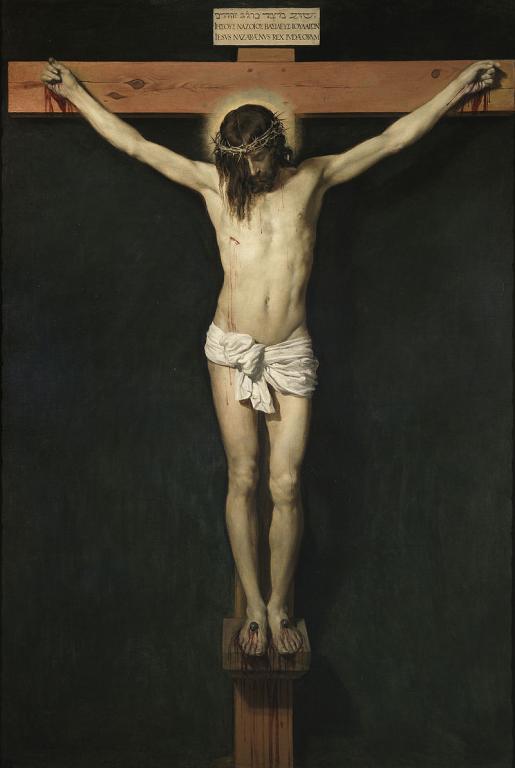
(“Cristo Crucificado,” 1632, by Diego Velázquez. Source: Wikipedia, Creative Commons License).
At the heart of Lent lies desire—the desire for unity with God, the desire to serve him even to the point of virtual self-abnegation. Purgation is itself a side-effect of this eros, an erosus, a corroding of ourselves so that we may fall, broken and holy, at the foot of the Cross.
Though I imagine the Greek and the Latin are not actually etymologically related (and I am a medievalist, so faux- or folk-etymology really is my field), there’s a truth embedded in this connection. Lent means letting all our sins corrode and fall away, saturated with the dew of the Lord.
Our medieval brethren were occasionally fond of depicting Jesus as a giant wound, a wound often conflated with the vagina, or sheathe, that is with the vagina as we understand it (exempla may be found here, here, and here). As the late Orthodox priest, Fr. Thomas Hopko puts is in his reflection for the fifth day of the Lenten fast:



The theme of man’s exile from God, his estrangement from the true spiritual reality to which he belongs, is constantly repeated in the lenten [sic] services. We are not home. We are not where we belong. We are alienated and estranged. We are in exile…The things of the world creep up on us to destroy us. We hardly notice it happening. Lust and pride and covetousness begin, little by little, to take over our lives. Their enslaving power always begins with little things…The small temptations, the petty demons, the little sins, so seemingly innocent, insignificant and harmless, must be dashed upon the Rock of Christ. Otherwise they grow big and become strong and destroy the heedless and negligent with their lethal power.
Our sights must remain set on the only goal, the only sensible thing worth striving for—Christ crucified, the rock upon which our little sins may be dashed. Some medieval illuminations depict Jesus birthing us, His Church, from His side; but, with certain Freudians, we might say that we also want to return to His very side, whence we come.

It is this desire that drives Lent, that carries us from the joyous introspection of Ash Wednesday to the foot of the Penitent Thief on Good Friday, for we know that all we can strive to be is penitent, unworthy, yet miraculously recognized by Christ’s tearfully triumphant gaze, drenched in the blood and viscera of the God-Man.
This itself, since we’re in a medieval mood, might remind us of Fulgentius’ allegorical interpretation of “the Fable of the Goddess Psyche and Cupid” from his Mythologies (an immensely popular work in the Middles Ages). Cupid is the Roman form of Eros, the son of Venus, who, sent to spite the beautiful Psyche, falls in love with her. She accidentally burns him with the oil of a lamp and, after doing a series of labors, is allowed to wed him; she thus becomes a goddess:
Venus envies her as lust; to her she sends greed (cupiditatem) to do away with her; but because greed is for good and evil alike, greed is taken with the spirit and links itself to her, as it were, in marriage. It persuades her not to look upon its countenance, that is, not to learn the pleasure of greed (thus Adam, although possessing sight, does not see himself as naked until he eats of the tree of covetousness), nor does she agree with her sisters—that is, flesh and free will—that she should satisfy her curiosity concerning its appearance, until frightened by their insistence she produces a lamp from beneath the bed, that is reveals the flame of desire concealed in her breast and loves and adores it [because] now it is seen to be so delightful.
Greed, since it is for good and ill, is desire. Fulgentius will go on to give a negative reading, but we can imagine the soul, Psyche, finding itself illuminating desire, within us—the desire for Christ, a desire that eventually leads to theosis, or our soul’s deification. Eros, sent by love (Venus, or, in our Christian reading, God), leads our souls to Paradise.
And this, the call to put ourselves aside and to let love guide us to Calvary, constitutes the erotics of Lent.
Previous Post

February 15, 2016
Alone in the Humanities
Next Post

February 17, 2016 St. Perpetua, Young Thug, and the Christian Counter-Culture
Browse Our Archives
Select a Category Academia Culture Politics Reviews Theology Uncategorized
Select a Month October 2026 September 2026 August 2026 July 2026 June 2026 May 2026 April 2026 March 2026 February 2026 January 2026 December 2025 November 2025 October 2025 September 2025 August 2025 July 2025 June 2025 May 2025 April 2025 March 2025 February 2025 January 2025 December 2024 November 2024 October 2024 September 2024 August 2024 July 2024 June 2024 May 2024 April 2024 March 2024 February 2024 January 2024 December 2023 November 2023 October 2023 September 2023 August 2023 July 2023 June 2023 May 2023 April 2023 March 2023 February 2023 January 2023 November 2022 October 2022 September 2022 August 2022 July 2022 June 2022 May 2022 April 2022 March 2022 February 2022 July 2021 December 2020 November 2020 July 2020 May 2020 April 2020 February 2020 January 2020 December 2019 November 2019 October 2019 August 2019 July 2019 April 2019 March 2019 December 2018 August 2018 July 2018 June 2018 May 2018 April 2018 March 2018 January 2018 December 2017 November 2017 September 2017 August 2017 July 2017 June 2017 May 2017 April 2017 March 2017 February 2017 January 2017 December 2016 November 2016 October 2016 September 2016 August 2016 July 2016 June 2016 May 2016 April 2016 March 2016 February 2016
Follow Us!
TAKE THE
Religious Wisdom Quiz
Who was the youngest friend who rebuked Job and the other friends?
Select your answer to see how you score.
Zophar Bildad Eliphaz Elihu
Related posts from Jappers and Janglers

American Movie: The Beauty of the Chuds



TRENDING AT PATHEOS Religious Music and Entertainment

The Dangers of Gradual Accommodation (Winking at Sin)
Recently, the “law of gradualness” resurfaced during the opening of a weeklong,...

The Iron Gates and the Lion of the...
Yesterday, I didn't finish my report about, well, yesterday. So I'll...

Dolly Parton’s Last Song Wins Dove Award with...
Bluegrass band The Grascals, speaking on the red carpet at the 57th...

The Image: On the Horror of Capitalism and...
The Image Then went the Pharisees, and took counsel how they might...

We are approaching the date of our new American national holiday: October...

Letters on Living the Faith by C.S. Lewis
Most of us met C.S. Lewis as a public intellectual. Mere Christianity....
view all Religious Music and Entertainment blogs
Ad-Free & Subscriber Log-In Subscription Support
- About Us
- 2026 Calendar
- Videos
- Podcasts
- Library of World Religions
- Faith In Media Tracker
- Advertise With Us
- Write for Us
- Privacy Policy
- Terms of Service
- Do Not Sell My Data
- Contact Us
- Radiant Digital
- Manage Newsletter Subscriptions
- Unsubscribe From Notifications
- Sitemap
Copyright 2008-2026, Patheos. All rights reserved.
Subscription Support Ad-Free & Subscriber Log-In
Follow Patheos