
BuddhistCatholicContemplativeEvangelicalGeneral ChristianHinduJewishLatter-day SaintMuslimNew VisionsProgressive Christian
Beliefs
- Buddhist
- Catholic
- Contemplative
- Evangelical
- General Christian
- Hindu
- Jewish
- Latter-day Saint
- More Voices
- Muslim
- New Visions
- Pagan
- Progressive Christian
Topics
- Religion News
- Food and Religion
- Sports and Religion
- Religious Art
- Religious Music and Entertainment
- Religious Events
- History and Religion
- Style and Religion
- Politics and Religion
- Women in Religion
- Recreation Outdoors and Religion
- Business Finance and Religion
- Careers Workplace and Religion
- Education and Religion
- Family Parenting and Religion
- Health Fitness and Religion
- Home and Religion
- Relationships and Religion
- Technology and Religion
- Travel and Religion
Columnists
- Buddhist Columnists
- Business Finance and Religion Columnists
- Careers Workplace and Religion Columnists
- Catholic Columnists
- Contemplative Columnists
- Education and Religion Columnists
- Evangelists Columnists
- Family Parenting and Religion Columnists
- General Christian Columnists
- Health Fitness and Religion Columnists
- Hindu Columnists
- History and Religion Columnists
- Home and Religion Columnists
- Jewish Columnists
- More Voices Columnists
- Latter Day Columnists
- Muslim Columnists
- New Visions Columnists
- Nonreligious Columnists
- Pagan Columnists
- Politics and Religion Columnists
- Progressive Columnists
- Recreation Outdoors and Religion Columnists
- Relationships and Religion Columnists
- Religion News Columnists
- Religious Art Columnists
- Religious Events Columnists
- Religious Music and Entertainment Columnists
- Sports and Religion Columnists
- Style and Religion Columnists
- Technology and Religion Columnists
- Travel and Religion Columnists
- Women in Religion Columnists
Resource Library
- 2026 Calendar
- Library of World Religions
- The 100 Most Holy Places on Earth
- Patheos Answers
- Podcasts
- Videos
- Faith Leaders Database
- Anglican Episcopalian
- Bahai
- Baptist
- Buddhism
- Christianity
- Confucianism
- Eastern Orthodoxy
- Hinduism
- Holiness and Pentecostal
- ISKCON
- Islam
- Judaism
- Lutheran
- Methodist
- The Church of Jesus Christ of Latter-day Saints
- New Age
- Paganism
- Presbytarian and Reformed
- Protestantism
- Religion Behind the Scenes
- Roman Catholic
- Scientology
- Shia Islam
- Sikhism
- Sufism
- Sunni Islam
- Taoism
- Zen
- See all religions
Research Tools
 Ad-Free & Subscriber Log-In Subscription Support
Ad-Free & Subscriber Log-In Subscription Support
Follow Patheos 

- Trending:
- Forgiveness
- |
- Marriage
- |
- Consciousness
- |
- Death Penalty
- |
- Election
- |
- Halloween

- Home
- Catholic
- Politics and Religion
- Pope Leo XIV, Dolton, and a changing Chicagoland
Pope Leo XIV, Dolton, and a changing Chicagoland
Last updated on: May 26, 2025 at 5:03 pm by Jane the Actuary
Pope Leo XIV, Dolton, and a changing Chicagoland 2025-05-26T17:03:33-06:00 Jane the Actuary
Patheos Explore the world's faith through different perspectives on religion and spirituality! Patheos has the views of the prevalent religions and spiritualities of the world.
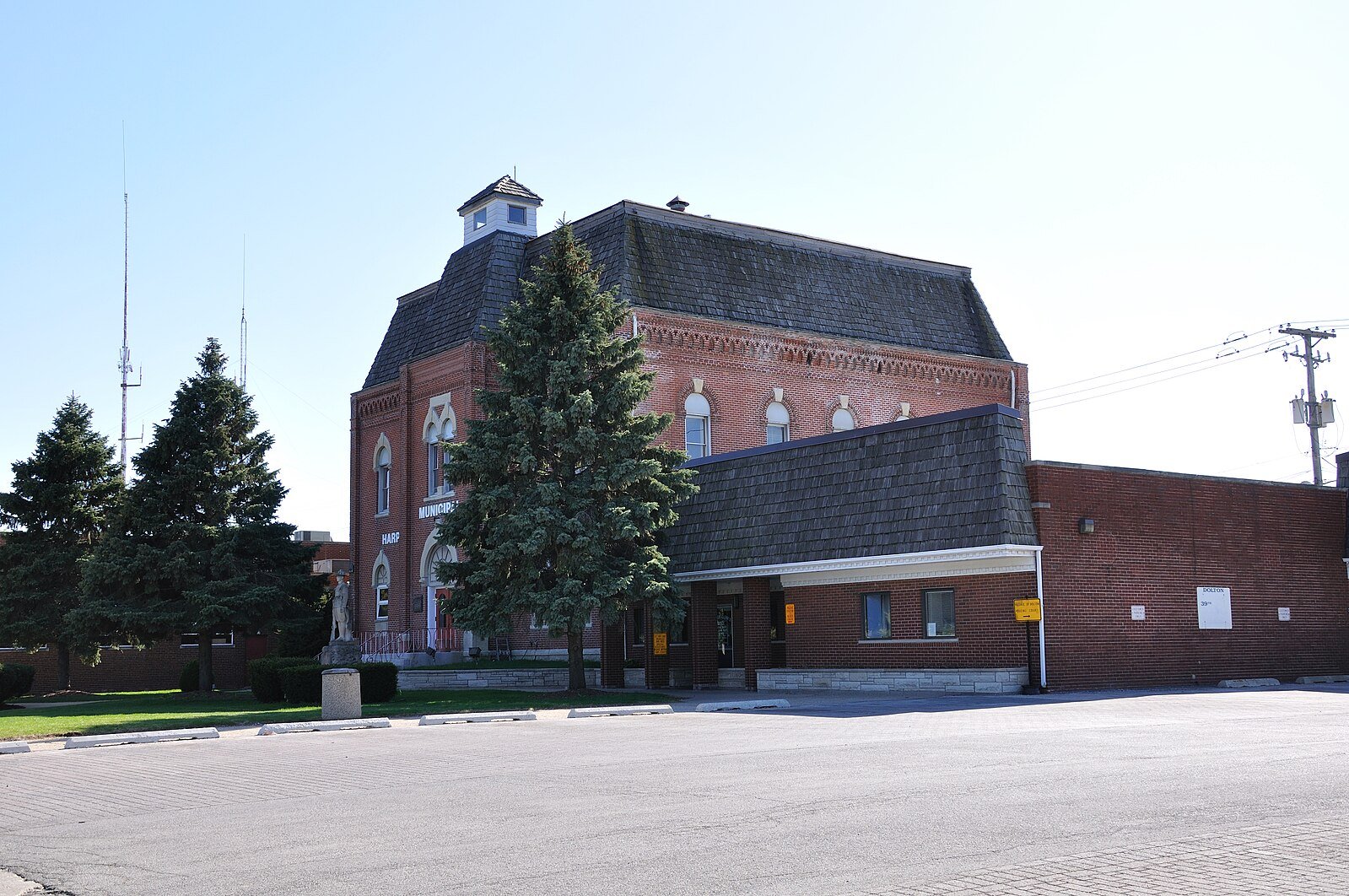
Dolton Municipal Building, from https://commons.wikimedia.org/wiki/File:Dolton_Municipal_Building_%284534670751%29.jpg; creative commons 2.0
Our new pope is from Chicago.
Or maybe not, depending on definitions.
After all, his childhood home is in Dolton, though his childhood church was on the far south side of Chicago. Yet he attended high school at an old-school minor seminary in Michigan, then went off to Villanova for college, attended seminary in Chicago, and spent a number of years at various assignments in the Augustinian order, and, while he returned to suburban Chicago (Olympia Fields) from 1987 to 1988 to be vocation director and missions director of the Augustinian Province of Our Mother of Good Counsel, and again from 1998 to 2001 as Prior Provincial (Wikipedia is confusing on this point and I’m not actually sure whether he was again actually based in Olympia Fields but the Midwest Augustinians’ website gives a far south side Chicago address so perhaps they moved from Olympia Fields to Chicago in the meantime), those were assignments within the Augustinian order, not as a Chicago parish priest, so his concerns would have been broader and engagement with everyday Chicagoans and his contacts with Chicago politicians far more limited, if at all, compared to Cardinal Cupich.
Does he nonetheless retain a certain affection for the city and feel that’s where his roots are? That’s surely further complicated by the nature of Dolton itself.
There are many suburbs where, had he had grown up there, he might come back and feel things are relatively unchanged. But Dolton? In his childhood, as described in articles I’ve read but didn’t bookmark, it was the sort of place filled with neighborhoods of traditional Catholic families, with boys as altar servers, Friday fish fries, and solid working-class communities. But his childhood church was closed down in 2000-ish, to be merged with another, and that church was merged with two others in 2011, and the demographics of the new church, well, they’ve changed, just as much as the area has changed.
Here are the key numbers from Wikipedia:
Pope Leo was born in 1955.
In 1950, Dolton had a population of 5,338.
In 1960, the town’s population had mushroomed to 18,746. It further grew to 25,937 in 1970, the peak census year.
In 1980, the town’s population was 94% white and 2% black; excluding the 3% potential “white Hispanic”, that’s still at least 91% white.
In 2020, the population was flipped; 90% black and 3% white (with 4% Hispanic), with the population shift occurring in the 80s and 90s.
Also, the crime rate is high – rated a “D” by crimegrade.org. And its economic well-being is low; formerly a town of factories and plentiful blue-collar jobs, they have largely dried up. Dolton up until now had most recently made the news for its corrupt mayor.
Looking at Statistical Atlas gives more info: the few white residents who remain are disproportionately old, that is, above age 65, and among young adults and children, there are some age groups with only small slivers of white residents in the chart. There are considerably fewer married couples and far more single moms than the Illinois average. The median household income is $44,500, compared to $59,000 for all of Illinois, and ranking 8th from bottom among about 55 Chicago towns (this was based on my counting them up one-by-one). Honestly, Dolton’s not great, but despite the whole issue with its corrupt mayor, it is a notch above the poor south suburbs of Robbins ($30.5K), Gary ($28.9K), and East Chicago ($27.3K) and the dirt-poor suburbs of Ford Heights ($23.2K) and Harvey ($21.9K), so that’s at least something.
In addition, the unemployment rate is high — 15.8%, vs 5.3% for all of Illinois. The rates are especially high for young adults — 38% for ages 20 – 21, 29% for ages 22 – 24, and 26% for ages 25 – 29 — and in these age ranges far more men are unemployed than women, with a gap of about 20 percentage points in the employment rate. Also, 28.9% of the population is on food stamps, compared to 13.3% statewide.
This is all context for the reports that the mayor of Dalton wants to buy the Pope’s childhood home, which the current owner had purchased and remodeled in a “flip”, then pulled off the market immediately after the announcement of the new pope, and now has placed up for auction, with a reserve/minimum price of $250,000, or $50,000 more than his prior asking price. Ironically, the house would have actually had more value before the flip, as it appears that it was in its original condition then, and is now just a generic white remodel.
But what would the significance of his birthplace be?
Many years ago, in a stretch of doing genealogical research, we identified my mother’s childhood home from census records, then tried to find it on a map. Turns out, it no longer exists, and appears to have been knocked down to build a highway, though we’re not entirely sure as so much of that area is gone that it was difficult to figure out where it would have been.
Pope Leo’s childhood home still exists as a structure. But the neighborhood he grew up in, the environment that was a part of his vocation to the priesthood, which may have in some way contributed to his perspectives, shaped him as a priest, that’s gone in many ways. I’d seen the demographic changes attributed to “white flight” but (though I couldn’t really find a lot online, since no one particularly cares about Dolton) I would guess that it was more a matter of the loss of jobs in the area leading existing residents to leave in search of jobs while at the same time, black Chicagoans moved outwards in hopes of a better life. But a neighborhood in which “everyone is Catholic and you see your friends and neighbors at church” is far more rare than it was. It reminds me more of the neighborhoods profiled in Tim Carney’s Family Unfriendly as idealized family-friendly neighborhoods where no one needs to schedule playdates and where socializing requires no special planning. Of course, in 1955, living in such a neighborhood was perfectly ordinary; now, that’s an intentional choice, and one of the neighborhoods Carney profiled was a Jewish neighborhood where families clustered together because of the need to walk to the synagogue. Ironically, the closest Catholic equivalent these days are probably neighborhoods which have sprung up around Latin Mass parishes, as people look to live near like-minded Catholics. But there’s little value in living “near” a relatively-recent suburban-style Catholic church, when it’s not within a subdivision but requires driving no matter what. Even in my neighborhood, there were far more Catholic families on the block when we first moved in 22 years ago than there are now; used to be our block-away-from-church location meant there were a steady stream of kids walking to school in the morning but that’s gone now as the school size has shrunk and the remaining families don’t seem to have particularly prioritized walking distance in their home-buying decisions.
So what meaning would a visit to his home impart? A few displays about his childhood would serve only to highlight the loss of cohesive communities since then, whether due to the unintended consequences of “planned communities” which absorbed their residents, or due to deindustrialization, or due to racism, or indeed due to “white flight” at whatever tipping point resulted in white residents leaving because of the demographic change (or because of crime rates). Or perhaps, depending on the angle taken by the display-creator, it would tell a different story, and take the Pope’s apparent mixed-race ancestry to construct a narrative in which his parents had to “hide” their “blackness” (labelling the, and the Pope himself, as black due to the one-drop rule, that is) because of racism.
And, it turns out, there is no historical museum in Dolton, and while there exists on the internet traces of an entity called Dolton Historical Society, it appears to be defunct (or perhaps never existed and its apparent life was generated by AI for ad revenue), so it wouldn’t be too outrageous to use this as an opportunity to (re-)invent one, though one suspects that the leading citizens of Dolton have enough to do just with meeting the city’s basic needs. At the same time, though, honestly, I do wonder what a typical Doltonian (or the more middle-class among their residents) think about the prospect of a museum of the history of their town, at a point in which, demographically speaking, it was not “their” town at all.
Addendum:
Two summers ago, our family vacation was, in part, to Poland — Krakow, Bielsko-Biala, and Wroclow. (Unlike prior trips, I did not write up my commentary in blog posts but just kept a personal journal.) The city of Krakow has always been Polish, Bielsko-Biala had had a mixed German and Polish population before the postwar expulsions, and Wroclaw (pronounced, more or less, “Rot-slav”), formerly Breslau, had been a Prussian, then German city until the borders shifted after World War II (or, to avoid the nicities of the passive voice, before the Allies redrew borders to give the eastern part of contiguous Germany to Poland in compensation for losing Eastern Poland to Ukraine/Belarus), and this was not merely a matter of balancing out the size of the country but in fact Poles expelled from the east were literally resettled into homes which ethnic Germans were forced to abandon (to the extent that they were still standing).
Now, as far as we could tell, Wroclaw was a thriving city; its Old Town, like seeming the rest of Poland, was in the middle of an expansive renovation project, though it didn’t take too long to get to modern or former-communist parts with their hasty rebuild. The city was celebrating an annual festival, with music and Christmas Market-like vendors. There’s a river and small motorboats to rent, and “Cathedral Island,” and a very modern water park-like public pool which would be the envy of Arlington Heights. But the flea market was full of old tableware and World War 2-era newspapers and magazines and postcards, and there was something a bit unsettling about the image of the new residents of abandoned homes, after decades of letting sit the accumulation of abandoned items in basements and attics, now selling them (directly or through the vendors there). And at the same time, the Old Town church where I spontaneously attended Sunday Mass, St. Elizabeth, contained in one of the side chapels a modern stained glass showing Jesus as the shepherd of cities labelled Lviv and others in the lost former eastern Poland.
So how do Wroclawians feel about their city? Do they feel any connection to the German inhabitants who lived there before them? Or is that as irrelevant to them as, say, the knowledge that a number of different native communities lived in or passed through any given American town?
And do the current residents of Dolton feel the same about the previous “white” history of the town?
Previous Post

May 6, 2025
The Hubris of Suburbia, Arlington Heights edition
Next Post
June 3, 2025 Is Cardinal Cupich Failing the Archdiocese of Chicago?
Recent Comments
Browse Our Archives
Select a Category Actuarial/Retirement Issues Politics Uncategorized
Select a Month September 2026 August 2026 July 2026 June 2026 April 2026 March 2026 February 2026 January 2026 December 2025 November 2025 October 2025 July 2025 June 2025 May 2025 April 2025 March 2025 February 2025 January 2025 December 2024 November 2024 October 2024 September 2024 August 2024 July 2024 June 2024 May 2024 April 2024 March 2024 February 2024 December 2023 November 2023 October 2023 September 2023 August 2023 July 2023 December 2022 September 2022 August 2022 July 2022 June 2022 May 2022 February 2022 January 2022 December 2021 August 2021 June 2021 April 2021 February 2021 January 2021 December 2020 November 2020 October 2020 September 2020 August 2020 July 2020 June 2020 May 2020 April 2020 March 2020 February 2020 January 2020 December 2019 November 2019 October 2019 September 2019 August 2019 July 2019 June 2019 May 2019 April 2019 March 2019 February 2019 January 2019 December 2018 November 2018 October 2018 September 2018 August 2018 July 2018 June 2018 May 2018 April 2018 March 2018 February 2018 January 2018 December 2017 November 2017 October 2017 September 2017 August 2017 July 2017 June 2017 May 2017 April 2017 March 2017 February 2017 January 2017 December 2016 November 2016 October 2016 September 2016 August 2016 July 2016 June 2016 May 2016 April 2016 March 2016 February 2016 January 2016 December 2015 November 2015 October 2015 September 2015 August 2015 July 2015 June 2015 May 2015 April 2015 March 2015 February 2015 January 2015 December 2014 November 2014 October 2014 September 2014 August 2014 July 2014 June 2014 May 2014 April 2014 March 2014 February 2014 January 2014 December 2013 November 2013 October 2013 September 2013 August 2013 July 2013
Follow Us!
TAKE THE
Religious Wisdom Quiz
What book comes directly after Lamentations?
Select your answer to see how you score.
Hosea Jeremiah Daniel Ezekiel
Related posts from Jane the Actuary


Illinois’ Assisted Suicide Law is, yes, literally deadly

Revising the "Disability [Pride] Flag"

In which I comment on the Supreme Court...
TRENDING AT PATHEOS Catholic

Pope Leo Celebrates Mass for Nurses & Docs...
I don't have any idea how he did it, but Pope Leo...

The Sermon on the Mount, Part I: Matthew...
The Sermon on the Mount, Part I (Matthew 4:12-5:12) St. Matthew moves...

What's up from Crossway: Reviewing some of their latest A few weeks...

Janie Learns the Way of the Cross: A...
Teaching children about Jesus' Passion can be challenging. Many parents and educators...

Looking For Good Catholic Writing - October 2026
He alone extends the heavens, and he walks upon the waves of...

In "Irreplaceable," our book on vocation and technology, Trevor Sutton and I...
view all Catholic blogs
What Are Your Thoughts?leave a comment
Ad-Free & Subscriber Log-In Subscription Support
- About Us
- 2026 Calendar
- Videos
- Podcasts
- Library of World Religions
- Faith In Media Tracker
- Advertise With Us
- Write for Us
- Privacy Policy
- Terms of Service
- Do Not Sell My Data
- Contact Us
- Radiant Digital
- Manage Newsletter Subscriptions
- Unsubscribe From Notifications
- Sitemap
Copyright 2008-2026, Patheos. All rights reserved.
Subscription Support Ad-Free & Subscriber Log-In
Follow Patheos