
BuddhistCatholicContemplativeEvangelicalGeneral ChristianHinduJewishLatter-day SaintMuslimNew VisionsProgressive Christian
Beliefs
- Buddhist
- Catholic
- Contemplative
- Evangelical
- General Christian
- Hindu
- Jewish
- Latter-day Saint
- More Voices
- Muslim
- New Visions
- Pagan
- Progressive Christian
Topics
- Religion News
- Food and Religion
- Sports and Religion
- Religious Art
- Religious Music and Entertainment
- Religious Events
- History and Religion
- Style and Religion
- Politics and Religion
- Women in Religion
- Recreation Outdoors and Religion
- Business Finance and Religion
- Careers Workplace and Religion
- Education and Religion
- Family Parenting and Religion
- Health Fitness and Religion
- Home and Religion
- Relationships and Religion
- Technology and Religion
- Travel and Religion
Columnists
- Buddhist Columnists
- Business Finance and Religion Columnists
- Careers Workplace and Religion Columnists
- Catholic Columnists
- Contemplative Columnists
- Education and Religion Columnists
- Evangelists Columnists
- Family Parenting and Religion Columnists
- General Christian Columnists
- Health Fitness and Religion Columnists
- Hindu Columnists
- History and Religion Columnists
- Home and Religion Columnists
- Jewish Columnists
- More Voices Columnists
- Latter Day Columnists
- Muslim Columnists
- New Visions Columnists
- Nonreligious Columnists
- Pagan Columnists
- Politics and Religion Columnists
- Progressive Columnists
- Recreation Outdoors and Religion Columnists
- Relationships and Religion Columnists
- Religion News Columnists
- Religious Art Columnists
- Religious Events Columnists
- Religious Music and Entertainment Columnists
- Sports and Religion Columnists
- Style and Religion Columnists
- Technology and Religion Columnists
- Travel and Religion Columnists
- Women in Religion Columnists
Resource Library
- 2026 Calendar
- Library of World Religions
- The 100 Most Holy Places on Earth
- Patheos Answers
- Podcasts
- Videos
- Faith Leaders Database
- Anglican Episcopalian
- Bahai
- Baptist
- Buddhism
- Christianity
- Confucianism
- Eastern Orthodoxy
- Hinduism
- Holiness and Pentecostal
- ISKCON
- Islam
- Judaism
- Lutheran
- Methodist
- The Church of Jesus Christ of Latter-day Saints
- New Age
- Paganism
- Presbytarian and Reformed
- Protestantism
- Religion Behind the Scenes
- Roman Catholic
- Scientology
- Shia Islam
- Sikhism
- Sufism
- Sunni Islam
- Taoism
- Zen
- See all religions
Research Tools
 Ad-Free & Subscriber Log-In Subscription Support
Ad-Free & Subscriber Log-In Subscription Support
Follow Patheos 

- Trending:
- Forgiveness
- |
- Marriage
- |
- Consciousness
- |
- Death Penalty
- |
- Election
- |
- Halloween

- Home
- Catholic
- Politics and Religion
- What does the Pope really think about “just war”?
What does the Pope really think about “just war”?
Last updated on: March 22, 2025 at 8:55 pm by Jane the Actuary
What does the Pope really think about “just war”? 2025-03-22T20:55:24-06:00 Jane the Actuary
Patheos Explore the world's faith through different perspectives on religion and spirituality! Patheos has the views of the prevalent religions and spiritualities of the world.
Going on three years ago, in an interview on June 20, 2022, Pope Francis in an interview made the statement that
I believe it is time to rethink the concept of a ‘just war.’
And some time afterwards I came across this and was mystified at what he could possibly mean. A lengthy explainer in The Pillar seems to claim, based on statements shortly before then, in March (thus, shortly after Russia invaded Ukraine) that the Pope is really saying that a nation which has been attacked should respond by seeking mediation by the international community, that is the United Nations. And honestly however good The Pillar is, generally speaking, this explainer isn’t very explainer-y, or maybe it’s just giving the Pope too much of the benefit of the doubt on the whole idea. After all, the notion that the “international community” would somehow come to the rescue of an invaded country through non-martial means is surely absurd. Did he believe that a proper combination of stern rebukes, sanctions, and superior moral authority would suffice to get an invading country to back down? Does he believe that a “police action” by UN troops doesn’t constitute “war”?
Not according to the June interview:
The pope also said that the situation in Europe today shows that the United Nations “has no power” to stop a war.
“After World War II, trust was placed in the United Nations. It is not my intention to offend anybody, I know there are very good people working there, but at this point, the UN has no power to assert,” he said.
Here’s another quote from the June interview:
Resolving conflicts through war is saying no to verbal reasoning, to being constructive. … War is essentially a lack of dialogue.
This is a head-scratcher. Does he believe that Ukraine should have “dialogued” better with Russia and it was their failure to speak persuasively enough that caused the country to be invaded? Surely he recognizes that Russia has invaded Ukraine to seize territory!
And finally, consider this quote:
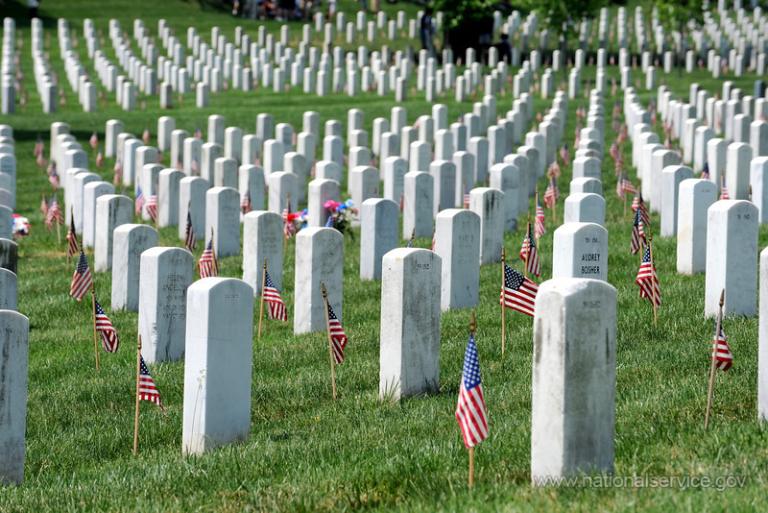
Pope Francis described how he cried during visits to war cemeteries in Europe, including the Redipuglia World War I memorial and Anzio World War II cemetery in Italy.
“And when the anniversary of the landing in Normandy was commemorated, I thought of the 30,000 boys who were left dead on the beach. They opened the boats and said, ‘get off, get off,’ they were ordered while the Nazis waited for them. Is that justified? Visiting military cemeteries in Europe helps one realize this,” he said.
To the extent that he wants to counsel a nation considering a military invasion, sure, yes, its leaders should reflect on the human cost of an attack. And the Redipuglia World War I memorial is sited on a battlefield in which the Italian army attacked Austro-Hungarian territory in a war of conquest (unlike the Eastern and Western Fronts in World War I, where the Central Powers were attacking the Allies, here the Italians were on the offensive). But the Anzio World War II cemetery? The dead buried there were casualties of the Battle of Anzio, a part of the campaign by the allies to retake Europe from the Axis.
And the Pope’s comments about Normandy are more concerning still. To suggest that the deaths of the Allied soldiers on D-Day were not justified in the campaign to retake France – and all of Europe – from the Nazi invaders? Does he think he is a better military strategist and that there were better ways to retake Europe with less loss of life? Or does he believe that the United States and Britain should have sat out and let Germany stay in power?
Concerningly, he doesn’t even have his numbers right – the count is 4,415 Allied soldiers dead and a similar number wounded on that first day. The American cemetery at Normandy contains 9,388 graves, because it includes soldiers who were killed after D-Day itself, hence, not “left dead on the beach.” Honestly, when I read Steven Ambrose’s D-Day, I was rather surprised at the narrative, in which the chaos on Omaha Beach was actually not the case at the other beaches, where the British and Canadians suffered much less loss of life (not because they were “better” armies but because of the geography).
But all that being said: we are now reaching a point in the war in Ukraine where there are actual “just war” considerations, not from the perspective of Russia, since it’s a given that their attack was unjust, but from the perspective of Ukraine, or from the US (considering the question of continued support), where the question is this:
In the event that Ukraine can be assured that a cease-fire would not result in being overrun by Russia, should the country continue to fight to regain lost territory, or should it accept its loss of territory?
And a couple weeks ago in my women’s church group, we read a portion of the catechism which included the Just War principles, and the one that stuck out to me was this:
There must be serious prospects of success.
If the Ukranians’ continual conscription and battles have as their likely consequence continued loss of life for a fruitless military objective, this would not be a “just war” according to the traditional definition.
On the other hand, perhaps “success” must be defined as “stalemate” because the alternative is being overrun by Russians, which meets the criteria of “the damage inflicted by the aggressor on the nation or community of nations must be lasting, grave, and certain” since Russia would, in that case, wipe Ukraine off the face of the map, that is, eliminate it as a geographic entity, as a culture, as a language.
So, as is often the case, it’s a muddle and I don’t have any answers, just a few things I am thinking about.
Image: Arlington National Cemetery, public domain (all federal government images are in the public domain.)
Previous Post

February 28, 2025
Do you have a "Third Place"?
Next Post

March 31, 2025 Why are American mobile phone plans so expensive?
Browse Our Archives
Select a Category Actuarial/Retirement Issues Politics Uncategorized
Select a Month September 2026 August 2026 July 2026 June 2026 April 2026 March 2026 February 2026 January 2026 December 2025 November 2025 October 2025 July 2025 June 2025 May 2025 April 2025 March 2025 February 2025 January 2025 December 2024 November 2024 October 2024 September 2024 August 2024 July 2024 June 2024 May 2024 April 2024 March 2024 February 2024 December 2023 November 2023 October 2023 September 2023 August 2023 July 2023 December 2022 September 2022 August 2022 July 2022 June 2022 May 2022 February 2022 January 2022 December 2021 August 2021 June 2021 April 2021 February 2021 January 2021 December 2020 November 2020 October 2020 September 2020 August 2020 July 2020 June 2020 May 2020 April 2020 March 2020 February 2020 January 2020 December 2019 November 2019 October 2019 September 2019 August 2019 July 2019 June 2019 May 2019 April 2019 March 2019 February 2019 January 2019 December 2018 November 2018 October 2018 September 2018 August 2018 July 2018 June 2018 May 2018 April 2018 March 2018 February 2018 January 2018 December 2017 November 2017 October 2017 September 2017 August 2017 July 2017 June 2017 May 2017 April 2017 March 2017 February 2017 January 2017 December 2016 November 2016 October 2016 September 2016 August 2016 July 2016 June 2016 May 2016 April 2016 March 2016 February 2016 January 2016 December 2015 November 2015 October 2015 September 2015 August 2015 July 2015 June 2015 May 2015 April 2015 March 2015 February 2015 January 2015 December 2014 November 2014 October 2014 September 2014 August 2014 July 2014 June 2014 May 2014 April 2014 March 2014 February 2014 January 2014 December 2013 November 2013 October 2013 September 2013 August 2013 July 2013
Follow Us!
TAKE THE
Religious Wisdom Quiz
What body of water did Peter walk on at Jesus' invitation?
Select your answer to see how you score.
Dead Sea Sea of Galilee Red Sea Mediterranean Sea
Related posts from Jane the Actuary
How smart is the Pope, really?
What's going on at the Amazon Synod?
Does the Mass make a difference?
TRENDING AT PATHEOS Catholic

Swimfan: Forgotten Aughts Pleasures
This is a recovery effort. In 2002, My Big Fat Greek Wedding...

Top Three Anti-Catholic Lies About Catholicism
This is my initial transcript for the video, "THE 3 WORST...

Pope Leo Celebrates Mass for Nurses & Docs...
I don't have any idea how he did it, but Pope Leo...

The Sermon on the Mount, Part I: Matthew...
The Sermon on the Mount, Part I (Matthew 4:12-5:12) St. Matthew moves...

What's up from Crossway: Reviewing some of their latest A few weeks...

Janie Learns the Way of the Cross: A...
Teaching children about Jesus' Passion can be challenging. Many parents and educators...
view all Catholic blogs
Ad-Free & Subscriber Log-In Subscription Support
- About Us
- 2026 Calendar
- Videos
- Podcasts
- Library of World Religions
- Faith In Media Tracker
- Advertise With Us
- Write for Us
- Privacy Policy
- Terms of Service
- Do Not Sell My Data
- Contact Us
- Radiant Digital
- Manage Newsletter Subscriptions
- Unsubscribe From Notifications
- Sitemap
Copyright 2008-2026, Patheos. All rights reserved.
Subscription Support Ad-Free & Subscriber Log-In
Follow Patheos