
BuddhistCatholicContemplativeEvangelicalGeneral ChristianHinduJewishLatter-day SaintMuslimNew VisionsProgressive Christian
Beliefs
- Buddhist
- Catholic
- Contemplative
- Evangelical
- General Christian
- Hindu
- Jewish
- Latter-day Saint
- More Voices
- Muslim
- New Visions
- Pagan
- Progressive Christian
Topics
- Religion News
- Food and Religion
- Sports and Religion
- Religious Art
- Religious Music and Entertainment
- Religious Events
- History and Religion
- Style and Religion
- Politics and Religion
- Women in Religion
- Recreation Outdoors and Religion
- Business Finance and Religion
- Careers Workplace and Religion
- Education and Religion
- Family Parenting and Religion
- Health Fitness and Religion
- Home and Religion
- Relationships and Religion
- Technology and Religion
- Travel and Religion
Columnists
- Buddhist Columnists
- Business Finance and Religion Columnists
- Careers Workplace and Religion Columnists
- Catholic Columnists
- Contemplative Columnists
- Education and Religion Columnists
- Evangelists Columnists
- Family Parenting and Religion Columnists
- General Christian Columnists
- Health Fitness and Religion Columnists
- Hindu Columnists
- History and Religion Columnists
- Home and Religion Columnists
- Jewish Columnists
- More Voices Columnists
- Latter Day Columnists
- Muslim Columnists
- New Visions Columnists
- Nonreligious Columnists
- Pagan Columnists
- Politics and Religion Columnists
- Progressive Columnists
- Recreation Outdoors and Religion Columnists
- Relationships and Religion Columnists
- Religion News Columnists
- Religious Art Columnists
- Religious Events Columnists
- Religious Music and Entertainment Columnists
- Sports and Religion Columnists
- Style and Religion Columnists
- Technology and Religion Columnists
- Travel and Religion Columnists
- Women in Religion Columnists
Resource Library
- 2026 Calendar
- Library of World Religions
- The 100 Most Holy Places on Earth
- Patheos Answers
- Podcasts
- Videos
- Faith Leaders Database
- Anglican Episcopalian
- Bahai
- Baptist
- Buddhism
- Christianity
- Confucianism
- Eastern Orthodoxy
- Hinduism
- Holiness and Pentecostal
- ISKCON
- Islam
- Judaism
- Lutheran
- Methodist
- The Church of Jesus Christ of Latter-day Saints
- New Age
- Paganism
- Presbytarian and Reformed
- Protestantism
- Religion Behind the Scenes
- Roman Catholic
- Scientology
- Shia Islam
- Sikhism
- Sufism
- Sunni Islam
- Taoism
- Zen
- See all religions
Research Tools
 Ad-Free & Subscriber Log-In Subscription Support
Ad-Free & Subscriber Log-In Subscription Support
Follow Patheos 

- Trending:
- Forgiveness
- |
- Marriage
- |
- Consciousness
- |
- Death Penalty
- |
- Election
- |
- Halloween

- Home
- Catholic
- Politics and Religion
- On the end of Roe, and why I’m not as celebratory as I would like to be
On the end of Roe, and why I’m not as celebratory as I would like to be
Last updated on: June 28, 2022 at 6:43 am by Jane the Actuary
On the end of Roe, and why I’m not as celebratory as I would like to be 2022-06-28T06:43:04-06:00 Jane the Actuary
Patheos Explore the world's faith through different perspectives on religion and spirituality! Patheos has the views of the prevalent religions and spiritualities of the world.

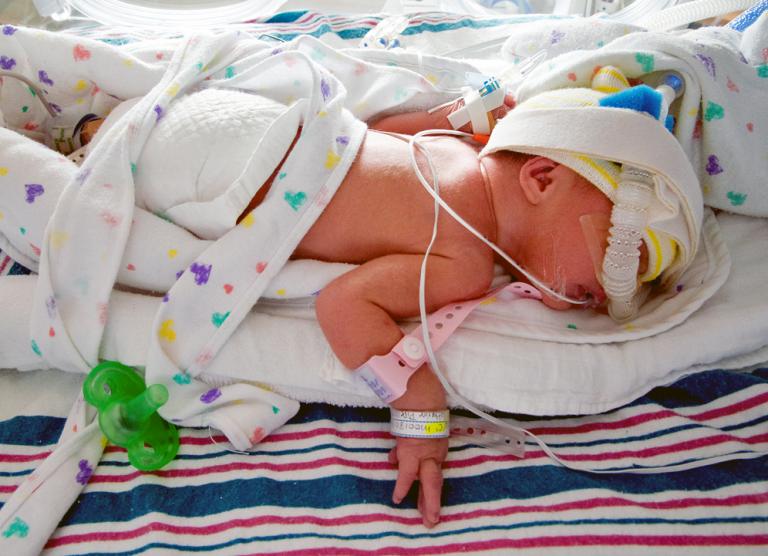
By Carin Araujo, http://www.prtc.net/~carin (Stock.xchng #197853) [Copyrighted free use], via Wikimedia Commons
I keep revisiting this draft, which I started a long time ago, when the Supreme Court decision on Dobbs was first leaked. I’ve written about abortion before, of course, but I keep wanting to express myself in just the right way, which is not only difficult, but, I’m inclined to think, has gotten harder since I don’t write as much these days. (Incidental update: I’m now back to being an actuary, working full-time at a private-sector employer, which means less personal writing and, overall, an adjustment to moving hobby-type activities and errand and family activities to the evenings and weekends, without the same opportunity as I had, even when I was working at my prior job, to take a long lunch when I wanted to write something, since I am now working full rather than part-time.)
It should not surprise readers that I am pleased that Roe v. Wade has been overturned. For all who are horrified that the Supreme Court has made what they think is a “political” decision, I view it as simply the undoing of a prior “political” decision that should have never been made. For those who think that precedent should be sacrosanct, I will call to mind Brown v. Board of Education overturning Plessy v. Ferguson, and the numerous gun restrictionist advocates who believe that Heller, the decision determining/confirming the individual right to bear arms, should be overturned. I also reject the idea that the Supreme Court should base its decisions on what appears to be fair or their perception of “justice” rather than whether the Constitution has something to say about the matter, and that, where the Constitution is silent, especially when there is a conflict in rights, it is up to the legislatures to choose to legislate, or not, and decide where to draw the line on the subject at hand.
At the same time, I am distressed by what seems to be a sort of “retaliatory” lawmaking by “blue” states and poorly-thought-out overenthusiastic restrictions by “red” states. Illinois started out by removing all remaining restrictions from its abortion legislation, requiring that insurance cover abortion with copays no different than for “other pregnancy care” and permitting abortion at any time in the pregnancy for reasons of “emotional health.” Various other states have enacted similar legislation and now California is in the middle of enacting legislation which would directly provide money to women to cover the costs of traveling to California for abortions. At the same time, various other states — Oklahoma comes to mind — are quickly passing bans, and other states have had “trigger laws” all along, but the legislation does not seem to clearly spell out how women with ectopic pregnancies, miscarriages underway or life-threatening emergencies are protected (either that, or the activists who claim women are at risk are telling lies, but I follow enough twitter accounts that I should have seen clarifications, were anti-abortion activists working hard enough at getting the word out). I would certainly prefer some sort of middle-ground in which some degree of abortion is available everywhere, but restricted to the earliest stages, than an outcome in which abortion is completely banned in some states and enthusiastically celebrated in others, because, even though every abortion takes a human life, it is, simply, honestly, worse, the more developed the child is — and that’s not just a matter of pain or some greater degree of sentience, but the fact that I think it harms all of us as a society, to accept the killing of what we all know is a human being, at a stage of development well beyond the “it looks weird,” because it suits our purposes.
It dismays me that in the space of a decade we have gone from “I am personally opposed to abortion but don’t feel comfortable with a ban” to “abortion is a positive good.” I have written about this in the past (or I think I have!), with respect to the sort of voices that are loud in the political discourse, the “shout your abortion,” the move from justifying abortion because of the difficult personal circumstances of women seeking abortion to the insistence that abortion is simply not a decision of any moral significance, but rather a routine medical procedure, to be avoided where possible only insofar as it is costlier and more inconvenient than consistent use of contraception.
But I have now watched my Facebook feed and have seen even women who are involved in church activities in various ways, or at least sent their children to Catholic schools, adopt the line not just that “I can’t judge a woman who gets an abortion” but that “women need abortion” — whether in difficult circumstances or just in any circumstance in which they don’t want to be pregnant. And I have seen them trot out claims “Catholics for Choice” makes that Catholic theologians were just fine with abortion until “quickening.” (Not true — the very earliest Christian writings outside of the Bible itself condemn abortion, and the later distinctions about “ensoulment” or “quickening” were a matter of how serious a sin abortion was, not whether it was a sin.) It’s deeply discouraging. How often do we now hear that without abortion, women cannot be the equals of men, because men, apparently, cannot be compelled to support their children, so women must conform to society’s demands to be childless?
The end of Roe ought to bring about a real reckoning: legislators in abortion-banning/restricting states ought to be grappling with the best way to support women with unplanned pregnancies, and their children after they are born. These are not easy questions. The answer is not “no one should have sex unless they are prepared to have a child,” nor is it “if charities step up, that’ll solve everything.” Likewise, it is not “teen girls should be given implants when they reach puberty,” or “we need to drill teens into using contraception,” or “free childcare and generous child benefits for all.” Maybe it’s a mix of all of these — and it’ll be complicated and require compromises and recognition that people won’t always behave as we want them to, won’t give up their babies to adoption however much that might seem like the practical choice, and that to whatever extent there are a greater number of babies born to poor women, both individual charities and the government at all levels will need to make greater provision for poor children. And however much politicians might have said in the past that they want to care for pregnant women and the children they bear, it is a heck of a lot easier to say “we tried but they refused our help” than it is to deal with the real world situation of women and children in poverty.
And it goes beyond this: our court system does not, to my understanding, make adequate provision for women to truly obtain child support orders from the fathers of their children, and does not enforce them. Why this is, I don’t know — whether it’s a casualty of general underfunding, or if the issue is around the cost of lawyers, or something else. And many young men would like to support the children they father but don’t themselves have the skills to parent or to earn a living (and however much we agonize over young women with unplanned pregnancies, it is disadvantaged young men, more than young women, who end up as NEET — not in employment, education, or training).
And, again, I’m in Illinois, which is planning to become the “abortion capital of the Midwest.” Its politicians hope to lure companies here with the promise that their female employees will have access to unrestricted abortion, and the local news reporting is one report after the next on how women need abortion. Chicago’s mayor Lori Lightfoot told Justice Thomas “f* you” and there was a local protest last night, too, with a “F* YOU” sign prominently in front.
I am not good at explaining my views, certainly not in person, and, judging by how long I’ve been plunking away at what is in the end not a very coherent post, not on paper either. But I am deeply saddened every time I see protests and read commentary that insists that women cannot achieve equality unless we can destroy unborn babies whenever we don’t want them.
Once, many years ago, I supported with monthly donations a local crisis pregnancy center. They closed down and it wasn’t entirely clear to me whether it was lack of donations or lack of clientele, and now I’m not even sure where to start to find a new organization to donate to.
Anyway, all that being said, as I said, some time ago I started to draft a post by going back to what I had written in the past, but I didn’t really know how to fit it all together. For what it’s worth, here’s that review of my prior writing on the issue.
On May 17, 2019, I wrote, “The statistics on abortion and social class,” in which I explored data around women’s income level and abortion, looking at data cited at Brooking, and finding that, in a national sample, among unmarried women not actively trying to get pregnant, poor women had a substantially higher rate of getting pregnant in a given year relative to non-poor women (9% for those literally below the poverty rate vs. rates hovering at 5% for women at income tiers above this, and 3% for women above 400% of the poverty line), but were also less likely to get abortions (9% of those pregnancies, vs. 32% for the wealthiest group of women), as a proportion of pregnancies, resulting in overall abortion rates that were about the same for these income classes.
On January 30, 2019, I looked into an emerging trend of bills claiming to “codify Roe v. Wade” but which really rejected any limits on abortion, based on the rationale that those late abortions “hardly ever happen,” and did some math, comparing a Guttmacher report that 1.2% of abortions occur after 20 weeks to the latest available statistics on murder: 17,284 cases in 2017 in the US, or 0.005% of the total American population. We do not shrug off murder as happening so infrequently that it is not worth making criminal, nor do we say that the cost of prosecuting murder cases is too high a burden, neither in terms of the dollars spent nor the burden placed on those who are ultimately found innocent, but abortion rights supporters are in fact quite willing to say that those babies are mere collateral damage who must be sacrificed to keep women’s rights intact.
Separately, on May 29, 2019, I dug up the statistics on children who died of abuse or neglect — a total of 1,720 in 2017 — to make the point that a justification for legal abortion at the later stages of pregnancy of “it hardly happens” is not something we deem acceptable in other circumstances.
On December 6, 2016, I wrote about an Economist article which claimed that the path towards reduced abortion was for governments to make hormonal contraception widely available and free of charge. They cited various countries which culturally reject IUDs and the like, including, most notably, Japan, and, among European countries, variations in the level of government subsidy of hormonal and highly-effective contraceptives. But they failed to make their case when countries they cited as having free highly-effective contraceptives, such as the UK, had higher abortion rates than countries with copays, such as Germany. I no longer have an Economist subscription, so I’ve pulled up another link with abortion rates, which finds that IUD-fearing Greece’s rate is 5 per 1,000 women, copay-requiring Germany’s rate is 7.8 per 1,000 women, condom-reliant Japan’s is 12.3, and free-contraception UK’s is 17. The US, depressingly, is one of the highest, at 20.8 — of “Western” countries, excluding former Warsaw Pact countries, there is none higher.
On February 11, 2016, I put together info from various sources on late-term abortion. Not much is particularly new but I did unearth a case of a late-term abortion, at 28 weeks, which made the news because it was a rare instance of prosecuting the doctor because the state’s law requires medical necessity and it was acknowledged by the woman herself that she wanted the abortion because the father of the child had left her. In the end, nothing much happened except a plea deal to cop to falsifying medical records, because he had documented the abortion as occurring at 24 weeks. One again my purpose was to push back on the claim, being made by Clinton and Sanders at the time, that late-term abortions only ever happen because of medical necessity. I also dug into issues of the Catholic ethical directives, though with acknowledged “I am not a doctor” limitations.
I also observed, in a January 22, 2016 blog post, that the old notion of “we can find common ground in making abortion rare” had disappeared, and replaced by “abortion is a common-sense routine medical procedure as a form of back-up contraception.” And, honestly, I’m kind of surprised that I hadn’t written more on this last topic, but on February 8, 2020, I wrote that the Democrats’ extremism on abortion, their refusal to accept any restrictions at all, their demand for federal funding, and the new mandate by abortion supporters, that even suggesting there is any reason for moral hesitancy when it comes to abortion, is verboten, meant that I cannot vote for a Democratic politician.
Previous Post

May 17, 2022
Yes, you should object to saying "they"
Next Post

July 31, 2022 New Job! A few personal updates
Browse Our Archives
Select a Category Actuarial/Retirement Issues Politics Uncategorized
Select a Month September 2026 August 2026 July 2026 June 2026 April 2026 March 2026 February 2026 January 2026 December 2025 November 2025 October 2025 July 2025 June 2025 May 2025 April 2025 March 2025 February 2025 January 2025 December 2024 November 2024 October 2024 September 2024 August 2024 July 2024 June 2024 May 2024 April 2024 March 2024 February 2024 December 2023 November 2023 October 2023 September 2023 August 2023 July 2023 December 2022 September 2022 August 2022 July 2022 June 2022 May 2022 February 2022 January 2022 December 2021 August 2021 June 2021 April 2021 February 2021 January 2021 December 2020 November 2020 October 2020 September 2020 August 2020 July 2020 June 2020 May 2020 April 2020 March 2020 February 2020 January 2020 December 2019 November 2019 October 2019 September 2019 August 2019 July 2019 June 2019 May 2019 April 2019 March 2019 February 2019 January 2019 December 2018 November 2018 October 2018 September 2018 August 2018 July 2018 June 2018 May 2018 April 2018 March 2018 February 2018 January 2018 December 2017 November 2017 October 2017 September 2017 August 2017 July 2017 June 2017 May 2017 April 2017 March 2017 February 2017 January 2017 December 2016 November 2016 October 2016 September 2016 August 2016 July 2016 June 2016 May 2016 April 2016 March 2016 February 2016 January 2016 December 2015 November 2015 October 2015 September 2015 August 2015 July 2015 June 2015 May 2015 April 2015 March 2015 February 2015 January 2015 December 2014 November 2014 October 2014 September 2014 August 2014 July 2014 June 2014 May 2014 April 2014 March 2014 February 2014 January 2014 December 2013 November 2013 October 2013 September 2013 August 2013 July 2013
Follow Us!
TAKE THE
Religious Wisdom Quiz
What city did Jesus grow up in?
Select your answer to see how you score.
Bethlehem Nazareth Capernaum Jericho
Related posts from Jane the Actuary

The ERA of 1972 no longer exists in...

What's A Pro-Life Illinoisan To do?
The Violinist vs. the Castaway, and an attempt...
An Imaginary Speech from Amy Klobuchar
TRENDING AT PATHEOS Catholic

Looking at the Largest Orthodox Cathedral on Earth
There is often a considerable amount of anger and, shall we...

The Problem with False Prophets
Miller’s Station UMC| 10/18/26| Anchor Verse: Jeremiah 23: 1, 9-23 I...

Emotion in Early Christianity by Andrew Crislip
Andrew Crislip’s Emotion in Early Christianity examines an often overlooked dimension of...

16 Spiritual Touchstones for a More Grounded Life
After decades of spiritual study, here are 16 principles I try...

Catholic Evangelization: Sharing Your Faith Every Day
Welcome back to the Graceful Awakening mini-series called, “From Faith to Mission.” ...

The Pillar of the Boatmen: the Ancient Monument...
The Pillar of the Boatmen is a Romano-Gaulish sculpture that dates from...
view all Catholic blogs
Ad-Free & Subscriber Log-In Subscription Support
- About Us
- 2026 Calendar
- Videos
- Podcasts
- Library of World Religions
- Faith In Media Tracker
- Advertise With Us
- Write for Us
- Privacy Policy
- Terms of Service
- Do Not Sell My Data
- Contact Us
- Radiant Digital
- Manage Newsletter Subscriptions
- Unsubscribe From Notifications
- Sitemap
Copyright 2008-2026, Patheos. All rights reserved.
Subscription Support Ad-Free & Subscriber Log-In
Follow Patheos