
BuddhistCatholicContemplativeEvangelicalGeneral ChristianHinduJewishLatter-day SaintMuslimNew VisionsProgressive Christian
Beliefs
- Buddhist
- Catholic
- Contemplative
- Evangelical
- General Christian
- Hindu
- Jewish
- Latter-day Saint
- More Voices
- Muslim
- New Visions
- Pagan
- Progressive Christian
Topics
- Religion News
- Food and Religion
- Sports and Religion
- Religious Art
- Religious Music and Entertainment
- Religious Events
- History and Religion
- Style and Religion
- Politics and Religion
- Women in Religion
- Recreation Outdoors and Religion
- Business Finance and Religion
- Careers Workplace and Religion
- Education and Religion
- Family Parenting and Religion
- Health Fitness and Religion
- Home and Religion
- Relationships and Religion
- Technology and Religion
- Travel and Religion
Columnists
- Buddhist Columnists
- Business Finance and Religion Columnists
- Careers Workplace and Religion Columnists
- Catholic Columnists
- Contemplative Columnists
- Education and Religion Columnists
- Evangelists Columnists
- Family Parenting and Religion Columnists
- General Christian Columnists
- Health Fitness and Religion Columnists
- Hindu Columnists
- History and Religion Columnists
- Home and Religion Columnists
- Jewish Columnists
- More Voices Columnists
- Latter Day Columnists
- Muslim Columnists
- New Visions Columnists
- Nonreligious Columnists
- Pagan Columnists
- Politics and Religion Columnists
- Progressive Columnists
- Recreation Outdoors and Religion Columnists
- Relationships and Religion Columnists
- Religion News Columnists
- Religious Art Columnists
- Religious Events Columnists
- Religious Music and Entertainment Columnists
- Sports and Religion Columnists
- Style and Religion Columnists
- Technology and Religion Columnists
- Travel and Religion Columnists
- Women in Religion Columnists
Resource Library
- 2026 Calendar
- Library of World Religions
- The 100 Most Holy Places on Earth
- Patheos Answers
- Podcasts
- Videos
- Faith Leaders Database
- Anglican Episcopalian
- Bahai
- Baptist
- Buddhism
- Christianity
- Confucianism
- Eastern Orthodoxy
- Hinduism
- Holiness and Pentecostal
- ISKCON
- Islam
- Judaism
- Lutheran
- Methodist
- The Church of Jesus Christ of Latter-day Saints
- New Age
- Paganism
- Presbytarian and Reformed
- Protestantism
- Religion Behind the Scenes
- Roman Catholic
- Scientology
- Shia Islam
- Sikhism
- Sufism
- Sunni Islam
- Taoism
- Zen
- See all religions
Research Tools
 Ad-Free & Subscriber Log-In Subscription Support
Ad-Free & Subscriber Log-In Subscription Support
Follow Patheos 

- Trending:
- Forgiveness
- |
- Marriage
- |
- Consciousness
- |
- Death Penalty
- |
- Election
- |
- Halloween

- Home
- Catholic
- Politics and Religion
- On her feast day: Elizabeth Ann Seton and the Latin Mass fuss
On her feast day: Elizabeth Ann Seton and the Latin Mass fuss
Last updated on: January 4, 2022 at 11:00 am by Jane the Actuary
On her feast day: Elizabeth Ann Seton and the Latin Mass fuss 2022-01-04T11:00:26-06:00 Jane the Actuary
Patheos Explore the world's faith through different perspectives on religion and spirituality! Patheos has the views of the prevalent religions and spiritualities of the world.
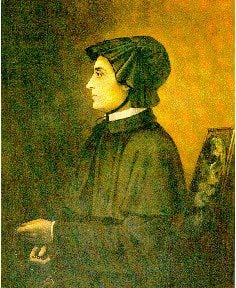
It’s Elizabeth Ann Seton’s feast day today. You know her — first American-born saint, founder of what became the Catholic school system in the United States, widow and mother. What follows is something of a re-write of my blog post from a couple years ago, with a bit of a different take in light of Cardinal Cupich’s new actions against the Traditional Latin Mass.
First, a mini-biography.
Elizabeth Ann Seton was raised as an Episcopalian, devout but also happy to enjoy life as part of the social elite of New York in the early years of independence. After marrying William Seton, of a well-to-do business family, she had five children, but the family business crashed and William suffered from tuberculosis, so they travelled with their eldest daughter to Italy in 1803, in hopes that the milder weather could improve his health, but he died shortly after arriving. For some time after his death, before she could arrange return passage, she stayed with the Filicchi family, business associates of the Setons, and Antonio and his wife Amabilia shared with her both the treasures of Italy and their Catholic faith. Elizabeth returned to the United States the following spring, and converted to Catholicism in 1805, whereupon she faced several years of rejection by her family and struggle to support her children before, with the financial support of benefactors, she founded a school for poor children and a religious order, the Sisters of Charity. She died on January 4, 1821.
Some time ago, I had acquired a collection of her writings, from the Sources of American Spirituality series (Paulist Press, edited by Ellin Kelly and Annabelle Melville, 1987). Here are a few of the passages that I had bookmarked at the time.
This is some particular festival here — Mrs. F. took me with her to mass as she calls it, and we say to church — I don’t know how to say the awful effect at being where they told me God was present in the blessed sacrament, and the tall pale meek heavenly looking man who did I don’t know what for I was the side of the alter, so that I could not look up without seeing his countenance on which many lights from the altar reflected, and gave such strange impressions to my soul that I could but cover my face with my ands and let the tears run — oh my the very little while we were there will never be forgotten though I saw nothing and no one, but this more than human person as he seemed to me. (p. 131, Feb 2, 1804 in her journal, written as addressed to her sister-in-law)
Then on February 10th (p 131-2):
these dear people are so strange about religion. I asked Mr. F, something I don’t know what about the different religions and he began to tell me there was only one true Religion and without a right Faith we could not be acceptable to God — O Sir then said I, if there is but one Faith and nobody pleases God without it, where are all the good people who die out of it — I don’t know he answered, that depends on what light of Faith they had received, but I know where people will go who can know the right Faith if they pray for it and enquire for it, and yet do neither, — much as to say Sir you want me to pray and enquire and be of your Faith said I laughing — pray, and enquire said he, that is all I ask you. so dearest Bec I am laughing with God when I try to be serious and say daily as the good gentleman told me in old Mr. Popes words, “if I am right O teach my heart still in the right to stay if I am wrong thy grace impart to find the better way.” not that I can think there is a better way than I know — but every one must be respected in their own —
the other day a young Englishman brought the blood from my very heart to my face in the church of Montenay where the F. families took Ann and I to a lovely part of the country where Mr. F. had been concealed by the blessed inhabitants of the covent during some political revolution, and they invited us to hear mass in their chapel, there this poor young Englishman at the very moment the Priest was doing the most sacred action they call the elevation, (after the bread you know is blessed with the prayers as they do when we go to communion) just at that moment this wild young man said loud in my ear this is what they call there real PRESENCE – my very heart trembled with shame and sorrow for his unfeeling interruption of their sacred adoration for all around was dead silence and many were prostrated — involuntarily I bent from him to the pavement and thought secretly on the word of St. Paul with starting tears “they discern not the Lords body” and the next thought was how should they eat and drink their very damnation for not discerning it, if indeed it is not there — yet how should it be there, and how did he breathe my Soul in me, and how and how a hundred other things I know nothing about.
And on the 24th (p. 133)
My sister dear how happy would we be if we believed what these dear souls believe, that they possess God in the Sacrament and that he remains in their churches and is carried to them when they are sick.
She then returned to the United States and engaged in a period of study and deliberation documented by letters to the Filicchis and others, struggles compounded by the fact that Catholics were deemed to be the poor rabble of the city, finally in January 1805 writing in another journal account (p. 164-165):
I WILL GO PEACABLY AND FIRMLY TO THE CATHOLICK CHURCH – for if Faith is so important to our Salvation I will seek it where true Faith first begun, seek it among those who received it from GOD HIMSELF, the controversies on it I am quite incapable of deciding, and as the strictest Protestant allows Salvation to a good Catholick, to the Catholicks I will go, and try to be a good one, may God accept my intention and pity me.
On March 14, 1805, she made her profession of faith, and on March 20th, her first confession, and on March 25, her first communion, writing
At last Amabilia — at last — GOD IS MINE and I AM HIS — Now let all go its round – I HAVE RECEIVED HIM
The remainder of the volume is less interesting to me because it’s her correspondence, more journals, etc., from her post-conversion period and her years as Mother Seton. For more details, here’s a brief biography of her, and a lengthier one here.
Now, to be clear, my take on the Traditional Latin Mass vs. the post-Vatican II version is that, Cupich’s yammering about “unity” notwithstanding, different people can find meaning in different forms of worship. Many people, perhaps even the majority of Catholics pre-Vatican II, perceived of the Latin Mass as something to just check off their to-do list each week, not benefitting from it spiritually at all. Others now perceive the modern form the same way, as a very ho-hum obligation for an hour, with nothing particularly sacred about it. Especially in the modern world in which we have access to so much media with high-quality production values, a mediocre cantor or a priest with a heavy accent can detract from the “experience” if you expect to be uplifted by a “production” such as a contemporary Protestant church might give you.
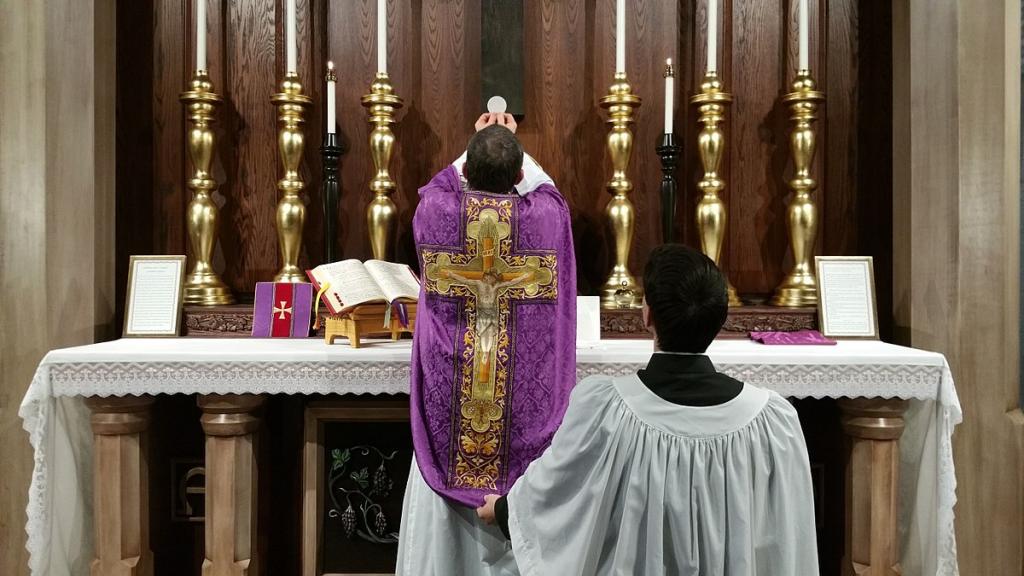
But can you imagine Elizabeth going to a modern mass and feeling this same sense of the sacred that so moved her, let alone the conviction that the Real Presence was, well, real — not just something to be learned in a catechism class, but something profound?
I have attended Latin Masses. I have concluded that it’s not my jam. But at the same time, I believe that people who say that there is nothing of value in that liturgy make a mistake, especially at a point when church attendance has dropped off so sharply, not merely because of Covid but certainly compounded by that. There are certain efforts to make mass more attractive to people, but we will never succeed in bringing people in based on “entertainment value.”
Fundamentally, for those people who make the point of attending Latin Mass, they do so not because of a conviction that the post-Vatican II mass is invalid but because it is this form of liturgy which gives them the feeling that “something sacred is taking place.” And that’s worth thinking about.
Image: https://commons.wikimedia.org/wiki/File:Saint_Elizabeth_Ann_Seton_(1774_-_1821).gif; UnknownUnknown author [Public domain], via Wikimedia Commons (no higher-resolution image appears to be clearly enough in the public domain)
Previous Post
January 1, 2022
Three Cardinal Cupich Updates That Make The Story Look Even Worse
Next Post
January 4, 2022 Santorini (a vacation sewing project)
Browse Our Archives
Select a Category Actuarial/Retirement Issues Politics Uncategorized
Select a Month September 2026 August 2026 July 2026 June 2026 April 2026 March 2026 February 2026 January 2026 December 2025 November 2025 October 2025 July 2025 June 2025 May 2025 April 2025 March 2025 February 2025 January 2025 December 2024 November 2024 October 2024 September 2024 August 2024 July 2024 June 2024 May 2024 April 2024 March 2024 February 2024 December 2023 November 2023 October 2023 September 2023 August 2023 July 2023 December 2022 September 2022 August 2022 July 2022 June 2022 May 2022 February 2022 January 2022 December 2021 August 2021 June 2021 April 2021 February 2021 January 2021 December 2020 November 2020 October 2020 September 2020 August 2020 July 2020 June 2020 May 2020 April 2020 March 2020 February 2020 January 2020 December 2019 November 2019 October 2019 September 2019 August 2019 July 2019 June 2019 May 2019 April 2019 March 2019 February 2019 January 2019 December 2018 November 2018 October 2018 September 2018 August 2018 July 2018 June 2018 May 2018 April 2018 March 2018 February 2018 January 2018 December 2017 November 2017 October 2017 September 2017 August 2017 July 2017 June 2017 May 2017 April 2017 March 2017 February 2017 January 2017 December 2016 November 2016 October 2016 September 2016 August 2016 July 2016 June 2016 May 2016 April 2016 March 2016 February 2016 January 2016 December 2015 November 2015 October 2015 September 2015 August 2015 July 2015 June 2015 May 2015 April 2015 March 2015 February 2015 January 2015 December 2014 November 2014 October 2014 September 2014 August 2014 July 2014 June 2014 May 2014 April 2014 March 2014 February 2014 January 2014 December 2013 November 2013 October 2013 September 2013 August 2013 July 2013
Follow Us!
TAKE THE
Religious Wisdom Quiz
What did Moses' staff turn into before Pharaoh?
Select your answer to see how you score.
A serpent A pillar of fire A bird A stone
Related posts from Jane the Actuary
Is the cruelty the point? Cardinal Cupich's mean-spirited...
Happy Elizabeth Ann Seton Day! (with discussion questions)

TRENDING AT PATHEOS Catholic

The Problem with False Prophets
Miller’s Station UMC| 10/18/26| Anchor Verse: Jeremiah 23: 1, 9-23 I...

Emotion in Early Christianity by Andrew Crislip
Andrew Crislip’s Emotion in Early Christianity examines an often overlooked dimension of...

16 Spiritual Touchstones for a More Grounded Life
After decades of spiritual study, here are 16 principles I try...

Catholic Evangelization: Sharing Your Faith Every Day
Welcome back to the Graceful Awakening mini-series called, “From Faith to Mission.” ...

The Pillar of the Boatmen: the Ancient Monument...
The Pillar of the Boatmen is a Romano-Gaulish sculpture that dates from...

In one sense walking into Westminster Abbey is like walking down the...
view all Catholic blogs
Ad-Free & Subscriber Log-In Subscription Support
- About Us
- 2026 Calendar
- Videos
- Podcasts
- Library of World Religions
- Faith In Media Tracker
- Advertise With Us
- Write for Us
- Privacy Policy
- Terms of Service
- Do Not Sell My Data
- Contact Us
- Radiant Digital
- Manage Newsletter Subscriptions
- Unsubscribe From Notifications
- Sitemap
Copyright 2008-2026, Patheos. All rights reserved.
Subscription Support Ad-Free & Subscriber Log-In
Follow Patheos