
BuddhistCatholicContemplativeEvangelicalGeneral ChristianHinduJewishLatter-day SaintMuslimNew VisionsProgressive Christian
Beliefs
- Buddhist
- Catholic
- Contemplative
- Evangelical
- General Christian
- Hindu
- Jewish
- Latter-day Saint
- More Voices
- Muslim
- New Visions
- Pagan
- Progressive Christian
Topics
- Religion News
- Food and Religion
- Sports and Religion
- Religious Art
- Religious Music and Entertainment
- Religious Events
- History and Religion
- Style and Religion
- Politics and Religion
- Women in Religion
- Recreation Outdoors and Religion
- Business Finance and Religion
- Careers Workplace and Religion
- Education and Religion
- Family Parenting and Religion
- Health Fitness and Religion
- Home and Religion
- Relationships and Religion
- Technology and Religion
- Travel and Religion
Columnists
- Buddhist Columnists
- Business Finance and Religion Columnists
- Careers Workplace and Religion Columnists
- Catholic Columnists
- Contemplative Columnists
- Education and Religion Columnists
- Evangelists Columnists
- Family Parenting and Religion Columnists
- General Christian Columnists
- Health Fitness and Religion Columnists
- Hindu Columnists
- History and Religion Columnists
- Home and Religion Columnists
- Jewish Columnists
- More Voices Columnists
- Latter Day Columnists
- Muslim Columnists
- New Visions Columnists
- Nonreligious Columnists
- Pagan Columnists
- Politics and Religion Columnists
- Progressive Columnists
- Recreation Outdoors and Religion Columnists
- Relationships and Religion Columnists
- Religion News Columnists
- Religious Art Columnists
- Religious Events Columnists
- Religious Music and Entertainment Columnists
- Sports and Religion Columnists
- Style and Religion Columnists
- Technology and Religion Columnists
- Travel and Religion Columnists
- Women in Religion Columnists
Resource Library
- 2026 Calendar
- Library of World Religions
- The 100 Most Holy Places on Earth
- Patheos Answers
- Podcasts
- Videos
- Faith Leaders Database
- Anglican Episcopalian
- Bahai
- Baptist
- Buddhism
- Christianity
- Confucianism
- Eastern Orthodoxy
- Hinduism
- Holiness and Pentecostal
- ISKCON
- Islam
- Judaism
- Lutheran
- Methodist
- The Church of Jesus Christ of Latter-day Saints
- New Age
- Paganism
- Presbytarian and Reformed
- Protestantism
- Religion Behind the Scenes
- Roman Catholic
- Scientology
- Shia Islam
- Sikhism
- Sufism
- Sunni Islam
- Taoism
- Zen
- See all religions
Research Tools
 Ad-Free & Subscriber Log-In Subscription Support
Ad-Free & Subscriber Log-In Subscription Support
Follow Patheos 

- Trending:
- Forgiveness
- |
- Marriage
- |
- Consciousness
- |
- Death Penalty
- |
- Election
- |
- Halloween

- Home
- Catholic
- Politics and Religion
- ACB, the ACA, and Constitutionalism
ACB, the ACA, and Constitutionalism
Last updated on: October 15, 2020 at 12:02 pm by Jane the Actuary
ACB, the ACA, and Constitutionalism 2020-10-15T12:02:11-06:00 Jane the Actuary
Patheos Explore the world's faith through different perspectives on religion and spirituality! Patheos has the views of the prevalent religions and spiritualities of the world.
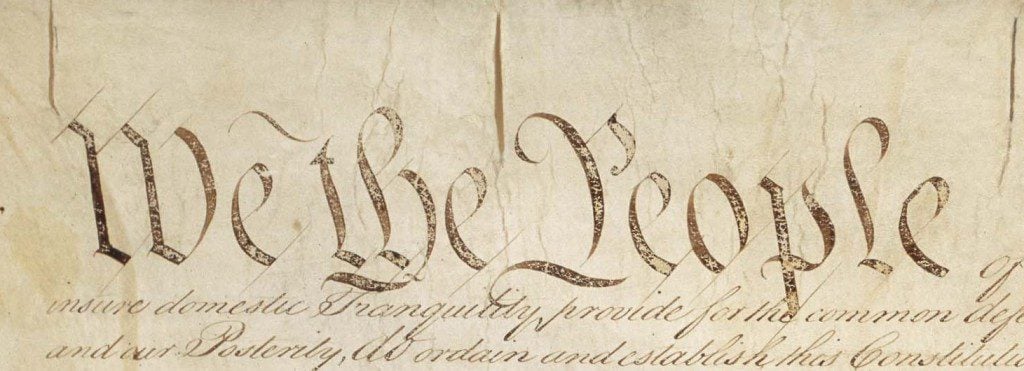
public domain
Are you watching the hearings? Here’s a rant. Some of this I’ve likely said before in other contexts, but here you go.
In the first place, Donald Trump has the legal right to appoint Barrett regardless of what McConnell may or may not have done 4 years ago. The fact that early voting has started in some localities, does not make Trump any less the president, and he remains president until Inauguration Day, and gets to do all the things a president is empowered to do. After all, no one is suggesting that stimulus legislation negotiation talks should end because “people are already voting” and “we’re in the middle of an election” so that our current elected officials should no longer be enacting legislation.
Second annoyance: twitter is chock full of people claiming that “originalism” is bad because it would mean that slavery would still exist. Whether they are being dishonest or just dumb, in rejecting amendments as a part of the constitution and, indeed, the fundamental means of changing the constitution, I don’t know.
Some examples:
An “originalist” reading of the Constitution would disqualify Judge Barrett, or any woman, from serving on the Supreme Court or from owning property or voting.
“Originalism” is a cover for deeply unpopular & un-democratic policies, not some kind of serious judicial philosophy.
— Rep. Barbara Lee (Archived) (@RepBarbaraLee) October 14, 2020
Women couldn’t vote.
Slavery was legal.
AR-15s and the internet and electric lights didn’t exist.But originalism. https://t.co/RpMRHcmKSq
— Chris Murphy
https://twitter.com/AnandWrites/status/1316037610138198018
This is, of course, nonsense.
Third, I am not sure that “originalism” vs. anti-originalism is even the right word to characterize what we’re watching play out here.
That debate exists in issues such as gun control (“the founders didn’t envision that there could be such a thing as a semiautomatic weapon, so the existence of a right to bear arms, in the Constitution as written then, can’t possibly be viewed as providing this right now”) and press freedom (“the technology of the printing press at the time the Constitution was ratified is so different than the internet, Twitter and Facebook today, so the First Amendment couldn’t possibly be viewed as guaranteed unfettered publishing rights now”), but not for most issues, it seems to me.
After all, aside from the “changing technology” issues, above, there are two types of Supreme Court decisions, generally speaking: first, in some cases, the court must assess whether a given legislation exceeds the powers the Constitution grants to Congress, or whether an action by the president/executive branch exceeds its own powers. And in other cases, the Court must determine whether a law (by the state or federal government) violates some right protected by the Constitution. (I suppose there are a third sort of issues, where the Court is called on as a final interpreter of some legislation — for example, the Bostock decision which was not a matter of determining a “right” guaranteed in the constitution but a protection of the Civil Rights Act by taking its text, and the meaning of words, as literally as possible, as I wrote about back in July.)
Of these two types, the Obergefell decision is the latter type: Kennedy determined that the “right” to marry someone of the same sex was protected by the constitution. His reasoning (which I touched on in that prior post) was a stretch, to say the least, defining “liberty” in the Fourteenth Amerdment’s prohibition of the deprivation of “life, liberty, or property,” without due process, not in the common-sense, appropriate-within-the-context meaning in which “deprivation of liberty” means imprisonment/enslavement, but as the ability to make “certain personal choices central to individual dignity and autonomy, including intimate choices that define personal identity and beliefs.”
While I am sure I had read this when it was decided back in 2015, I had forgotten about it and was floored to read this justification, this past summer, because it simply seemed so utterly preposterous. This is not “society has evolved.” This is, “I know the decision I want to make, quite apart from what the Constitution says, and the only challenge is finding some way to justify it.”
And, of course, the various court challenges on the ACA are fundamentally based on the premise that it is not within Congress’s powers to mandate that Americans purchase insurance. Quite apart from whether it is “fair” or “unfair” for Congress to do so, or whether the mandate is a “compromise” from an alternative of universal healthcare provision since that would be an expansion of Medicare that no one objects to, it is simply not among Congress’s enumerated powers (and, no, you can’t subsume this under “regulating commerce” because there is a difference between “regulate” and “mandate”). Roberts, in his 2015 decision (which, surprisingly, I didn’t really address at the time), attempted to square the circle by saying, “it’s not a mandate, it’s a tax.” Now, the decision before the Court is whether that original justification can still stand since the tax has been removed, and it’s become a “pure mandate,” but, at the same time, one without any enforcement mechanism; secondarily, and more crucially, the question is whether a finding that the mandate is unconstitutional must send the entire law toppling, that is, the question of severability. (I wrote about this at Forbes.)
But look at what’s going on at Barrett’s confirmation hearings: Democrats are spending a small fraction of their time questioning Barrett, and much more of their time lamenting the effects of the loss of health insurance if the law is deemed unconstitutional and its provisions non-severable. Here, for instance, is a clip of Sen. Kamala Harris: she spends 10 minutes lamenting the suffering Americans would experience without the ACA. She then asks a series of questions the point of which was to make the claim that Trump nominated her exclusively for the objective of getting the ACA overturned (Barrett of course said she was not aware of any such intent and had made no promises to anyone).
Then Harris raised the example of DACA (that is, the legislation providing renewable legal status to immigrants who arrived as children), and the impact that a ruling against its recipients would have on their lives, asking (rough transcriptions) “Do you consider the consequences of your rulings on people’s lives?”
Barrett replied, “Every case has consequences on people’s lives, so of course I do. . . . [that’s] a part of the decision-making process.”
Harris then launched into a litany of the people who would be affected by the ACA being struck down, and Barrett said that “the question would be figuring out whether [keeping the ACA] would be consistent with [their] intent” and “whether the flawed portion could be excised out.” Harris pushes here to assign a weight she would give to these impacts and Barrett replies:
“Stare decisis takes into account reliance interests. I can’t say how they would play in or weigh in this case. I can’t commit to how I would weigh specific factors.”
This line of questioning (if you can call it that, when there weren’t really much in the way of questions) repeated itself with others: “people rely on Obamacare, and its importance means it would be wrong to take into account the question of whether it is actually constitutional or not.”
All that being said, a couple weeks ago, Ryan Cooper, writing at The Week, made a proposal that was intended to be an alternative to court-packing: if the Supreme Court determines that legislation enacted by a Democratic President and Congress violates the Constitution, that President/Congress should just shrug it off and say, “whatever, thanks but no thanks,” and continue with its implementation. (I suspect he would be less happy with Republicans doing the same.)
Which gets to why I question the label “originalism”: what we’re really talking about is “constitutionalism” — that is, using the Constitution as a basis for decision-making, allowing Congress and state legislatures to legislate within their powers as defined in the Constitution and restricting them as the Constitution so restricts — in contrast a method which uses a sense of what decision would best promote fairness or justice based on one’s own principles, which would, if justices are chosen based as exemplars of justice and ethics, as individuals who always strive for the common good, be a force for good. There is, so far as I can tell, no easy label, no “ism” that fits this viewpoint, and, no, the phrase “living constitution” doesn’t do it, because the point is that proponents essentially believe that the constitution does not bind decision-making, however much they must work within the framework of “the constitution” to state their case.
Previous Post

September 30, 2020
Debate Post-Mortem
Next Post
October 22, 2020 Covid "Science" Update - two new infuriating reports
Browse Our Archives
Select a Category Actuarial/Retirement Issues Politics Uncategorized
Select a Month September 2026 August 2026 July 2026 June 2026 April 2026 March 2026 February 2026 January 2026 December 2025 November 2025 October 2025 July 2025 June 2025 May 2025 April 2025 March 2025 February 2025 January 2025 December 2024 November 2024 October 2024 September 2024 August 2024 July 2024 June 2024 May 2024 April 2024 March 2024 February 2024 December 2023 November 2023 October 2023 September 2023 August 2023 July 2023 December 2022 September 2022 August 2022 July 2022 June 2022 May 2022 February 2022 January 2022 December 2021 August 2021 June 2021 April 2021 February 2021 January 2021 December 2020 November 2020 October 2020 September 2020 August 2020 July 2020 June 2020 May 2020 April 2020 March 2020 February 2020 January 2020 December 2019 November 2019 October 2019 September 2019 August 2019 July 2019 June 2019 May 2019 April 2019 March 2019 February 2019 January 2019 December 2018 November 2018 October 2018 September 2018 August 2018 July 2018 June 2018 May 2018 April 2018 March 2018 February 2018 January 2018 December 2017 November 2017 October 2017 September 2017 August 2017 July 2017 June 2017 May 2017 April 2017 March 2017 February 2017 January 2017 December 2016 November 2016 October 2016 September 2016 August 2016 July 2016 June 2016 May 2016 April 2016 March 2016 February 2016 January 2016 December 2015 November 2015 October 2015 September 2015 August 2015 July 2015 June 2015 May 2015 April 2015 March 2015 February 2015 January 2015 December 2014 November 2014 October 2014 September 2014 August 2014 July 2014 June 2014 May 2014 April 2014 March 2014 February 2014 January 2014 December 2013 November 2013 October 2013 September 2013 August 2013 July 2013
Follow Us!
TAKE THE
Religious Wisdom Quiz
What was the first plague on Egypt?
Select your answer to see how you score.
Hail Lice Nile turned to Blood Death of the Firstborn
Related posts from Jane the Actuary
Let's talk about natural-born citizens


Remember Marbury vs. Madison? A question for readers
TRENDING AT PATHEOS Catholic

The First Eucharistic Controversy: Christ’s Real Presence
For Catholics, the Eucharist is the source and summit of the Christian...

What a Stop Sign Can Teach Us About...
How to Make a Decision When You Can't Hear God Main point:...

Archdiocese Hosts Military Marriage Retreat in Germany
RASTATT, Germany — The transient military lifestyle, with its frequent deployments and...

Nearly every morning, I make the drive to Detroit with my high-school-age...

The Real AI Story Is Adoption Without Trust
Artificial intelligence has crossed a political threshold. It is no longer a...

A new article, written by Jeff Lindsay and Gale L. Pooley,...
view all Catholic blogs
Ad-Free & Subscriber Log-In Subscription Support
- About Us
- 2026 Calendar
- Videos
- Podcasts
- Library of World Religions
- Faith In Media Tracker
- Advertise With Us
- Write for Us
- Privacy Policy
- Terms of Service
- Do Not Sell My Data
- Contact Us
- Radiant Digital
- Manage Newsletter Subscriptions
- Unsubscribe From Notifications
- Sitemap
Copyright 2008-2026, Patheos. All rights reserved.
Subscription Support Ad-Free & Subscriber Log-In
Follow Patheos