
BuddhistCatholicContemplativeEvangelicalGeneral ChristianHinduJewishLatter-day SaintMuslimNew VisionsProgressive Christian
Beliefs
- Buddhist
- Catholic
- Contemplative
- Evangelical
- General Christian
- Hindu
- Jewish
- Latter-day Saint
- More Voices
- Muslim
- New Visions
- Pagan
- Progressive Christian
Topics
- Religion News
- Food and Religion
- Sports and Religion
- Religious Art
- Religious Music and Entertainment
- Religious Events
- History and Religion
- Style and Religion
- Politics and Religion
- Women in Religion
- Recreation Outdoors and Religion
- Business Finance and Religion
- Careers Workplace and Religion
- Education and Religion
- Family Parenting and Religion
- Health Fitness and Religion
- Home and Religion
- Relationships and Religion
- Technology and Religion
- Travel and Religion
Columnists
- Buddhist Columnists
- Business Finance and Religion Columnists
- Careers Workplace and Religion Columnists
- Catholic Columnists
- Contemplative Columnists
- Education and Religion Columnists
- Evangelists Columnists
- Family Parenting and Religion Columnists
- General Christian Columnists
- Health Fitness and Religion Columnists
- Hindu Columnists
- History and Religion Columnists
- Home and Religion Columnists
- Jewish Columnists
- More Voices Columnists
- Latter Day Columnists
- Muslim Columnists
- New Visions Columnists
- Nonreligious Columnists
- Pagan Columnists
- Politics and Religion Columnists
- Progressive Columnists
- Recreation Outdoors and Religion Columnists
- Relationships and Religion Columnists
- Religion News Columnists
- Religious Art Columnists
- Religious Events Columnists
- Religious Music and Entertainment Columnists
- Sports and Religion Columnists
- Style and Religion Columnists
- Technology and Religion Columnists
- Travel and Religion Columnists
- Women in Religion Columnists
Resource Library
- 2026 Calendar
- Library of World Religions
- The 100 Most Holy Places on Earth
- Patheos Answers
- Podcasts
- Videos
- Faith Leaders Database
- Anglican Episcopalian
- Bahai
- Baptist
- Buddhism
- Christianity
- Confucianism
- Eastern Orthodoxy
- Hinduism
- Holiness and Pentecostal
- ISKCON
- Islam
- Judaism
- Lutheran
- Methodist
- The Church of Jesus Christ of Latter-day Saints
- New Age
- Paganism
- Presbytarian and Reformed
- Protestantism
- Religion Behind the Scenes
- Roman Catholic
- Scientology
- Shia Islam
- Sikhism
- Sufism
- Sunni Islam
- Taoism
- Zen
- See all religions
Research Tools
 Ad-Free & Subscriber Log-In Subscription Support
Ad-Free & Subscriber Log-In Subscription Support
Follow Patheos 

- Trending:
- Forgiveness
- |
- Marriage
- |
- Consciousness
- |
- Death Penalty
- |
- Election
- |
- Halloween

- Home
- Catholic
- Politics and Religion
- A Visit to the Field Museum
A Visit to the Field Museum
Last updated on: March 1, 2020 at 11:13 pm by Jane the Actuary
A Visit to the Field Museum 2020-03-01T23:13:39-06:00 Jane the Actuary
Patheos Explore the world's faith through different perspectives on religion and spirituality! Patheos has the views of the prevalent religions and spiritualities of the world.
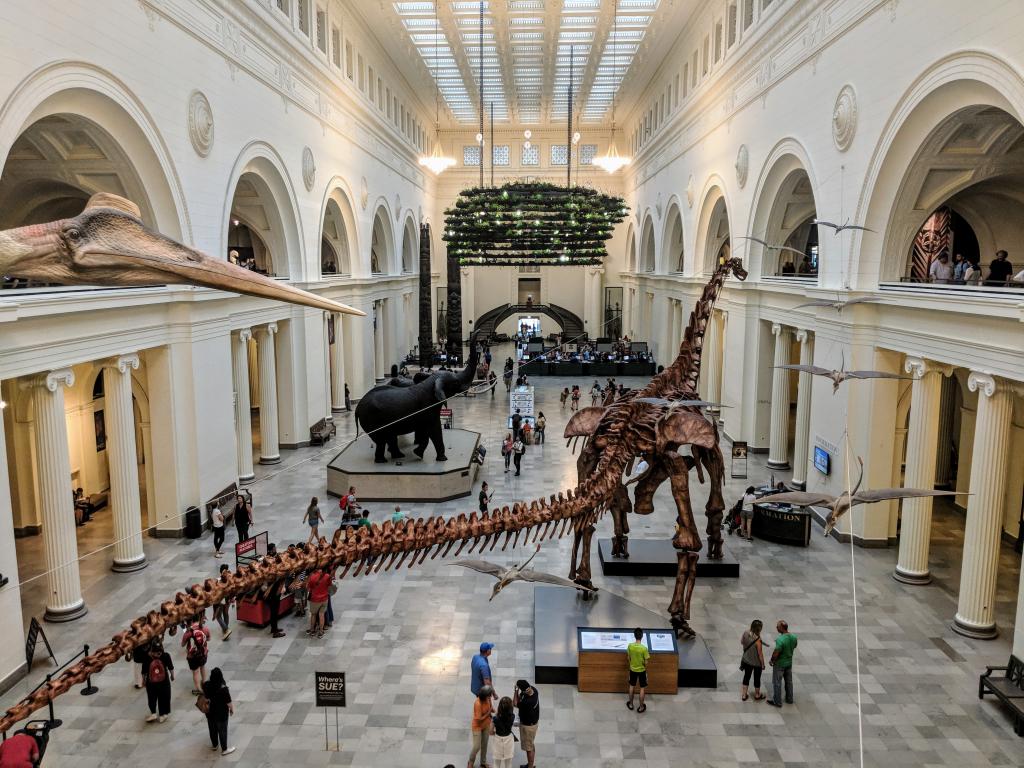
The Field Museum; https://www.flickr.com/photos/photographingtravis/41600203020
So last weekend, when hubby and the boys were all at a Boy Scout outing, I took advantage of the warm weather and the museum “free day” to go to the Field Museum.
It’s a funky sort of museum in that it’s a combination of a true “natural history museum” (dinosaurs, animals) and what the Europeans would call a “museum of ethnology” — and my interest generally lies in the ethnology side. (The evolution/dinosaurs display has a recreation of a prehistoric rainforest which frightened my then-preschooler when we attempted to view the exhibit some time ago; since then, I went back and walked through the whole thing but it wasn’t the sort of thing that I wanted to return to again and again.)
In particular:
the museum has a substantial display on Africa. It starts with a feature about a holiday in Dakar, Senegal, then takes you to the Bamum and Tuareg cultures, explains metalworking in Ethiopia, and so on, with various artifacts. (There’s also a section on animals and the environment, which I skipped.) It’s quite nice, even though it’s also getting a bit long in the tooth — that is, the “family in Senegal” part has black-and-white photographs where it seems it could be easily updated, since it’s not meant to be historic but present-day.
What I hadn’t remembered was that after viewing all these exhibits, you end up in a section on the slave trade (explaining that Africa was vulnerable to European colonization because of the loss of its people through slaving) and the life of slaves in the Americas. I am inclined to think that this was new, though I can’t say for certain. At any rate, it didn’t really seem to fit — it was no longer “ethnology” but American history (for which, to be sure, there is no dedicated museum in Chicago, only the Chicago-specific Chicago History Museum and the African-American-specific DuSable Museum).
I then walked through parts of the Ancient Egypt exhibit, which always strikes me as something of an anomaly in the way it displays actual human corpses, but since these are “mummies,” we think of them as somehow “not real people,” I guess. But the exhibit is an interesting combination of mummies and information/artifacts related to this, and a considerable amount of information on daily life.
Up next: I went upstairs. I skipped the “Abbott Hall of Conservation: Restoring Earth” and the website certainly indicates I didn’t miss much: videos and photographs and “hands-on learning tools” which generally mean computer displays, no? The Tibet display seemed smaller than I remembered it and — grrr — the Cyrus Tang Hall of China appears to have upgraded the exhibit on China at the costs of requiring an additional ticket, making it the second “extra charge” permanent exhibit at the museum (the first being a children’s exhibit about bugs). Why this, of all the exhibits, requires an extra charge, isn’t clear to me. Is it as simple as supply and demand and expecting that, as the newest exhibit, people will choose to pay the upcharge ($8 for adults, or $6 if you’re upgrading from one ticketed exhibit to all) so that this is a revenue boost win?
At any rate, I continued on to the Regenstein Halls of the Pacific. Unlike the African and Egyptian artifacts, which were just acquired in an anonymous sort of way, here the exhibit starts with a story: in the early 1900s, one man travelled throughout the Pacific islands collecting objects: masks, wood carvings, instruments, and the like. We are told that he bought them with trade goods such as machetes. And it really is a massive collection, with explanations of what the rituals were in which the objects were used.
Now, that’s only half the exhibit — the other half is, quite honestly, much less interesting, featuring a bit on the geological history of the islands (volcanos, etc.) and some bits about present-day occupants (a recreation of a Fiji market).
Then it’s back downstairs, and then, well, it all gets a bit Woke, with the Robert R. McCormick Halls of the Ancient Americas. As an incidental comment, the entire display of the, well, non-Ancient Americas (except the Northwest Coast & Artic Peoples) is being completely re-done. It’s not a surprise, I guess, given that this was one of the oldest parts of the museum, and the last time I was there, consisted of display cases with clothing, tools, etc. But the emphasis now seems to be on “people think that Indians disappeared and we are still very much here,” and, quite honestly, if the exhibit becomes focused on modern day life, well, a bunch of video clips and text with a sort of idealized picture of native culture would, let’s face it, be of interest to very small numbers of visitors. (And, what’s more, this emphasis on “people think we no longer exist, but we do” strikes me as a bit weird. The Ancient Egypt exhibit has no interest in telling us what life is like for modern Egyptians, for example.)
But anyway, back to the Ancient Americas.
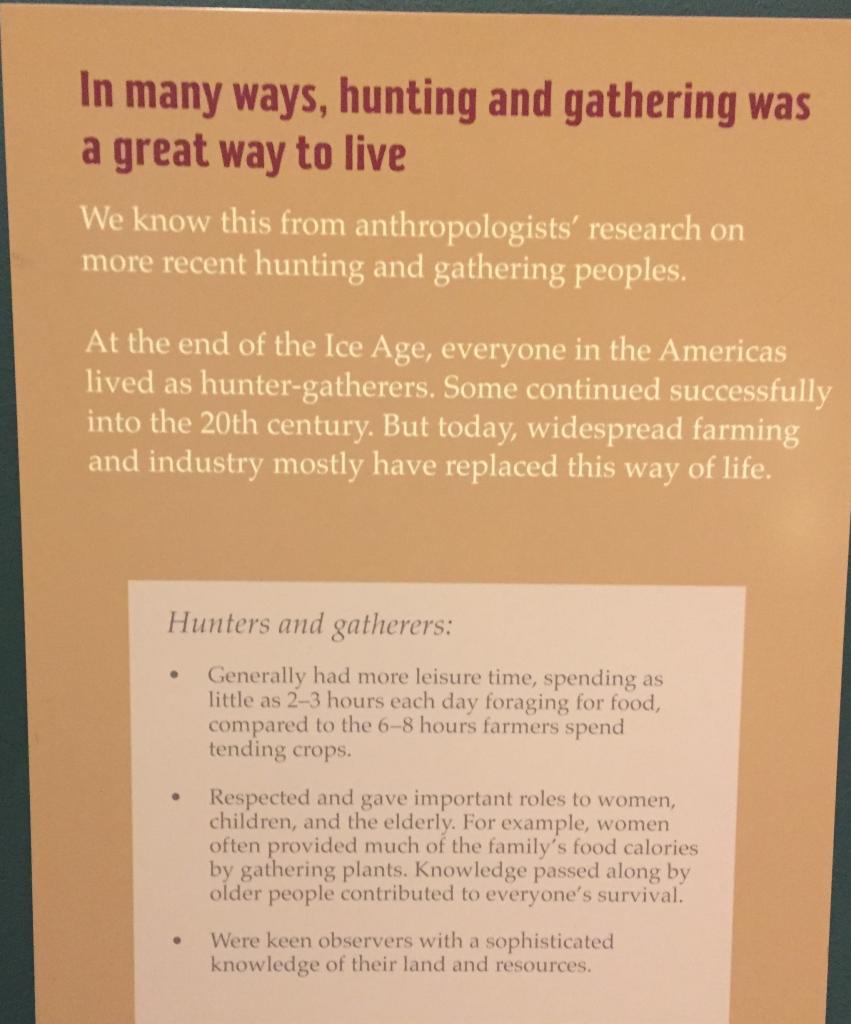
The exhibit is organized based on the development of societies into increasingly more complex communities, from the first archeological signs of arrowheads, to the development of farming, pottery, villages, and then eventually to empires. And here are there bits of text:
Field Museum; own work
Was hunting and gathering “a great way to live”? This display tells only a small part of the picture. Farming became widespread for reasons other than just the stupidity of those who invented it. The notion that hunters and gathers “respected” children misses that, to my understanding, infanticide was common if a woman gave birth and still had a child who needed to be carried as they moved from place to place.
Field Museum; own work
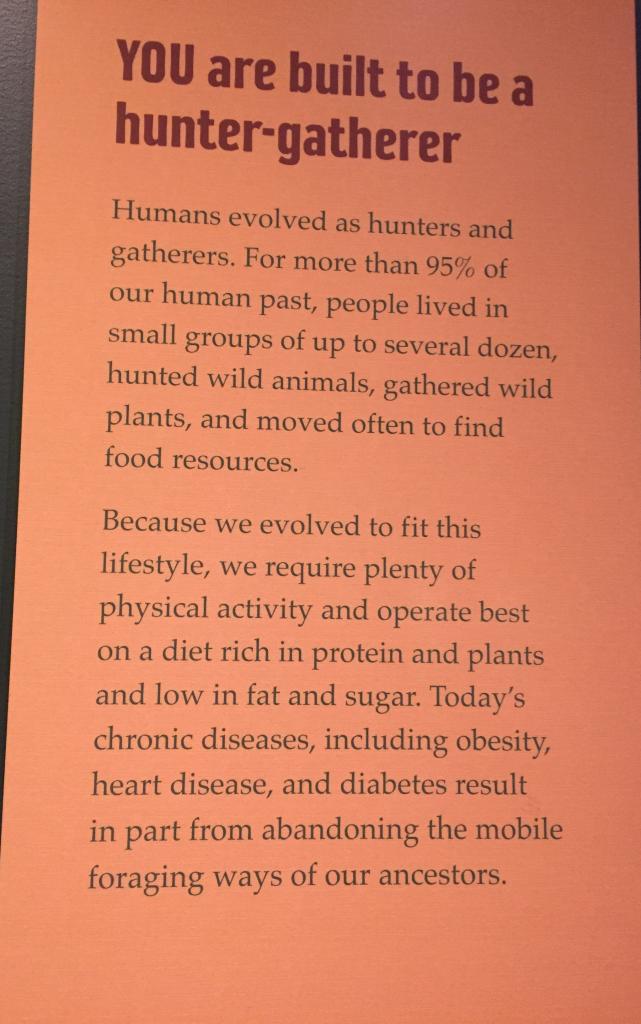
And this is another one: we should all still be hunters and gatherers.
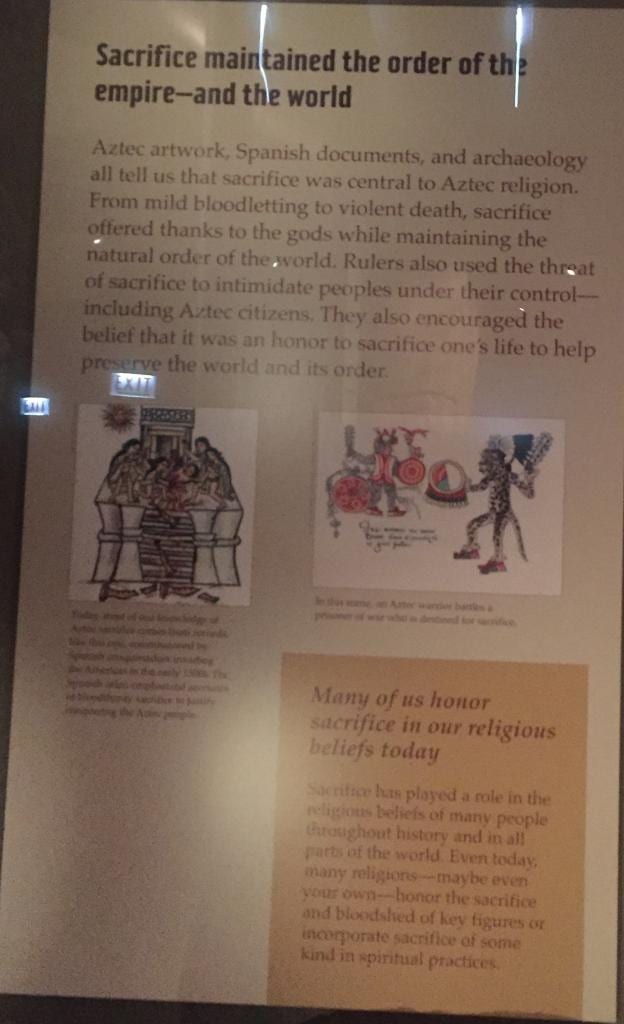
But here’s the third piece of text that had me SMDH:
Field Museum; own work
The text?
Many of us honor sacrifice in our religious beliefs today.
Sacrifice has played a role in the religious beliefs of many people throughout history and in all parts of the world. Even today, many religions — maybe even your own — honor the sacrifice and bloodshed of key figures or incorporate sacrifice of some kind in spiritual practices.
Did the author of these sentences really fail to understand the difference between the belief that a religious figure undertook self-sacrifice or that believers should do so (Jesus, martyrs, the Lenten sacrifices of Christians), and the killing of prisoners in the name of appeasing the gods? Is it not generally understood that part of the reason that the Aztec Empire fell so easily to the Spaniards is that their treatment of their subjects, including the seizing of victims for sacrifice, meant that those subject peoples were willing to ally themselves with the Spaniards? Or was it simply deemed necessary to whitewash this aspect of the Aztec Empire, all the more because of the exhibits constant linking (via text and videos) of these ancient peoples to their modern day distant descendants (or perhaps not descendants at all, but simply people whose ancestors occupied similar territory, since, after all, we’re talking ancient history, that is, prior to the “tribal” structure with continuity to modern times).
I should also add that, in the same manner as the Africa exhibit ends with the slave trade, so, too, the Ancient Americas exhibit ends with a room that functions as a sort of memorial to the cultures ended and lives lost over the centuries after European contact. Maybe that will eventually be moved over to the non-Ancient exhibit, when that’s complete; maybe the intention really is for the two exhibits to have a divide of 1492, and for the new exhibit to tell a story very much with a lens of loss due to the Europeans.
And that’s when it really struck me: this whole narrative is incomplete. In each of the three exhibits, the Europeans are the outsiders who come in and upend everything (even though that narrative isn’t as stark, and more incidental in the case of the Pacific Islands). But nowhere is there any sort of exhibit in which the Europeans have any sort of culture other than that of conqueror and slaver. Heck, there are multiple explanations of how the Europeans ended up the more technologically advanced conquerors. There’s Jared Diamond’s explanation (it was all geography, both in terms of domesticatible animals/plants and the large land mass of Eurasia enabling technological exchange over time) and, dangit, it seems to me there was another book out not too long ago that basically said it was all cyclical and bad luck that the Chinese fell behind. Even if there’s a degree to which they’d need to put up disclaimers of “this is all one interpretation” wouldn’t that be worthwhile to explain? And wouldn’t it make sense to give the Europeans a culture, other than just swarming aliens?
So that’s my museum-ing for the time being. What do you think?
Previous Post

March 1, 2020
Afghanistan, Vietnam, and the limits of power
Next Post

March 10, 2020 Back to recipes: Instant Pot Goulash
Browse Our Archives
Select a Category Actuarial/Retirement Issues Politics Uncategorized
Select a Month September 2026 August 2026 July 2026 June 2026 April 2026 March 2026 February 2026 January 2026 December 2025 November 2025 October 2025 July 2025 June 2025 May 2025 April 2025 March 2025 February 2025 January 2025 December 2024 November 2024 October 2024 September 2024 August 2024 July 2024 June 2024 May 2024 April 2024 March 2024 February 2024 December 2023 November 2023 October 2023 September 2023 August 2023 July 2023 December 2022 September 2022 August 2022 July 2022 June 2022 May 2022 February 2022 January 2022 December 2021 August 2021 June 2021 April 2021 February 2021 January 2021 December 2020 November 2020 October 2020 September 2020 August 2020 July 2020 June 2020 May 2020 April 2020 March 2020 February 2020 January 2020 December 2019 November 2019 October 2019 September 2019 August 2019 July 2019 June 2019 May 2019 April 2019 March 2019 February 2019 January 2019 December 2018 November 2018 October 2018 September 2018 August 2018 July 2018 June 2018 May 2018 April 2018 March 2018 February 2018 January 2018 December 2017 November 2017 October 2017 September 2017 August 2017 July 2017 June 2017 May 2017 April 2017 March 2017 February 2017 January 2017 December 2016 November 2016 October 2016 September 2016 August 2016 July 2016 June 2016 May 2016 April 2016 March 2016 February 2016 January 2016 December 2015 November 2015 October 2015 September 2015 August 2015 July 2015 June 2015 May 2015 April 2015 March 2015 February 2015 January 2015 December 2014 November 2014 October 2014 September 2014 August 2014 July 2014 June 2014 May 2014 April 2014 March 2014 February 2014 January 2014 December 2013 November 2013 October 2013 September 2013 August 2013 July 2013
Follow Us!
TAKE THE
Religious Wisdom Quiz
Which Christian group is known for large-scale missionary work headquartered in Salt Lake City, Utah?
Select your answer to see how you score.
Latter-day Saints United Church of Christ Anglican Catholic
Related posts from Jane the Actuary
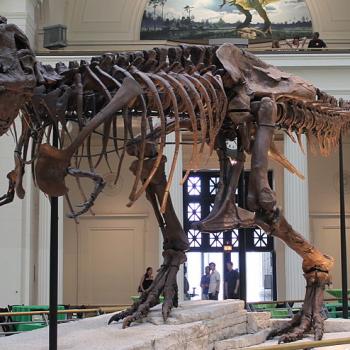
Sue is being replaced - by a fake!


Illinois’ Assisted Suicide Law is, yes, literally deadly
TRENDING AT PATHEOS Catholic

When Halloween Unmasks Married Hearts
Written by Dr. David K. Ewen from Eternal Truth Bible College Behind...

Aristotle. He’s been called the father of logic, the father of the...

Methodist Central Hall and Westminster Abbey
Situated on the same square is Methodist Central Hall and Westminster Abbey. ...

57th Dove Awards Honor Dolly Parton, Crown New...
On gospel music’s biggest night, the 57th annual GMA Dove Awards honored...

The First Eucharistic Controversy: Christ’s Real Presence
For Catholics, the Eucharist is the source and summit of the Christian...

What a Stop Sign Can Teach Us About...
How to Make a Decision When You Can't Hear God Main point:...
view all Catholic blogs
Ad-Free & Subscriber Log-In Subscription Support
- About Us
- 2026 Calendar
- Videos
- Podcasts
- Library of World Religions
- Faith In Media Tracker
- Advertise With Us
- Write for Us
- Privacy Policy
- Terms of Service
- Do Not Sell My Data
- Contact Us
- Radiant Digital
- Manage Newsletter Subscriptions
- Unsubscribe From Notifications
- Sitemap
Copyright 2008-2026, Patheos. All rights reserved.
Subscription Support Ad-Free & Subscriber Log-In
Follow Patheos