
BuddhistCatholicContemplativeEvangelicalGeneral ChristianHinduJewishLatter-day SaintMuslimNew VisionsProgressive Christian
Beliefs
- Buddhist
- Catholic
- Contemplative
- Evangelical
- General Christian
- Hindu
- Jewish
- Latter-day Saint
- More Voices
- Muslim
- New Visions
- Pagan
- Progressive Christian
Topics
- Religion News
- Food and Religion
- Sports and Religion
- Religious Art
- Religious Music and Entertainment
- Religious Events
- History and Religion
- Style and Religion
- Politics and Religion
- Women in Religion
- Recreation Outdoors and Religion
- Business Finance and Religion
- Careers Workplace and Religion
- Education and Religion
- Family Parenting and Religion
- Health Fitness and Religion
- Home and Religion
- Relationships and Religion
- Technology and Religion
- Travel and Religion
Columnists
- Buddhist Columnists
- Business Finance and Religion Columnists
- Careers Workplace and Religion Columnists
- Catholic Columnists
- Contemplative Columnists
- Education and Religion Columnists
- Evangelists Columnists
- Family Parenting and Religion Columnists
- General Christian Columnists
- Health Fitness and Religion Columnists
- Hindu Columnists
- History and Religion Columnists
- Home and Religion Columnists
- Jewish Columnists
- More Voices Columnists
- Latter Day Columnists
- Muslim Columnists
- New Visions Columnists
- Nonreligious Columnists
- Pagan Columnists
- Politics and Religion Columnists
- Progressive Columnists
- Recreation Outdoors and Religion Columnists
- Relationships and Religion Columnists
- Religion News Columnists
- Religious Art Columnists
- Religious Events Columnists
- Religious Music and Entertainment Columnists
- Sports and Religion Columnists
- Style and Religion Columnists
- Technology and Religion Columnists
- Travel and Religion Columnists
- Women in Religion Columnists
Resource Library
- 2026 Calendar
- Library of World Religions
- The 100 Most Holy Places on Earth
- Patheos Answers
- Podcasts
- Videos
- Faith Leaders Database
- Anglican Episcopalian
- Bahai
- Baptist
- Buddhism
- Christianity
- Confucianism
- Eastern Orthodoxy
- Hinduism
- Holiness and Pentecostal
- ISKCON
- Islam
- Judaism
- Lutheran
- Methodist
- The Church of Jesus Christ of Latter-day Saints
- New Age
- Paganism
- Presbytarian and Reformed
- Protestantism
- Religion Behind the Scenes
- Roman Catholic
- Scientology
- Shia Islam
- Sikhism
- Sufism
- Sunni Islam
- Taoism
- Zen
- See all religions
Research Tools
 Ad-Free & Subscriber Log-In Subscription Support
Follow Patheos 

- Trending:
- Advent
- |
- Forgiveness
- |
- Thanksgiving
- |
- Election
- |
- Seasonal Holidays
- |
- Marriage

- Home
- Catholic
- Politics and Religion
- A brief rant about SNAP/Food Stamp work requirement whining
A brief rant about SNAP/Food Stamp work requirement whining
Last updated on: December 5, 2019 at 3:26 pm by Jane the Actuary
A brief rant about SNAP/Food Stamp work requirement whining 2019-12-05T15:26:11-06:00 Jane the Actuary
Patheos Explore the world's faith through different perspectives on religion and spirituality! Patheos has the views of the prevalent religions and spiritualities of the world.

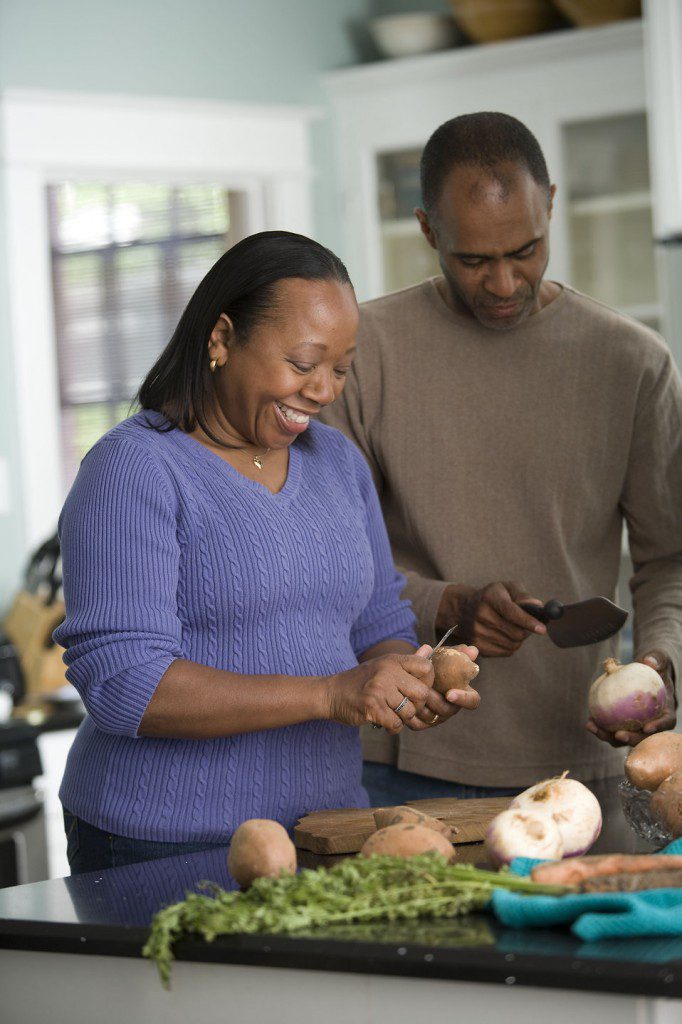
from https://www.flickr.com/photos/chrstphre/5489717927
In the news today: “Feds tighten work rules for food stamps: 688,000 adults could lose benefits”
The Trump administration on Wednesday announced changes to the federal food stamp program that will make it harder for states to exempt adults from the program’s work requirements, a move it expects will cause 688,000 people nationwide to lose their benefits. . . .
Those affected by the changes announced Wednesday are able-bodied adults under age 50 without children or other dependents, a group that represents about 7% of the 36 million people nationwide using the Supplemental Nutrition Assistance Program, commonly called SNAP. Children, the elderly and people with disabilities — who make up the vast majority of SNAP participants — are not affected.
Effective April 1, many of those able-bodied recipients across the country will be limited to three months of food aid over a three-year period unless they are working, in job training or participating in volunteer opportunities for at least 80 hours a month. The work requirements have existed since the mid-1990s, but many states receive waivers for counties with higher unemployment rates or where jobs are scarce. The new rule makes those waivers harder to get.
About 140,000 of the 1.8 million individuals who receive food stamps in Illinois fit the definition of able-bodied adult. The state’s Department of Human Services, which adamantly opposes the rule, is working on calculating how many of those people are not working and are at risk of losing benefits.
. . . state officials worry it could leave many people worse off. Many food stamp recipients who don’t work face barriers that make it difficult to land or keep a job, such as little education and skills, criminal backgrounds that make it tough to get hired, transportation hurdles or an undiagnosed disability. . . .
To that end, the state has established specialty teams at its local offices to connect people to work or training activities. It also has expanded supportive services that help pay for transportation and work uniforms, and has developed a referral network with the Illinois departments of Employment Security and Economic Opportunity, and the Illinois Community College Board.
So why don’t these able-bodied food stamp recipients work?
Here’s what I understand to be the case based on a variety of reading in the past. Even when jobs are available:
Some folks are disabled.
Some folks are eligible for other exceptions (e.g., a caregiver to a child or an incapacitated person).
Some can’t find jobs due to convictions.
Some are addicts.
Some can’t manage transportation to a potential job.
Some are working already, but under the table.
And some are simply wholly disconnected from the labor force.
But look at who’s exempt from the work requirements (from the Minnesota Department of Human Services):
- Anyone deemed “unfit for employment.” It is not required that one be deemed “disabled” according to the tight Social Security disability definition; rather, there are multiple ways of qualifying, including a legitimate doctor’s note certifying a mental or physical illness, documentation of an injury or surgery/recuperation from surgery, or homelessness.
- Anyone caring for an incapacitated person for more than 20 hours per week. The incapacitated person does not need to be living in the same household, and extensive proof is not required, just a statement of the name of the person receiving care, and the number of hours involved.
- Anyone caring for a child under age 6 for more than 20 hours per week. Again, this does not need to be one’s own child, and the child does not need to live in one’s own home; a grandmother caring for a grandchild would count, too, and more than one person can count per child.
- Anyone participating in a drug addiction or alcohol treatment program, with no minimum hours required (but AA and NA don’t count).
- Anyone in a school or training program (students in higher education must also be employed for 20 hours/week).
As to the work requirements themselves, there are two components. The first is the “General Work Requirements” which involve “registering for work” and participating in a training program if available or accepting a suitable job if offered. The second involves the actual work itself, which requires one of the following:
Work at least 80 hours a month. Work can be for pay, for goods or services (for something other than money), unpaid, or as a volunteer;
or
Participate in a work program at least 80 hours a month. A work program could be SNAP Employment and Training or another federal, state, or local work program
or some combination of the two, or
Participate in workfare for the number of hours assigned to you each month (the number of hours will depend on the amount of your SNAP benefit.)
And the “volunteer work” is fairly broad. It is not necessary that one volunteer for a specially-approved agency. I couldn’t find much that’s Illinois-specific, but Legal Aid of West Virginia spells out that any “non-profit, charity, or religious charity” would count.
So who would fall through the cracks here? I suppose there are some outstanding issues around people who cannot find drug treatment programs, though the answer is to beef up funding for these programs, or possibly create an exemption for “on a waitlist for a program” (if that’s not already included in the general “incapacitated” category). Perhaps in rural areas there’s no means of performing volunteer work for a recognized charity (though surely in most cases the local church could find some activity for which they could sign off on 20 hours per week). Perhaps there are some who are so disconnected from the community that they can’t find anyone for whom they can perform volunteer service.
But how many such people are there? How often is it more a matter of the sort of person who simply can’t get his act together even to the minimal amount needed to show up for 20 hours, who wouldn’t qualify as an addict in need of rehab but nonetheless spends his days high or drunk?
And that’s where the bottom line to this whole debate lies. In the case of someone who will not meet these requirements, even at the minimum level of volunteering somewhere for 20 hours a week, should they continue to receive food benefits? I know there are plenty of people who say, “we shouldn’t let people go hungry no matter what,” but it looks a lot less like “keeping people from starving” and a lot more like “keeping people in their state of disconnection,” to no long-term good.
Previous Post

December 4, 2019
In defense of that Peloton commercial
Next Post

December 6, 2019 ". . . neither shall he eat" -- more on Food Stamps/SNAP and work
Browse Our Archives
Select a Category Actuarial/Retirement Issues Politics Uncategorized
Select a Month October 2026 September 2026 August 2026 July 2026 June 2026 April 2026 March 2026 February 2026 January 2026 December 2025 November 2025 October 2025 July 2025 June 2025 May 2025 April 2025 March 2025 February 2025 January 2025 December 2024 November 2024 October 2024 September 2024 August 2024 July 2024 June 2024 May 2024 April 2024 March 2024 February 2024 December 2023 November 2023 October 2023 September 2023 August 2023 July 2023 December 2022 September 2022 August 2022 July 2022 June 2022 May 2022 February 2022 January 2022 December 2021 August 2021 June 2021 April 2021 February 2021 January 2021 December 2020 November 2020 October 2020 September 2020 August 2020 July 2020 June 2020 May 2020 April 2020 March 2020 February 2020 January 2020 December 2019 November 2019 October 2019 September 2019 August 2019 July 2019 June 2019 May 2019 April 2019 March 2019 February 2019 January 2019 December 2018 November 2018 October 2018 September 2018 August 2018 July 2018 June 2018 May 2018 April 2018 March 2018 February 2018 January 2018 December 2017 November 2017 October 2017 September 2017 August 2017 July 2017 June 2017 May 2017 April 2017 March 2017 February 2017 January 2017 December 2016 November 2016 October 2016 September 2016 August 2016 July 2016 June 2016 May 2016 April 2016 March 2016 February 2016 January 2016 December 2015 November 2015 October 2015 September 2015 August 2015 July 2015 June 2015 May 2015 April 2015 March 2015 February 2015 January 2015 December 2014 November 2014 October 2014 September 2014 August 2014 July 2014 June 2014 May 2014 April 2014 March 2014 February 2014 January 2014 December 2013 November 2013 October 2013 September 2013 August 2013 July 2013
Follow Us!
TAKE THE
Religious Wisdom Quiz
What does the name "Samuel" mean?
Select your answer to see how you score.
Chosen one The Lord saves God has heard God is my judge
Related posts from Jane the Actuary
Actually, workers on Food Stamps is a good...
What about Latrell -- and other invisible men?
". . . neither shall he eat" --...
What the heck is up with the "public...
TRENDING AT PATHEOS Catholic

God and the Contingency of This World
The great Catholic philosopher Aquinas and the great Lutheran philosopher Leibniz developed...

Pope Francis and The Devil – A Pagan...
According to his private diaries, Pope Francis saw visions of the devil...

Rock N' Roll-- Morphing into/for a New Generation...
Well, should we be grateful, or is rock n' roll just dead? ...

Ansley Gordon Brings Faith and Fresh Stories to...
For screenwriter and actress Ansley Gordon, Christmas has always been about more...

Chris Pratt on Veterans, Faith, “The Way of...
For Chris Pratt, service is not something that ends when a person...

Chapter 5, Sarah: The Quest for Safety in...
Open and Relational Theology & Social Psychology About this series: This series...
view all Catholic blogs
Ad-Free & Subscriber Log-In Subscription Support
- About Us
- 2026 Calendar
- Videos
- Podcasts
- Library of World Religions
- Faith In Media Tracker
- Advertise With Us
- Write for Us
- Privacy Policy
- Terms of Service
- Do Not Sell My Data
- Contact Us
- Radiant Digital
- Manage Newsletter Subscriptions
- Unsubscribe From Notifications
- Sitemap
Copyright 2008-2026, Patheos, part of the Radiant Digital network of media brands. All rights reserved.
Subscription Support Ad-Free & Subscriber Log-In
Follow Patheos