
BuddhistCatholicContemplativeEvangelicalGeneral ChristianHinduJewishLatter-day SaintMuslimNew VisionsProgressive Christian
Beliefs
- Buddhist
- Catholic
- Contemplative
- Evangelical
- General Christian
- Hindu
- Jewish
- Latter-day Saint
- More Voices
- Muslim
- New Visions
- Pagan
- Progressive Christian
Topics
- Religion News
- Food and Religion
- Sports and Religion
- Religious Art
- Religious Music and Entertainment
- Religious Events
- History and Religion
- Style and Religion
- Politics and Religion
- Women in Religion
- Recreation Outdoors and Religion
- Business Finance and Religion
- Careers Workplace and Religion
- Education and Religion
- Family Parenting and Religion
- Health Fitness and Religion
- Home and Religion
- Relationships and Religion
- Technology and Religion
- Travel and Religion
Columnists
- Buddhist Columnists
- Business Finance and Religion Columnists
- Careers Workplace and Religion Columnists
- Catholic Columnists
- Contemplative Columnists
- Education and Religion Columnists
- Evangelists Columnists
- Family Parenting and Religion Columnists
- General Christian Columnists
- Health Fitness and Religion Columnists
- Hindu Columnists
- History and Religion Columnists
- Home and Religion Columnists
- Jewish Columnists
- More Voices Columnists
- Latter Day Columnists
- Muslim Columnists
- New Visions Columnists
- Nonreligious Columnists
- Pagan Columnists
- Politics and Religion Columnists
- Progressive Columnists
- Recreation Outdoors and Religion Columnists
- Relationships and Religion Columnists
- Religion News Columnists
- Religious Art Columnists
- Religious Events Columnists
- Religious Music and Entertainment Columnists
- Sports and Religion Columnists
- Style and Religion Columnists
- Technology and Religion Columnists
- Travel and Religion Columnists
- Women in Religion Columnists
Resource Library
- 2026 Calendar
- Library of World Religions
- The 100 Most Holy Places on Earth
- Patheos Answers
- Podcasts
- Videos
- Faith Leaders Database
- Anglican Episcopalian
- Bahai
- Baptist
- Buddhism
- Christianity
- Confucianism
- Eastern Orthodoxy
- Hinduism
- Holiness and Pentecostal
- ISKCON
- Islam
- Judaism
- Lutheran
- Methodist
- The Church of Jesus Christ of Latter-day Saints
- New Age
- Paganism
- Presbytarian and Reformed
- Protestantism
- Religion Behind the Scenes
- Roman Catholic
- Scientology
- Shia Islam
- Sikhism
- Sufism
- Sunni Islam
- Taoism
- Zen
- See all religions
Research Tools
 Ad-Free & Subscriber Log-In Subscription Support
Ad-Free & Subscriber Log-In Subscription Support
Follow Patheos 

- Trending:
- Forgiveness
- |
- Marriage
- |
- Consciousness
- |
- Death Penalty
- |
- Election
- |
- Halloween

- Home
- Catholic
- Politics and Religion
- “Math Ethnic Studies”? No, no, no.
“Math Ethnic Studies”? No, no, no.
Last updated on: October 9, 2019 at 12:40 pm by Jane the Actuary
“Math Ethnic Studies”? No, no, no. 2019-10-09T12:40:01-06:00 Jane the Actuary
Patheos Explore the world's faith through different perspectives on religion and spirituality! Patheos has the views of the prevalent religions and spiritualities of the world.
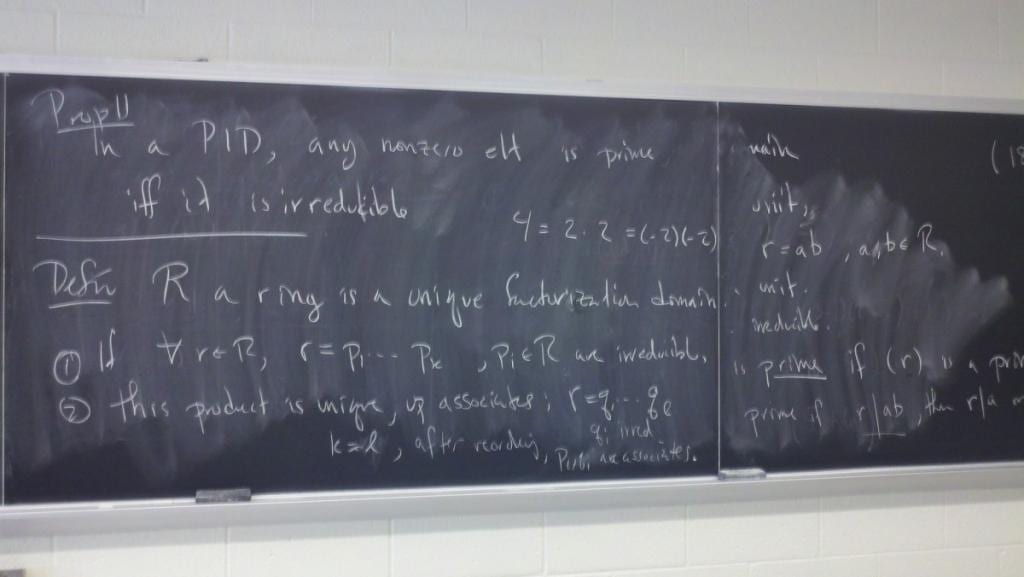
public domain; https://pxhere.com/en/photo/973959
An article I previewed yesterday . . .
You’ve likely seen this reported elsewhere by now, a Seattle Public Schools “Math Ethnic Studies Framework” that first made the rounds on twitter, as part of a curriculum of “ethnic studies.” Subsequent to the document itself being shared, pundits jumped in to criticize it, such as radio talk show host Dori Monson, in an op ed:
This is what happens when you allow radicals to take control of the schools. You start seeing problems where they cannot exist — like in the objective world of mathematics.
We’re now reducing math to a divisive sociological issue — and that’s the kind of reduction and division we don’t want to be teaching.
After which the local Seattle Times wrote in defense:
Seattle schools are in the process of developing ethnic-studies frameworks for different subjects, including social studies and art. . . .
In math, lessons are more theoretical. Seattle’s recently released proposal includes questions like, “Where does Power and Oppression show up in our math experiences?” and “How is math manipulated to allow inequality and oppression to persist?” . . .
A 2016 Stanford University report looked at ethnic-studies classes in San Francisco high schools and found that attendance increased by 21% and GPA increased by 1.4 grade points. There were significant effects on GPA specific to math and science, the study said, and boys and Hispanic students improved the most.
“When students can see themselves in curriculum and see diversity in curriculum, they respond better,” Au said. “And, it can help white students understand themselves better. Structural racism in the country has mistaught white people about themselves — that they don’t have culture, that they don’t have roots.”
This mindset extends to mathematics and science, Castro-Gill said.
“There are studies that talk about specifically black and brown students not being seen as scientists or mathematicians … It affects their efficacy, their ability to engage in that kind of learning,” she said. “That’s why identity is so core to math and science.”
It’s not that the formulas and equations taught in current math classes are racist, Castro-Gill said — it’s about how they’re used in daily life.
“Nowhere in this document says that math is inherently racist,” she said. “It’s how math is used as a tool for oppression.”
One example teachers might mention in an ethnic studies math class, she said, is how black voters in the South were given literacy and numeracy tests before they could cast their ballot. Another might be a lesson on ratios that discusses gaps in incarceration rates and how the weight of a type of drug determines the length of a sentence.
“The numbers are objective,” she said, “but how we use it is not objective.”
Classes might also talk about how different cultures have practiced math, such as how Aztecs used a base-20 number system, as opposed to the base-10 system Americans use.
So does this all simply mean that “math ethnic studies” is unobjectionable?
The actual document belies this explanation, that it’s all as harmless as story problems with a “social justice” lens, or the use of math and statistics in an “ethnic studies” elective.
Instead, it’s a framework for viewing math as a part of culture, or, rather, cultures, with the same cultural-reclaiming and power-seeking agenda as for literature and history. What’s more, it uses bad history, and the framework appears to simply fail to understand that mathematics is a set of skills that students need to learn in order to succeed as adults, both in employment and simply to manage their financial affairs, and that we as a country need the next generation to possess, in aggregate, the mathematical skills needed for our economy and our society to function and move forward, from nurses calculating correct dosages for medications to aerospace engineers building the next Mars lander and everything in-between.
There are four themes:
- Origins, Identity, and Agency,
- Power and Oppression,
- History of Resistance and Liberation, and
- Reflection and Action.
The first of these says:
Origins, Identity and Agency, as defined by ethnic studies, is the ways in which we view ourselves as mathematicians and members of broader mathematical communities. Mathematical theory and application is rooted in the ancient histories of people and empires of color. All human endeavors include mathematical thinking; from humanities to the arts to the sciences.
No, no, no.
“Color” as understood by 21st century “ethnic theorists” has nothing to do with the history of mathematical theory and application. Take a look at the Wikipedia articles on the history of arithmetic and algebra. One presumes the author of these words had in mind something like “the Romans were so stupid that they couldn’t even do proper arithmetic with their Roman numerals, but the Arabs invented Arabic numbers and algebra.” In fact, the Romans used an abacus for their calculations. The Greeks had a positional notation system, including a zero. It is indeed the case that the Indian system was readily adopted by Europeans beginning in the 13th century as superior to existing systems, and that Muḥammad ibn Mūsā al-Khwārizmī, a Persian scholar working in Baghdad in the 9th century, authored the textbook that systematized algebra and became the foundational text, when translated into Latin, for European universities until the 16th century. It is also true that, in the manner in which empires and civilizations rise and fall, during the Islamic Golden Age, Western Europe was, first, beset by invaders from north, east, and south, including Arab raiders and slave-traders, and subsequently, had its own high-medieval flourishing marked by the growth of cities, trade, cathedrals, and universities. And the peak of Baghdad’s flourishing ended with wars beginning in the 10th century, and the Islamic Golden Age itself ended after an invasion by an Empire of Color, namely the Mongols, in which, during the 1258 Siege of Baghdad,
The Mongols looted and then destroyed mosques, palaces, libraries, and hospitals. Priceless books from Baghdad’s thirty-six public libraries were torn apart, the looters using their leather covers as sandals. Grand buildings that had been the work of generations were burned to the ground. The House of Wisdom (the Grand Library of Baghdad), containing countless precious historical documents and books on subjects ranging from medicine to astronomy, was destroyed. Survivors said that the waters of the Tigris ran black with ink from the enormous quantities of books flung into the river and red from the blood of the scientists and philosophers killed.
Should this be included in the math curriculum? What about the fact that, after this decline, new advancements in math originated from Europe, in the form of, for example, Newton and Leibniz’s independent invention of calculus?
The second theme is “power and oppression.”
Power and oppression, as defined by ethnic studies, are the ways in which individuals and groups define mathematical knowledge so as to see “Western” mathematics as the only legitimate expression of mathematical identity and intelligence. This definition of legitimacy is then used to disenfranchise people and communities of color. This erases the historical contributions of people and communities of color.
No, no, and no some more.
SWBAT (Students will be able to) analyze the ways in which ancient mathematical knowledge has been appropriated by Western culture.
No. That’s not how knowledge works. In the world outside this sort of delusional “grievance studies,” knowledge is shared. Prior to Western Europeans translating Arabic treatises, the Arabs, while their countrymen were raiding Europe, were themselves eagerly translating Greek mathematical treatises.
SWBAT identify how the development of mathematics has been erased from learning in school.
Look, it’s cute to want to have lessons on the history of mathematics, but last I checked, a better grounding in various foundational skills takes priority.
And the remainder of the “learning targets” under power and oppression are that students should learn that math, science, and technology, as well as standardized testing, have been used to “oppress and marginalize people and communities of color” — which I suppose might mean that, without the ability to navigate in ocean-going vessels, slave-traders would never have been able to bring their cargo to the Americas.
The third theme, history of resistance and liberation, says,
The history of resistance and liberation, as defined by ethnic studies, is the stories, places, and people who helped liberate people and communities of color using math, engineering, and technology. Access to mathematical knowledge itself is an act of liberation.
Which sounds harmless, enough. Learn mathematical skills, leave poverty. Nations which increase their level of education, reduce their poverty rates. But that’s not what they mean. They don’t even mean that statistical analysis can be used in efforts to combat poverty, for example, by directing government money to the neediest places, or determining what anti-poverty measures work best, or even that statistical analysis can help win lawsuits against discrimination. They mean, again, that knowing that non-Europeans invented math will make students feel empowered:
SWBAT know and appreciate the contributions of their individual communities toward the development of institutions in the advancement of mathematics.
and
SWBAT identify economic movements that have led to liberation
which, I’m sorry, makes no sense (the statement has a parenthetical mention of Kirabo Jackson, who, it turns out, is a professor at Northwestern who specializes in studying teacher effectiveness).
There’s also a leading question:
How can we change mathematics from individualistic to collectivist thinking?
which I again can’t make any sense out of except insofar as a lesson uses story problems to illustrate the superiority of the economic system of Venezuela under Chavez (that is, because even most far-leftists recognize things are Very Bad in Venezuela at the moment but tend to blame that on Maduro).
And the fourth theme is “reflection and action”:
Student action, as defined by ethnic studies, is fostering a sense of advocacy, empowerment, and action in the students that creates internal motivation to engage in and contribute to their identities as mathematicians. Students will be confident in their ability to construct & decode mathematical knowledge, truth, and beauty so they can contribute to their experiences and the experiences of people in their community.
Which doesn’t make a heck of a lot of sense to me except as the same sort of Call to Action as one would read anywhere else.
Now, to revisit yesterday’s post: I complained that
there are too many people who adopt the conviction that what matters most is having the right, moral intentions, and if you do so, math be damned, it’ll all work out.
And, separately, I had a conversation with someone about the pension mess in Chicago. And I found myself continually repeating, paraphrased, “I’m not an expert in many aspects of Chicago’s finances, I don’t know how much room the city has to raise taxes and don’t want to make any assertions about who should win and who should lose in the balancing of interests, but I know that if Chicago intends to pay the pension benefits it promised, it needs to find the money somewhere, and if someone is trying to sell a different solution, they’re smoking something.”
It is certainly true that statistics can be used in manipulative ways. It is true that technology can be used to oppress, though it also has been used to bring unprecendented prosperity, to heal disease, to end hunger. But this is missing the point that elementary and secondary-aged children need to learn the fundamentals of arithmetic, of algebra, they need to know the basics of statistics, and none of this has anything to do with engagement in social justice fights. And when they do get out there and fight for their causes, they have to understand that math isn’t just a tool that can be manipulated to get the result you want, a way of presenting an argument to persuade others — budgets have to balance, money spent on one cause means less for another, the mere fact that you are convinced of the moral righteousness of a cause you support does not mean that it is feasible, that your idea will work, that there won’t be unintended consequences. And promoting this idea that math is a rhetorical tool to fight for justice is far from a mere remedying of oppression.
Previous Post

October 8, 2019
GM, the UAW, and the Winds that Didn't Change
Next Post
October 9, 2019 What's going on at the Amazon Synod?
Browse Our Archives
Select a Category Actuarial/Retirement Issues Politics Uncategorized
Select a Month September 2026 August 2026 July 2026 June 2026 April 2026 March 2026 February 2026 January 2026 December 2025 November 2025 October 2025 July 2025 June 2025 May 2025 April 2025 March 2025 February 2025 January 2025 December 2024 November 2024 October 2024 September 2024 August 2024 July 2024 June 2024 May 2024 April 2024 March 2024 February 2024 December 2023 November 2023 October 2023 September 2023 August 2023 July 2023 December 2022 September 2022 August 2022 July 2022 June 2022 May 2022 February 2022 January 2022 December 2021 August 2021 June 2021 April 2021 February 2021 January 2021 December 2020 November 2020 October 2020 September 2020 August 2020 July 2020 June 2020 May 2020 April 2020 March 2020 February 2020 January 2020 December 2019 November 2019 October 2019 September 2019 August 2019 July 2019 June 2019 May 2019 April 2019 March 2019 February 2019 January 2019 December 2018 November 2018 October 2018 September 2018 August 2018 July 2018 June 2018 May 2018 April 2018 March 2018 February 2018 January 2018 December 2017 November 2017 October 2017 September 2017 August 2017 July 2017 June 2017 May 2017 April 2017 March 2017 February 2017 January 2017 December 2016 November 2016 October 2016 September 2016 August 2016 July 2016 June 2016 May 2016 April 2016 March 2016 February 2016 January 2016 December 2015 November 2015 October 2015 September 2015 August 2015 July 2015 June 2015 May 2015 April 2015 March 2015 February 2015 January 2015 December 2014 November 2014 October 2014 September 2014 August 2014 July 2014 June 2014 May 2014 April 2014 March 2014 February 2014 January 2014 December 2013 November 2013 October 2013 September 2013 August 2013 July 2013
Follow Us!
TAKE THE
Religious Wisdom Quiz
What message did Jeremiah send to the exiles in Babylon to encourage them?
Select your answer to see how you score.
Build houses and seek the city's good Pray for Judah only Return and revolt Fast and do not marry
Related posts from Jane the Actuary
Are 28% of Americans truly functionally illiterate?
What happens to the rest of us, when...
In which, apparently, the country has completely lost...
TRENDING AT PATHEOS Catholic

Letters on Living the Faith by C.S. Lewis
Most of us met C.S. Lewis as a public intellectual. Mere Christianity....

When Halloween Unmasks Married Hearts
Written by Dr. David K. Ewen from Eternal Truth Bible College Behind...

Aristotle. He’s been called the father of logic, the father of the...

Methodist Central Hall and Westminster Abbey
Situated on the same square is Methodist Central Hall and Westminster Abbey. ...

57th Dove Awards Honor Dolly Parton, Crown New...
On gospel music’s biggest night, the 57th annual GMA Dove Awards honored...

The First Eucharistic Controversy: Christ’s Real Presence
For Catholics, the Eucharist is the source and summit of the Christian...
view all Catholic blogs
Ad-Free & Subscriber Log-In Subscription Support
- About Us
- 2026 Calendar
- Videos
- Podcasts
- Library of World Religions
- Faith In Media Tracker
- Advertise With Us
- Write for Us
- Privacy Policy
- Terms of Service
- Do Not Sell My Data
- Contact Us
- Radiant Digital
- Manage Newsletter Subscriptions
- Unsubscribe From Notifications
- Sitemap
Copyright 2008-2026, Patheos. All rights reserved.
Subscription Support Ad-Free & Subscriber Log-In
Follow Patheos