
BuddhistCatholicContemplativeEvangelicalGeneral ChristianHinduJewishLatter-day SaintMuslimNew VisionsProgressive Christian
Beliefs
- Buddhist
- Catholic
- Contemplative
- Evangelical
- General Christian
- Hindu
- Jewish
- Latter-day Saint
- More Voices
- Muslim
- New Visions
- Pagan
- Progressive Christian
Topics
- Religion News
- Food and Religion
- Sports and Religion
- Religious Art
- Religious Music and Entertainment
- Religious Events
- History and Religion
- Style and Religion
- Politics and Religion
- Women in Religion
- Recreation Outdoors and Religion
- Business Finance and Religion
- Careers Workplace and Religion
- Education and Religion
- Family Parenting and Religion
- Health Fitness and Religion
- Home and Religion
- Relationships and Religion
- Technology and Religion
- Travel and Religion
Columnists
- Buddhist Columnists
- Business Finance and Religion Columnists
- Careers Workplace and Religion Columnists
- Catholic Columnists
- Contemplative Columnists
- Education and Religion Columnists
- Evangelists Columnists
- Family Parenting and Religion Columnists
- General Christian Columnists
- Health Fitness and Religion Columnists
- Hindu Columnists
- History and Religion Columnists
- Home and Religion Columnists
- Jewish Columnists
- More Voices Columnists
- Latter Day Columnists
- Muslim Columnists
- New Visions Columnists
- Nonreligious Columnists
- Pagan Columnists
- Politics and Religion Columnists
- Progressive Columnists
- Recreation Outdoors and Religion Columnists
- Relationships and Religion Columnists
- Religion News Columnists
- Religious Art Columnists
- Religious Events Columnists
- Religious Music and Entertainment Columnists
- Sports and Religion Columnists
- Style and Religion Columnists
- Technology and Religion Columnists
- Travel and Religion Columnists
- Women in Religion Columnists
Resource Library
- 2026 Calendar
- Library of World Religions
- The 100 Most Holy Places on Earth
- Patheos Answers
- Podcasts
- Videos
- Faith Leaders Database
- Anglican Episcopalian
- Bahai
- Baptist
- Buddhism
- Christianity
- Confucianism
- Eastern Orthodoxy
- Hinduism
- Holiness and Pentecostal
- ISKCON
- Islam
- Judaism
- Lutheran
- Methodist
- The Church of Jesus Christ of Latter-day Saints
- New Age
- Paganism
- Presbytarian and Reformed
- Protestantism
- Religion Behind the Scenes
- Roman Catholic
- Scientology
- Shia Islam
- Sikhism
- Sufism
- Sunni Islam
- Taoism
- Zen
- See all religions
Research Tools
 Ad-Free & Subscriber Log-In Subscription Support
Ad-Free & Subscriber Log-In Subscription Support
Follow Patheos 

- Trending:
- Forgiveness
- |
- Marriage
- |
- Consciousness
- |
- Death Penalty
- |
- Election
- |
- Halloween

- Home
- Catholic
- Politics and Religion
- A few (more) words on the Amazon Synod
A few (more) words on the Amazon Synod
Last updated on: October 25, 2019 at 3:05 pm by Jane the Actuary
A few (more) words on the Amazon Synod 2019-10-25T15:05:48-06:00 Jane the Actuary
Patheos Explore the world's faith through different perspectives on religion and spirituality! Patheos has the views of the prevalent religions and spiritualities of the world.
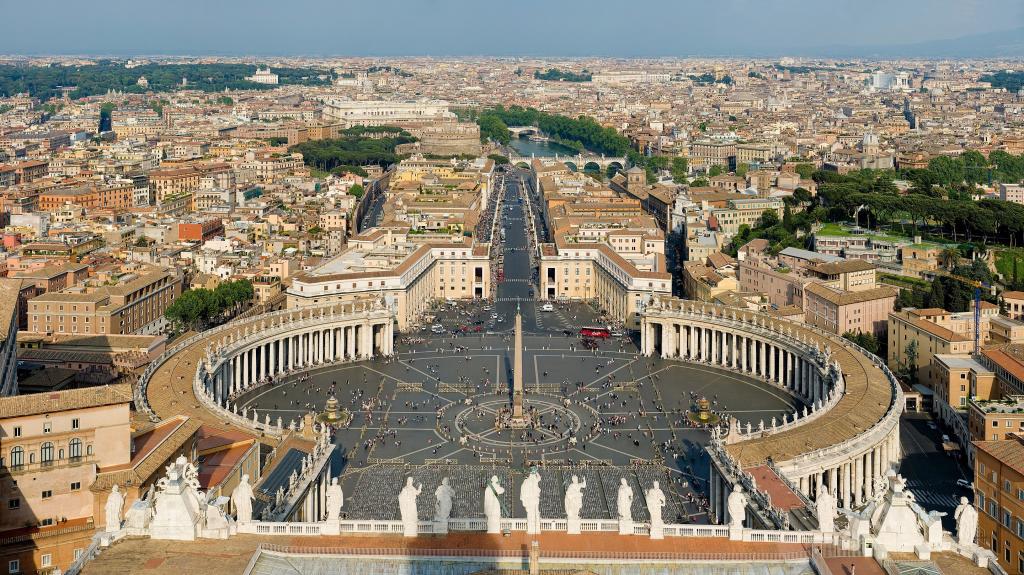
https://commons.wikimedia.org/wiki/File:St_Peter%27s_Square,_Vatican_City_-_April_2007.jpg; Diliff [CC BY-SA 3.0 (http://creativecommons.org/licenses/by-sa/3.0/)]
Is it an idol? Is it merely a symbol? Is it an idol-that’s-perfectly-OK-in-the-spirit-of-inclusiveness?
The Vatican can’t seem to make up their minds about the carved figure of a woman (actually multiple such carvings, originally purchased at a Brazilian artisan’s market) given a place of honor at various rites during the Amazon Synod.
A recent National Catholic Register article reports:
“There is nothing to know. It is an indigenous woman who represents life,” said Father Giacomo Costa, part of the synod communications teams. “It is a feminine figure [which] is neither pagan nor sacred.” . . .
Paolo Ruffini, the prefect of Vatican communications dicastery, said that he sees the figure as “representing life,” which is basically saying that it is a fertility (life) symbol, in different words.
The Catholic press bent over backwards to offer various accounts of something apparently so mysterious that it could not be straightforwardly explained by the people who thought it important enough to bring it across the oceans. The secular press was not so accommodating, and said flat-out that it was an “indigenous fertility symbol,” in the words of The Associated Press.
When said carvings were removed from the church in which they were displayed and thrown into the Tiber by anonymous men who posted their video on YouTube, there was cheering by traditionalists but anger by the activist group REPAM, who accused traditionalists of “religious intolerance” and “racism” and a “refusal to build new paths for the renewal of our church.”
And in today’s news, the pope himself apologized for the act.
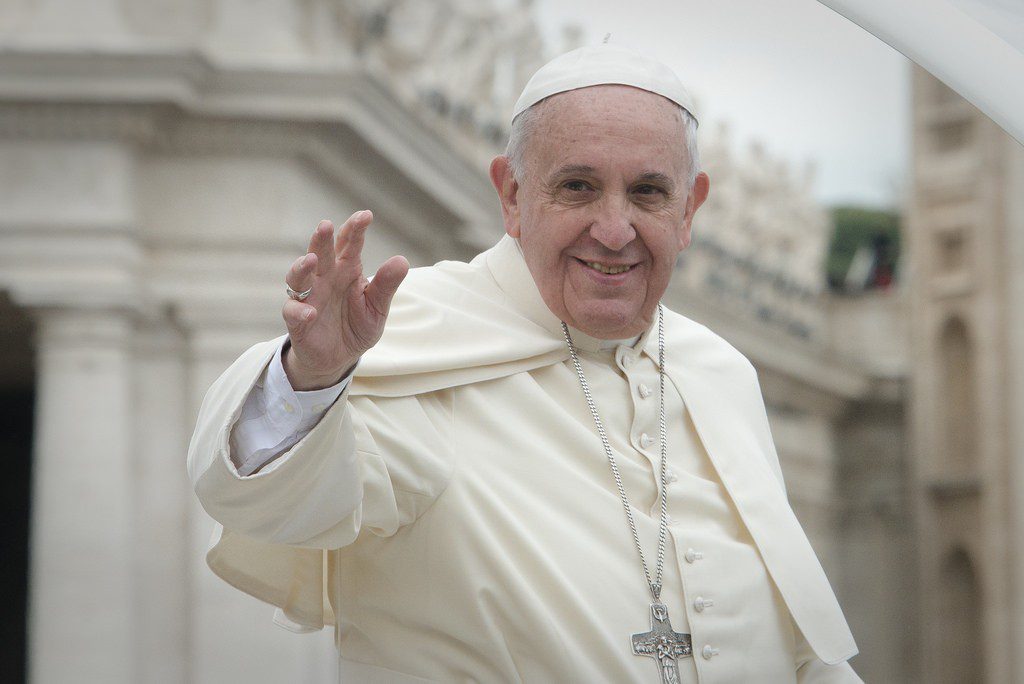
“As bishop of this diocese,” Pope Francis, who is Bishop of Rome, said, “I ask forgiveness from those who have been offended by this gesture.”
Pope Francis also reported that the statues had been recovered from the river, are not damaged, and are being kept in the offices of the head of Italy’s national police. . . .
According to the transcript provided by the Vatican, the pope referred to the statues as “Pachamama,” the name traditionally given to an Andean fertility goddess, which can be roughly translated as “Mother Earth.”
While it is unclear whether he was using it colloquially, the pope’s use of the term “Pachamama” will likely further ongoing debate regarding the exact nature of the statutes, and what they represent.
So what are these statues meant to be? Are they being reverenced as if they were sacred? Their defenders say they “represent life” but they are being treated as more of a sacred object than if they were merely symbolic of creation, or God’s blessings, or the like, being included in a procession and in a tree-planting rite. Near as I can tell, for some of their supporters, the statues are meant to represent a sort of “Mother Earth” which comes from the sort of neo-pagan sensibility that the earth is sacred, a sort of pantheism that is altogether different than Christian belief in one God who is the creator and stands apart from creation. And some of them have such a vague understanding of what it means to be a Christian that they find it to be entirely congruent with their religious beliefs to reverence “life” or “fertility” or “Mother Earth” as a sacred thing in its own right rather than a gift from God, or they have perhaps forgotten that “religious tolerance” means accepting that people outside your religion have different beliefs, rather than one’s one religion becoming meaningless.
Here’s Dwight Longnecker:
Now here is the big difference between Catholic images and the statue they are parading around the Vatican.
It’s really very simple.
An authentic Catholic image is the representation of a real person who, by God’s grace, has become remade into Christ’s likeness. The saint has become an image of the unseen God.
A pagan image is not a real person. A pagan image is an idol. It is either a representation of a demon or it is a symbol of some sort of spirit or demigod (which is a nice name for a demon).
Even if the Amazonian female statue is nothing more than a symbol, we don’t venerate symbols. We have symbols in church. The Chi-Rho is a symbol. The triangle in three circles is a symbol. The Lamb of God is a symbol, but we don’t venerate symbols. We don’t carry them around in processions. We don’t light candles in front of symbols. We don’t put symbols in the middle of prayer circles and bow down before them.
And, to revisit the original National Catholic Register article, well, its title says it all:
Elementary Pastoral Sense Absent From Amazonian Statue Controversy
Since symbols convey so much more than words, Vatican officials should have clarified exactly what the statue means, before allowing it to be deployed in a paraliturgical context.
And the author explains that even in the circumstance in which this was all a misunderstanding and the statue was simply a symbol of the Amazon, a mere decoration, it was inappropriate to have been treated as it was, placed in a side chapel, and in any case the various Vatican officials had an obligation to avoid any confusion, any appearance of idol worship.
Which is pretty much where I’m at. There are plenty of instances of symbols of the community being used in some such settings — I will say based on vague memories that a medieval religious processions would have various guild members carrying symbols of their trades, and a side altar funded by a goldsmith’s guild, for example, might have symbols of that profession. But they were never shown any special reverence. And at the same time, I almost have the feeling the Vatican is being cagey about its meaning because they think some of the people of the Amazon do believe it is a “Mother Earth” symbol, and this doesn’t really both them.
Who are the Viri Probati?
The synod participants, in addition to yammering about the environment, spent a great deal of attention on the question of ordaining viri probati, that is, older married men within a community which is so remote as to otherwise not have regular masses celebrated, only occasionally when a visiting priest arrives.
Here’s are a few excerpts from a First Things article on the topic:
Over the last five years, Pope Francis has empowered Bishop Erwin Kräutler and his allies, who urge the Church to abandon its general insistence on priestly celibacy. In 2014, Kräutler discussed his ideas with the pope. In 2015, the pope asked him to make “bold, daring proposals” for the Amazon region, and two years later Francis appointed Kräutler to the committee organizing the Amazon synod. Kräutler has related how, last year, he and his allies campaigned successfully for their married-priests idea to be on the synod agenda; now it is thought to be part of the synod’s draft final document, which will be voted on tomorrow. . . .
He frequently refers to the work of another bishop, Fritz Lobinger, who has written at length on ordaining married men. In Lobinger’s dream set of reforms, the priesthood as we know it will be pushed to the margins: Instead, married “elders”—perhaps, dear reader, you and I—will be trained part-time to take up our sacramental duties. We “elders” will still wear ordinary garb and do ordinary jobs, but we’ll also say Mass, hear confessions, and so on.
Eventually, Lobinger writes, there will be communities where “elders” outnumber the old-school priests by a ratio of 30 to 1, or 15 to 1, and Catholics may be able to “overcome the stage where they prefer” the old system.
And this is what bugs me more than the question of married priests per se: the idea that the priesthood would be reduced to the role of sacrament-doers.
I have gotten no sense from any of what I have read that these married church-elder priests would be expected to undertake significant theological training. To be a priest, it appears, would become a matter simply of having had the ordination rite performed to empower one to say mass, and perform the sacraments of reconciliation and anointing of the sick. Knowing the teachings of the church, understanding scripture, the whole lot, becomes optional.
Now, I should say that I also have no sense of whether this is part and parcel of an expectation that indigenous folk are too uneducated for theology to matter to them, or, more general, any knowledge of church doctrine beyond instruction in the 7 sacraments, say, and that what matters more is for them to follow their particular customs and traditions. It also promotes a sense that they are and will always be dependent on their “betters” of none of them can ever become learned and have to make do with training in performing rituals. And this doesn’t sit right with me.
And what about female deacons?
Here’s an article in the America magazine of the Jesuits: “As the Amazon Synod nears the end, a Brazilian bishop makes the case for women deacons.”
On the eve of the highly anticipated voting on the final document of the Synod of Bishops for the Pan-Amazonian Region, Bishop Evaristo Pascoal Spengler, O.F.M., of Marajó, Brazil, chose to focus his remarks at the daily Vatican press briefing on Oct. 25 on the synod’s discernment of an “official ministry” for women. . . .
At the briefing, Bishop Spengler, 60, a native Brazilian, described the “decisive presence of women” in the history of salvation, as prophets, judges, the mother of God, saints, papal counselors and doctors of the church. And, he added, “St. Paul speaks of women deacons serving the community.”
“If we look to the Amazon today,” he continued, “over 60 percent of communities are coordinated and led by women.” Women are the majority of catechists, ministers of the Word and of the Eucharist, “so women have a decisive presence in the Amazon,” he said. . . .
Inés Azucena Zambrano Jara, M.M.I., of Colombia, also fielded a question on the topic. A journalist asked the sister, who is an auditor at the synod, what difference it would make for women and their ministry in Amazonia if the pope approved a proposal for women deacons.
“This would confirm our identities, our baptismal nature,” she responded, adding that her congregation, the Missionary Sisters of Mary Immaculate and of St. Catherine of Siena, “walks together with indigenous people and has been doing so for 100 years.”“We want to enhance indigenous women,” she said. “This is what we are fighting for.”
And this is what I notice:
The sister says the ability to be ordained to the diaconate would “confirm our identities, our baptismal nature” — which is a very odd thing to say, when this prospective ordination has nothing to do with baptism, as, of course, every Catholic is baptized and only a small number are ordained. The institution of a female version of the diaconate, whether it simply means inviting women into the category of “permanent deacon” alongside men or creating an entirely new pathway for “female deacons,” is a form of clericalism. I am not seeing any explanation of why a female diaconate is important to enhance the ministry of women in the church, now being undertaken as laywomen. I am not seeing something like “in misogynist parts of the Amazon, women are not being accorded the respect they would have if we called them deacons.” I am not seeing, “if we called women ‘clergy,’ they would be protected from persecution.
As best as I can tell, this is really a matter of “credentialing” women and granting them official status and recognition. And maybe either or both of these are worthy things: to say, for instance, that so-and-so is certified as sufficiently educated in church teaching to be able to instruct others, or to be able to bestow on a woman a title of honor for the work she does in her local church community. Maybe that’s really what it means to be a deacon, given that a (male) deacon has no special sacramental powers (he can “do” baptisms, but so can any baptized Christian), and maybe that means that it’s an entirely reasonable action to ordain women, as a form of commissioning to ministry, a formal recognition, the bestowing of a title, and a credentialing of qualification for ministry. But I wish we would talk about it in those terms rather than as a sort of consolation prize for not having the ability to be ordained priests.
Anyway, I’ve rambled a lot. Readers, what do you think?
Previous Post

October 24, 2019
Why are STD rates at all-time highs?
Next Post
October 26, 2019 Because I'm a nerd . . . looking at more STD data
Browse Our Archives
Select a Category Actuarial/Retirement Issues Politics Uncategorized
Select a Month September 2026 August 2026 July 2026 June 2026 April 2026 March 2026 February 2026 January 2026 December 2025 November 2025 October 2025 July 2025 June 2025 May 2025 April 2025 March 2025 February 2025 January 2025 December 2024 November 2024 October 2024 September 2024 August 2024 July 2024 June 2024 May 2024 April 2024 March 2024 February 2024 December 2023 November 2023 October 2023 September 2023 August 2023 July 2023 December 2022 September 2022 August 2022 July 2022 June 2022 May 2022 February 2022 January 2022 December 2021 August 2021 June 2021 April 2021 February 2021 January 2021 December 2020 November 2020 October 2020 September 2020 August 2020 July 2020 June 2020 May 2020 April 2020 March 2020 February 2020 January 2020 December 2019 November 2019 October 2019 September 2019 August 2019 July 2019 June 2019 May 2019 April 2019 March 2019 February 2019 January 2019 December 2018 November 2018 October 2018 September 2018 August 2018 July 2018 June 2018 May 2018 April 2018 March 2018 February 2018 January 2018 December 2017 November 2017 October 2017 September 2017 August 2017 July 2017 June 2017 May 2017 April 2017 March 2017 February 2017 January 2017 December 2016 November 2016 October 2016 September 2016 August 2016 July 2016 June 2016 May 2016 April 2016 March 2016 February 2016 January 2016 December 2015 November 2015 October 2015 September 2015 August 2015 July 2015 June 2015 May 2015 April 2015 March 2015 February 2015 January 2015 December 2014 November 2014 October 2014 September 2014 August 2014 July 2014 June 2014 May 2014 April 2014 March 2014 February 2014 January 2014 December 2013 November 2013 October 2013 September 2013 August 2013 July 2013
Follow Us!
TAKE THE
Religious Wisdom Quiz
What happened immediately after Jesus was baptized?
Select your answer to see how you score.
A lion appeared Heaven opened and God spoke It began to rain Jesus disappeared
Related posts from Jane the Actuary
Pachamama-worship isn't over yet
What's going on at the Amazon Synod?


Illinois’ Assisted Suicide Law is, yes, literally deadly
TRENDING AT PATHEOS Catholic

Methodist Central Hall and Westminster Abbey
Situated on the same square is Methodist Central Hall and Westminster Abbey. ...

57th Dove Awards Honor Dolly Parton, Crown New...
On gospel music’s biggest night, the 57th annual GMA Dove Awards honored...

The First Eucharistic Controversy: Christ’s Real Presence
For Catholics, the Eucharist is the source and summit of the Christian...

What a Stop Sign Can Teach Us About...
How to Make a Decision When You Can't Hear God Main point:...

Archdiocese Hosts Military Marriage Retreat in Germany
RASTATT, Germany — The transient military lifestyle, with its frequent deployments and...

Nearly every morning, I make the drive to Detroit with my high-school-age...
view all Catholic blogs
Ad-Free & Subscriber Log-In Subscription Support
- About Us
- 2026 Calendar
- Videos
- Podcasts
- Library of World Religions
- Faith In Media Tracker
- Advertise With Us
- Write for Us
- Privacy Policy
- Terms of Service
- Do Not Sell My Data
- Contact Us
- Radiant Digital
- Manage Newsletter Subscriptions
- Unsubscribe From Notifications
- Sitemap
Copyright 2008-2026, Patheos. All rights reserved.
Subscription Support Ad-Free & Subscriber Log-In
Follow Patheos