
BuddhistCatholicContemplativeEvangelicalGeneral ChristianHinduJewishLatter-day SaintMuslimNew VisionsProgressive Christian
Beliefs
- Buddhist
- Catholic
- Contemplative
- Evangelical
- General Christian
- Hindu
- Jewish
- Latter-day Saint
- More Voices
- Muslim
- New Visions
- Pagan
- Progressive Christian
Topics
- Religion News
- Food and Religion
- Sports and Religion
- Religious Art
- Religious Music and Entertainment
- Religious Events
- History and Religion
- Style and Religion
- Politics and Religion
- Women in Religion
- Recreation Outdoors and Religion
- Business Finance and Religion
- Careers Workplace and Religion
- Education and Religion
- Family Parenting and Religion
- Health Fitness and Religion
- Home and Religion
- Relationships and Religion
- Technology and Religion
- Travel and Religion
Columnists
- Buddhist Columnists
- Business Finance and Religion Columnists
- Careers Workplace and Religion Columnists
- Catholic Columnists
- Contemplative Columnists
- Education and Religion Columnists
- Evangelists Columnists
- Family Parenting and Religion Columnists
- General Christian Columnists
- Health Fitness and Religion Columnists
- Hindu Columnists
- History and Religion Columnists
- Home and Religion Columnists
- Jewish Columnists
- More Voices Columnists
- Latter Day Columnists
- Muslim Columnists
- New Visions Columnists
- Nonreligious Columnists
- Pagan Columnists
- Politics and Religion Columnists
- Progressive Columnists
- Recreation Outdoors and Religion Columnists
- Relationships and Religion Columnists
- Religion News Columnists
- Religious Art Columnists
- Religious Events Columnists
- Religious Music and Entertainment Columnists
- Sports and Religion Columnists
- Style and Religion Columnists
- Technology and Religion Columnists
- Travel and Religion Columnists
- Women in Religion Columnists
Resource Library
- 2026 Calendar
- Library of World Religions
- The 100 Most Holy Places on Earth
- Patheos Answers
- Podcasts
- Videos
- Faith Leaders Database
- Anglican Episcopalian
- Bahai
- Baptist
- Buddhism
- Christianity
- Confucianism
- Eastern Orthodoxy
- Hinduism
- Holiness and Pentecostal
- ISKCON
- Islam
- Judaism
- Lutheran
- Methodist
- The Church of Jesus Christ of Latter-day Saints
- New Age
- Paganism
- Presbytarian and Reformed
- Protestantism
- Religion Behind the Scenes
- Roman Catholic
- Scientology
- Shia Islam
- Sikhism
- Sufism
- Sunni Islam
- Taoism
- Zen
- See all religions
Research Tools
 Ad-Free & Subscriber Log-In Subscription Support
Ad-Free & Subscriber Log-In Subscription Support
Follow Patheos 

- Trending:
- Forgiveness
- |
- Marriage
- |
- Consciousness
- |
- Death Penalty
- |
- Election
- |
- Halloween

- Home
- Catholic
- Politics and Religion
- Oh, heck, let’s criticize “free college” in detail
Oh, heck, let’s criticize “free college” in detail
Last updated on: September 18, 2019 at 10:25 am by Jane the Actuary
Oh, heck, let’s criticize “free college” in detail 2019-09-18T10:25:47-06:00 Jane the Actuary
Patheos Explore the world's faith through different perspectives on religion and spirituality! Patheos has the views of the prevalent religions and spiritualities of the world.
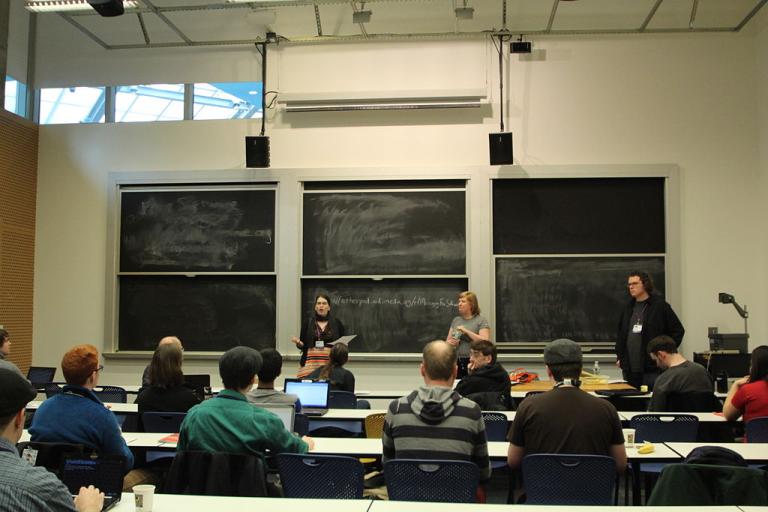
Bernie Sanders is making promises.
Yes, sure, all the Democratic presidential candidates are chock full of promises, and it’s a fair question at this point which candidate has made the most extensive promises, but let’s talk about the specifics of Bernie’s free college proposal, because his website’s promises have some actual supporting detail in the form of the the College for All Act of 2019 and well, his proposals make no sense.
Let’s start with this: I’m not going to object to the basic premise that tertiary education should be free, or at least considerably less expensive than it is now, in something like the European model (though in reality, there is not one single approach that all European countries take, even if there are broad similarities). For the purposes of this article, I’m not going to argue that point because my objective is really more to think about whether his proposal even works or has the fundamental fairness that he claims it does.
And, no, I don’t think that his proposal works but my objective is to get my brain in gear sufficiently well to discuss why.
Let’s start with his website:
When Bernie is in the White House, he will:
Pass the College for All Act to provide at least $48 billion per year to eliminate tuition and fees at four-year public colleges and universities, tribal colleges, community colleges, trade schools, and apprenticeship programs.
Cancel All Existing Student Debt
Make College Debt-Free for All
Provide $1.3 billion to private, nonprofit HBCUs and MSIs every year to eliminate or significantly reduce tuition and fees for low-income students.
and
Tax Wall Street Gambling to Cancel All Student Debt and Pay for College for All
the last of these by taxing stock trades at 0.5%, meant to punish the rich but, of course, impacting every American with a 401(k) and especially those with target-date provisions which rebalance the portfolios, unless Sanders were to create some sort of loophole.
But would this work?
His debt cancellation proposal is straightforward, as far as that part of the whole endeavor goes. All federal student loans are cancelled. All private sector student loans are bought by the government, then cancelled. All parent loans are likewise cancelled.
Is this equitable? Certainly, a young adult who ate ramen and took on extra shifts to pay off that debt or to avoid it in the first place, wouldn’t think so. Nor would a family who diligently saved for their kids’ college rather than taking trips to Disneyland. Does the Sanders team respond, like everyone’s fathers’ would, “so what? life isn’t fair” or do they object to the very premise that some people had the ability to save and chose not to, and operate on the assumption that surely, all those poor folks deep in debt did their best to avoid it as well, and just couldn’t help it?
But how would the “free college” work?
Despite the claim to promise “debt free” college, getting into the weeds of his proposal, that’s not actually the case — and he even promises that future student loans, because they will continue to exist, will have super-low interest rates (1.88%). (Why 1.88%? No idea — it’s not stated as being tied to any particular variable rate that happens to be 1.88%. It’s just 1.88%.)
But his entire structure is this:
The federal government gives states grants equal to 67% of the amount of money needed to eliminate tuition and fees for undergraduate students at their public colleges and universities, in exchange for those states contributing the remaining 33%. In addition, there’s a dollar for dollar match on additional state spending to improve student instruction.
But then the text of the bill starts talking about the sort of spending that schools cannot get a 50:50 match on: building new stadiums, hiring administrators, etc. Yet at the same time, each year, the school determines the amount of money it needs to “eliminate tuition and required fees” and the feds fund 2/3s of this sum; how this is supposed to work is not at all clear to me except, perhaps, for the requirement that states kick in 1/3 the cost being intended to keep them from inflating costs. Oh, and in addition, schools at the moment already have programs in which they charge tuition that exceeds the true cost of instruction in order to reallocate some of that money into “institutional aid” — would those grants be based on the “sticker price,” giving universities a surplus, or on their receipts net of this aid/scholarships?
And schools are subject to all manner of requirements to be eligible for the grants; most significantly, 75% of their instruction (not defined) must be by tenured or tenure-track professors.
There are some other elements which just don’t make sense; in particular, there’s a whole section about tuition for out-of-state students that I can’t figure out and presume is not carefully drafted. And there’s nothing at all about international students, who are a profit center at many universities now; if the grants are meant to cover the entire cost of tuition, does that include everyone?
But all this aside — room and board isn’t covered except in the form of a requirement that schools cover the “remaining need” for Pell Grant-eligible students. (With what money? More state funds required? Are schools allowed to cost-shift using tuition?) And in an era in which increasing numbers of students attend grad school out of a reality or a perception that it’s necessary, the proposal makes no provision for grad school, or does it attempt to innovate to reduce its perceived or real need.
And finally, other than subsidies for certain universities serving minority students, the proposal includes no provision for private universities, which over 1/4 of American college students attend and which are responsible for a disproportionate share of student debt. Would the adoption of a program such as Sanders’, raising the relative cost of private colleges, shift more students to public colleges? Would they be able to handle the increased demand? Or would students continue to believe private collages offered them advantages they couldn’t pass up, even at the cost of high debt levels?
None of this works.
And, yes, I get that this isn’t really intended to “work” – that this is legislation that’s meant to express goals and ideals rather than be passed as-is. But even disregarding that: Sanders and others imagine that we should just “be like Europe” but Sanders can’t create a replica of the European system, however much he’d like to.
Even disregarding the fact that, generally speaking, European universities require entrance exams, offer much less in the way of support services, athletics, etc.,, and in general are intended for a much smaller slice of the population than in the US, and even disregarding the issue of private schools, the whole concept of 2/3 – 1/3 grants with preconditions just doesn’t make sense and points to the fact that the American federalist system means that, if a unit of government is equipped to make determinations about the extent to which public universities should be free or charge tuition, it should be that unit of government which sponsors those in the first place — the states (or, for community colleges, the county or Community College District or other local or regional entity if that’s how it works in a given state). They are the ones who can make an appropriation for the universities within their state and then, using their oversight powers, set requirements about tuition and status of instructors and share of students who are in- or out-of-state and anything else they want to regulate/meddle in (depending on your perspective) and if a university comes back and says, “that’s preposterous, we can’t meet those conditions without X or Y unintended consequence,” then they negotiate.
And the various states have varying policies about the degree to which they fund their universities, and the degree to which they place other conditions on them. In some states, they all operate independently; in other states (New York, California, Wisconsin) they are part of systems in name or in fact. And their in-state tuition levels vary widely as it is, something that I learned when my oldest was looking at colleges and I was trying to guide him. (Which is, incidentally, another bit of unfairness with Sanders’ and similar proposals: a state which had always heavily subsidized in-state tuition gets less money from the feds than a state like Illinois with much lower subsidies.)
“Free college” or boosts in levels of state aid is a fine plan for a state to undertake. But at the federal level, this grant-based approach doesn’t make sense. And boosts in student aid have failed to control costs because they’ve been paired with conventional wisdom such as “everyone must go to college” and “everyone should go to the most prestigious college they can gain admission to” (as defined by price tag) and “the experience of ‘going away to college’ is an important part of growing up that makes the added cost worth every penny” — not to mention the periodic reports that employers demand BAs for jobs which don’t require them, and MAs for jobs which should be appropriate for a college grad with additional on-the-job training, more or less just because they can, because of the surplus of college grads relative to jobs for which a degree is truly a meaningful qualification for the job.
And now, having said all that, here’s my summary of the text of the College for All Act of 2019 itself.
**************
The legislation is in the form of an amendment to the Higher Education Act of 1965, so it starts with Section 901, which authorizes, in subsection (b), grants “to enable the States and eligible Indian entities to eliminate tuition and required fees for all eligible students at community colleges, public 4-year institutions of higher education in the State, or Tribal Colleges and Universities of the eligible Indian entity, where “eligible” students are previously defined as those not already having a baccalaureate degree.
Section 901(b)(2) specifies that each States or eligible Indian entity “shall provide a non-Federal share of funds for an award year from non-Federal sources in an amount that is equal to 33 percent of the amount required to eliminate tuition and fees.”
Consider that each state currently subsidizes public education at different levels. Does a state already funding half the cost of tuition get a federal grant of 2/3 times the remaining 50%, and a state funding only one quarter, get a grant of 2/3 times the remaining 75%? Would more heavily-subsidizing states stand for this?
There are alternate provisions for Tribal Colleges — honestly, I’ll just skip the Tribal College provisions from here on out.
Anyway, 901(c) states that the award money for the first year is 67% of whatever revenue the community college/university students paid in as tuition in the prior year. Stray thought: do international students count, too? There are separate rules for states who don’t participate from the beginning of the program onwards. In subsequent years, that amount is increased by increases in student enrollment and “the amount of additional expenditures per full-time equivalent student . . . that will be necessary to eliminate tuition and required fees for each student.” This seems to say that schools can just raise their expenses however much they want, knowing that they have to cover 1/3 the additional amount and the feds cover the remaining 2/3. Will legislators see the need to cover 1/3 as something to compel them to keep expenses down, or will they say, “it’s a bargain because we only pay 1/3”? Oh, and the school uses “projected” enrollment which the feds can call into question if it’s more than 25%, and it’s ultimately adjusted to reflect actual numbers.
There is also the possibility of additional money at a dollar-for-dollar match, for funds “towards reducing the cost of attendance and improving instruction” — the first of these might include, I imagine, subsidizing room and board; the second of these is not clear, given that the provisions already state that whatever the state deems as additional expenses is covered. A later section lists possible items in the category of “improving instruction” and these include professional development for faculty and tutoring for students. I’m guessing that what’s implied is that the year-over-year grant increase is meant to be based on “keeping all the elements of the university’s general functioning the same,” and that the dollar-for-dollar money is meant for extras in the year of implementation. But this dollar-for-dollar money cannot be used for “the construction of a nonacademic facility, such as an athletic facility or stadium” or “for merit-based student financial aid” or “to pay the salaries or benefits of school administrators” or several other categories — which leaves me rather stumped as to what Sanders has in mind here. Is the state supposed to pay for these items out of a wholly separate pot of state money? Are existing merit aid programs that had previously been covered by tuition acceptable or is the share of tuition that had been funding these programs required to be paid for by the state? And what about the provision that administrators’ compensation cannot be covered? Given that they think of themselves as dedicated to improving student outcomes and/or essential to the operation of the university, why are they treated differently?
Oh, well.
Then there are some eligibility requirements:
States must maintain spending on instruction at the same per-student level as at the initial implementation of the program. So I guess any innovations that reduce instructional cost are ruled out — though that would have been unlikely anyway, and there’s still the question of how it increases relative to inflation.
States must shift, within 5 years, to a tenure/tenure-track instructional model, with 75% of instruction (not defined – number of courses? Adjusted for numbers of students per course?) by tenured or tenure-track faculty. Look, I’m not a big fan of the adjunct per-course model, but, especially at the community college level, there is no reason to preserve the tenure model; full-time, regular, benefits-eligible employment should be just fine without the promise of lifetime employment.
States must meet 100% of the remaining “need” of maximum-Pell Grant-eligible students (that is, their room and board costs).
All universities must keep enrollment at current levels, except to the extent that it’s beyond their control.
States must “provide an assurance that public institutions of higher education in the State . . . will not charge out-of-state students an amount that exceeds the marginal cost of attending institutions of higher education in the State.” I admit I don’t understand what this means given that the initial provisions are that all tuition is to be covered by the grants and money by the state. Maybe there was a drafting error here since this is legislation that isn’t expected to be passed in this form, but I can’t really guess what this would be.
States must promise that they will not overcharge non-eligible in-State students — that is, the rate of increase for their tuition will not exceed the rate of increase in the hypothetical tuition that’s covered by the grants and state funds. I think “non-eligible” means graduate students or maybe students going for a second degree.
Anyway, that’s the first half of Sanders’ legislation.
The second half, section 902, has to do with grant money for private colleges which meet definitions for serving Hispanics, Blacks, Alaskan-Natives, Native-Hawaiians, Asian Americans, and which has 35% or more low-income students — and here, too, there are grants to eliminate tuition, and it’s not entirely clear how it’s meant to work except that there is a specific sum of money appropriated here, $1.34 billion in 2020, but with the vague “such sums as may be necessary” for subsequent years.
And then there are more provisions:
Student loan rates are limited to 1.88%.
Oh, and then nearly at the bottom is Title IV: “Student Debt Cancellation.”
The outstanding balance on all Federal student loans is to be forgiven not later than 180 days after the passage of the bill, including parental loans and consolidated loans. Also, any payments made by borrowers between the date of the enactment and the date of official loan forgiveness is to be refunded.
And the federal government will purchase all private student loans, and then forgive the balance.
And finally: well, missing from this entirely are the promised pay-fors as described on the Sanders website.
And there you have it: free!
Image: “LibrePlanet 2014 27” by Lionel Allorge – Own work. Licensed under CC BY-SA 3.0 via Wikimedia Commons – http://commons.wikimedia.org/wiki/File:LibrePlanet_2014_27.jpg#mediaviewer/File:LibrePlanet_2014_27.jpg
Previous Post

September 17, 2019
A tale of two memorials

Browse Our Archives
Select a Category Actuarial/Retirement Issues Politics Uncategorized
Select a Month September 2026 August 2026 July 2026 June 2026 April 2026 March 2026 February 2026 January 2026 December 2025 November 2025 October 2025 July 2025 June 2025 May 2025 April 2025 March 2025 February 2025 January 2025 December 2024 November 2024 October 2024 September 2024 August 2024 July 2024 June 2024 May 2024 April 2024 March 2024 February 2024 December 2023 November 2023 October 2023 September 2023 August 2023 July 2023 December 2022 September 2022 August 2022 July 2022 June 2022 May 2022 February 2022 January 2022 December 2021 August 2021 June 2021 April 2021 February 2021 January 2021 December 2020 November 2020 October 2020 September 2020 August 2020 July 2020 June 2020 May 2020 April 2020 March 2020 February 2020 January 2020 December 2019 November 2019 October 2019 September 2019 August 2019 July 2019 June 2019 May 2019 April 2019 March 2019 February 2019 January 2019 December 2018 November 2018 October 2018 September 2018 August 2018 July 2018 June 2018 May 2018 April 2018 March 2018 February 2018 January 2018 December 2017 November 2017 October 2017 September 2017 August 2017 July 2017 June 2017 May 2017 April 2017 March 2017 February 2017 January 2017 December 2016 November 2016 October 2016 September 2016 August 2016 July 2016 June 2016 May 2016 April 2016 March 2016 February 2016 January 2016 December 2015 November 2015 October 2015 September 2015 August 2015 July 2015 June 2015 May 2015 April 2015 March 2015 February 2015 January 2015 December 2014 November 2014 October 2014 September 2014 August 2014 July 2014 June 2014 May 2014 April 2014 March 2014 February 2014 January 2014 December 2013 November 2013 October 2013 September 2013 August 2013 July 2013
Follow Us!
TAKE THE
Religious Wisdom Quiz
Who said, "For where two or three gather in my name, there am I with them"?
Select your answer to see how you score.
John Jesus Paul Peter
Related posts from Jane the Actuary
The Great Guardianship/Financial Aid Scandal of 2019 (or...
How much is a grad student worth?
Affirmative-Action Rhodes Scholarships?
Grad student Chicken Littles -- sort of right,...
TRENDING AT PATHEOS Catholic

The Brazilian Remake of Kendricks' 'Flywheel' Opens in...
“Flywheel,” the story that launched the Kendrick Brothers’ filmmaking career is getting...

The Dangers of Gradual Accommodation (Winking at Sin)
Recently, the “law of gradualness” resurfaced during the opening of a weeklong,...

The Iron Gates and the Lion of the...
Yesterday, I didn't finish my report about, well, yesterday. So I'll...

Dolly Parton’s Last Song Wins Dove Award with...
Bluegrass band The Grascals, speaking on the red carpet at the 57th...

The Image: On the Horror of Capitalism and...
The Image Then went the Pharisees, and took counsel how they might...

We are approaching the date of our new American national holiday: October...
view all Catholic blogs
Ad-Free & Subscriber Log-In Subscription Support
- About Us
- 2026 Calendar
- Videos
- Podcasts
- Library of World Religions
- Faith In Media Tracker
- Advertise With Us
- Write for Us
- Privacy Policy
- Terms of Service
- Do Not Sell My Data
- Contact Us
- Radiant Digital
- Manage Newsletter Subscriptions
- Unsubscribe From Notifications
- Sitemap
Copyright 2008-2026, Patheos. All rights reserved.
Subscription Support Ad-Free & Subscriber Log-In
Follow Patheos