
BuddhistCatholicContemplativeEvangelicalGeneral ChristianHinduJewishLatter-day SaintMuslimNew VisionsProgressive Christian
Beliefs
- Buddhist
- Catholic
- Contemplative
- Evangelical
- General Christian
- Hindu
- Jewish
- Latter-day Saint
- More Voices
- Muslim
- New Visions
- Pagan
- Progressive Christian
Topics
- Religion News
- Food and Religion
- Sports and Religion
- Religious Art
- Religious Music and Entertainment
- Religious Events
- History and Religion
- Style and Religion
- Politics and Religion
- Women in Religion
- Recreation Outdoors and Religion
- Business Finance and Religion
- Careers Workplace and Religion
- Education and Religion
- Family Parenting and Religion
- Health Fitness and Religion
- Home and Religion
- Relationships and Religion
- Technology and Religion
- Travel and Religion
Columnists
- Buddhist Columnists
- Business Finance and Religion Columnists
- Careers Workplace and Religion Columnists
- Catholic Columnists
- Contemplative Columnists
- Education and Religion Columnists
- Evangelists Columnists
- Family Parenting and Religion Columnists
- General Christian Columnists
- Health Fitness and Religion Columnists
- Hindu Columnists
- History and Religion Columnists
- Home and Religion Columnists
- Jewish Columnists
- More Voices Columnists
- Latter Day Columnists
- Muslim Columnists
- New Visions Columnists
- Nonreligious Columnists
- Pagan Columnists
- Politics and Religion Columnists
- Progressive Columnists
- Recreation Outdoors and Religion Columnists
- Relationships and Religion Columnists
- Religion News Columnists
- Religious Art Columnists
- Religious Events Columnists
- Religious Music and Entertainment Columnists
- Sports and Religion Columnists
- Style and Religion Columnists
- Technology and Religion Columnists
- Travel and Religion Columnists
- Women in Religion Columnists
Resource Library
- 2026 Calendar
- Library of World Religions
- The 100 Most Holy Places on Earth
- Patheos Answers
- Podcasts
- Videos
- Faith Leaders Database
- Anglican Episcopalian
- Bahai
- Baptist
- Buddhism
- Christianity
- Confucianism
- Eastern Orthodoxy
- Hinduism
- Holiness and Pentecostal
- ISKCON
- Islam
- Judaism
- Lutheran
- Methodist
- The Church of Jesus Christ of Latter-day Saints
- New Age
- Paganism
- Presbytarian and Reformed
- Protestantism
- Religion Behind the Scenes
- Roman Catholic
- Scientology
- Shia Islam
- Sikhism
- Sufism
- Sunni Islam
- Taoism
- Zen
- See all religions
Research Tools
 Ad-Free & Subscriber Log-In Subscription Support
Ad-Free & Subscriber Log-In Subscription Support
Follow Patheos 

- Trending:
- Forgiveness
- |
- Marriage
- |
- Consciousness
- |
- Death Penalty
- |
- Election
- |
- Halloween

- Home
- Catholic
- Politics and Religion
- Is Trump really causing premature births?
Is Trump really causing premature births?
Last updated on: August 15, 2019 at 9:53 pm by Jane the Actuary
Is Trump really causing premature births? 2019-08-15T21:53:56-06:00 Jane the Actuary
Patheos Explore the world's faith through different perspectives on religion and spirituality! Patheos has the views of the prevalent religions and spiritualities of the world.
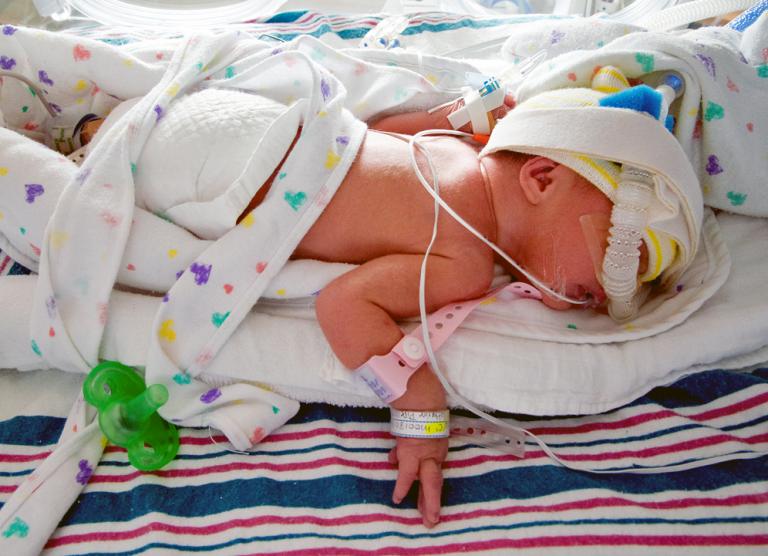
https://commons.wikimedia.org/wiki/File:Mcmaster_NICU_infant_6978.jpg; Peter K Burian [CC BY-SA 4.0 (https://creativecommons.org/licenses/by-sa/4.0)]
The one-word answer is “no.”
The three-word version, “eh, probably not.”
And for more words than that, it becomes more necessary to dig into the data that underlies a claim reported in CNN earlier this month, that, as the headline says, “A rise in premature births among Latina women may be linked to Trump’s election, study says.”
The claim goes like this:
The United States 2016 election, when President Donald Trump was voted into office, may have been tied to a rise in premature births among Latina women across the US, according to a new study.
In the nine months beginning with November 2016, about 3.2% to 3.6% more preterm births to Latina women occurred above the levels of preterm births that would have been expected had the election not occurred, suggests the study, published in the medical journal JAMA Network Open on Friday.
The study itself, “Association of Preterm Births Among US Latina Women With the 2016 Presidential Election” by Alison Gemmill, Ralph Catalano, Joan A. Casey, et al., is available online and is based on publicly accessible data at the CDC WONDER database.
This boost in prematurity is attributed to stress experienced by women in the country illegally as well as stresses felt by Hispanic women who are legal residents or citizens but feel anxiety about the prospect of family or community members being deported or otherwise experiencing instability. In addition to the general rise in prematurity identified during this period, they identify a peak in February 2017 for male births (corresponding to being in the second trimester at the time of Trump’s election) and July 2017 for female births (corresponding to conception at Trump’s election). The authors speculate that this might be due to stress and anxiety affecting their health, or because illegal-immigrant mothers sought out prenatal care less often out of fear, and may have been due to the election itself, the inauguration, or Trump’s immigration-related January 2017 Executive Orders (the authors are not more specific but presumably they have in mind the “build a wall” executive order).
The study also note, but discards as relevant, another factor:
Third, as noted above, we were not able to disaggregate births to Latina mothers by nativity status owing to data limitations. Foreign-born Latina women have a lower risk for preterm birth than their US-born counterparts. A decrease in the number of foreign-born women among Latina women giving birth immediately after the election could, therefore, have contributed to observed increases in preterm birth. If, however, compositional changes drove our results, we would expect a similar association between the election and male and female preterm births.
And the study shows two charts (shown individually for male and female births) to document their calculations visually, that, in the period from November 2016 to July 2017, there were more premature births among Hispanic babies than expected based on the “time series” method of projecting forward expected rates of prematurity based on data starting in 2009 (that is, the start of the Obama presidency). It looks convincing enough. But is it?
Immediately, one notices two things about these charts:
First, their chart showing the discrepancies between “expected/modeled” and “actual” preterm births covers only the period from November 2016 to July 2017. What happened before November 2016? Turns out, their full set of actual and expected preterm birth data from 2009 shows that higher-than-expected preterm birth rates began before November 2016, though exactly how far before then is difficult to make out with the nature of the graph.
So what’s going on? Here’s an NPR report from last fall, after the 2017 data (the most recent available) was released:
The rate of premature birth across the United States rose for the third year in a row, according to the annual premature birth report card from March of Dimes, a nonprofit organization that works to improve maternal and infant health. This comes after nearly a decade of decline from 2007 to 2015.
In 2017, the premature birth rate was 9.93 percent of births, up slightly from 2016, when it was 9.85 percent. The report card draws from the latest Centers for Disease Control and Prevention data.
What’s more, I analyzed the data on the WONDER website, though rather than using the sophisticated modeling techniques employed by these authors to adjust for seasonality of prematurity rates (that is, they are higher at some times of the year than others), I simply used a rolling 12-month average. In order to best match the study, I used prematurity estimates based on “last menstrual period” pregnancy dating, even though this has been supplanted by the Obstetric/Clinical Gestation Estimate beginning in 2014. And I looked at prematurity rates for non-Hispanic women, all Hispanics, and women who identified as Mexican or Central/South American only (that is, excluding Puerto Rican and Cuban women as well as those who did not specify their national origin, presuming these are more likely to be women more removed from immigrant communities if they no longer identify with a specific nationality), both for all birth and for the subgroup of younger women (under 35) with singleton pregnancies, to remove the impact of greater risks of prematurity among multiples and older women.
What’s the take-away here?
From the beginning of this data set in 2007, prematurity rates declined steadily year after year — until 2014/2015.
For non-Hispanic women (which include not merely white “Anglo” women but also black women, women of Asian ancestry, and others), the trough was for the 12-month average ending in May – July 2015.
For all Hispanic women, the trough was in the 12 months ending November 2015 to April 2016.
And for Mexican and Central/South American-origin women, the trough was in the period ending from March 2014 to April 2016.
(In each case, the rates for young mother singleton-births were lower than those for all births, but the patterns were very nearly the same.)
After these points, for each of these groups of women, rates began to rise, a pattern that was continued after Trump took office but began before then.
In other words, you cannot use this data to tell a story of prematurity rates spiking because Trump is making Hispanic women fearful, when the broader context is one of a flatlining of prematurity rate decreases, followed by increases in the later years of Obama’s presidency, though it is curious that the rebounding of prematurity rates was briefly delayed for Hispanic women relative to non-Hispanics. What’s the real cause? The NPR report blames racism and poverty, and that is certainly a key factor in terms of prematurity rates in general, but there’s no reason to believe that these factors have worsened in just the time period since 2014, especially when the implementation of Obamacare and the expansion of Medicaid has been credited with increasing health insurance access.
And in the end, this is another example of the need to be skeptical and cautious of any data analysis which appears to prove a political agenda a bit too neatly and cleverly.
Previous Post

August 13, 2019
The real cost of cheap chicken



Browse Our Archives
Select a Category Actuarial/Retirement Issues Politics Uncategorized
Select a Month September 2026 August 2026 July 2026 June 2026 April 2026 March 2026 February 2026 January 2026 December 2025 November 2025 October 2025 July 2025 June 2025 May 2025 April 2025 March 2025 February 2025 January 2025 December 2024 November 2024 October 2024 September 2024 August 2024 July 2024 June 2024 May 2024 April 2024 March 2024 February 2024 December 2023 November 2023 October 2023 September 2023 August 2023 July 2023 December 2022 September 2022 August 2022 July 2022 June 2022 May 2022 February 2022 January 2022 December 2021 August 2021 June 2021 April 2021 February 2021 January 2021 December 2020 November 2020 October 2020 September 2020 August 2020 July 2020 June 2020 May 2020 April 2020 March 2020 February 2020 January 2020 December 2019 November 2019 October 2019 September 2019 August 2019 July 2019 June 2019 May 2019 April 2019 March 2019 February 2019 January 2019 December 2018 November 2018 October 2018 September 2018 August 2018 July 2018 June 2018 May 2018 April 2018 March 2018 February 2018 January 2018 December 2017 November 2017 October 2017 September 2017 August 2017 July 2017 June 2017 May 2017 April 2017 March 2017 February 2017 January 2017 December 2016 November 2016 October 2016 September 2016 August 2016 July 2016 June 2016 May 2016 April 2016 March 2016 February 2016 January 2016 December 2015 November 2015 October 2015 September 2015 August 2015 July 2015 June 2015 May 2015 April 2015 March 2015 February 2015 January 2015 December 2014 November 2014 October 2014 September 2014 August 2014 July 2014 June 2014 May 2014 April 2014 March 2014 February 2014 January 2014 December 2013 November 2013 October 2013 September 2013 August 2013 July 2013
Follow Us!
TAKE THE
Religious Wisdom Quiz
How many days did God take to create the world?
Select your answer to see how you score.
Seven Ten Two Six
Related posts from Jane the Actuary


Can we -- should we -- pray for...

Why I don't care about Trump's tax return

Feelings don't care about your facts!
TRENDING AT PATHEOS Catholic

Methodist Central Hall and Westminster Abbey
Situated on the same square is Methodist Central Hall and Westminster Abbey. ...

57th Dove Awards Honor Dolly Parton, Crown New...
On gospel music’s biggest night, the 57th annual GMA Dove Awards honored...

The First Eucharistic Controversy: Christ’s Real Presence
For Catholics, the Eucharist is the source and summit of the Christian...

What a Stop Sign Can Teach Us About...
How to Make a Decision When You Can't Hear God Main point:...

Archdiocese Hosts Military Marriage Retreat in Germany
RASTATT, Germany — The transient military lifestyle, with its frequent deployments and...

Nearly every morning, I make the drive to Detroit with my high-school-age...
view all Catholic blogs
Ad-Free & Subscriber Log-In Subscription Support
- About Us
- 2026 Calendar
- Videos
- Podcasts
- Library of World Religions
- Faith In Media Tracker
- Advertise With Us
- Write for Us
- Privacy Policy
- Terms of Service
- Do Not Sell My Data
- Contact Us
- Radiant Digital
- Manage Newsletter Subscriptions
- Unsubscribe From Notifications
- Sitemap
Copyright 2008-2026, Patheos. All rights reserved.
Subscription Support Ad-Free & Subscriber Log-In
Follow Patheos