
BuddhistCatholicContemplativeEvangelicalGeneral ChristianHinduJewishLatter-day SaintMuslimNew VisionsProgressive Christian
Beliefs
- Buddhist
- Catholic
- Contemplative
- Evangelical
- General Christian
- Hindu
- Jewish
- Latter-day Saint
- More Voices
- Muslim
- New Visions
- Pagan
- Progressive Christian
Topics
- Religion News
- Food and Religion
- Sports and Religion
- Religious Art
- Religious Music and Entertainment
- Religious Events
- History and Religion
- Style and Religion
- Politics and Religion
- Women in Religion
- Recreation Outdoors and Religion
- Business Finance and Religion
- Careers Workplace and Religion
- Education and Religion
- Family Parenting and Religion
- Health Fitness and Religion
- Home and Religion
- Relationships and Religion
- Technology and Religion
- Travel and Religion
Columnists
- Buddhist Columnists
- Business Finance and Religion Columnists
- Careers Workplace and Religion Columnists
- Catholic Columnists
- Contemplative Columnists
- Education and Religion Columnists
- Evangelists Columnists
- Family Parenting and Religion Columnists
- General Christian Columnists
- Health Fitness and Religion Columnists
- Hindu Columnists
- History and Religion Columnists
- Home and Religion Columnists
- Jewish Columnists
- More Voices Columnists
- Latter Day Columnists
- Muslim Columnists
- New Visions Columnists
- Nonreligious Columnists
- Pagan Columnists
- Politics and Religion Columnists
- Progressive Columnists
- Recreation Outdoors and Religion Columnists
- Relationships and Religion Columnists
- Religion News Columnists
- Religious Art Columnists
- Religious Events Columnists
- Religious Music and Entertainment Columnists
- Sports and Religion Columnists
- Style and Religion Columnists
- Technology and Religion Columnists
- Travel and Religion Columnists
- Women in Religion Columnists
Resource Library
- 2026 Calendar
- Library of World Religions
- The 100 Most Holy Places on Earth
- Patheos Answers
- Podcasts
- Videos
- Faith Leaders Database
- Anglican Episcopalian
- Bahai
- Baptist
- Buddhism
- Christianity
- Confucianism
- Eastern Orthodoxy
- Hinduism
- Holiness and Pentecostal
- ISKCON
- Islam
- Judaism
- Lutheran
- Methodist
- The Church of Jesus Christ of Latter-day Saints
- New Age
- Paganism
- Presbytarian and Reformed
- Protestantism
- Religion Behind the Scenes
- Roman Catholic
- Scientology
- Shia Islam
- Sikhism
- Sufism
- Sunni Islam
- Taoism
- Zen
- See all religions
Research Tools
 Ad-Free & Subscriber Log-In Subscription Support
Ad-Free & Subscriber Log-In Subscription Support
Follow Patheos 

- Trending:
- Forgiveness
- |
- Marriage
- |
- Consciousness
- |
- Death Penalty
- |
- Election
- |
- Halloween

- Home
- Catholic
- Politics and Religion
- The new generation is ruining X, outdoors edition
The new generation is ruining X, outdoors edition
Last updated on: January 9, 2019 at 12:23 pm by Jane the Actuary
The new generation is ruining X, outdoors edition 2019-01-09T12:23:25-06:00 Jane the Actuary
Patheos Explore the world's faith through different perspectives on religion and spirituality! Patheos has the views of the prevalent religions and spiritualities of the world.
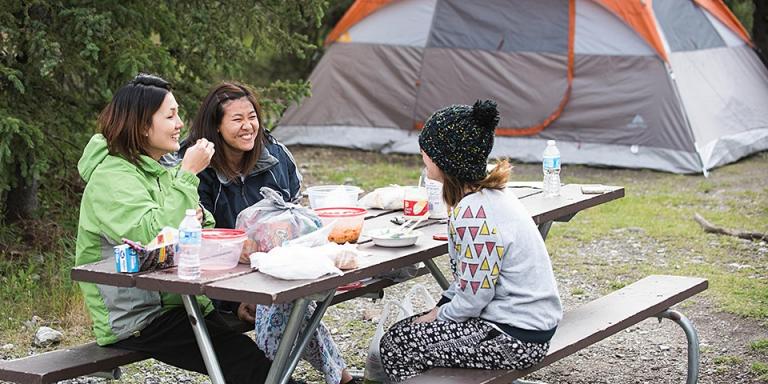
In the Atlantic the other day (well, actually two weeks ago or thereabouts), “Five Ways to Make the Outdoors More Inclusive.”
As a disclaimer, yes, the article is clearly identified as “marketing,” and it’s sponsored by REI, and their objective is not really to “make the outdoors more inclusive” but to market themselves to outdoors enthusiasts as the socially conscious choice for purchasing outdoor gear.
But the author/marketer cites that statistic that 78% of those who visit federal parks are white, though their link is bad, so it’s not possible to determine whether this refers to national parks specifically or all National Parks Service-administered properties, whether it distinguishes between Americans and white European tourists, or whether it includes Hispanic-ethnicity-folk in its definition of “white.” In addition, they report,
African Americans, Latinos, women, and members of the LGBTQ community often report feeling unwelcome or unsafe in outdoor spaces. Moreover, the outdoors industry workforce—which includes everyone from park rangers to retail sales associates—has minimal representation from these groups.
In order to think about these issues, REI / The Atlantic / the marketing group convened a panel for a “brainstorming group” and came up with recommendations, some of which might well be useful, others of which are silly, and yet others could do more harm than good, in furthering the cause of encouraging greater engagement with nature by non-white, non-male non-straight non-native born non-etc. Americans.
Among these:
Increase the degree to which the history of minority groups is documented and memorialized within the park system, both by means of “telling the stories” (e.g., creating museum gallery spaces) of those groups at existing parks as well as creating new “storytelling-driven memorials”. This may or may not be a worthy cause, and might increase the budget of the National Parks Service, but isn’t going to increase the amount of time these groups spend in the outdoors. Consider that the Cesar Chavez National Memorial cited as an example in the article is located on the property of the United Farm Workers headquarters, and only a visitor center and the gravesite are open to the public for this reason. Likewise the new Pullman National Monument was celebrated by civic boosters in Chicago, who even initially hoped it would be declared a National Park, an outcome that would have perhaps boosted “national park attendance” but without actually increasing Americans’ experiences with the outdoors.
Change park rangers’ uniforms to be more “modern” and “welcoming” resembling a hiker or jogger, so as to avoid intimidating groups fearful of law enforcement. However well-intentioned this might be, being easily recognized helps park rangers serve the public.
Allow larger groups at backcountry campsites and allow dogs, to welcome those who feel unsafe unless they’re a part of larger groups or with a dog for protection. It might indeed be reasonable to evaluate whether in any given location, campsite numbers can be increased or dogs can be permitted rather than following blanket rules, but rules shouldn’t be abandoned if there were valid reasons for instituting them in the first place.
Make outdoor recreation more affordable, for instance, by organizing subsidized transportation for poor families to get to nearby outdoor spaces, by offering free admission to state parks for first-timers, or by creating more affordable lodging at state or national parks. Some of this is obvious. (California charges $195 for its state parks’ annual pass? For a Blue State, that’s surprising, given that Illinois charges nothing, and my neighboring states a fairly moderate fee even for nonresidents.) Some of this is less so — after all, high costs for national park lodging isn’t (only) because providers wish to cater to luxury markets, but because of concerns about environmental protection, and there are ongoing disputes in some parks about how much lodging should be permitted anyway.
Make parks “cool” with music or cultural festivals. Which is all well and good until the battle royale begins over whether said music festivals are damaging the property.
and finally,
“Expand the definition of the outdoors to include smaller urban parks.” In other words, if we can’t change the underlying circumstances, we’ll just change the way we measure them, and call our actions a success.
(Yes, that’s more than five – these and other items are all sub-items of their List of Five.)
But all of this ultimately just begs the question by assuming that it’s important to “make the outdoors more inclusive” in the first place, if, indeed, the younger generation has other interests and priorities, and in particular if camping and hiking simply isn’t a part of the cultural traditions of the cultures that immigrants bring with them. REI/The Atlantic addresses this briefly in its introduction:
contact with nature leads to improved mental health, lower stress levels, and enhanced cognitive skills, for one. Plus, if more of an effort isn’t made to engage current and future generations (and this may be an especially relevant concern, as the country continues to diversify, with the U.S. Census Bureau forecasting that the U.S. will become a minority white nation by 2045), potential support for the parks “might go away” altogether, according to Michael Woo, dean of the College of Environmental Design at California State Polytechnic University, Pomona.
But, based on my quick check on the availability of accommodations for Yellowstone in summer 2019 (spoiler alert: pretty much all sold out), there’ll be no harm done if the national parks are a wee bit less popular. One could even make a case that we could do with fewer hikers and campers, if this leaves more of the wilderness areas truly left reserved for wildlife. And the “nature deficit disorder” referenced in the article really has more to do with having green spaces in our everyday lives than with increasing the prevalence of hiking or camping vacations.
Are we upset that immigrants and/or young adults aren’t interested in square dancing? Model-building? Hunting? Fishing? Sailing, or boating more generally? Golfing? The accordion? Isn’t it deemed a violation of multicultural sensitivity to expect that immigrants should adapt to white America’s interests? Isn’t the burden on those hobbyist-communities to share their hobby with the next generation, regardless of what skin color they are? And if they can’t make the case that that activity is attractive without appealing to cultural traditions, then tough luck, and those hobby shop or slot car racing storefronts can be used for Mariachi band instruments and quinceanera dresses instead.
It comes down to this: how do you distinguish between “hobbies” and crucial pieces of the fabric of American life (churches, community institutions) which benefit society as a whole rather than just providing fun and relaxation for those who choose to participate in them? Our current conversation has been so suffused with “tolerance” and “multiculturalism” and honoring everyone’s individual identity groups that we don’t have the space to discuss this, and to make the case that a society which engages in the outdoors is better than one that doesn’t, in the same way as is the case of a society with healthy community institutions.
What’s more, the blinders worn by those immeshed in the ethos of diversity (as well as the need to virtue-signal to their target audience) meant that this panel missed the most obvious way to reach out to prospective outdoorsmen and -women: Scouting. After all, one of the reasons (or the explanation offered by the BSA, in any case) for opening BSA-scouting up to girls, in (yes, this point is generally missed) single-sex dens (for Cub Scouts) or troops (for Scouting), was as an outreach to immigrant families, who expressed the desire for scouting to be something they did as a family, even if that took the form of a single meeting time with “break-out groups” for each age/sex den/troop. And scouting — for middle and high schoolers — includes monthly outings, usually outdoors, so that boys (and, yes, now girls) can learn camping, hiking, and general outdoor skills in a structured way, and encourages parents to accompany their children and the Scout leaders, so that they, too, can gain experience with camping even if they didn’t grow up with it. And scout camping is an affordable way for a young person or a family to begin to experience the outdoors, since the troop purchases equipment such as tents and cooking equipment, leaving for individual scouts only such items as sleeping bags, warm clothing, and mess kits, and scouts learn to be thrifty (a part of the Scout Law, after all) in camping as well. But instead of supporting Scouting (or, alternatively, alternative scouting-style organizations), those who fancy themselves socially-aware have mocked them.
And finally, even though they seek to encourage groups with the mission of encouraging specific underrepresented groups (highlighting groups supporting blacks or black women specifically and gay people in the outdoors) to hike and camp, they completely miss the role that strenghtened churches and community organizations could play. The authors propose that corporations might provide transportation to state or national parks as a charitable deed. Wouldn’t this make more sense as something that’s done as a church outing instead?
So, yes, again, this is marketing. This is virtue-signaling. But this is also another illustration of a divide that means they miss the point.
Image: https://www.nps.gov/subjects/camping/frontcountry-camping.htm
Previous Post

January 4, 2019
Happy Elizabeth Ann Seton Day! (with discussion questions)
Next Post
January 11, 2019 What if Trump doesn't care?
Browse Our Archives
Select a Category Actuarial/Retirement Issues Politics Uncategorized
Select a Month September 2026 August 2026 July 2026 June 2026 April 2026 March 2026 February 2026 January 2026 December 2025 November 2025 October 2025 July 2025 June 2025 May 2025 April 2025 March 2025 February 2025 January 2025 December 2024 November 2024 October 2024 September 2024 August 2024 July 2024 June 2024 May 2024 April 2024 March 2024 February 2024 December 2023 November 2023 October 2023 September 2023 August 2023 July 2023 December 2022 September 2022 August 2022 July 2022 June 2022 May 2022 February 2022 January 2022 December 2021 August 2021 June 2021 April 2021 February 2021 January 2021 December 2020 November 2020 October 2020 September 2020 August 2020 July 2020 June 2020 May 2020 April 2020 March 2020 February 2020 January 2020 December 2019 November 2019 October 2019 September 2019 August 2019 July 2019 June 2019 May 2019 April 2019 March 2019 February 2019 January 2019 December 2018 November 2018 October 2018 September 2018 August 2018 July 2018 June 2018 May 2018 April 2018 March 2018 February 2018 January 2018 December 2017 November 2017 October 2017 September 2017 August 2017 July 2017 June 2017 May 2017 April 2017 March 2017 February 2017 January 2017 December 2016 November 2016 October 2016 September 2016 August 2016 July 2016 June 2016 May 2016 April 2016 March 2016 February 2016 January 2016 December 2015 November 2015 October 2015 September 2015 August 2015 July 2015 June 2015 May 2015 April 2015 March 2015 February 2015 January 2015 December 2014 November 2014 October 2014 September 2014 August 2014 July 2014 June 2014 May 2014 April 2014 March 2014 February 2014 January 2014 December 2013 November 2013 October 2013 September 2013 August 2013 July 2013
Follow Us!
TAKE THE
Religious Wisdom Quiz
Who were the first two sons of Adam and Eve?
Select your answer to see how you score.
Cain and Abel Seth and Enosh Jacob and Esau Isaac and Ishmael
Related posts from Jane the Actuary
A sewing-machine metaphor (and people aren't machines)

In which I think about Sarah Jeong, racism,...

Affirmative-Action Rhodes Scholarships?
TRENDING AT PATHEOS Catholic

Letters on Living the Faith by C.S. Lewis
Most of us met C.S. Lewis as a public intellectual. Mere Christianity....

When Halloween Unmasks Married Hearts
Written by Dr. David K. Ewen from Eternal Truth Bible College Behind...

Aristotle. He’s been called the father of logic, the father of the...

Methodist Central Hall and Westminster Abbey
Situated on the same square is Methodist Central Hall and Westminster Abbey. ...

57th Dove Awards Honor Dolly Parton, Crown New...
On gospel music’s biggest night, the 57th annual GMA Dove Awards honored...

The First Eucharistic Controversy: Christ’s Real Presence
For Catholics, the Eucharist is the source and summit of the Christian...
view all Catholic blogs
Ad-Free & Subscriber Log-In Subscription Support
- About Us
- 2026 Calendar
- Videos
- Podcasts
- Library of World Religions
- Faith In Media Tracker
- Advertise With Us
- Write for Us
- Privacy Policy
- Terms of Service
- Do Not Sell My Data
- Contact Us
- Radiant Digital
- Manage Newsletter Subscriptions
- Unsubscribe From Notifications
- Sitemap
Copyright 2008-2026, Patheos. All rights reserved.
Subscription Support Ad-Free & Subscriber Log-In
Follow Patheos