
BuddhistCatholicContemplativeEvangelicalGeneral ChristianHinduJewishLatter-day SaintMuslimNew VisionsProgressive Christian
Beliefs
- Buddhist
- Catholic
- Contemplative
- Evangelical
- General Christian
- Hindu
- Jewish
- Latter-day Saint
- More Voices
- Muslim
- New Visions
- Pagan
- Progressive Christian
Topics
- Religion News
- Food and Religion
- Sports and Religion
- Religious Art
- Religious Music and Entertainment
- Religious Events
- History and Religion
- Style and Religion
- Politics and Religion
- Women in Religion
- Recreation Outdoors and Religion
- Business Finance and Religion
- Careers Workplace and Religion
- Education and Religion
- Family Parenting and Religion
- Health Fitness and Religion
- Home and Religion
- Relationships and Religion
- Technology and Religion
- Travel and Religion
Columnists
- Buddhist Columnists
- Business Finance and Religion Columnists
- Careers Workplace and Religion Columnists
- Catholic Columnists
- Contemplative Columnists
- Education and Religion Columnists
- Evangelists Columnists
- Family Parenting and Religion Columnists
- General Christian Columnists
- Health Fitness and Religion Columnists
- Hindu Columnists
- History and Religion Columnists
- Home and Religion Columnists
- Jewish Columnists
- More Voices Columnists
- Latter Day Columnists
- Muslim Columnists
- New Visions Columnists
- Nonreligious Columnists
- Pagan Columnists
- Politics and Religion Columnists
- Progressive Columnists
- Recreation Outdoors and Religion Columnists
- Relationships and Religion Columnists
- Religion News Columnists
- Religious Art Columnists
- Religious Events Columnists
- Religious Music and Entertainment Columnists
- Sports and Religion Columnists
- Style and Religion Columnists
- Technology and Religion Columnists
- Travel and Religion Columnists
- Women in Religion Columnists
Resource Library
- 2026 Calendar
- Library of World Religions
- The 100 Most Holy Places on Earth
- Patheos Answers
- Podcasts
- Videos
- Faith Leaders Database
- Anglican Episcopalian
- Bahai
- Baptist
- Buddhism
- Christianity
- Confucianism
- Eastern Orthodoxy
- Hinduism
- Holiness and Pentecostal
- ISKCON
- Islam
- Judaism
- Lutheran
- Methodist
- The Church of Jesus Christ of Latter-day Saints
- New Age
- Paganism
- Presbytarian and Reformed
- Protestantism
- Religion Behind the Scenes
- Roman Catholic
- Scientology
- Shia Islam
- Sikhism
- Sufism
- Sunni Islam
- Taoism
- Zen
- See all religions
Research Tools
 Ad-Free & Subscriber Log-In Subscription Support
Ad-Free & Subscriber Log-In Subscription Support
Follow Patheos 

- Trending:
- Forgiveness
- |
- Marriage
- |
- Consciousness
- |
- Death Penalty
- |
- Election
- |
- Halloween

- Home
- Catholic
- Politics and Religion
- Defining democracy
Defining democracy
Last updated on: November 2, 2018 at 9:24 am by Jane the Actuary
Defining democracy 2018-11-02T09:24:31-06:00 Jane the Actuary
Patheos Explore the world's faith through different perspectives on religion and spirituality! Patheos has the views of the prevalent religions and spiritualities of the world.
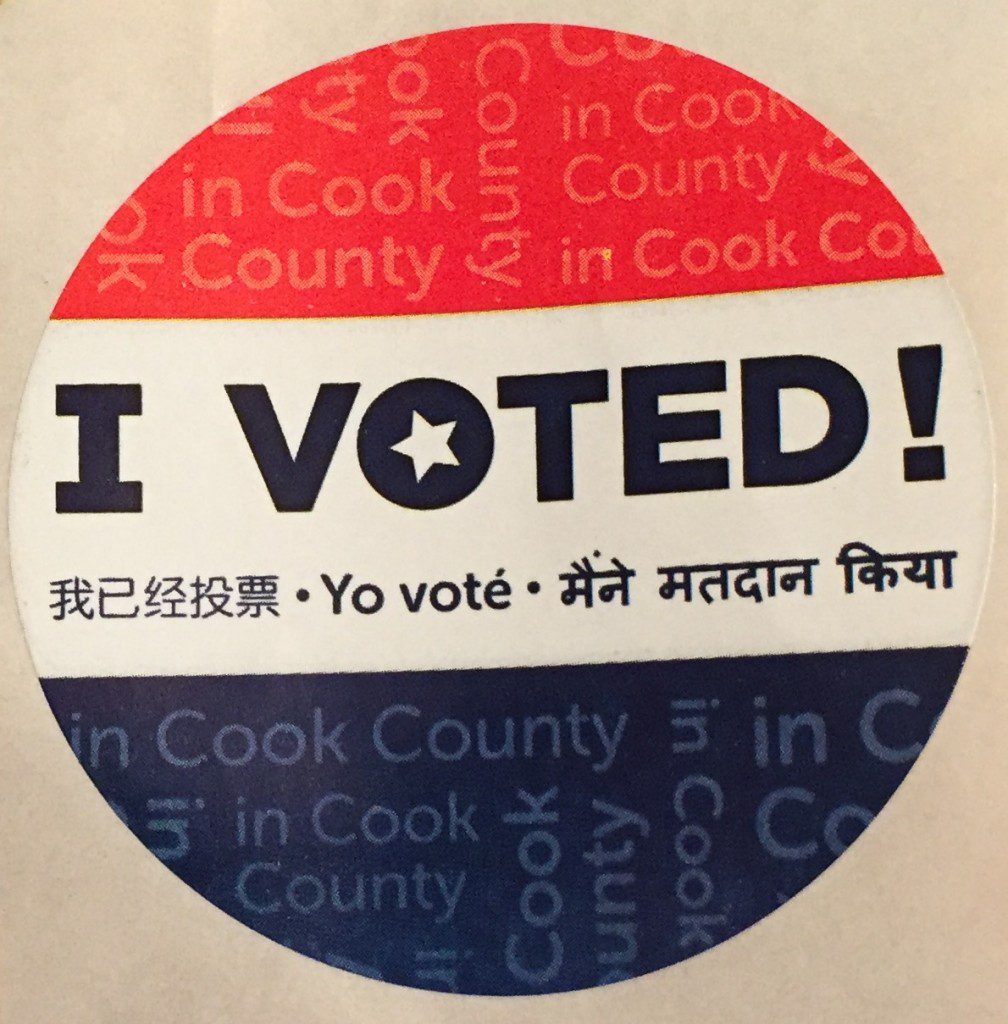
Here’s a sort of pre-Election Day post meant as a conversation-starter.
Consider the rhetoric you’ve heard lately: “our democracy is threatened by Trumpism.” Or by gerrymandering. Or tightening of voter ID regulations. Or lack thereof. Or by low turnout. Or too much turnout by voters who don’t understand the issues sufficiently well. Or too many white men. Or not enough white men.
But it occurs to me that when we speak of “democracy” we really mean much more than that. We have an ideal in which all Americans believe in equality, liberty, fair play, and, much more broadly, the ideal that we all care about the common good rather than just competing for the best possible arrangements for our own “tribe.” But, strictly speaking, it’s entirely possible to have a government which follows the democratic norm of allowing each individual to cast a vote, without an ideal, let alone real-world putting-into-practice, of common good-seeking or dreams or realities of equal treatment. All that’s needed is, indeed, for such a country to be heavily tribal and for people to vote with their tribe.
I’m thinking of this in light of the various people — celebrities, politicians, news personalities, etc. — urging everyone to vote. There was a tweet the other day purporting to share some wisdom on increasing voter turnout, which went something like this: “If you’re talking to someone who says they don’t know enough about the candidates to decide who to vote for, sometimes even just sharing one positive attribute about a candidate can be enough.” And I’m reminded of the time that, while I was voting, a clearly intellectually disabled man was accompanied by some sort of assistant and helped with voting. I couldn’t tell to what extent the “helper” was actually punching the chads or bubbling the circles, but my very strong impression was that the voter in question was voting as a ritual and a means of being able to participate in a Thing Adults Do.
There are reports, now and again, that candidates with “normal” names have an edge, that being first on the list of candidates helps, that there are, indeed, people who simply vote somewhat randomly in primaries or nonpartisan races. There are worries that the Nazi running as a Republican will get votes from straight-ticket voters who haven’t paid enough attention to the news to know that, indeed, he is a Nazi.
And I’m getting plenty of mailers in my mailbox (I sort of wish I had collected them until the election, so as to know what the final total will have been), which say one thing: either “vote against so-and-so because they’re prolife” (well, they don’t say, “prolife”; they want me to reject these candidates because they oppose abortion, but that’s what I see: “Oh, thank you for telling me who I support”) or “vote against so-and-so because we put his picture next to Trump’s and used the scary-filter.”
And earlier today I came across a report that the L.A. Times had two different sets of endorsements, one in its “regular” paper and the other, in which the endorsements were for Latinos, in its LA Times en Español, which contains translated L.A. Times content as well as additional articles on the Hispanic community.
It’s all based on the approach of “know your tribe, then vote for your tribe member.” Calling on people to vote, who haven’t otherwise taken the time to learn about the candidates and their positions, takes it for granted: if you’re blue collar, if you’re a racial or ethnic minority, of course, “your” party is the Democrats, so you need to pull that lever; if you’re middle or upper-middle class, or an Evangelical, your party is the Republicans. If you’re voting in a primary, say, for the mayor of Chicago, you just need to take a look at the skin color of the candidate and choose the one that matches yours. (Yes, folks, sorry, that’s how it works, or at least how it worked in the last election: there was indeed, in the primary, a Black candidate, a Hispanic candidate, and a White candidate, and I’m capitalizing the color-identifiers because they functioned very much as tribe-identifiers.)
And that’s just the US with our two-party system. In other countries, with multiparty systems, parties can be explicitly based on religion or ethnicity, with multiple parties coming together in a coalition to secure benefits for their groups.
And a system win which whites, blacks, people of Mexican origin, and other groups all jostled for their share of government spending would still be a democracy according to the narrow definition of “everyone gets to vote.” A system in which fundamentalist Muslims (or, yes, Christians) required women to cover themselves, or even which prohibited other religions, would still be a democracy if the law was passed by elected officials, no?
So what it boils down to is that what we want from our government and our society is much broader than just “democracy,” but we don’t really have a good way to express it. And I’ve kind of blathered a bit without really coming to any great insights, so I’ll conclude with my usual invitation to readers to discuss in the comments.
Previous Post

October 31, 2018
My last Halloween costume
Next Post
November 2, 2018 Voter disenfranchisement? Not in this case
Browse Our Archives
Select a Category Actuarial/Retirement Issues Politics Uncategorized
Select a Month September 2026 August 2026 July 2026 June 2026 April 2026 March 2026 February 2026 January 2026 December 2025 November 2025 October 2025 July 2025 June 2025 May 2025 April 2025 March 2025 February 2025 January 2025 December 2024 November 2024 October 2024 September 2024 August 2024 July 2024 June 2024 May 2024 April 2024 March 2024 February 2024 December 2023 November 2023 October 2023 September 2023 August 2023 July 2023 December 2022 September 2022 August 2022 July 2022 June 2022 May 2022 February 2022 January 2022 December 2021 August 2021 June 2021 April 2021 February 2021 January 2021 December 2020 November 2020 October 2020 September 2020 August 2020 July 2020 June 2020 May 2020 April 2020 March 2020 February 2020 January 2020 December 2019 November 2019 October 2019 September 2019 August 2019 July 2019 June 2019 May 2019 April 2019 March 2019 February 2019 January 2019 December 2018 November 2018 October 2018 September 2018 August 2018 July 2018 June 2018 May 2018 April 2018 March 2018 February 2018 January 2018 December 2017 November 2017 October 2017 September 2017 August 2017 July 2017 June 2017 May 2017 April 2017 March 2017 February 2017 January 2017 December 2016 November 2016 October 2016 September 2016 August 2016 July 2016 June 2016 May 2016 April 2016 March 2016 February 2016 January 2016 December 2015 November 2015 October 2015 September 2015 August 2015 July 2015 June 2015 May 2015 April 2015 March 2015 February 2015 January 2015 December 2014 November 2014 October 2014 September 2014 August 2014 July 2014 June 2014 May 2014 April 2014 March 2014 February 2014 January 2014 December 2013 November 2013 October 2013 September 2013 August 2013 July 2013
Follow Us!
TAKE THE
Religious Wisdom Quiz
What did Isaiah say about Egypt's future in his oracles?
Select your answer to see how you score.
It would conquer Israel It would be conquered It would rule Persia It would prosper
Related posts from Jane the Actuary

What does democracy look like?


Illinois’ Assisted Suicide Law is, yes, literally deadly

Revising the "Disability [Pride] Flag"
TRENDING AT PATHEOS Catholic

Catholic Evangelization: Sharing Your Faith Every Day
Welcome back to the Graceful Awakening mini-series called, “From Faith to Mission.” ...

The Pillar of the Boatmen: the Ancient Monument...
The Pillar of the Boatmen is a Romano-Gaulish sculpture that dates from...

In one sense walking into Westminster Abbey is like walking down the...

'Super Scam Me' Exposes AI Jon Bon Jovi...
Leslie Pickett believed she was in a relationship with Jon Bon Jovi....

The Brazilian Remake of Kendricks' 'Flywheel' Opens in...
“Flywheel,” the story that launched the Kendrick Brothers’ filmmaking career is getting...

The Dangers of Gradual Accommodation (Winking at Sin)
Recently, the “law of gradualness” resurfaced during the opening of a weeklong,...
view all Catholic blogs
Ad-Free & Subscriber Log-In Subscription Support
- About Us
- 2026 Calendar
- Videos
- Podcasts
- Library of World Religions
- Faith In Media Tracker
- Advertise With Us
- Write for Us
- Privacy Policy
- Terms of Service
- Do Not Sell My Data
- Contact Us
- Radiant Digital
- Manage Newsletter Subscriptions
- Unsubscribe From Notifications
- Sitemap
Copyright 2008-2026, Patheos. All rights reserved.
Subscription Support Ad-Free & Subscriber Log-In
Follow Patheos