
BuddhistCatholicContemplativeEvangelicalGeneral ChristianHinduJewishLatter-day SaintMuslimNew VisionsProgressive Christian
Beliefs
- Buddhist
- Catholic
- Contemplative
- Evangelical
- General Christian
- Hindu
- Jewish
- Latter-day Saint
- More Voices
- Muslim
- New Visions
- Pagan
- Progressive Christian
Topics
- Religion News
- Food and Religion
- Sports and Religion
- Religious Art
- Religious Music and Entertainment
- Religious Events
- History and Religion
- Style and Religion
- Politics and Religion
- Women in Religion
- Recreation Outdoors and Religion
- Business Finance and Religion
- Careers Workplace and Religion
- Education and Religion
- Family Parenting and Religion
- Health Fitness and Religion
- Home and Religion
- Relationships and Religion
- Technology and Religion
- Travel and Religion
Columnists
- Buddhist Columnists
- Business Finance and Religion Columnists
- Careers Workplace and Religion Columnists
- Catholic Columnists
- Contemplative Columnists
- Education and Religion Columnists
- Evangelists Columnists
- Family Parenting and Religion Columnists
- General Christian Columnists
- Health Fitness and Religion Columnists
- Hindu Columnists
- History and Religion Columnists
- Home and Religion Columnists
- Jewish Columnists
- More Voices Columnists
- Latter Day Columnists
- Muslim Columnists
- New Visions Columnists
- Nonreligious Columnists
- Pagan Columnists
- Politics and Religion Columnists
- Progressive Columnists
- Recreation Outdoors and Religion Columnists
- Relationships and Religion Columnists
- Religion News Columnists
- Religious Art Columnists
- Religious Events Columnists
- Religious Music and Entertainment Columnists
- Sports and Religion Columnists
- Style and Religion Columnists
- Technology and Religion Columnists
- Travel and Religion Columnists
- Women in Religion Columnists
Resource Library
- 2026 Calendar
- Library of World Religions
- The 100 Most Holy Places on Earth
- Patheos Answers
- Podcasts
- Videos
- Faith Leaders Database
- Anglican Episcopalian
- Bahai
- Baptist
- Buddhism
- Christianity
- Confucianism
- Eastern Orthodoxy
- Hinduism
- Holiness and Pentecostal
- ISKCON
- Islam
- Judaism
- Lutheran
- Methodist
- The Church of Jesus Christ of Latter-day Saints
- New Age
- Paganism
- Presbytarian and Reformed
- Protestantism
- Religion Behind the Scenes
- Roman Catholic
- Scientology
- Shia Islam
- Sikhism
- Sufism
- Sunni Islam
- Taoism
- Zen
- See all religions
Research Tools
 Ad-Free & Subscriber Log-In Subscription Support
Ad-Free & Subscriber Log-In Subscription Support
Follow Patheos 

- Trending:
- Forgiveness
- |
- Marriage
- |
- Consciousness
- |
- Death Penalty
- |
- Election
- |
- Halloween

- Home
- Catholic
- Politics and Religion
- What does it mean to “Divinely Renovate” the liturgy?
What does it mean to “Divinely Renovate” the liturgy?
Last updated on: October 8, 2018 at 4:49 pm by Jane the Actuary
What does it mean to “Divinely Renovate” the liturgy? 2018-10-08T16:49:26-06:00 Jane the Actuary
Patheos Explore the world's faith through different perspectives on religion and spirituality! Patheos has the views of the prevalent religions and spiritualities of the world.

A bit of context: last week, the Archdiocese of Chicago hosted a “summit” for all its priests and other parish staff (deacons, pastoral associates, etc.) during which Fr. James Mallon presented his parish renewal program, Divine Renovation. The person who pointed me to this said that it was his understanding that Cardinal Cupich intended for each parish to adopt this program, which had me immediately wary that a program in use by a small number of self-selected parishes could be scalable, especially if imposed on parishes rather than freely adopted by them. I asked around on Facebook and heard further skepticism, especially with respect to liturgy, which was characterized as “it means adopting Praise and Worship music.” So I borrowed the book which outlines the program and principles, aptly named Divine Renovation, to find out straight from the horse’s mouth what’s up, and will be blogging about this over the next couple days. (I need to hurry, though, as I need to give the book back!)
The first half of the book, more or less, is the “why” of it. What should Catholics be about, in the end? Too many Catholics, he writes, see evangelism as the “job” of the clergy. They might not voice it, but their mindset is still that of the “pray, pay, and obey” model, even if they would object that they don’t get told what to do. He also rejects the mindset typified by the (mythically-attributed) St. Francis quote of “preach the gospel at all times and, if necessary, use words,” that is, the idea that we hear so, so often, that no one really needs to say to anyone awkward and uncomfortable words such as “I believe that Jesus Christ is the source of our salvation,” but that we can do our evangelizing duty well enough by just being good enough people that others will say, “gosh, X is so nice, I wonder what motivates her.”
However, it is not an either/or situation, it is both/and, and both/and is a sound Catholic principle. The witness of life must come first, but it must lead to the word of life being proclaimed. (p. 29)
He also writes of false gospels that must be jettisoned to proclaim the true gospel. As a former Lutheran, the one that most resonated with me was Pelagianism, that is, the heresy that we earn our salvation, and that “Jesus’ saving act was to give us an example of pure love that could be imitated” (p. 62). Mallon asserts:
I believe that most churchgoing Catholics have been so deeply impacted by Pelagianism that they really do not grasp the fundamental message of the Good News of Jesus Christ. How many times have I heard Catholics say something like “If anyone deserves to be let into heaven, she does . . .”? . . . I remember about eight years ago being at a funeral of a parishioner. A brother priest preached on the text from John 14:6, where Jesus says, “I am the way, and the truth, and the life.” This priest told the people that Jesus was not the way to God in an exclusive sense, but in the sense that he showed the true way to live life through his loving example (p. 68).
What’s the consequence of this attitude? Not the version that I grew up with, some notion that God’s standards are surely so high that without salvation through Jesus, we’d all go to hell. Instead, for neo-Pelagians, salvation is earned by simply avoiding doing “really, really bad things,” which means that any notion of “the sheer audacity of God’s mercy” is also lost. If you don’t feel any particular need to have been saved, you likewise don’t have any joy at having been saved.
Mallon then gets into the “how,” and here I’ll just discuss the first part, the liturgy (since that’s as far as I’ve read).
As a further preface, Mallon is a fan of the concept that I’d first read about as a part of (some) evangelical churches: “belong before you believe,” that is, without watering down Catholic doctrine, we should nonetheless welcome into the community those who don’t (yet) believe as we do, and those who don’t (yet) behave as we’d like them to behave.
So his first objective is this: “giving priority to the weekend.” Given that most Catholics encounter the parish at weekend masses, the first priority among parish staff should be to make this a “wow” experience. If “the Eucharist is to be a foretaste of [the wedding] banquet” of the Kingdom of God, then great efforts should be taken. The notion that mass should last one hour, no longer, should be jettisoned. Visitors should be welcomed, both in the literal sense of being welcoming to them, and more broadly, with a welcome center and/or other ways to provide information to them about the church, and means for them to register as parishioners.
And, yes, music is a significant part of his “program.” He does advocate for “praise music” but with a much broader meaning than the “praise and worship” music with lyrics projected on screens, and the praise bands that come up for regular mocking on the Babylon Bee. This is one type of music that he supports, but alongside traditional music that has stood the test of time. In either case, the music should meet the standard of “beauty” and should be focused on praising God, rather than praising the community. (He doesn’t say so, but I suspect such Gather standards as “All Are Welcome”, “Gather Us In”, “I Myself am the Bread of Life” would fail this test.)
Hence, he does not, as I had initially understood from the first conversation, mandate that everyone switch to “praise music.” At his home parish, there are two masses with a praise band, one with traditional hymns sprinkled with chant and Latin and smells & bells (and not at some early-morning, old-people’s mass, either, but at 11:15), and a fifth with “typical parish hymnbook offerings.” All these masses have choirs rather than just cantors.
But — look, my own parish has a “praise band” at one of the masses. And the congregation, for the most part, listens just as passively as they do at the other masses. How do you get them to sing? Partly, he says, it’s about having actual hymns of praise, and having a congregation which actually feels the “joy of salvation” (p. 122), but he does actually prod them and take a look at this:
At the beginning of Mass, once I reach the presier’s chair, if we are singing a hymn of praise and it looks as if half of the church is attending a ventriloquist convention, I will invite the congregation to go back and sing a refrain again.
Holy ****! Can you imagine that?!
And if a parish, if my parish, misunderstands him entirely and thinks his message is “all praise band, all the time,” well, that’s a problem.
He also calls on priests to jettison the “shorter is better” mindset on homilies. His homilies are 15 – 20 minutes, and are very carefully prepared.
Which means that, quite honestly, so far, I like what I’m seeing, though I’m still wary of what’s coming up next (preview: small groups!).
Readers, if you have any experience with this program, please share it!
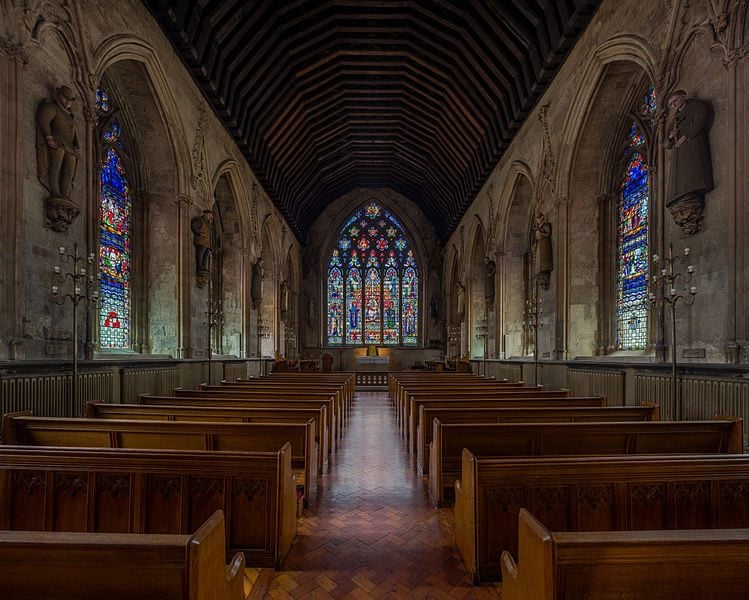
Image: https://www.pexels.com/photo/blue-sky-building-cathedral-city-880697/
Previous Post

October 7, 2018
No, you can't change the 2-Senators-per-state Constitutional provision
Next Post

October 10, 2018 "Divinely Renovating" the Catholic Church - the catch!
Browse Our Archives
Select a Category Actuarial/Retirement Issues Politics Uncategorized
Select a Month September 2026 August 2026 July 2026 June 2026 April 2026 March 2026 February 2026 January 2026 December 2025 November 2025 October 2025 July 2025 June 2025 May 2025 April 2025 March 2025 February 2025 January 2025 December 2024 November 2024 October 2024 September 2024 August 2024 July 2024 June 2024 May 2024 April 2024 March 2024 February 2024 December 2023 November 2023 October 2023 September 2023 August 2023 July 2023 December 2022 September 2022 August 2022 July 2022 June 2022 May 2022 February 2022 January 2022 December 2021 August 2021 June 2021 April 2021 February 2021 January 2021 December 2020 November 2020 October 2020 September 2020 August 2020 July 2020 June 2020 May 2020 April 2020 March 2020 February 2020 January 2020 December 2019 November 2019 October 2019 September 2019 August 2019 July 2019 June 2019 May 2019 April 2019 March 2019 February 2019 January 2019 December 2018 November 2018 October 2018 September 2018 August 2018 July 2018 June 2018 May 2018 April 2018 March 2018 February 2018 January 2018 December 2017 November 2017 October 2017 September 2017 August 2017 July 2017 June 2017 May 2017 April 2017 March 2017 February 2017 January 2017 December 2016 November 2016 October 2016 September 2016 August 2016 July 2016 June 2016 May 2016 April 2016 March 2016 February 2016 January 2016 December 2015 November 2015 October 2015 September 2015 August 2015 July 2015 June 2015 May 2015 April 2015 March 2015 February 2015 January 2015 December 2014 November 2014 October 2014 September 2014 August 2014 July 2014 June 2014 May 2014 April 2014 March 2014 February 2014 January 2014 December 2013 November 2013 October 2013 September 2013 August 2013 July 2013
Follow Us!
TAKE THE
Religious Wisdom Quiz
What does God question Job about, showing His wisdom in creation?
Select your answer to see how you score.
Religious rituals Battles Kingdoms Animals and nature
Related posts from Jane the Actuary
A snarky post about parish life

"Divinely Renovating" the Catholic Church - the catch!


Illinois’ Assisted Suicide Law is, yes, literally deadly
TRENDING AT PATHEOS Catholic

When Halloween Unmasks Married Hearts
Written by Dr. David K. Ewen from Eternal Truth Bible College Behind...

Aristotle. He’s been called the father of logic, the father of the...

Methodist Central Hall and Westminster Abbey
Situated on the same square is Methodist Central Hall and Westminster Abbey. ...

57th Dove Awards Honor Dolly Parton, Crown New...
On gospel music’s biggest night, the 57th annual GMA Dove Awards honored...

The First Eucharistic Controversy: Christ’s Real Presence
For Catholics, the Eucharist is the source and summit of the Christian...

What a Stop Sign Can Teach Us About...
How to Make a Decision When You Can't Hear God Main point:...
view all Catholic blogs
Ad-Free & Subscriber Log-In Subscription Support
- About Us
- 2026 Calendar
- Videos
- Podcasts
- Library of World Religions
- Faith In Media Tracker
- Advertise With Us
- Write for Us
- Privacy Policy
- Terms of Service
- Do Not Sell My Data
- Contact Us
- Radiant Digital
- Manage Newsletter Subscriptions
- Unsubscribe From Notifications
- Sitemap
Copyright 2008-2026, Patheos. All rights reserved.
Subscription Support Ad-Free & Subscriber Log-In
Follow Patheos