
BuddhistCatholicContemplativeEvangelicalGeneral ChristianHinduJewishLatter-day SaintMuslimNew VisionsProgressive Christian
Beliefs
- Buddhist
- Catholic
- Contemplative
- Evangelical
- General Christian
- Hindu
- Jewish
- Latter-day Saint
- More Voices
- Muslim
- New Visions
- Pagan
- Progressive Christian
Topics
- Religion News
- Food and Religion
- Sports and Religion
- Religious Art
- Religious Music and Entertainment
- Religious Events
- History and Religion
- Style and Religion
- Politics and Religion
- Women in Religion
- Recreation Outdoors and Religion
- Business Finance and Religion
- Careers Workplace and Religion
- Education and Religion
- Family Parenting and Religion
- Health Fitness and Religion
- Home and Religion
- Relationships and Religion
- Technology and Religion
- Travel and Religion
Columnists
- Buddhist Columnists
- Business Finance and Religion Columnists
- Careers Workplace and Religion Columnists
- Catholic Columnists
- Contemplative Columnists
- Education and Religion Columnists
- Evangelists Columnists
- Family Parenting and Religion Columnists
- General Christian Columnists
- Health Fitness and Religion Columnists
- Hindu Columnists
- History and Religion Columnists
- Home and Religion Columnists
- Jewish Columnists
- More Voices Columnists
- Latter Day Columnists
- Muslim Columnists
- New Visions Columnists
- Nonreligious Columnists
- Pagan Columnists
- Politics and Religion Columnists
- Progressive Columnists
- Recreation Outdoors and Religion Columnists
- Relationships and Religion Columnists
- Religion News Columnists
- Religious Art Columnists
- Religious Events Columnists
- Religious Music and Entertainment Columnists
- Sports and Religion Columnists
- Style and Religion Columnists
- Technology and Religion Columnists
- Travel and Religion Columnists
- Women in Religion Columnists
Resource Library
- 2026 Calendar
- Library of World Religions
- The 100 Most Holy Places on Earth
- Patheos Answers
- Podcasts
- Videos
- Faith Leaders Database
- Anglican Episcopalian
- Bahai
- Baptist
- Buddhism
- Christianity
- Confucianism
- Eastern Orthodoxy
- Hinduism
- Holiness and Pentecostal
- ISKCON
- Islam
- Judaism
- Lutheran
- Methodist
- The Church of Jesus Christ of Latter-day Saints
- New Age
- Paganism
- Presbytarian and Reformed
- Protestantism
- Religion Behind the Scenes
- Roman Catholic
- Scientology
- Shia Islam
- Sikhism
- Sufism
- Sunni Islam
- Taoism
- Zen
- See all religions
Research Tools
 Ad-Free & Subscriber Log-In Subscription Support
Ad-Free & Subscriber Log-In Subscription Support
Follow Patheos 

- Trending:
- Forgiveness
- |
- Marriage
- |
- Consciousness
- |
- Death Penalty
- |
- Election
- |
- Halloween

- Home
- Catholic
- Politics and Religion
- “Divinely Renovating” the Catholic Church – the catch!
“Divinely Renovating” the Catholic Church – the catch!
Last updated on: October 10, 2018 at 11:14 am by Jane the Actuary
“Divinely Renovating” the Catholic Church – the catch! 2018-10-10T11:14:58-06:00 Jane the Actuary
Patheos Explore the world's faith through different perspectives on religion and spirituality! Patheos has the views of the prevalent religions and spiritualities of the world.

I previously wrote about the first half of the book Divine Renovation by Fr. James Mallon, in which he advocates for a revival of evangelism among Catholics, and a revival of moribund parishes in general, and talks about what that means in terms of Sunday liturgies: a renewed emphasis on praise and on beauty, and on quality preaching.
Some of the other uncontroversial elements of his program include monthly Name Tag Sundays, an invitation not just to greet but to pray for their pew-neighbor at mass, an after-mass prayer ministry in which trained volunteer parishioners are available to pray over churchgoers, and the communication of expectations via a brochure for newcomers which explicitly states that everyone ought to be an active member rather than just a weekly churchgoer. He also has a Protestant-like annual stewardship initiative, which I think Chicagoland Catholics would be much more accepting of if it’s in replacement of rather than in addition to the diocesan Annual Catholic Appeal. And he emphasizes “strength-based ministry” for pastoral staff.
That’s the part of his program that’s easy to buy into.
The second half is where I’m more hesitant.
To begin with, he starts with the prescription of using the Alpha Course, both for existing parishioners to help them revive their spiritual life rather than just plodding along with praying and paying, and for new parishioners, who are expected to be brought into the church as a result of the increased “missional” sense of the existing parishioners, as they begin to feel emboldened, by the Alpha experience, and the continued support of their faith life beyond it, to invite others.
The Alpha Course had its origins in an Anglican church in England, but it has been used by all manner of denominations because its objective is to preach the core gospel message, with the idea being that denominational specifics will be filled out later. Its fundamental concept is a combination of teaching the gospel and creating a feeling of belonging through shared meals at each of its 10 weekly sessions and cumulating final day or weekend retreat, and its objective is a “personal encounter with Jesus and a decision to follow him.” He speaks of attempting to reach a “tipping point when a substantial number of parishioners have been touched by the experience.” And much of what Mallon describes as having implemented in his parish, he deems attempts to “move a little bit of Alpha . . . into the sanctuary” (p. 144) — including (can you imagine this at your own parish?) an actual Altar Call (p. 148)!
Mallon also instituted what he calls “connect groups”, which are what he deems “mid-sized” groups rather than small groups — intended to be large enough so that you don’t feel quite as obliged to talk or quite as out-of-place if you don’t care to but small enough to provide support to their members, meeting twice monthly for a shared meal, prayer and song, a talk by a member, and more prayer. (This doesn’t sound like a typical “faith-sharing” group where everyone just gropes around for the right profound-sounding but really kinda trite thing to say.) It appears that, rather than membership being reshuffled periodically, new members are added and as a group grows, it splits off into two smaller groups, but it’s not entirely clear.
But here’s the catch: Alpha is very, er, charismatic. Here’s some commentary on the program from the Bible Answer Man, an at-the-time evangelical Christian (now Orthodox, but this was clearly written from an evangelical Protestant perspective). Skip his complaints that the program doesn’t emphasize Protestant teachings like sola scriptura and scroll down to the very bottom: Alpha teaches such Charismatic/Pentacostal ideas as being “filled with the Holy Spirit” in ways that cause one to shake or otherwise be affected physically, and teaches speaking in tongues.
Exactly to what degree Mallon embraces these elements isn’t entirely clear but he does write about the importance of “experiencing the Holy Spirit” and the power that this has. During the Alpha retreat, “each person [is] prayed over to be filled with the Holy Spirit” (188) — and the effect of the focus on the Holy Spirit is enthusiasm and an emotional response that we in the West tend to find “weird” but is seen as perfectly normal elsewhere.
So let me pause for a minute before I discuss the remaining chapters — because:
I’m not comfortable with that.
I know that there are Catholics who are attracted to charismatic elements of worship and prayer, and I don’t have an issue with that, so long as that’s their decision. Maybe they’re better Catholics than I am, but I know that there is more than one right way to be Catholic.
And this makes it an unsettling prospect that Cupich might want to impose this on all parishes in the Archdiocese. Have you ever heard him speak of any of these ideas, of being filled with the Holy Spirit, of feeling a sense of enthusiasm and having an emotional relationship with God as a result? I certainly don’t have any sense that this is something of any particular importance to him, so much that he might view it as a useful tool — which means that he views the parishioners whom he has charge of as his pawns, to be sent off to “do Alpha” because he thinks it’s a good strategic plan. And if that further means that he views the idea of “being filled with the Holy Spirit” not as something real but as a good mechanism to build better Christians, well, that’s even worse.
Back to the book . . .
Mallon then talks about various practical elements of parish life. He conducts baptisms as a regular part of Sunday mass rather than a separate “family event.” In response to a religious ed experience in which the kids were dropped off but the family never attended mass, he restructured it into an open-ended family program separated out from sacramental preparation at any age where the family is ready, with the expectation that the entire family is to make a commitment to their faith rather than the child getting a frilly dress or suit for first communion, never to be seen again. They mandate Alpha as a part of marriage prep.
And finally, Mallon talks about parish leadership. I’m sure this is fine, I skimmed through it and didn’t really have a strong reaction except that much of this is more difficult when the staff in place isn’t exceptionally skilled at their jobs because you’re trying to scale this up from a small group of self-selected parishes to a much wider group — and, after all, remember that fully half of the priests and lay staff in a country, state, community, are destined by the math of it all to be below average.
So I have doubts and would love reader comments, especially if you know more about Alpha.
You can also browse through the website of the “original” Divine Renovation parish, St. Benedict in Nova Scotia.
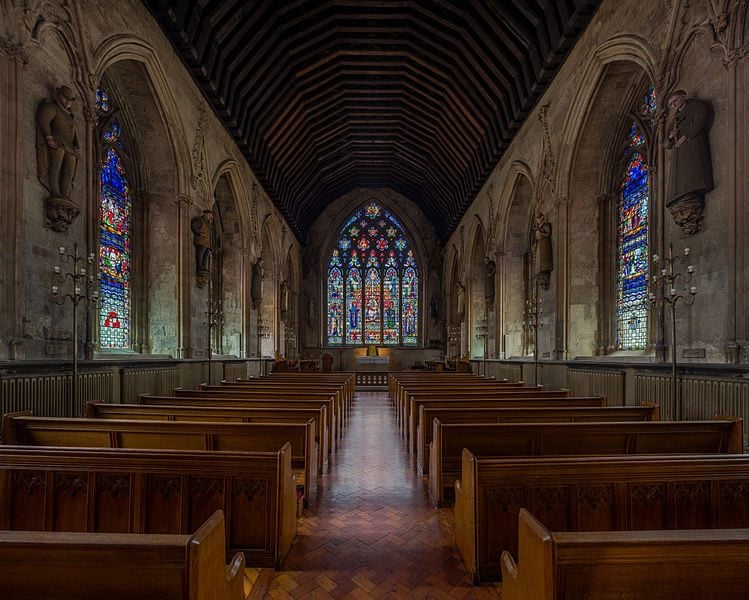
Image: https://www.pexels.com/photo/blue-sky-building-cathedral-city-880697/
Previous Post

October 8, 2018
What does it mean to "Divinely Renovate" the liturgy?
Next Post
October 12, 2018 Synod update - well, actually, not so much
Browse Our Archives
Select a Category Actuarial/Retirement Issues Politics Uncategorized
Select a Month September 2026 August 2026 July 2026 June 2026 April 2026 March 2026 February 2026 January 2026 December 2025 November 2025 October 2025 July 2025 June 2025 May 2025 April 2025 March 2025 February 2025 January 2025 December 2024 November 2024 October 2024 September 2024 August 2024 July 2024 June 2024 May 2024 April 2024 March 2024 February 2024 December 2023 November 2023 October 2023 September 2023 August 2023 July 2023 December 2022 September 2022 August 2022 July 2022 June 2022 May 2022 February 2022 January 2022 December 2021 August 2021 June 2021 April 2021 February 2021 January 2021 December 2020 November 2020 October 2020 September 2020 August 2020 July 2020 June 2020 May 2020 April 2020 March 2020 February 2020 January 2020 December 2019 November 2019 October 2019 September 2019 August 2019 July 2019 June 2019 May 2019 April 2019 March 2019 February 2019 January 2019 December 2018 November 2018 October 2018 September 2018 August 2018 July 2018 June 2018 May 2018 April 2018 March 2018 February 2018 January 2018 December 2017 November 2017 October 2017 September 2017 August 2017 July 2017 June 2017 May 2017 April 2017 March 2017 February 2017 January 2017 December 2016 November 2016 October 2016 September 2016 August 2016 July 2016 June 2016 May 2016 April 2016 March 2016 February 2016 January 2016 December 2015 November 2015 October 2015 September 2015 August 2015 July 2015 June 2015 May 2015 April 2015 March 2015 February 2015 January 2015 December 2014 November 2014 October 2014 September 2014 August 2014 July 2014 June 2014 May 2014 April 2014 March 2014 February 2014 January 2014 December 2013 November 2013 October 2013 September 2013 August 2013 July 2013
Follow Us!
TAKE THE
Religious Wisdom Quiz
What language was the Old Testament mostly written in?
Select your answer to see how you score.
Hebrew Greek Aramaic Latin
Related posts from Jane the Actuary
A snarky post about parish life
What does it mean to "Divinely Renovate" the...


Illinois’ Assisted Suicide Law is, yes, literally deadly
TRENDING AT PATHEOS Catholic

Letters on Living the Faith by C.S. Lewis
Most of us met C.S. Lewis as a public intellectual. Mere Christianity....

When Halloween Unmasks Married Hearts
Written by Dr. David K. Ewen from Eternal Truth Bible College Behind...

Aristotle. He’s been called the father of logic, the father of the...

Methodist Central Hall and Westminster Abbey
Situated on the same square is Methodist Central Hall and Westminster Abbey. ...

57th Dove Awards Honor Dolly Parton, Crown New...
On gospel music’s biggest night, the 57th annual GMA Dove Awards honored...

The First Eucharistic Controversy: Christ’s Real Presence
For Catholics, the Eucharist is the source and summit of the Christian...
view all Catholic blogs
Ad-Free & Subscriber Log-In Subscription Support
- About Us
- 2026 Calendar
- Videos
- Podcasts
- Library of World Religions
- Faith In Media Tracker
- Advertise With Us
- Write for Us
- Privacy Policy
- Terms of Service
- Do Not Sell My Data
- Contact Us
- Radiant Digital
- Manage Newsletter Subscriptions
- Unsubscribe From Notifications
- Sitemap
Copyright 2008-2026, Patheos. All rights reserved.
Subscription Support Ad-Free & Subscriber Log-In
Follow Patheos