
BuddhistCatholicContemplativeEvangelicalGeneral ChristianHinduJewishLatter-day SaintMuslimNew VisionsProgressive Christian
Beliefs
- Buddhist
- Catholic
- Contemplative
- Evangelical
- General Christian
- Hindu
- Jewish
- Latter-day Saint
- More Voices
- Muslim
- New Visions
- Pagan
- Progressive Christian
Topics
- Religion News
- Food and Religion
- Sports and Religion
- Religious Art
- Religious Music and Entertainment
- Religious Events
- History and Religion
- Style and Religion
- Politics and Religion
- Women in Religion
- Recreation Outdoors and Religion
- Business Finance and Religion
- Careers Workplace and Religion
- Education and Religion
- Family Parenting and Religion
- Health Fitness and Religion
- Home and Religion
- Relationships and Religion
- Technology and Religion
- Travel and Religion
Columnists
- Buddhist Columnists
- Business Finance and Religion Columnists
- Careers Workplace and Religion Columnists
- Catholic Columnists
- Contemplative Columnists
- Education and Religion Columnists
- Evangelists Columnists
- Family Parenting and Religion Columnists
- General Christian Columnists
- Health Fitness and Religion Columnists
- Hindu Columnists
- History and Religion Columnists
- Home and Religion Columnists
- Jewish Columnists
- More Voices Columnists
- Latter Day Columnists
- Muslim Columnists
- New Visions Columnists
- Nonreligious Columnists
- Pagan Columnists
- Politics and Religion Columnists
- Progressive Columnists
- Recreation Outdoors and Religion Columnists
- Relationships and Religion Columnists
- Religion News Columnists
- Religious Art Columnists
- Religious Events Columnists
- Religious Music and Entertainment Columnists
- Sports and Religion Columnists
- Style and Religion Columnists
- Technology and Religion Columnists
- Travel and Religion Columnists
- Women in Religion Columnists
Resource Library
- 2026 Calendar
- Library of World Religions
- The 100 Most Holy Places on Earth
- Patheos Answers
- Podcasts
- Videos
- Faith Leaders Database
- Anglican Episcopalian
- Bahai
- Baptist
- Buddhism
- Christianity
- Confucianism
- Eastern Orthodoxy
- Hinduism
- Holiness and Pentecostal
- ISKCON
- Islam
- Judaism
- Lutheran
- Methodist
- The Church of Jesus Christ of Latter-day Saints
- New Age
- Paganism
- Presbytarian and Reformed
- Protestantism
- Religion Behind the Scenes
- Roman Catholic
- Scientology
- Shia Islam
- Sikhism
- Sufism
- Sunni Islam
- Taoism
- Zen
- See all religions
Research Tools
 Ad-Free & Subscriber Log-In Subscription Support
Ad-Free & Subscriber Log-In Subscription Support
Follow Patheos 

- Trending:
- Forgiveness
- |
- Marriage
- |
- Consciousness
- |
- Death Penalty
- |
- Election
- |
- Halloween

- Home
- Catholic
- Politics and Religion
- “Lord, to whom shall we go?” and the Catholic Cover-up Crisis
“Lord, to whom shall we go?” and the Catholic Cover-up Crisis
Last updated on: September 13, 2018 at 11:37 am by Jane the Actuary
“Lord, to whom shall we go?” and the Catholic Cover-up Crisis 2018-09-13T11:37:58-06:00 Jane the Actuary
Patheos Explore the world's faith through different perspectives on religion and spirituality! Patheos has the views of the prevalent religions and spiritualities of the world.
Before I get to the most recent of the Catholic Cover-up Crisis news (because, again, this is what’s the greater concern), here’s a bit of a step back.
Longtime readers will know that I became Catholic in grad school, after having grown up in the Lutheran Church Missouri Synod, a branch of Lutheranism which, in contrast to the Evangelical Lutheran Church in America (ELCA) is, or was, in the incarnation I experienced it, pretty fundamentalist — creationist, ultra-traditionalist in terms of women’s roles, and weirdly anti-Catholic, so that we learned about the Catholic sacraments, for instance, in a religion class lesson designed to teach us why only the Lutherans (vs. Catholics and Baptists) had the right number of sacraments and believed the right things about them. At the same time, we attended the local Catholic church with a certain frequency, since Dad was Catholic, and when I was in college, I alternated between the two.
So when I went off to grad school, to study Medieval history at Notre Dame, I engaged in a fair amount of church shopping, landing most weeks at the nearest off-campus parish (the congregation of which actually sang, in contrast to the church we attended as a child), but also visiting the Lutheran churches reasonably often, as well as an Episcopalian and a Presbyterian and a nondenominational “Calvary Chapel” (ooh, boy, was that an experience) and, for the sake of cultural awareness, a Mormon service along with my roommate. And in the meantime, I studied the history of the church in the Early Christian and the Medieval period, as well as theology, and, believe me, I was under no illusion that the Catholic church has been pure throughout its history.
So why choose Catholicism? I’m not going to claim that it was the result of a deep spiritual awakening. Instead, it was initially a process of elimination: “I want a church that has a good liturgy, but the Episcopalians and the Lutherans (ELCA) aren’t possible options because they’re prochoice and that really creeps me out.” But my RCIA sponsor convinced me that I could not make a profession of faith unless I was willing to, if not believe, than at least assent to, the doctrines of the church, so I did engage in a process of learning more, so as to conclude that maybe purgatory isn’t so weird, and that faith without works is dead, Humanae Vitae has some good points, and, well, the whole Mary & the Saints thing isn’t my cup of tea but I’ll assent to it. And here’s a bit of irony for you: that friend, whom I’m no longer in touch with but followed via her blogging for quite some time, ultimately left the church for Episcopalianism and later an Old Catholic church. (Another friend who was often a part of these conversations did end up getting ordained, though, so there’s that, anyway.)
But the quote above, in the post title? That’s not just a scripture passage, but also from the ELCA liturgy’s gospel acclamation: “Alleluia, Lord, to whom shall we go? You have the words of eternal life. Alleluia, alleluia.”
And to revisit the Ross Douthat book I wrote about just before all this news broke, he wrote something that really speaks to at least part of my feelings as well. In his introduction he wrote:
Unlike many Catholics I knew who were loyal to the church as a community but doubtful of its doctrines, I did not want this tension to be smoothed away by understanding priests and broad-minded theologians,; indeed, the conflict between what I professed and how badly I fell short was part of what made the profession seem plausible, because a religion that just confirmed me in my early-twenty-first-century way of life couldn’t possibly be divinely revealed. (p. XIV)
In the end, the approach to religion taken by many Protestants (and Catholics, too) is that “I will believe only what makes intuitive sense to me” and “I will accept as sinful only those things which really feel wrong to me” just feels too human. Who am I to imagine that I am so smart, and my conscience so perfectly formed that I myself have got everything all figured out? After all, in my world as a mom, and as an actuary, and especially as someone who blogs about a whole ton of topics based on reading what information the real experts have shared, I am only all too aware of what I don’t know about all manner of topics, so why shouldn’t it be the same with theology. And with respect to morality, I know there are things about which I am equally likely to say, “eh, that doesn’t bother me” (e.g., the death penalty, particularly in circumstances when it’s not necessary to protect the community) even if I can intellectually understand why they’d be wrong.
So that’s a lot of rambling, just to get to the point when I reflect on the question of “how do you stay put in so obviously-flawed a church?” because I think that the context, and repeating some of my personal background, might be helpful.
Because there is a real question here, with all the dreadful reporting coming out about cover-ups. And it’s not just the United States, but also Germany, where I had figured that the greater secularism of the country would have meant that the victims’ families would have insisted on police involvement.
Yes, “my faith is in God, not men, blah blah blah.” And yes, child sexual abuse exists everywhere, and children are most likely to be abused by a family member or someone in their immediate household. Heck, I just spent the better part of two hours on Youth Protection Training for the Boy Scouts, learning about the subject and the BSA’s rules to prevent and stop abuse (including the two-deep leadership and no one-on-one rules, along with the “no shared tenting with boys greater than two years’ age difference” rule). And the Chicago Public Schools has had their own scandal, not to mention the issues in Hollywood.
But, again, we’re not really talking about abuse by priests any longer. We’re taking about bishops covering up, and we’re taking about bishops and others taking advantage of their authority with respect to seminarians and others in positions subordinate to them, and we’re talking about yet other bishops indifferent to the whole issue and hoping to avoid these issues by claiming that once they have procedures in place regarding new accusations of child sexual abuse, their job is done. Read this article by Elizabeth Bruenig in the Washington Post, “He wanted to be a priest. He says Archbishop McCarrick used that to abuse him,” which describes the power McCarrick had over seminarians, in which they accepted McCarrick’s behavior (in this case, watching a seminarian change into swim trunks, and later putting his hand in those trunks) because it was made clear to them that he had the power to prevent their ordination, and tell me that this’ll be solved by new rules with respect to mistreatment of minors.
The challenge is that, at least in part, it is the fundamental hierarchical structure of the Catholic Church that produces this. Oh, sure, there’s the fact that not just bishops but people who held themselves out as experts believed that a priest could, via therapy, be “treated” and safely returned to ministry. And there’s the all-too-human tendency to want to protect those you are closest to, your “family” either literally or figuratively. But a lot of the reason for the cover-ups is surely also about people in power protecting themselves, and taking advantage of their power to engage in their worst impulses, and people not in power not wanting to rock the boat because they either feel powerless or because they hope someday to gain some share of that power for themselves. And even though becoming a bishop, or moving up the episcopal ranks, is not something where one seeks out the promotion, or applies for and interviews for the position, it would certainly seem to me that the personality traits required to get noticed by and appointed to these positions mesh together pretty well with those of cover-uppers and of perpetrators. That’s not to say that every bishop is keen to move up the ranks, to take advantage of his power, to appear pious and humble, of course, but we are indeed hearing plenty of reports that McCarrick’s misdeeds (so long as confined to seminarians) were shrugged off so long as he was bringing hefty donations into the church. And the Vatican, too, is infamous for people jockeying for power.
Oh, and let’s not forget about the further issue of the desire to cover up in a misguided attempt to protect the church — sacrificing children, sacrificing justice, to achieve what’s considered the greater good of keeping church membership numbers up. Whether all bishops doing so (and whether Francis has the same motive now, as well), do so because they don’t want to diminish their personal power or not, I can’t say.
But here’s an obvious statement: if we had no bishops, if we had no pope, if like plenty of evangelical churches, our parishes were just a bunch of parishes in association with one another, there would be no one to do the covering-up. Or, rather, maybe a family might report the abuse to church elders, and they might tell the pastor to start looking for another job, but it wouldn’t be taken as an indictment of the entire denomination.
And yet, of course, without the bishops, without centralization, well, the Catholic church simply wouldn’t be catholic, wouldn’t be universal. Sure, I suppose we could have some sort of governing body that’s wholly unrelated to pastoral ministry, and to be sure, one doesn’t read of cover-up scandals among the Methodists or the Episcopalians, though they may exist, but they have their own problems, as their churchs’ relative independence has brought the Methodists to the brink of schism.
So where do we go from here? I don’t know, really. How do we preserve the system of bishops, and the pope, while ensuring that the next generation of bishops is more uniformly committed to ministry and honest dealings and to passing on the faith than their own political ladder-climbing or pursuit of their personal causes?
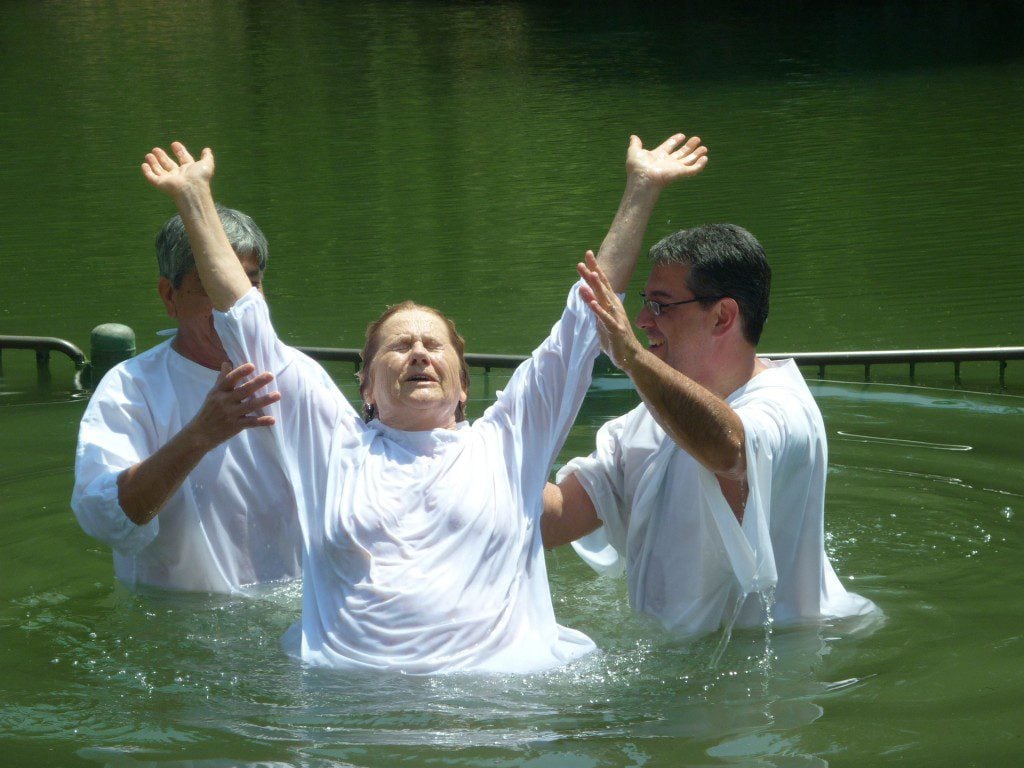
Image: https://pixabay.com/en/baptism-christianity-jordan-river-1959655/
Previous Post

September 11, 2018
Some Cover-up Crisis links
Next Post
September 14, 2018 Bad news from China - and the Vatican
Browse Our Archives
Select a Category Actuarial/Retirement Issues Politics Uncategorized
Select a Month September 2026 August 2026 July 2026 June 2026 April 2026 March 2026 February 2026 January 2026 December 2025 November 2025 October 2025 July 2025 June 2025 May 2025 April 2025 March 2025 February 2025 January 2025 December 2024 November 2024 October 2024 September 2024 August 2024 July 2024 June 2024 May 2024 April 2024 March 2024 February 2024 December 2023 November 2023 October 2023 September 2023 August 2023 July 2023 December 2022 September 2022 August 2022 July 2022 June 2022 May 2022 February 2022 January 2022 December 2021 August 2021 June 2021 April 2021 February 2021 January 2021 December 2020 November 2020 October 2020 September 2020 August 2020 July 2020 June 2020 May 2020 April 2020 March 2020 February 2020 January 2020 December 2019 November 2019 October 2019 September 2019 August 2019 July 2019 June 2019 May 2019 April 2019 March 2019 February 2019 January 2019 December 2018 November 2018 October 2018 September 2018 August 2018 July 2018 June 2018 May 2018 April 2018 March 2018 February 2018 January 2018 December 2017 November 2017 October 2017 September 2017 August 2017 July 2017 June 2017 May 2017 April 2017 March 2017 February 2017 January 2017 December 2016 November 2016 October 2016 September 2016 August 2016 July 2016 June 2016 May 2016 April 2016 March 2016 February 2016 January 2016 December 2015 November 2015 October 2015 September 2015 August 2015 July 2015 June 2015 May 2015 April 2015 March 2015 February 2015 January 2015 December 2014 November 2014 October 2014 September 2014 August 2014 July 2014 June 2014 May 2014 April 2014 March 2014 February 2014 January 2014 December 2013 November 2013 October 2013 September 2013 August 2013 July 2013
Follow Us!
TAKE THE
Religious Wisdom Quiz
Who lay on his side for over a year as a prophetic sign?
Select your answer to see how you score.
Micah Hosea Ezekiel Daniel
Related posts from Jane the Actuary
Portland Parish Protests POC Priest
Happy Elizabeth Ann Seton Day! (with discussion questions)
Pope, Bishops to Catholics: You're on your own
TRENDING AT PATHEOS Catholic

Looking at the Largest Orthodox Cathedral on Earth
There is often a considerable amount of anger and, shall we...

The Problem with False Prophets
Miller’s Station UMC| 10/18/26| Anchor Verse: Jeremiah 23: 1, 9-23 I...

Emotion in Early Christianity by Andrew Crislip
Andrew Crislip’s Emotion in Early Christianity examines an often overlooked dimension of...

16 Spiritual Touchstones for a More Grounded Life
After decades of spiritual study, here are 16 principles I try...

Catholic Evangelization: Sharing Your Faith Every Day
Welcome back to the Graceful Awakening mini-series called, “From Faith to Mission.” ...

The Pillar of the Boatmen: the Ancient Monument...
The Pillar of the Boatmen is a Romano-Gaulish sculpture that dates from...
view all Catholic blogs
Ad-Free & Subscriber Log-In Subscription Support
- About Us
- 2026 Calendar
- Videos
- Podcasts
- Library of World Religions
- Faith In Media Tracker
- Advertise With Us
- Write for Us
- Privacy Policy
- Terms of Service
- Do Not Sell My Data
- Contact Us
- Radiant Digital
- Manage Newsletter Subscriptions
- Unsubscribe From Notifications
- Sitemap
Copyright 2008-2026, Patheos. All rights reserved.
Subscription Support Ad-Free & Subscriber Log-In
Follow Patheos