
BuddhistCatholicContemplativeEvangelicalGeneral ChristianHinduJewishLatter-day SaintMuslimNew VisionsProgressive Christian
Beliefs
- Buddhist
- Catholic
- Contemplative
- Evangelical
- General Christian
- Hindu
- Jewish
- Latter-day Saint
- More Voices
- Muslim
- New Visions
- Pagan
- Progressive Christian
Topics
- Religion News
- Food and Religion
- Sports and Religion
- Religious Art
- Religious Music and Entertainment
- Religious Events
- History and Religion
- Style and Religion
- Politics and Religion
- Women in Religion
- Recreation Outdoors and Religion
- Business Finance and Religion
- Careers Workplace and Religion
- Education and Religion
- Family Parenting and Religion
- Health Fitness and Religion
- Home and Religion
- Relationships and Religion
- Technology and Religion
- Travel and Religion
Columnists
- Buddhist Columnists
- Business Finance and Religion Columnists
- Careers Workplace and Religion Columnists
- Catholic Columnists
- Contemplative Columnists
- Education and Religion Columnists
- Evangelists Columnists
- Family Parenting and Religion Columnists
- General Christian Columnists
- Health Fitness and Religion Columnists
- Hindu Columnists
- History and Religion Columnists
- Home and Religion Columnists
- Jewish Columnists
- More Voices Columnists
- Latter Day Columnists
- Muslim Columnists
- New Visions Columnists
- Nonreligious Columnists
- Pagan Columnists
- Politics and Religion Columnists
- Progressive Columnists
- Recreation Outdoors and Religion Columnists
- Relationships and Religion Columnists
- Religion News Columnists
- Religious Art Columnists
- Religious Events Columnists
- Religious Music and Entertainment Columnists
- Sports and Religion Columnists
- Style and Religion Columnists
- Technology and Religion Columnists
- Travel and Religion Columnists
- Women in Religion Columnists
Resource Library
- 2026 Calendar
- Library of World Religions
- The 100 Most Holy Places on Earth
- Patheos Answers
- Podcasts
- Videos
- Faith Leaders Database
- Anglican Episcopalian
- Bahai
- Baptist
- Buddhism
- Christianity
- Confucianism
- Eastern Orthodoxy
- Hinduism
- Holiness and Pentecostal
- ISKCON
- Islam
- Judaism
- Lutheran
- Methodist
- The Church of Jesus Christ of Latter-day Saints
- New Age
- Paganism
- Presbytarian and Reformed
- Protestantism
- Religion Behind the Scenes
- Roman Catholic
- Scientology
- Shia Islam
- Sikhism
- Sufism
- Sunni Islam
- Taoism
- Zen
- See all religions
Research Tools
 Ad-Free & Subscriber Log-In Subscription Support
Ad-Free & Subscriber Log-In Subscription Support
Follow Patheos 

- Trending:
- Forgiveness
- |
- Marriage
- |
- Consciousness
- |
- Death Penalty
- |
- Election
- |
- Halloween

- Home
- Catholic
- Politics and Religion
- Do you understand the Synod on Youth?
Do you understand the Synod on Youth?
Last updated on: September 22, 2018 at 6:45 am by Jane the Actuary
Do you understand the Synod on Youth? 2018-09-22T06:45:31-06:00 Jane the Actuary
Patheos Explore the world's faith through different perspectives on religion and spirituality! Patheos has the views of the prevalent religions and spiritualities of the world.
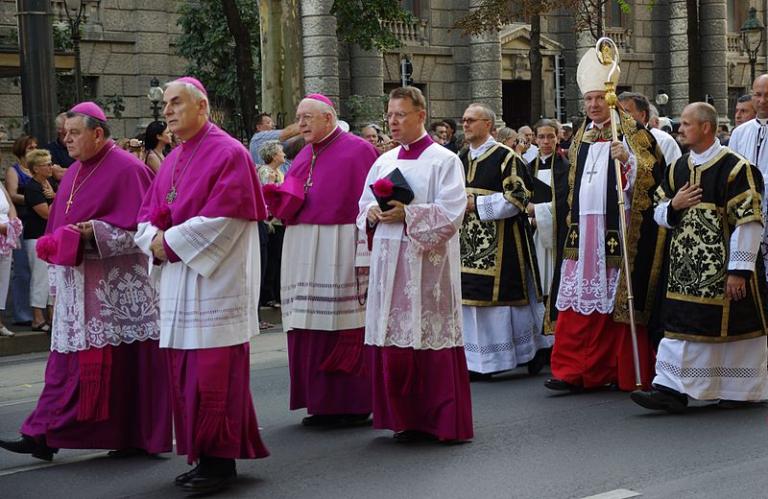
It’s the fifteenth Ordinary General Synod of Bishops since these began post-Vatican II, and it has as its topic Young People, Faith, and Vocational Discernment, but, readers, I’ll be honest, I’ve tried to read the Instrumentum Laboris, the document which serves as an agenda/guiding document for the synod and I just didn’t really get it. Today a friend shared a critique of the synod which reinforced my confusion and concerns.
This synod is the successor synod to the Synod of the Family three years ago, which had as its result Amoris Laetitia, which was full of generic passages on the importance of family life, with nothing particularly remarkable except the infamous footnotes that may or may not have said that it’s OK to divorce and remarry and take communion, as long as you’re not a deadbeat dad.
What will the outcome of this synod be?
Part of what troubles me is that I can’t figure out if the attendees are supposed to be experts or if there’s supposed to be some process whereby they learn from experts. Cardinal Marx from Munich is going to be there. Is he going to claim he has it all figured out, or is he attending precisely so as to be able to ask the African bishops what their secret is?
But the Instrumentum Laboris (or the IL, as it is apparently called) seems fairly secular in many of its concerns. Will this, in the end, be a matter of proclaiming that, since young people care about and are affected by income inequality, the environment, and similar issues, our concern for them make it all the more important to be active in these areas?
And at the same time, there seems to be a great deal of emphasis on the new trendy buzzword of accompaniment. Rather than handing down the faith, one is to accompany young people as they seek out answers and try to discern what the spirit is telling them. “Vocational discernment” appears not to have anything to do with vocations of religious life, but just of young people more generically trying to figure out what they’re meant to do in life.
There are also a few sentences about sexual morality. There’s nothing that explicitly says, “maybe we should rethink two millennia of teaching” but there are comments like, “what should we tell young people who are in same-sex relationships and want to have a connection to the church?” Will this be a basis for a document which casts Catholic sexual teaching as an “ideal” that’s kinda-sorta optional, just recommended like saying a daily rosary?
But the overall document just seemed so all-over-the-place in its themes, addressing anything that has to do with young people. And quite honestly, a young adult in the United States has so little in common with a young adult in Africa, or with an African paying a smuggler to get him to Europe, that having a synod attempting to address this as a topic seems like it will simply be unable to pull together a meaningful common set of recommendations. What’s more, I don’t get a particularly firm sense, other than rambling flowey language, that the authors of the synod document have any particular sense of crisis. Does Marx understand that a random visitor to a random parish on a random Sunday will see pretty much nothing but grey hair? Does Cupich have any sense of worry that the US will follow Europe in this regard? Or are the Pope’s handpicked delegates convinced that the way to bring young people back is to get rid of whatever teachings they may dislike, because the Episcopalians are doing so well?
And the recent news that
In a new apostolic constitution, Pope Francis has reformed the Synod of Bishops, creating a mechanism for the assembly’s final document to be included in official Church teaching.
Episcopalis Communio, promulgated by the pope on Sept. 15, establishes that the final document of a synod assembly, drafted and approved by a special commission, can be considered part of the ordinary magisterium – that is, the official teaching of the Church – if it receives a particular level of papal approval.
left me wondering what sort of “teaching” might be a part of such a document that would be meaningfully “new” rather than a restatement of existing teaching with applications for the situation we find ourselves in, in 2018. The idea that the Pope seems to envision that there might be a new teaching does concern me, and all the more so considering that Marx seems to have has already been busy promoting communion by non-Catholic spouses and by remarried individuals, and even suggested that same-sex union blessings might be fine if deemed “pastoral care.” In other words, if Marx can steer the outcome of the synod, almost anything might be signed off on if it can be labelled “pastoral care.”
Now, maybe I’m reading too much into this. The bishops get together every three years. Put nicely, they build relationships and share their challenges with each other; put cynically, they gossip and work to build their power base for their next promotion. But they need some kind of theme to give some structure to the gathering, so “youth” it is.
But it still worries me.
Image: what’s the collective noun for bishops?
https://commons.wikimedia.org/wiki/File:20110716_Otto_von_Habsburg_funeral_procession_2280.jpg; By Jakub Hałun [GFDL (http://www.gnu.org/copyleft/fdl.html) or CC BY-SA 4.0 (https://creativecommons.org/licenses/by-sa/4.0)], from Wikimedia Commons
Previous Post

September 21, 2018
MeToo-ism and the Kavanaugh accusation
Next Post

September 22, 2018 What's the purpose of Christianity? On (skeptically) reading Spong
Browse Our Archives
Select a Category Actuarial/Retirement Issues Politics Uncategorized
Select a Month September 2026 August 2026 July 2026 June 2026 April 2026 March 2026 February 2026 January 2026 December 2025 November 2025 October 2025 July 2025 June 2025 May 2025 April 2025 March 2025 February 2025 January 2025 December 2024 November 2024 October 2024 September 2024 August 2024 July 2024 June 2024 May 2024 April 2024 March 2024 February 2024 December 2023 November 2023 October 2023 September 2023 August 2023 July 2023 December 2022 September 2022 August 2022 July 2022 June 2022 May 2022 February 2022 January 2022 December 2021 August 2021 June 2021 April 2021 February 2021 January 2021 December 2020 November 2020 October 2020 September 2020 August 2020 July 2020 June 2020 May 2020 April 2020 March 2020 February 2020 January 2020 December 2019 November 2019 October 2019 September 2019 August 2019 July 2019 June 2019 May 2019 April 2019 March 2019 February 2019 January 2019 December 2018 November 2018 October 2018 September 2018 August 2018 July 2018 June 2018 May 2018 April 2018 March 2018 February 2018 January 2018 December 2017 November 2017 October 2017 September 2017 August 2017 July 2017 June 2017 May 2017 April 2017 March 2017 February 2017 January 2017 December 2016 November 2016 October 2016 September 2016 August 2016 July 2016 June 2016 May 2016 April 2016 March 2016 February 2016 January 2016 December 2015 November 2015 October 2015 September 2015 August 2015 July 2015 June 2015 May 2015 April 2015 March 2015 February 2015 January 2015 December 2014 November 2014 October 2014 September 2014 August 2014 July 2014 June 2014 May 2014 April 2014 March 2014 February 2014 January 2014 December 2013 November 2013 October 2013 September 2013 August 2013 July 2013
Follow Us!
TAKE THE
Religious Wisdom Quiz
A woman who had suffered bleeding for twelve years was healed by touching Jesus' what?
Select your answer to see how you score.
The hairs of his head His feet His hand His cloak
Related posts from Jane the Actuary

Actually, Card. Cupich is hurting, not helping, immigrants
Is Cardinal Cupich Failing the Archdiocese of Chicago?
Dear Cardinal Cupich: enough with endless Capital Campaigns!
The good and bad about Cupich's DNC prayer
TRENDING AT PATHEOS Catholic

When Halloween Unmasks Married Hearts
Written by Dr. David K. Ewen from Eternal Truth Bible College Behind...

Aristotle. He’s been called the father of logic, the father of the...

Methodist Central Hall and Westminster Abbey
Situated on the same square is Methodist Central Hall and Westminster Abbey. ...

57th Dove Awards Honor Dolly Parton, Crown New...
On gospel music’s biggest night, the 57th annual GMA Dove Awards honored...

The First Eucharistic Controversy: Christ’s Real Presence
For Catholics, the Eucharist is the source and summit of the Christian...

What a Stop Sign Can Teach Us About...
How to Make a Decision When You Can't Hear God Main point:...
view all Catholic blogs
Ad-Free & Subscriber Log-In Subscription Support
- About Us
- 2026 Calendar
- Videos
- Podcasts
- Library of World Religions
- Faith In Media Tracker
- Advertise With Us
- Write for Us
- Privacy Policy
- Terms of Service
- Do Not Sell My Data
- Contact Us
- Radiant Digital
- Manage Newsletter Subscriptions
- Unsubscribe From Notifications
- Sitemap
Copyright 2008-2026, Patheos. All rights reserved.
Subscription Support Ad-Free & Subscriber Log-In
Follow Patheos