
BuddhistCatholicContemplativeEvangelicalGeneral ChristianHinduJewishLatter-day SaintMuslimNew VisionsProgressive Christian
Beliefs
- Buddhist
- Catholic
- Contemplative
- Evangelical
- General Christian
- Hindu
- Jewish
- Latter-day Saint
- More Voices
- Muslim
- New Visions
- Pagan
- Progressive Christian
Topics
- Religion News
- Food and Religion
- Sports and Religion
- Religious Art
- Religious Music and Entertainment
- Religious Events
- History and Religion
- Style and Religion
- Politics and Religion
- Women in Religion
- Recreation Outdoors and Religion
- Business Finance and Religion
- Careers Workplace and Religion
- Education and Religion
- Family Parenting and Religion
- Health Fitness and Religion
- Home and Religion
- Relationships and Religion
- Technology and Religion
- Travel and Religion
Columnists
- Buddhist Columnists
- Business Finance and Religion Columnists
- Careers Workplace and Religion Columnists
- Catholic Columnists
- Contemplative Columnists
- Education and Religion Columnists
- Evangelists Columnists
- Family Parenting and Religion Columnists
- General Christian Columnists
- Health Fitness and Religion Columnists
- Hindu Columnists
- History and Religion Columnists
- Home and Religion Columnists
- Jewish Columnists
- More Voices Columnists
- Latter Day Columnists
- Muslim Columnists
- New Visions Columnists
- Nonreligious Columnists
- Pagan Columnists
- Politics and Religion Columnists
- Progressive Columnists
- Recreation Outdoors and Religion Columnists
- Relationships and Religion Columnists
- Religion News Columnists
- Religious Art Columnists
- Religious Events Columnists
- Religious Music and Entertainment Columnists
- Sports and Religion Columnists
- Style and Religion Columnists
- Technology and Religion Columnists
- Travel and Religion Columnists
- Women in Religion Columnists
Resource Library
- 2026 Calendar
- Library of World Religions
- The 100 Most Holy Places on Earth
- Patheos Answers
- Podcasts
- Videos
- Faith Leaders Database
- Anglican Episcopalian
- Bahai
- Baptist
- Buddhism
- Christianity
- Confucianism
- Eastern Orthodoxy
- Hinduism
- Holiness and Pentecostal
- ISKCON
- Islam
- Judaism
- Lutheran
- Methodist
- The Church of Jesus Christ of Latter-day Saints
- New Age
- Paganism
- Presbytarian and Reformed
- Protestantism
- Religion Behind the Scenes
- Roman Catholic
- Scientology
- Shia Islam
- Sikhism
- Sufism
- Sunni Islam
- Taoism
- Zen
- See all religions
Research Tools
 Ad-Free & Subscriber Log-In Subscription Support
Ad-Free & Subscriber Log-In Subscription Support
Follow Patheos 

- Trending:
- Forgiveness
- |
- Marriage
- |
- Consciousness
- |
- Death Penalty
- |
- Election
- |
- Halloween

- Home
- Catholic
- Politics and Religion
- Can the Pope rewrite doctrine?
Can the Pope rewrite doctrine?
Last updated on: August 2, 2018 at 4:02 pm by Jane the Actuary
Can the Pope rewrite doctrine? 2018-08-02T16:02:51-06:00 Jane the Actuary
Patheos Explore the world's faith through different perspectives on religion and spirituality! Patheos has the views of the prevalent religions and spiritualities of the world.
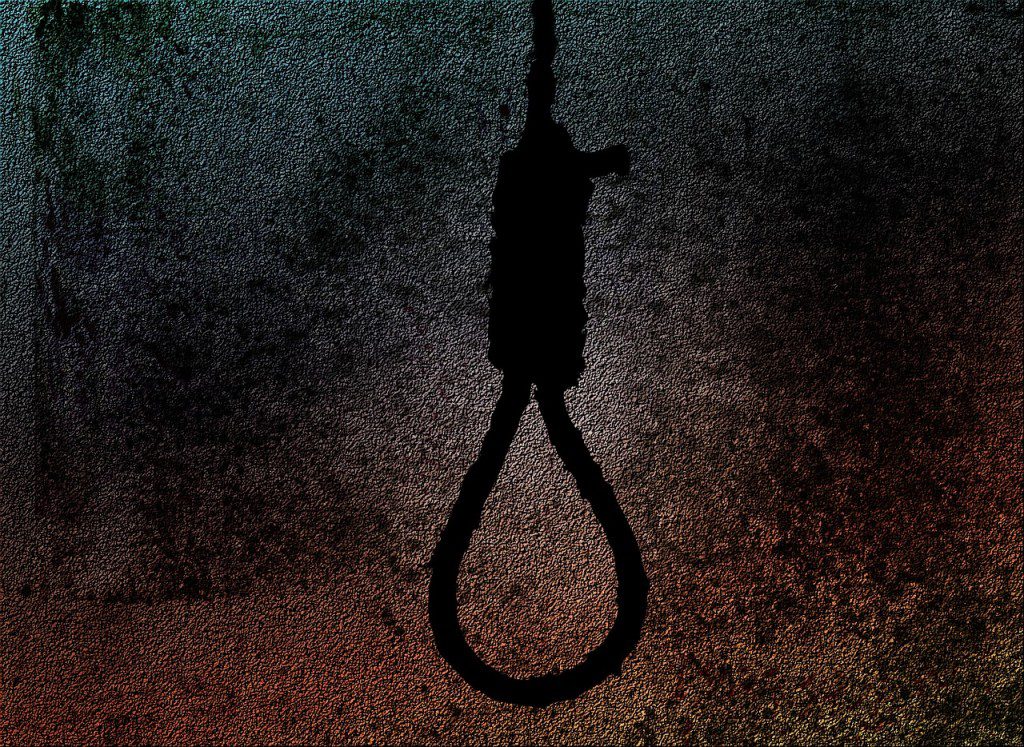
In today’s news, the dramatic announcement that, as the New York Times phrases it in its headline, “Pope Declares Death Penalty Unacceptable in All Cases.”
Pope Francis has declared that the death penalty is wrong in all cases, a definitive change in church teaching that is likely to challenge faithful Catholic politicians, judges and officials in the United States and other countries who have argued that their church was not entirely opposed to capital punishment.
Francis added the change to the Catechism of the Roman Catholic Church. . . .
Francis’ decision is likely to put many American Catholic politicians in a difficult position, especially Catholic governors, like Greg Abbott of Texas and Pete Ricketts of Nebraska, who have presided over executions.
And it could set off a backlash among American Catholic traditionalists who have already cast Francis as being dangerously inclined to change or compromise church teaching on other issues, like permitting communion for Catholics who have divorced and remarried without getting a church annulment. . . .
Abolishing the death penalty has been one of Francis’ top priorities for many years, along with saving the environment and caring for immigrants and refugees.
Now, I have to admit that I find it odd that the death penalty is such a priority for a Pope from Latin America, where, per this handy-dandy map, with few exceptions, the entire continent has abolished it entirely or “except in extreme cases.” The only country over which the Catholic Church has any influence, which has the death penalty, is the United States, and the remaining such countries are ones where a papal campaign would make no difference. Conceivably, this “top priority” is a carry-over from the fact that Argentina only abolished the death penalty a decade ago. But in 2018 America, this seems a campaign that’s as likely to have the undesirable effect of pushing Catholics from public life in death-penalty states as it is to have its desired effect.
But that’s really just a preamble to the larger question: did the Pope clearly and directly change Catholic doctrine and, hence, communicate that doctrine is changeable if you have a good enough reason?
The National Catholic Register article on the subject strikes me as trying, however strained an interpretation it might be, to emphasize continuity:
The Vatican Thursday altered the Catechism’s wording on the permissibility of the death penalty, which the Church teaches is legitimate in extreme cases, stating it is “inadmissible,” and its elimination will be sought.
What does “inadmissable” mean, and does the reporter’s use of the present tense mean that she still understands this core “legitimate in extreme cases” teaching to be true, just that the Pope rejects that in the world of 2018 no such “extreme cases” exist? I’m not sure.
But there are more skeptical, more worried perspectives.
Here’s Ross Douthat, writing on twitter (apologies for the long set of links but I’m not sure what the best practice is for citing from a tweetstorm) that Francis is once again engaged in changing doctrine with some degree of plausible denyability:
There are anti-death penalty Catholic thinkers who argue that past teaching on this question was real but not authoritative/infallible, and therefore a reversal is possible. This is the position taken, for instance, by E. Christian Brugger in this debate:https://t.co/frOE9FffR0
— Ross Douthat (@DouthatNYT) August 2, 2018
This effectively sidestepped the debate about whether the DP was intrinsically evil by seeking recourse in a kind of consequentialism: It might be okay to use it to protect society in some situations but probably not in modern conditions.
— Ross Douthat (@DouthatNYT) August 2, 2018
And the keenest theological minds behind the JPII synthesis worked hard to argue for its prudential quality, and therefore its continuity with past church teaching — for instance, Ratzinger in his public interventions, and Avery Dulles at length here:https://t.co/SjM9t2y8nm
— Ross Douthat (@DouthatNYT) August 2, 2018
That looks more like reversal. And yet — if you read the preamble to the change, there's still talk about how the change reflects the fact that "more effective systems of detention have been developed." And "inadmissible" is not the same (or is it?) as "intrinsically evil."
— Ross Douthat (@DouthatNYT) August 2, 2018
But anyone arguing for continuity has to recognize that at the very least this kind of shift turns the traditional teaching into a sort of hermetic secret, available to ppl who read extremely carefully but invisible in the normal public teaching of the church.
— Ross Douthat (@DouthatNYT) August 2, 2018
Another way to see this is that on both the death penalty and divorce, the JPII synthesis stretched the claim of continuity — with a prudential anti-death penalty arg that *sounded* absolute, and a liberal annulment policy — without making a formal break.
— Ross Douthat (@DouthatNYT) August 2, 2018
In this case there may be less uproar, because conservative Catholics (see Brugger or Robert George or others) are less certain and more divided about the authoritativeness of past teaching on DP than they are about remarriage.
— Ross Douthat (@DouthatNYT) August 2, 2018
But the bottom line is that this is another example of how Pope Francis has consistently exposed the tensions in the post-Vatican II conservative position, and pushed the JPII synthesis into intellectual crisis.
— Ross Douthat (@DouthatNYT) August 2, 2018
It seems to me that the Pope has crossed a bright line. He is denying, for the first time in nearly two millennia of Catholic teaching, and in direct contradiction to the Fathers of the Church, that the state has the right to impose capital punishment. That’s a meaningful difference from saying that the state has that right, but shouldn’t use it.
Even if you disfavor the death penalty, understand what this means: this Pope has claimed forthrightly that the Catholic Church taught error, but now, at long last, he has set the Church straight. From a traditional point of view, though, this means that the Pope is teaching error.
This. Is. Big.
If Francis can do this, what can’t he do? What are the limits on his power?
Catholic friends keep saying to me how much they hope that the Catholic Church and the Orthodox Churches can end our thousand-year schism, and reunite. I would love for that to happen myself, but I keep telling them that even if the Orthodox set aside the historical prejudices that stand in the way, there is no way that Orthodoxy is going to take the chance of reunion with the Latin church that is so unstable, liturgically and doctrinally.
Me?
In the first place, I admit that the death penalty is not something about which I care particularly much. In 2018 America, I don’t think it has much of a deterrent effect — quite the opposite, really; I think Dylan Roof is much more OK with being executed and imagining himself a Hero of the White Race than with the prospect of truly spending the rest of his life in prison. I also believe that our penal system is well functioning enough that we need not fear some sort of mass break-out, and I believe that we can humanely run a prison system which includes life in prison for the worst criminals. But I don’t want to say that, in the Wild West, or at some hypothetical future time when there may be a much less secure prison system, it was or will be sinful for the government to carry out executions. And I just can’t get myself to be upset by the fact that in various other states it exists as a sentence.
It does bother me quite a bit that Francis was not satisfied with reiterating the catechism’s existing statements confining the death penalty to a very narrow set of circumstances, but chose to advance this further, and in doing so, chose to advance the very concept of “development of doctrine.” It feels a bit as if he’s attempting a bit of preparing the battlespace for other future “developments of doctrine.” And, no, when I made my RCIA profession of faith, it was not to “all that the holy Catholic Church believes, teaches, and proclaims to be revealed by God as determined by the Pope at any given time.”
What’s more, the determination that Francis has now made, that the death penalty is wrong in all cases, feels a bit “end of history”-ish, in that it assumes that all nations are on an inevitable march towards an ever more just, peaceful, and prosperous world. Yes, I hope that’s the case, but I’m not keen on building up a corpus of doctrine that’s contingent on this.
And finally, the death penalty, like the killing of enemy soldiers and, collaterally, civilians, in times of war, is something that, yes, relies on the general principle of holding regard for human dignity, but requires prudential judgment as well. In the case of war, we do not believe our religious leaders are the best foreign policy experts to determine the particulars of whether and how a war should be fought, whether a military action that seems correct might do more harm than good, or whether the choice not to intervene might be the worse choice. In the case of the death penalty, I don’t consider the Pope to be the expert on the specific circumstances in any given country, nor would I turn to him to evaluate questions of deterrence, or the effect on the psyche of long-term incarceration or solitary confinement (because, yes, some nations have even deemed life imprisonment to be just as much a violation of human dignity – and, apparently, what’s to stop the Pope?), questions which are, in the end, not questions of religion or morality.
So I’m not happy about it. The whole point of the Catholic Church is its unchangingness. This is not like an academic field of study, in which, say, our understanding of physics, or astronomy, or biology, “develops” over time.
And, while, yes, I’m sure this has been in the works for quite some time, for this to be announced, directed at American Catholics, at a time when its members are hearing constantly, “seminars are full of hanky-panky and all the bishops knew about all kinds of misbehavior” and the bishops have, so far as I know, not acknowledged this but have instead repeated their same old mantra with promises to investigate — well, it feels like trying to change the subject. “The bishops and seminaries are corrupt? Nah, let’s criticize the bad laypeople who haven’t come around to opposing the death penalty.”
Image: from pixabay, https://pixabay.com/en/sling-hangman-hanging-knot-1222466/
Previous Post

August 1, 2018
Will the "Rent Relief Act" relieve renters?
Next Post

August 4, 2018 In which I think about Sarah Jeong, racism, and privacy
Browse Our Archives
Select a Category Actuarial/Retirement Issues Politics Uncategorized
Select a Month September 2026 August 2026 July 2026 June 2026 April 2026 March 2026 February 2026 January 2026 December 2025 November 2025 October 2025 July 2025 June 2025 May 2025 April 2025 March 2025 February 2025 January 2025 December 2024 November 2024 October 2024 September 2024 August 2024 July 2024 June 2024 May 2024 April 2024 March 2024 February 2024 December 2023 November 2023 October 2023 September 2023 August 2023 July 2023 December 2022 September 2022 August 2022 July 2022 June 2022 May 2022 February 2022 January 2022 December 2021 August 2021 June 2021 April 2021 February 2021 January 2021 December 2020 November 2020 October 2020 September 2020 August 2020 July 2020 June 2020 May 2020 April 2020 March 2020 February 2020 January 2020 December 2019 November 2019 October 2019 September 2019 August 2019 July 2019 June 2019 May 2019 April 2019 March 2019 February 2019 January 2019 December 2018 November 2018 October 2018 September 2018 August 2018 July 2018 June 2018 May 2018 April 2018 March 2018 February 2018 January 2018 December 2017 November 2017 October 2017 September 2017 August 2017 July 2017 June 2017 May 2017 April 2017 March 2017 February 2017 January 2017 December 2016 November 2016 October 2016 September 2016 August 2016 July 2016 June 2016 May 2016 April 2016 March 2016 February 2016 January 2016 December 2015 November 2015 October 2015 September 2015 August 2015 July 2015 June 2015 May 2015 April 2015 March 2015 February 2015 January 2015 December 2014 November 2014 October 2014 September 2014 August 2014 July 2014 June 2014 May 2014 April 2014 March 2014 February 2014 January 2014 December 2013 November 2013 October 2013 September 2013 August 2013 July 2013
Follow Us!
TAKE THE
Religious Wisdom Quiz
Who said, "Am I my brother's keeper?"
Select your answer to see how you score.
Cain Esau Jacob Joseph
Related posts from Jane the Actuary
How smart is the Pope, really?

What does the Pope really think about "just...
What's going on at the Amazon Synod?
TRENDING AT PATHEOS Catholic

Methodist Central Hall and Westminster Abbey
Situated on the same square is Methodist Central Hall and Westminster Abbey. ...

57th Dove Awards Honor Dolly Parton, Crown New...
On gospel music’s biggest night, the 57th annual GMA Dove Awards honored...

The First Eucharistic Controversy: Christ’s Real Presence
For Catholics, the Eucharist is the source and summit of the Christian...

What a Stop Sign Can Teach Us About...
How to Make a Decision When You Can't Hear God Main point:...

Archdiocese Hosts Military Marriage Retreat in Germany
RASTATT, Germany — The transient military lifestyle, with its frequent deployments and...

Nearly every morning, I make the drive to Detroit with my high-school-age...
view all Catholic blogs
Ad-Free & Subscriber Log-In Subscription Support
- About Us
- 2026 Calendar
- Videos
- Podcasts
- Library of World Religions
- Faith In Media Tracker
- Advertise With Us
- Write for Us
- Privacy Policy
- Terms of Service
- Do Not Sell My Data
- Contact Us
- Radiant Digital
- Manage Newsletter Subscriptions
- Unsubscribe From Notifications
- Sitemap
Copyright 2008-2026, Patheos. All rights reserved.
Subscription Support Ad-Free & Subscriber Log-In
Follow Patheos