
BuddhistCatholicContemplativeEvangelicalGeneral ChristianHinduJewishLatter-day SaintMuslimNew VisionsProgressive Christian
Beliefs
- Buddhist
- Catholic
- Contemplative
- Evangelical
- General Christian
- Hindu
- Jewish
- Latter-day Saint
- More Voices
- Muslim
- New Visions
- Pagan
- Progressive Christian
Topics
- Religion News
- Food and Religion
- Sports and Religion
- Religious Art
- Religious Music and Entertainment
- Religious Events
- History and Religion
- Style and Religion
- Politics and Religion
- Women in Religion
- Recreation Outdoors and Religion
- Business Finance and Religion
- Careers Workplace and Religion
- Education and Religion
- Family Parenting and Religion
- Health Fitness and Religion
- Home and Religion
- Relationships and Religion
- Technology and Religion
- Travel and Religion
Columnists
- Buddhist Columnists
- Business Finance and Religion Columnists
- Careers Workplace and Religion Columnists
- Catholic Columnists
- Contemplative Columnists
- Education and Religion Columnists
- Evangelists Columnists
- Family Parenting and Religion Columnists
- General Christian Columnists
- Health Fitness and Religion Columnists
- Hindu Columnists
- History and Religion Columnists
- Home and Religion Columnists
- Jewish Columnists
- More Voices Columnists
- Latter Day Columnists
- Muslim Columnists
- New Visions Columnists
- Nonreligious Columnists
- Pagan Columnists
- Politics and Religion Columnists
- Progressive Columnists
- Recreation Outdoors and Religion Columnists
- Relationships and Religion Columnists
- Religion News Columnists
- Religious Art Columnists
- Religious Events Columnists
- Religious Music and Entertainment Columnists
- Sports and Religion Columnists
- Style and Religion Columnists
- Technology and Religion Columnists
- Travel and Religion Columnists
- Women in Religion Columnists
Resource Library
- 2026 Calendar
- Library of World Religions
- The 100 Most Holy Places on Earth
- Patheos Answers
- Podcasts
- Videos
- Faith Leaders Database
- Anglican Episcopalian
- Bahai
- Baptist
- Buddhism
- Christianity
- Confucianism
- Eastern Orthodoxy
- Hinduism
- Holiness and Pentecostal
- ISKCON
- Islam
- Judaism
- Lutheran
- Methodist
- The Church of Jesus Christ of Latter-day Saints
- New Age
- Paganism
- Presbytarian and Reformed
- Protestantism
- Religion Behind the Scenes
- Roman Catholic
- Scientology
- Shia Islam
- Sikhism
- Sufism
- Sunni Islam
- Taoism
- Zen
- See all religions
Research Tools
 Ad-Free & Subscriber Log-In Subscription Support
Ad-Free & Subscriber Log-In Subscription Support
Follow Patheos 

- Trending:
- Forgiveness
- |
- Marriage
- |
- Consciousness
- |
- Death Penalty
- |
- Election
- |
- Halloween

- Home
- Catholic
- Politics and Religion
- About Sensitivity Readers
About Sensitivity Readers
Last updated on: January 2, 2018 at 8:24 am by Jane the Actuary
About Sensitivity Readers 2018-01-01T23:09:20-06:00 Jane the Actuary
Patheos Explore the world's faith through different perspectives on religion and spirituality! Patheos has the views of the prevalent religions and spiritualities of the world.

When I was a middle- and high-schooler, I read a lot of James Michener novels — Hawaii, Centennial, Chesapeake, Space, Poland and The Covenant are the ones I remember, looking at the Goodreads list. If you’re unfamiliar with his novels, they generally take the form of a narrative of several families, told over generations, centuries, or millennia, in a particular place; the stories of the individuals from those families intersect with the history and the historical figures of that place. My vague memories include Poland’s describing the partitions by which Russia, Prussia, and Austro-Hungary divided Poland up among them, and a character who winds up in a concentration camp. Of Hawaii, I remember having to give a book report in 5th grade, and adjusting the narrative because it wasn’t entirely PG, what with affairs and illegitimate children and so forth. (Had my Dad read the book himself, or did it just wind up on the family bookshelf? I don’t know. But they made a big deal out of, “Jane is so smart that she’s reading such a long book!” without any apparent interest in the age-appropriateness of the book. There probably wasn’t anything explicit in it, though.) Of Space, I remember that one of the protagonists was from the “wrong side of the tracks” and I pictured him as black and Denzil Washington-y, and was surprised later in the book when NASA management is embarrassed by a photo of a lily-white staff and makes efforts to hire blacks, showing that my image was incorrect. And The Covenant portrays families in South Africa, both Zulu and of Dutch origin. I recall in particular a scene in which, in the recent past, a girl is studied to determine whether she is “white” or “colored” by determining whether her hair holds a curl, and have vaguer memories of character portrayals that attempted to provide the point of view of the whites, and how it is that they thought that setting up the apartheid system was not a self-serving way to oppress others but somehow the “right thing to do.”
Could Michener have written such a book in 2018, rather than its original publication date of 1980? Or would sensitivity readers have stood in the way?
Sensitivity readers, if you’ve missed the recent press on them (e.g., the New York Times, Reason, and, back last winter, Slate) are “experts” employed by publishers, or by authors themselves, to read drafts of novels and provide feedback, corrections, or outright rejection, with respect to how “sensitive” the book is to issues of race, sex, mental illness, poverty, and the like. This is most common for children’s and young adult fiction (why do we call fiction written for teenagers “young adult fiction”, by the way?), but the Times reports that they’re coming into use for adult fiction as well. And the principle of the thing isn’t bad, per se — Michener researched his novels extensively, and presumably if he were writing about, say, the life of poor black families in inner-city Chicago, he would have consulted with experts on that subject as well, and perhaps have some such individual provide feedback on a draft. Hence, a “sensitivity reader.”
But the task sensitivity readers set themselves to seems to be far more extensive than just providing that sort of factual knowledge. These “readers” care as much about tone and emphasis. As Slate says,
There are issues of framing to consider: Is the book about the girl struggling with her weight too much about a girl, well, struggling with her weight? Does a character’s reference to his “shrink” denigrate therapy?
And the readers themselves — according to a database of individuals holding themselves out as experts, anyway — appear to be, well, very intersectional, as the label goes, claiming expertise in the immigrant experience, or the experience of blacks in America, but also simultaneously claiming expertise in LGetc. issues, trans issues, and mental health issues (anxiety, depression), which suggests that their ability to put themselves in the shoes of a straight, cis, neurotypical kid of a minority race or class experience is actually limited.
Now, to a certain extent, near as I can figure, sensitivity readers seem, in general, to be employed by or for authors seeking to write socially-conscious books, didactic books with messages, that attempt to teach majority-culture children about minorities of some sort or another, or to teach understanding of mental illness, or poverty, or the like, or that attempt to provide children in those situations with some comfort. And narrowly speaking, that does me no harm; it’s just another genre that I and my kids don’t read, and, if there’s a market for it, then fine, there can be endless “socially-conscious” books. It’s an irritant that they take up seemingly-disproportionate shelf space at the library, to be sure, though, to be sure, I have no way of knowing whether, among other families, they’re popular enough to warrant the extensive copies that our library purchases. And, likewise, I don’t know if non-didactic books are less likely to get Kirkus stars or other sorts of attention, by their lack of such.
But here’s my concern: the practice of sensitivity readers seems to go beyond pragmatic understandings of minority-ethnic group culture, or the particulars of what it means to have a mental illness, say, and appear to push characters which conform to their own notions of how a character from that particular (ethnic/racial, religious, sex/gender, mental status) minority group would think and feel, and, in particular, seem to result in literature in which minority characters are always flawless, because no flaws would be acceptable to these readers. And who would want to read a story in which the minority characters, whether as protagonist or secondary characters, are cast as perfect, and perfectly heroic?
It reminds me of a complaint that periodically surfaces about instances in which, in children’s novels or Hollywood movies, the female supporting character is actually more competent than the male main character — for instance, “Hermione should have been the main character in the Harry Potter stories, because she’s smarter and saves Harry’s ass repeatedly.” But it just doesn’t work, in fiction, for the main character to always be perfect, and always know what the right thing to do is, and never struggle to figure anything out, does it? In a way, Hermione is more plot device than character.
So this is where I’ll have to ask readers: tell me, does the work product of a sensitivity reader stick to the mandate of stripping out inaccuracies, or does it extend to transforming the books they touch into didactic, but bland, works?
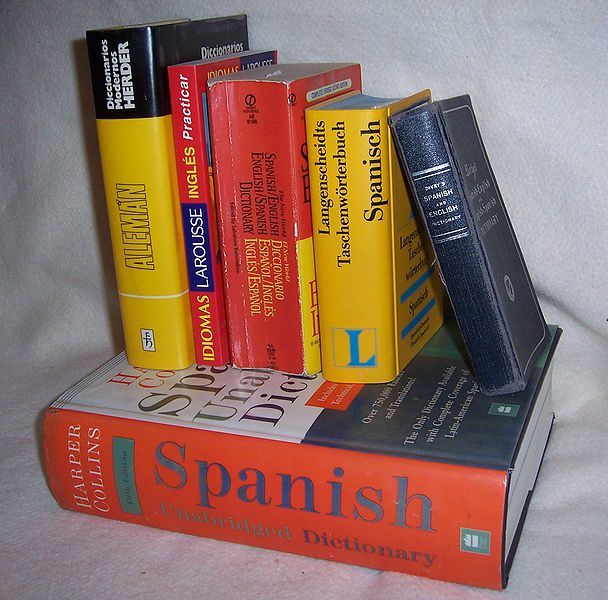
Image: From flickr; https://www.flickr.com/photos/zapthedingbat/3591108120

Next Post

January 2, 2018 White trash, Reader's Digest, and tribalism
Browse Our Archives
Select a Category Actuarial/Retirement Issues Politics Uncategorized
Select a Month September 2026 August 2026 July 2026 June 2026 April 2026 March 2026 February 2026 January 2026 December 2025 November 2025 October 2025 July 2025 June 2025 May 2025 April 2025 March 2025 February 2025 January 2025 December 2024 November 2024 October 2024 September 2024 August 2024 July 2024 June 2024 May 2024 April 2024 March 2024 February 2024 December 2023 November 2023 October 2023 September 2023 August 2023 July 2023 December 2022 September 2022 August 2022 July 2022 June 2022 May 2022 February 2022 January 2022 December 2021 August 2021 June 2021 April 2021 February 2021 January 2021 December 2020 November 2020 October 2020 September 2020 August 2020 July 2020 June 2020 May 2020 April 2020 March 2020 February 2020 January 2020 December 2019 November 2019 October 2019 September 2019 August 2019 July 2019 June 2019 May 2019 April 2019 March 2019 February 2019 January 2019 December 2018 November 2018 October 2018 September 2018 August 2018 July 2018 June 2018 May 2018 April 2018 March 2018 February 2018 January 2018 December 2017 November 2017 October 2017 September 2017 August 2017 July 2017 June 2017 May 2017 April 2017 March 2017 February 2017 January 2017 December 2016 November 2016 October 2016 September 2016 August 2016 July 2016 June 2016 May 2016 April 2016 March 2016 February 2016 January 2016 December 2015 November 2015 October 2015 September 2015 August 2015 July 2015 June 2015 May 2015 April 2015 March 2015 February 2015 January 2015 December 2014 November 2014 October 2014 September 2014 August 2014 July 2014 June 2014 May 2014 April 2014 March 2014 February 2014 January 2014 December 2013 November 2013 October 2013 September 2013 August 2013 July 2013
Follow Us!
TAKE THE
Religious Wisdom Quiz
Which Christian principle is shown by the story of the widow's mite?
Select your answer to see how you score.
Give to be seen Give only if rich Never give Generosity from the heart
Related posts from Jane the Actuary
In which, apparently, the country has completely lost...
A brief rant on names and pronunciations

"Whiteness" -- and the insolvability of multiculturalism

TRENDING AT PATHEOS Catholic

Methodist Central Hall and Westminster Abbey
Situated on the same square is Methodist Central Hall and Westminster Abbey. ...

57th Dove Awards Honor Dolly Parton, Crown New...
On gospel music’s biggest night, the 57th annual GMA Dove Awards honored...

The First Eucharistic Controversy: Christ’s Real Presence
For Catholics, the Eucharist is the source and summit of the Christian...

What a Stop Sign Can Teach Us About...
How to Make a Decision When You Can't Hear God Main point:...

Archdiocese Hosts Military Marriage Retreat in Germany
RASTATT, Germany — The transient military lifestyle, with its frequent deployments and...

Nearly every morning, I make the drive to Detroit with my high-school-age...
view all Catholic blogs
Ad-Free & Subscriber Log-In Subscription Support
- About Us
- 2026 Calendar
- Videos
- Podcasts
- Library of World Religions
- Faith In Media Tracker
- Advertise With Us
- Write for Us
- Privacy Policy
- Terms of Service
- Do Not Sell My Data
- Contact Us
- Radiant Digital
- Manage Newsletter Subscriptions
- Unsubscribe From Notifications
- Sitemap
Copyright 2008-2026, Patheos. All rights reserved.
Subscription Support Ad-Free & Subscriber Log-In
Follow Patheos