
BuddhistCatholicContemplativeEvangelicalGeneral ChristianHinduJewishLatter-day SaintMuslimNew VisionsProgressive Christian
Beliefs
- Buddhist
- Catholic
- Contemplative
- Evangelical
- General Christian
- Hindu
- Jewish
- Latter-day Saint
- More Voices
- Muslim
- New Visions
- Pagan
- Progressive Christian
Topics
- Religion News
- Food and Religion
- Sports and Religion
- Religious Art
- Religious Music and Entertainment
- Religious Events
- History and Religion
- Style and Religion
- Politics and Religion
- Women in Religion
- Recreation Outdoors and Religion
- Business Finance and Religion
- Careers Workplace and Religion
- Education and Religion
- Family Parenting and Religion
- Health Fitness and Religion
- Home and Religion
- Relationships and Religion
- Technology and Religion
- Travel and Religion
Columnists
- Buddhist Columnists
- Business Finance and Religion Columnists
- Careers Workplace and Religion Columnists
- Catholic Columnists
- Contemplative Columnists
- Education and Religion Columnists
- Evangelists Columnists
- Family Parenting and Religion Columnists
- General Christian Columnists
- Health Fitness and Religion Columnists
- Hindu Columnists
- History and Religion Columnists
- Home and Religion Columnists
- Jewish Columnists
- More Voices Columnists
- Latter Day Columnists
- Muslim Columnists
- New Visions Columnists
- Nonreligious Columnists
- Pagan Columnists
- Politics and Religion Columnists
- Progressive Columnists
- Recreation Outdoors and Religion Columnists
- Relationships and Religion Columnists
- Religion News Columnists
- Religious Art Columnists
- Religious Events Columnists
- Religious Music and Entertainment Columnists
- Sports and Religion Columnists
- Style and Religion Columnists
- Technology and Religion Columnists
- Travel and Religion Columnists
- Women in Religion Columnists
Resource Library
- 2026 Calendar
- Library of World Religions
- The 100 Most Holy Places on Earth
- Patheos Answers
- Podcasts
- Videos
- Faith Leaders Database
- Anglican Episcopalian
- Bahai
- Baptist
- Buddhism
- Christianity
- Confucianism
- Eastern Orthodoxy
- Hinduism
- Holiness and Pentecostal
- ISKCON
- Islam
- Judaism
- Lutheran
- Methodist
- The Church of Jesus Christ of Latter-day Saints
- New Age
- Paganism
- Presbytarian and Reformed
- Protestantism
- Religion Behind the Scenes
- Roman Catholic
- Scientology
- Shia Islam
- Sikhism
- Sufism
- Sunni Islam
- Taoism
- Zen
- See all religions
Research Tools
 Ad-Free & Subscriber Log-In Subscription Support
Ad-Free & Subscriber Log-In Subscription Support
Follow Patheos 

- Trending:
- Forgiveness
- |
- Marriage
- |
- Consciousness
- |
- Death Penalty
- |
- Election
- |
- Halloween

- Home
- Catholic
- Politics and Religion
- So about this “Jesus was born in the spring” idea . . .
So about this “Jesus was born in the spring” idea . . .
Last updated on: December 26, 2017 at 4:45 pm by Jane the Actuary
So about this “Jesus was born in the spring” idea . . . 2017-12-26T16:45:50-06:00 Jane the Actuary
Patheos Explore the world's faith through different perspectives on religion and spirituality! Patheos has the views of the prevalent religions and spiritualities of the world.
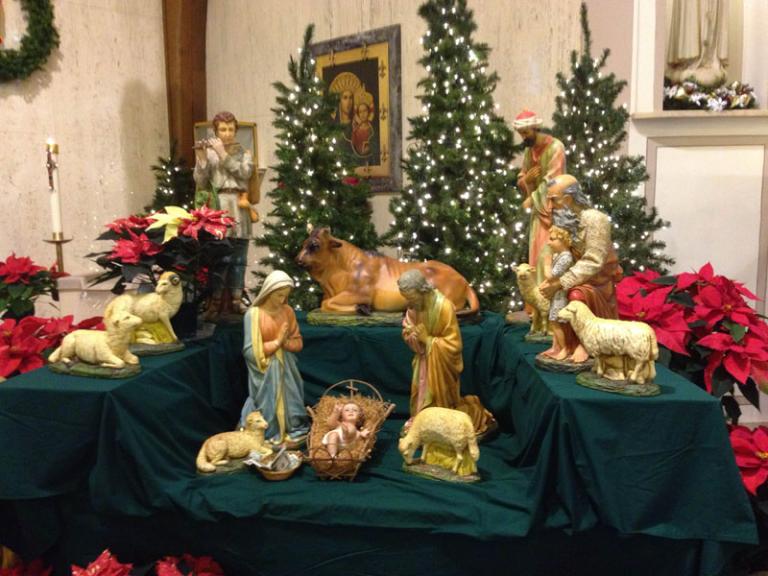
Two articles that came across my twitter feed recently:
“Biological evidence that Jesus actually was born in December” at Aleteia. We’re happy to criticize portrayals of the Nativity that include a blonde, blue-eyed Holy Family, and even periodically ask ourselves if the images of the stable being snow-covered are correct, for Bethlehem. But there’s another difference between the Middle East and Europe:
One continual objection was that the shepherds in the fields at night were presumed to be attending to the dropping of lambs. And lambs didn’t drop in December. Lambs dropped in the spring, not the winter.
So, when yet another person asked “Why do we celebrate Christmas in December if lambs are born in the spring?” instead of explaining the significance of March 25, I suddenly wondered: ARE lambs actually born in the spring in Israel? Can I find out?
The Awassi sheep is a desert sheep, a fat-tailed breed that has existed in the Middle East for an estimated 5,000 years. It is the only indigenous breed of sheep in Israel. They are raised for wool, meat, and milk. Awassi sheep breed in the summer and drop lambs in the winter, when there is sufficient pasture for the ewes in milk. In Israel, the principal lambing season is December through January.
Second, from the site “History for Atheists,” within a long refutation of the idea that Christmas is just a re-purposing of a pagan celebration on that day, “The Great Myths 2: Christmas, Mithras and Paganism”:
Within Judaism there was a tradition that prophets died on the same date on which they were conceived. Jesus was thought to have died on 14 Nisan according to the Jewish calendar. That’s March 25, which is celebrated in various Christian liturgical calendars as the Feast of the Annunciation to this day – the feast of the conception of Jesus. March 25 was also thought to be the date of the Creation of the World. So if, according to this theological calculation, Jesus was conceived on March 25, when was he born? The obvious answer is nine months later: on December 25.
And it’s this date that we find recurring in the early Christian writings on the subject, many of which were long before the fourth century and any period in which Christianity was trying to absorb and adopt pagan festivals. Theophilus of Caesarea (115-181 AD) wrote that “we ought to celebrate the birth-day of our Lord” on December 25. Origen (153-217 AD) noted “there are those who have determined not only the year of our Lord’s birth, but also the day …. the twenty-fifth day of Pachon”. Hippolytus of Rome (170-240 AD) also gives the date as “eight days before the calends of January (December 25).
This then goes on to say that these early writings long pre-dated the conversion of Constantine and the subsequent efforts to convert the “pagans” — that is, the country-dwellers (the origin of the term “pagan”) who were the supposed beneficiaries of Christian missionaries’ appropriation of pagan festivals and symbols.
Of course, I should also add that my knowledge of Europe inspires my own pet theory on Jesus’s birth (back from when it was popular to postulate that Jesus never had anything to do with Bethlehem at all, but was born in Nazareth), that is, that Joseph returned to Bethlehem not because of some distant ancestry, but because it was his literal hometown, from which he had departed to develop his carpentry craftsmanship, and to which he returned, even with Mary due any day now, because he judged it important to be registered at that city rather than at Nazareth.
And when the gospel says that Mary laid him in a manger, I picture, not a barn as we know it today in America, but a typical home in a German open-air history museum, in which the animals and the family themselves were housed in the same building, just within separate rooms. In fact, a quick google search brings up an article, “Was There Really ‘No Room in the Inn’?” which paints a picture of the First Christmas in the context of homes at the time.
All of which is to say that, while, to be sure, one’s faith isn’t dependent on these stories being literally true, it’s nice to know that there is scholarly support for these accounts.
Image: from my local parish.
Previous Post

December 24, 2017
Welcome, Chreasters!
Next Post
December 26, 2017 No blank slate: the problem with "tax reform"
Browse Our Archives
Select a Category Actuarial/Retirement Issues Politics Uncategorized
Select a Month September 2026 August 2026 July 2026 June 2026 April 2026 March 2026 February 2026 January 2026 December 2025 November 2025 October 2025 July 2025 June 2025 May 2025 April 2025 March 2025 February 2025 January 2025 December 2024 November 2024 October 2024 September 2024 August 2024 July 2024 June 2024 May 2024 April 2024 March 2024 February 2024 December 2023 November 2023 October 2023 September 2023 August 2023 July 2023 December 2022 September 2022 August 2022 July 2022 June 2022 May 2022 February 2022 January 2022 December 2021 August 2021 June 2021 April 2021 February 2021 January 2021 December 2020 November 2020 October 2020 September 2020 August 2020 July 2020 June 2020 May 2020 April 2020 March 2020 February 2020 January 2020 December 2019 November 2019 October 2019 September 2019 August 2019 July 2019 June 2019 May 2019 April 2019 March 2019 February 2019 January 2019 December 2018 November 2018 October 2018 September 2018 August 2018 July 2018 June 2018 May 2018 April 2018 March 2018 February 2018 January 2018 December 2017 November 2017 October 2017 September 2017 August 2017 July 2017 June 2017 May 2017 April 2017 March 2017 February 2017 January 2017 December 2016 November 2016 October 2016 September 2016 August 2016 July 2016 June 2016 May 2016 April 2016 March 2016 February 2016 January 2016 December 2015 November 2015 October 2015 September 2015 August 2015 July 2015 June 2015 May 2015 April 2015 March 2015 February 2015 January 2015 December 2014 November 2014 October 2014 September 2014 August 2014 July 2014 June 2014 May 2014 April 2014 March 2014 February 2014 January 2014 December 2013 November 2013 October 2013 September 2013 August 2013 July 2013
Follow Us!
TAKE THE
Religious Wisdom Quiz
Which prophet asked, "What does the Lord require of you?"
Select your answer to see how you score.
Joel Jonah Amos Micah
Related posts from Jane the Actuary
Why was Jesus born in Bethlehem?

Was Jesus a refugee? It doesn't frickin' matter
TRENDING AT PATHEOS Catholic

The Iron Gates and the Lion of the...
Yesterday, I didn't finish my report about, well, yesterday. So I'll...

Dolly Parton’s Last Song Wins Dove Award with...
Bluegrass band The Grascals, speaking on the red carpet at the 57th...

The Image: On the Horror of Capitalism and...
The Image Then went the Pharisees, and took counsel how they might...

We are approaching the date of our new American national holiday: October...

Letters on Living the Faith by C.S. Lewis
Most of us met C.S. Lewis as a public intellectual. Mere Christianity....

When Halloween Unmasks Married Hearts
Written by Dr. David K. Ewen from Eternal Truth Bible College Behind...
view all Catholic blogs
Ad-Free & Subscriber Log-In Subscription Support
- About Us
- 2026 Calendar
- Videos
- Podcasts
- Library of World Religions
- Faith In Media Tracker
- Advertise With Us
- Write for Us
- Privacy Policy
- Terms of Service
- Do Not Sell My Data
- Contact Us
- Radiant Digital
- Manage Newsletter Subscriptions
- Unsubscribe From Notifications
- Sitemap
Copyright 2008-2026, Patheos. All rights reserved.
Subscription Support Ad-Free & Subscriber Log-In
Follow Patheos