
BuddhistCatholicContemplativeEvangelicalGeneral ChristianHinduJewishLatter-day SaintMuslimNew VisionsProgressive Christian
Beliefs
- Buddhist
- Catholic
- Contemplative
- Evangelical
- General Christian
- Hindu
- Jewish
- Latter-day Saint
- More Voices
- Muslim
- New Visions
- Pagan
- Progressive Christian
Topics
- Religion News
- Food and Religion
- Sports and Religion
- Religious Art
- Religious Music and Entertainment
- Religious Events
- History and Religion
- Style and Religion
- Politics and Religion
- Women in Religion
- Recreation Outdoors and Religion
- Business Finance and Religion
- Careers Workplace and Religion
- Education and Religion
- Family Parenting and Religion
- Health Fitness and Religion
- Home and Religion
- Relationships and Religion
- Technology and Religion
- Travel and Religion
Columnists
- Buddhist Columnists
- Business Finance and Religion Columnists
- Careers Workplace and Religion Columnists
- Catholic Columnists
- Contemplative Columnists
- Education and Religion Columnists
- Evangelists Columnists
- Family Parenting and Religion Columnists
- General Christian Columnists
- Health Fitness and Religion Columnists
- Hindu Columnists
- History and Religion Columnists
- Home and Religion Columnists
- Jewish Columnists
- More Voices Columnists
- Latter Day Columnists
- Muslim Columnists
- New Visions Columnists
- Nonreligious Columnists
- Pagan Columnists
- Politics and Religion Columnists
- Progressive Columnists
- Recreation Outdoors and Religion Columnists
- Relationships and Religion Columnists
- Religion News Columnists
- Religious Art Columnists
- Religious Events Columnists
- Religious Music and Entertainment Columnists
- Sports and Religion Columnists
- Style and Religion Columnists
- Technology and Religion Columnists
- Travel and Religion Columnists
- Women in Religion Columnists
Resource Library
- 2026 Calendar
- Library of World Religions
- The 100 Most Holy Places on Earth
- Patheos Answers
- Podcasts
- Videos
- Faith Leaders Database
- Anglican Episcopalian
- Bahai
- Baptist
- Buddhism
- Christianity
- Confucianism
- Eastern Orthodoxy
- Hinduism
- Holiness and Pentecostal
- ISKCON
- Islam
- Judaism
- Lutheran
- Methodist
- The Church of Jesus Christ of Latter-day Saints
- New Age
- Paganism
- Presbytarian and Reformed
- Protestantism
- Religion Behind the Scenes
- Roman Catholic
- Scientology
- Shia Islam
- Sikhism
- Sufism
- Sunni Islam
- Taoism
- Zen
- See all religions
Research Tools
 Ad-Free & Subscriber Log-In Subscription Support
Ad-Free & Subscriber Log-In Subscription Support
Follow Patheos 

- Trending:
- Forgiveness
- |
- Marriage
- |
- Consciousness
- |
- Death Penalty
- |
- Election
- |
- Halloween

- Home
- Catholic
- Politics and Religion
- Is there a “retirement crisis”?
Is there a “retirement crisis”?
Last updated on: December 29, 2017 at 12:18 am by Jane the Actuary
Is there a “retirement crisis”? 2017-12-29T00:18:14-06:00 Jane the Actuary
Patheos Explore the world's faith through different perspectives on religion and spirituality! Patheos has the views of the prevalent religions and spiritualities of the world.
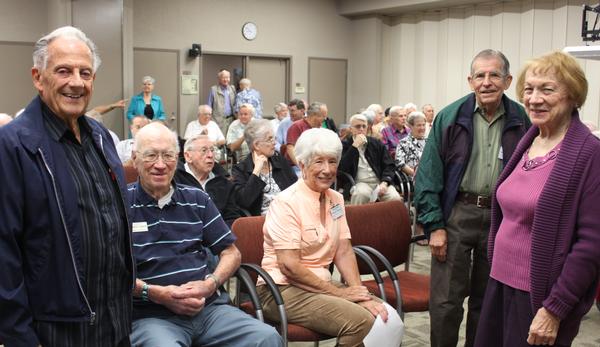
So I’d been thinking, off and on, about the arguments that researcher Andrew Biggs has been making about retirement, in which, in various venues, he’s disputed the idea that there is a “retirement crisis,” or, at least, that it’s as bad as other experts say it is. (Turns out, I had written a blog post with this very title some two years ago.) I’d been meaning to dig up the various articles in which he makes his case and really work through them because it would be a very useful exercise for thinking through the associated issues; for those interested (and with time on their hands) here are a couple: one from 2014, and one from earlier in 2017.
Biggs’ argument, as presented in these and other articles, is basically this:
- Retirees are, in general, financially better off than prior studies have suggested. For one thing, the standard yardstick had been to assess how much income they had, in a very narrow sense of monthly checks flowing into the home: paychecks, Social Security checks, and traditional pension checks. It excluded other monies available to retirees that don’t fall into the definition of “income” — for instance, spending down of assets — and thus gave a misleading picture. What’s more, although large numbers of workers report no savings, this figure is likewise misleading — it excludes retirement provision via pension benefits (e.g., public sector employees), and fails to acknowledge that the poorest workers don’t need to supplement Social Security anyway.
- The availability of employer-sponsored Defined Benefit pensions may be decreasing, but the total assets dedicated to retirement, both DB and DC, is growing year after year, as is the total contribution to retirement savings, when employer + employee DB + DC contributions are considered all together. Which means that, given that a minority of Americans truly benefitted from DB plans in the first place (considering numbers of employers who offered them, vesting requirements, the loss in value when job-hopping), Americans as a whole are now better off.
So, yay!, no worries! Well, except that this doesn’t really give us the full story.
In the first place, employer defined benefit plans are not fully-funded, so that the amount of money employers contribute doesn’t necessarily track to the amount of future benefit employees will receive. Public pensions are generally acknowledged to be heavily underfunded. Private pensions, too, are generally not fully-funded, though this is, in part, a matter of definition. (Quick link: Mercer in July reported that the S&P 500 is, collectively, 83% funded, based on US GAAP accounting rules, which involve determining liabilities using corporate bond rates and projecting pay increase to retirement or termination.) A metric showing that total contributions are increasing, doesn’t necessarily prove that total retirement income will be increasing, if part of this increase is just due to funded plans replacing partially pay-as-you-go plans.
What’s more, it is generally acknowledged that it costs more to provide a given level of benefit on a DC basis than a DB basis, for multiple reasons. DC plan participants face higher administrative/investment expenses than DB plans (though this is decreasing as an issue now that employers are paying more attention to providing low-fee options), and they’re less likely to invest in assets appropriate for their age/time to retirement (though, again, the development of target-date funds has improved this situation). In addition, large pension funds have access to hedge funds and other high-return investments that ordinary 401(k) investors don’t have (though, to be fair, many employers, especially those with closed plans, are electing more conservative investments). Also, individually-purchased annuities are considerably more expensive than group annuities, both because of anti-selection issues (retirees in poor health are unlikely to buy an individual annuity, but are included in the group when an employer purchases annuities for everyone), and higher administrative/marketing costs. And, finally, absent annuities (which are rare in any case), DC-retirees don’t have longevity protection, so they make more “costly” spend-down decisions in order to “self-insure” during retirement to provide for the eventuality of living to an old age: they follow a “4% rule” or attempt to live on the interest, for instance, and end up with a pot of money for their estate if they die young — money that, in the case of a DB plan, would have been “spent” in providing for more generous benefits.
And, so far as I know (and admittedly I don’t have access to the scholarly literature), we can slice and dice statistics about average income, but don’t have a firm grasp on how that really plays out for retirees. Fun fact: Japan, with its aging population, doesn’t have DB pensions in the way that we think of them. Employees get paid out as lump sums — always have, with the exception of options to receive your pension benefit spread out over 10 years. The story I was told, or read somewhere, is that traditionally the expectation to be cared for by one’s children was strong enough that the lump sum just went into the pot of money for the family and might have gone into funding a home purchase for your kids or grandkids.
One thing we do know is that, even under the “old” DB regime, there were plenty of retirees who simply didn’t have traditional pensions. Sure, the vast majority of large employers provided them, as well as certain smaller employers, through multi-employer plans, but (from memory) that really amounted to only half of the U.S. private-sector workforce. Which means that it seems to me that it would be worthwhile to study the experiences of these individuals, presumably not through some sort of big statistical analysis project but through individual interviews with random Joes at the senior center. Did these workers — employees at smallish businesses or individual entrepreneurs — save through IRAs and even through deferred annuities or other investments and end up reasonably comfortable in retirement, or are they, on average, worse off, relative to their pre-retirement income, than those who had DB pensions from their employers? Second fun fact: annuities, and deferred annuities, are much more “normal” in various European countries than in the U.S., and it’s always seemed to me to be a mistake to just say, “well, Europeans are clearly wrong.”
In fact, for that matter, I have the impression that there’s research that supports the idea that, on average, retirees are not doing that badly relative to their pre-retirement income, but I don’t know what extent there’s data that shows whether this lines up reasonably well for individual retirees, vs. there being winners and losers — people who had reasonably middle-class incomes while employed dropping down significantly, and others who struggled while working finding that their income in retirement is halfway reasonable?
It also seems to me that there are really two stages of retirement. In one’s early retirement years, you’re generally still in reasonably good health. If you’ve got the income for it, you’ll want to travel and enjoy your hobbies, and you can manage your money yourself, at least to the same degree as while employed. If money is tight, you can supplement your retirement income with earned income, though perhaps at a part-time, less-demanding job, and you might actually be better off doing so, to stay active. In your later retirement years, your experience is significantly different. Forget going on cruises or playing golf — your children will be begging you to be giving the senior center a try instead of staying at home watching TV all day. Forget high-deductible health plans; you won’t realistically be able to keep track of what your various doctors are telling you to do or what your meds are for, let alone questioning the value of the tests or procedures they want to perform. You’ll spend much less on discretionary items, but more on medical expenses, or on those checks for the Humane Society solicitations that arrive in your mailbox daily. Which means that your financial needs and wants will be different in these stages as well, and I don’t think our retirement policy does a good job of sorting through that.
Of course, part of the problem is that when you move from “independent” to “dependent” retirement, varies from person to person, so it’s difficult to come up with retirement legislation that reflects this with hard age-cutoffs. And it matters for things such as any sort of Social Security, Medicare, or Medicaid (long-term care) reform, or provision of services to seniors, subsidized housing, even tax benefits for seniors (long-time readers will remember my opinion on “aging in place” and the incentives we have in favor of it — e.g., property tax freezes that seniors who move to alternate housing don’t benefit from — even if it contributes to social isolation).
All that being said, Biggs’ work is worth thinking about for the very fact that it goes against the grain and is counter to the conventional wisdom that WE’RE ALL GOING TO BE MIRED IN POVERTY WHEN WE REACH RETIREMENT AND SOCIETY IS GOING TO COLLAPSE FROM THE BURDEN OF SUPPORTING THE ELDERLY!
So to a certain extent my purpose in writing this up is a sort of wish list of what I’d like to understand more about, and what seems to be missing (again, unless it’s in the scholarly literature that I don’t have access to) in existing research — though, at the same time, I don’t write as much about retirement topics as I’d like exactly for the reason that it’s a lot easier to comment on what’s in the news than what’s buried in data sources I don’t have access to, or the time to analyze. It’s a sort of new year’s resolution blog post — asking myself whether I can write something credible and professional without the access to data (or time) that professors and think tank-ers have.
But it also strikes me that what we think about retirement as a public policy issue is likely influenced by our own personal lives. We save determinedly (also known as doing well career-wise, and, let’s face it, I married well) and didn’t increase our living standards at the same pace as our income grew, but I know people in my generation, among my family, who simply haven’t saved for retirement and don’t have, based on comments they’ve made, anything in a 401(k), and certainly don’t have a Defined Benefit plan to look to. (A fellow parishioner made the comment not long ago that in his work as a financial planner, he very commonly encounters people who have spent years happily without saving, in order to keep up with the Joneses, until they are very close to retirement and then struggle to catch up.) My parents, on the other hand, benefitted greatly from having a solid pension from GM, which gives us peace of mind, knowing they can completely blow their IRAs and other savings and not be kicked to the curb, but at the same time, well, their healthy finances are about the only positive about the way their retirement is going, and my husband and I repeatedly vow that as we become empty nesters, we’ll have hobbies that we’ll continue to develop in retirement, and we’ll become comfortable with the senior center and other community groups so as to build our social networks when the “our friends are our kids’ friends’ parents” aspect of life fades away — an ambition which might be, well, a bit ambitious for introverts such as ourselves.
Image: http://www.navair.navy.mil/index.cfm?fuseaction=home.NAVAIRNewsStory&id=4801 Gotta love the military and their public domain images!
Previous Post

December 26, 2017
No blank slate: the problem with "tax reform"
Next Post
December 30, 2017 I'm sorry, but "aging in place" is still is a piece of *@!%
Browse Our Archives
Select a Category Actuarial/Retirement Issues Politics Uncategorized
Select a Month September 2026 August 2026 July 2026 June 2026 April 2026 March 2026 February 2026 January 2026 December 2025 November 2025 October 2025 July 2025 June 2025 May 2025 April 2025 March 2025 February 2025 January 2025 December 2024 November 2024 October 2024 September 2024 August 2024 July 2024 June 2024 May 2024 April 2024 March 2024 February 2024 December 2023 November 2023 October 2023 September 2023 August 2023 July 2023 December 2022 September 2022 August 2022 July 2022 June 2022 May 2022 February 2022 January 2022 December 2021 August 2021 June 2021 April 2021 February 2021 January 2021 December 2020 November 2020 October 2020 September 2020 August 2020 July 2020 June 2020 May 2020 April 2020 March 2020 February 2020 January 2020 December 2019 November 2019 October 2019 September 2019 August 2019 July 2019 June 2019 May 2019 April 2019 March 2019 February 2019 January 2019 December 2018 November 2018 October 2018 September 2018 August 2018 July 2018 June 2018 May 2018 April 2018 March 2018 February 2018 January 2018 December 2017 November 2017 October 2017 September 2017 August 2017 July 2017 June 2017 May 2017 April 2017 March 2017 February 2017 January 2017 December 2016 November 2016 October 2016 September 2016 August 2016 July 2016 June 2016 May 2016 April 2016 March 2016 February 2016 January 2016 December 2015 November 2015 October 2015 September 2015 August 2015 July 2015 June 2015 May 2015 April 2015 March 2015 February 2015 January 2015 December 2014 November 2014 October 2014 September 2014 August 2014 July 2014 June 2014 May 2014 April 2014 March 2014 February 2014 January 2014 December 2013 November 2013 October 2013 September 2013 August 2013 July 2013
Follow Us!
TAKE THE
Religious Wisdom Quiz
What part of the body does the Breastplate of Righteousness protect?
Select your answer to see how you score.
The head The back The stomach The heart
Related posts from Jane the Actuary
Please tell me your "social capital" retirement stories!

Can Teresa Ghilarducci rescue retirement?, part 2
Can Teresa Ghilarducci rescue retirement?
Some questions for agers-in-place -- and movers, too
TRENDING AT PATHEOS Catholic

The Iron Gates and the Lion of the...
Yesterday, I didn't finish my report about, well, yesterday. So I'll...

Dolly Parton’s Last Song Wins Dove Award with...
Bluegrass band The Grascals, speaking on the red carpet at the 57th...

The Image: On the Horror of Capitalism and...
The Image Then went the Pharisees, and took counsel how they might...

We are approaching the date of our new American national holiday: October...

Letters on Living the Faith by C.S. Lewis
Most of us met C.S. Lewis as a public intellectual. Mere Christianity....

When Halloween Unmasks Married Hearts
Written by Dr. David K. Ewen from Eternal Truth Bible College Behind...
view all Catholic blogs
Ad-Free & Subscriber Log-In Subscription Support
- About Us
- 2026 Calendar
- Videos
- Podcasts
- Library of World Religions
- Faith In Media Tracker
- Advertise With Us
- Write for Us
- Privacy Policy
- Terms of Service
- Do Not Sell My Data
- Contact Us
- Radiant Digital
- Manage Newsletter Subscriptions
- Unsubscribe From Notifications
- Sitemap
Copyright 2008-2026, Patheos. All rights reserved.
Subscription Support Ad-Free & Subscriber Log-In
Follow Patheos