
BuddhistCatholicContemplativeEvangelicalGeneral ChristianHinduJewishLatter-day SaintMuslimNew VisionsProgressive Christian
Beliefs
- Buddhist
- Catholic
- Contemplative
- Evangelical
- General Christian
- Hindu
- Jewish
- Latter-day Saint
- More Voices
- Muslim
- New Visions
- Pagan
- Progressive Christian
Topics
- Religion News
- Food and Religion
- Sports and Religion
- Religious Art
- Religious Music and Entertainment
- Religious Events
- History and Religion
- Style and Religion
- Politics and Religion
- Women in Religion
- Recreation Outdoors and Religion
- Business Finance and Religion
- Careers Workplace and Religion
- Education and Religion
- Family Parenting and Religion
- Health Fitness and Religion
- Home and Religion
- Relationships and Religion
- Technology and Religion
- Travel and Religion
Columnists
- Buddhist Columnists
- Business Finance and Religion Columnists
- Careers Workplace and Religion Columnists
- Catholic Columnists
- Contemplative Columnists
- Education and Religion Columnists
- Evangelists Columnists
- Family Parenting and Religion Columnists
- General Christian Columnists
- Health Fitness and Religion Columnists
- Hindu Columnists
- History and Religion Columnists
- Home and Religion Columnists
- Jewish Columnists
- More Voices Columnists
- Latter Day Columnists
- Muslim Columnists
- New Visions Columnists
- Nonreligious Columnists
- Pagan Columnists
- Politics and Religion Columnists
- Progressive Columnists
- Recreation Outdoors and Religion Columnists
- Relationships and Religion Columnists
- Religion News Columnists
- Religious Art Columnists
- Religious Events Columnists
- Religious Music and Entertainment Columnists
- Sports and Religion Columnists
- Style and Religion Columnists
- Technology and Religion Columnists
- Travel and Religion Columnists
- Women in Religion Columnists
Resource Library
- 2026 Calendar
- Library of World Religions
- The 100 Most Holy Places on Earth
- Patheos Answers
- Podcasts
- Videos
- Faith Leaders Database
- Anglican Episcopalian
- Bahai
- Baptist
- Buddhism
- Christianity
- Confucianism
- Eastern Orthodoxy
- Hinduism
- Holiness and Pentecostal
- ISKCON
- Islam
- Judaism
- Lutheran
- Methodist
- The Church of Jesus Christ of Latter-day Saints
- New Age
- Paganism
- Presbytarian and Reformed
- Protestantism
- Religion Behind the Scenes
- Roman Catholic
- Scientology
- Shia Islam
- Sikhism
- Sufism
- Sunni Islam
- Taoism
- Zen
- See all religions
Research Tools
 Ad-Free & Subscriber Log-In Subscription Support
Ad-Free & Subscriber Log-In Subscription Support
Follow Patheos 

- Trending:
- Forgiveness
- |
- Marriage
- |
- Consciousness
- |
- Death Penalty
- |
- Election
- |
- Halloween

- Home
- Catholic
- Politics and Religion
- Grad student Chicken Littles — sort of right, sort of wrong
Grad student Chicken Littles — sort of right, sort of wrong
Last updated on: November 18, 2017 at 2:55 pm by Jane the Actuary
Grad student Chicken Littles — sort of right, sort of wrong 2017-11-18T14:55:44-06:00 Jane the Actuary
Patheos Explore the world's faith through different perspectives on religion and spirituality! Patheos has the views of the prevalent religions and spiritualities of the world.
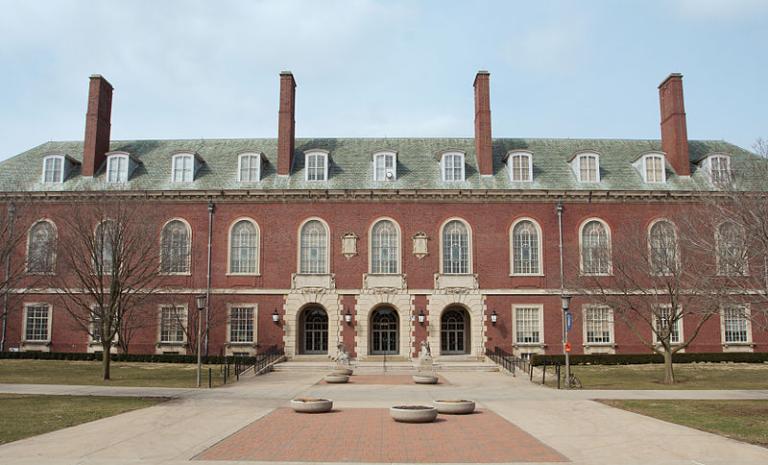
![https://commons.wikimedia.org/wiki/File%3AHarvard_Yard%2C_Harvard_University.JPG; By Daderot. (Own work) [GFDL (http://www.gnu.org/copyleft/fdl.html) or CC-BY-SA-3.0 (http://creativecommons.org/licenses/by-sa/3.0/)], via Wikimedia Commons](https://wp-media.patheos.com/blogs/sites/533/2017/08/800px-Harvard_Yard_Harvard_University.jpg)
So last week I wrote a little blogpost expressing my irritation at the Chicken Little reporting over a provision in the House tax bill, which would remove the exemption/”loophole” in which, at present, grad student-employees are exempt from paying taxes on the tuition waivers they receive that are conditioned on that employment. No, it will not destroy higher education, I wrote, since universities can either remove the work requirement from the tuition waiver, or can gross up the stipend accordingly.
After another such article in the New York Times on Thursday, I fired out a tweet griping about these claims that the change in the provision would “bankrupt graduate students.” And this time I got a number of replies.
Some of them just didn’t get what I was trying to say. “If universities no longer condition the tuition waivers on employment, they wouldn’t be able to get grad students to do the teaching and lab work upon which they depend.” Um, no. It seems preposterous to imagine that any more than a small number of grad students would turn down the stipend, so as long as that’s conditioned on employment — and that’s taxable anyway so it’s not a change — there won’t be any significant impact in that respect. In the sciences, the “employment” is part and parcel of their research towards their doctorate, so it simply wouldn’t have any effect. In the humanities, surely it’s still the norm that grad students at least have the hope of pursuing a teaching career, so that teaching assistantships are a key part of their training, and they wouldn’t be willing to forgo the teaching, presuming that it’s not too burdensome. My experience is now many years in the past, and was, after all, at only one university, but I would guess that it’s generally the case that the stipend is a “good deal” and, even without considering the tuition waiver element, is still more pay for fewer working hours, relative to any other job that a grad student might find that would accommodate their studies. Maybe there would be humanities grad students who didn’t need an income, for whatever reason (spousal support, independently wealthy) and wanted to focus exclusively on their studies without the distraction of teaching. But I don’t see how that would necessarily be a problem, as I suspect that, again even considering only the cost of the stipend, a university could likely hire a full-time instructor for the equivalent of two or three grad student stipends (assuming that a grad student TA works half- or one-thirds-time), and probably provide more value for their students.
But the replies in my twitter feed did point out three relevant complications.
In the first place, in the sciences, it is grants that pay for grad student stipends, and those same grants also pay for the tuition waivers. For those universities to now declare that the tuition waivers are unconditional would mean that there would be accounting/compliance issues, if grant money is paying universities for something that is now no longer connected up to the content of the grant. Which means that those grants would have to be reduced in value, and universities would lose real money. On the other hand, those grants could include both employment-conditional tuition waivers and a tax gross-up, but this can’t just happen overnight, and it would mean that the grants would be more costly. Given that (so far as I understand) grants generally originate from the government (e.g., the NSF, NIH, etc.), it seems perhaps correct from an accounting point of view but an unnecessary complication for the government to pay out money that just gets paid back in taxes. (Though, on the other hand, one could say that this is exactly the same as any government employee being obliged to pay taxes like other citizens.)
In the second place, in the humanities, and to the extent that grad students in the sciences “earn their keep” not by research but by teaching/TAing, it upends what is at the very least a convenient fiction that tuition waivers are compensation for grad student work. After all, if universities had to deem graduate student scholarships as entirely unconditional, they’d face criticism for their generosity in handing these out. Public universities in particular might come under criticism from state legislatures, depending on how closely they scrutinize their spending.
Perhaps this would factor into universities’ decisions about building out humanities graduate education, if they were unable to maintain the fiction that they earned their out-of-state tuition by teaching, and had to acknowledge that the objective of a graduate department is not to “pay for itself” but to make the professors happier and boost prestige. And don’t get me started on what I think of claims being made that all sorts of wonderful career opportunities await individuals with graduate degrees in the humanities. I think it’s done a lot of harm that young adults are now being told that a master’s degree is a near-requirement for all manner of employment in which it objectively isn’t. After all, there are a lot of ways to acquire the writing skills and the “advanced knowledge” and touted wisdom of these graduates that cost less money — among them, life experience, and experience on the job itself.
But the point is, if this loophole had never been there, the system would have developed differently, which means that, regardless of what’s “right” or “wrong” in terms of how universities and taxes should work, there are legitimate issues around a transition, particularly with the apparent last-minute nature of the whole bill — for the federal government to make changes to the tax code which would, near as I can tell, take effect almost immediately, is moronic.
And some twitter-repliers reasonably asked, “why is all of this being put into place at all?”
With respect to changes in how universities manage their endowments, I quite honestly haven’t dug into this enough to know whether the law removes loopholes, so that university endowments are treated the same as an endowment or foundation connected to a hospital, say, or an independent foundation, or whether universities are being singled out because they’ve pissed off too many GOP lawmakers.
With respect to this legislative change, I simply don’t know whether lawmakers wanted to be “purists” and remove all loopholes, and make everyone play by the same rules, whether in the end it gets them more money or not, or whether this change is a by-product of a separate change that is intended to garner more revenue, or if, again, this is an intentional “stick it to the Ivory Tower.” After all, the principle of the change is reasonable — bartering and payments in kind are taxable. If I offer up my actuarial skills to a university and ask, in exchange for teaching a course on pension accounting, to be able to take a class on public policy tuition-free, that’s clearly compensation.
And, yes, if I were a professional blogger, rather than writing in the snatches of time before I start work in the morning, or at lunch, or at the end of the day, I might have had access to the sorts of information that would answer that question.
But the Chicken Little approach that universities have taken really gets my dander up. It’s just so frickin’ unproductive, because you can’t talk anymore, if no provision of the tax code can ever be changed for anyone.
And, yes, I promised a more general post on the tax bill, and I still haven’t gotten around to it.
Image: https://commons.wikimedia.org/wiki/File%3AHarvard_Yard%2C_Harvard_University.JPG; By Daderot. (Own work) [GFDL (http://www.gnu.org/copyleft/fdl.html) or CC-BY-SA-3.0 (http://creativecommons.org/licenses/by-sa/3.0/)], via Wikimedia Commons
Previous Post

November 17, 2017
Update on college marketing
Next Post

November 20, 2017 Affirmative-Action Rhodes Scholarships?
Browse Our Archives
Select a Category Actuarial/Retirement Issues Politics Uncategorized
Select a Month September 2026 August 2026 July 2026 June 2026 April 2026 March 2026 February 2026 January 2026 December 2025 November 2025 October 2025 July 2025 June 2025 May 2025 April 2025 March 2025 February 2025 January 2025 December 2024 November 2024 October 2024 September 2024 August 2024 July 2024 June 2024 May 2024 April 2024 March 2024 February 2024 December 2023 November 2023 October 2023 September 2023 August 2023 July 2023 December 2022 September 2022 August 2022 July 2022 June 2022 May 2022 February 2022 January 2022 December 2021 August 2021 June 2021 April 2021 February 2021 January 2021 December 2020 November 2020 October 2020 September 2020 August 2020 July 2020 June 2020 May 2020 April 2020 March 2020 February 2020 January 2020 December 2019 November 2019 October 2019 September 2019 August 2019 July 2019 June 2019 May 2019 April 2019 March 2019 February 2019 January 2019 December 2018 November 2018 October 2018 September 2018 August 2018 July 2018 June 2018 May 2018 April 2018 March 2018 February 2018 January 2018 December 2017 November 2017 October 2017 September 2017 August 2017 July 2017 June 2017 May 2017 April 2017 March 2017 February 2017 January 2017 December 2016 November 2016 October 2016 September 2016 August 2016 July 2016 June 2016 May 2016 April 2016 March 2016 February 2016 January 2016 December 2015 November 2015 October 2015 September 2015 August 2015 July 2015 June 2015 May 2015 April 2015 March 2015 February 2015 January 2015 December 2014 November 2014 October 2014 September 2014 August 2014 July 2014 June 2014 May 2014 April 2014 March 2014 February 2014 January 2014 December 2013 November 2013 October 2013 September 2013 August 2013 July 2013
Follow Us!
TAKE THE
Religious Wisdom Quiz
Who was the mother of Samuel?
Select your answer to see how you score.
Deborah Hannah Rebekah Ruth
Related posts from Jane the Actuary

Oh, heck, let's criticize "free college" in detail
The Great Guardianship/Financial Aid Scandal of 2019 (or...

How much is a grad student worth?

Let's not demonize private schools
TRENDING AT PATHEOS Catholic

The Image: On the Horror of Capitalism and...
The Image Then went the Pharisees, and took counsel how they might...

We are approaching the date of our new American national holiday: October...

Letters on Living the Faith by C.S. Lewis
Most of us met C.S. Lewis as a public intellectual. Mere Christianity....

When Halloween Unmasks Married Hearts
Written by Dr. David K. Ewen from Eternal Truth Bible College Behind...

Aristotle. He’s been called the father of logic, the father of the...

Methodist Central Hall and Westminster Abbey
Situated on the same square is Methodist Central Hall and Westminster Abbey. ...
view all Catholic blogs
Ad-Free & Subscriber Log-In Subscription Support
- About Us
- 2026 Calendar
- Videos
- Podcasts
- Library of World Religions
- Faith In Media Tracker
- Advertise With Us
- Write for Us
- Privacy Policy
- Terms of Service
- Do Not Sell My Data
- Contact Us
- Radiant Digital
- Manage Newsletter Subscriptions
- Unsubscribe From Notifications
- Sitemap
Copyright 2008-2026, Patheos. All rights reserved.
Subscription Support Ad-Free & Subscriber Log-In
Follow Patheos