
BuddhistCatholicContemplativeEvangelicalGeneral ChristianHinduJewishLatter-day SaintMuslimNew VisionsProgressive Christian
Beliefs
- Buddhist
- Catholic
- Contemplative
- Evangelical
- General Christian
- Hindu
- Jewish
- Latter-day Saint
- More Voices
- Muslim
- New Visions
- Pagan
- Progressive Christian
Topics
- Religion News
- Food and Religion
- Sports and Religion
- Religious Art
- Religious Music and Entertainment
- Religious Events
- History and Religion
- Style and Religion
- Politics and Religion
- Women in Religion
- Recreation Outdoors and Religion
- Business Finance and Religion
- Careers Workplace and Religion
- Education and Religion
- Family Parenting and Religion
- Health Fitness and Religion
- Home and Religion
- Relationships and Religion
- Technology and Religion
- Travel and Religion
Columnists
- Buddhist Columnists
- Business Finance and Religion Columnists
- Careers Workplace and Religion Columnists
- Catholic Columnists
- Contemplative Columnists
- Education and Religion Columnists
- Evangelists Columnists
- Family Parenting and Religion Columnists
- General Christian Columnists
- Health Fitness and Religion Columnists
- Hindu Columnists
- History and Religion Columnists
- Home and Religion Columnists
- Jewish Columnists
- More Voices Columnists
- Latter Day Columnists
- Muslim Columnists
- New Visions Columnists
- Nonreligious Columnists
- Pagan Columnists
- Politics and Religion Columnists
- Progressive Columnists
- Recreation Outdoors and Religion Columnists
- Relationships and Religion Columnists
- Religion News Columnists
- Religious Art Columnists
- Religious Events Columnists
- Religious Music and Entertainment Columnists
- Sports and Religion Columnists
- Style and Religion Columnists
- Technology and Religion Columnists
- Travel and Religion Columnists
- Women in Religion Columnists
Resource Library
- 2026 Calendar
- Library of World Religions
- The 100 Most Holy Places on Earth
- Patheos Answers
- Podcasts
- Videos
- Faith Leaders Database
- Anglican Episcopalian
- Bahai
- Baptist
- Buddhism
- Christianity
- Confucianism
- Eastern Orthodoxy
- Hinduism
- Holiness and Pentecostal
- ISKCON
- Islam
- Judaism
- Lutheran
- Methodist
- The Church of Jesus Christ of Latter-day Saints
- New Age
- Paganism
- Presbytarian and Reformed
- Protestantism
- Religion Behind the Scenes
- Roman Catholic
- Scientology
- Shia Islam
- Sikhism
- Sufism
- Sunni Islam
- Taoism
- Zen
- See all religions
Research Tools
 Ad-Free & Subscriber Log-In Subscription Support
Ad-Free & Subscriber Log-In Subscription Support
Follow Patheos 

- Trending:
- Forgiveness
- |
- Marriage
- |
- Consciousness
- |
- Death Penalty
- |
- Election
- |
- Halloween

- Home
- Catholic
- Politics and Religion
- Who is a “Catholic”? – About Schismatic Churches
Who is a “Catholic”? – About Schismatic Churches
Last updated on: June 19, 2017 at 4:35 pm by Jane the Actuary
Who is a “Catholic”? – About Schismatic Churches 2017-06-19T16:35:15-06:00 Jane the Actuary
Patheos Explore the world's faith through different perspectives on religion and spirituality! Patheos has the views of the prevalent religions and spiritualities of the world.
In the twitter feed today: “Critical Mass; An Austin church remakes Catholicism without the Pope, celibate priests, or most of the other rules.”
The article is about what you’d expect: an “Independent Catholic” church founded by a breakaway priest, Jayme Mathias, who has now married (another man), and focuses his ministry on Mexican immigrant Catholics. His church has grown to 215 congregants in 5 years, with 3 Spanish masses and one English one. In addition to intentionally welcoming gays, divorced/remarrieds, and the like, he tells his parishioners that, in the manner of a rolling stop at a stop sign, what matters isn’t following the “letter of the law” but “the spirit of the law” so long as no one gets hurt and your heart is in the right place.
As far as theology goes:
A significant difference between the Roman Catholic Church and the ACCUS [American Catholic Church in the United States] is their approach to the sacraments, including the Eucharist, which at Holy Family is open to all. In the Roman Catholic Church, the sacrament of confirmation is typically preceded by at least nine months of preparatory classes. At Holy Family, people can be confirmed after attending a single class. The practice allows parents to have very young children confirmed, as is typical in some parts of Mexico, and it reflects the ACCUS’s stance that the church should not place obstacles between believers and the sacraments. “The ancient church baptized, confirmed, and gave the Eucharist to people all in the same day, even to infants,” Mathias says. “Should we withhold the sacraments from certain people for ageist reasons, because they’re not yet eight years old? For sexist reasons, because we don’t ordain women? We just decided we were going to make the sacraments available to all. If you feel called in your heart to receive the Eucharist, then I am not standing between you and your God.”
The differences extend to the sacrament of holy orders, or ordination, which in the Roman Catholic Church requires an education that amounts to a college degree plus five to seven years of seminary education. Father Roy Gomez, a 71-year-old former supervisor for several Short Stop restaurants, was ordained as an ACCUS priest in 2015. He had nothing more than a high school education but had been heavily involved in ministry as a layperson at Cristo Rey and helped Mathias lead English classes for immigrants.
“You can be educated and not serve the people, but I’d rather be dumb and be able to serve,” Gomez quips. “You have to know the people, gain their trust, and show them that you care about them, and I think that if you’re able to do that, then you’re fit to be a priest.”
Now, the twitter replies pretty consistently reacted by pointing out that these people would be right at home in an Episcopalian Church. Same line up of sacraments, same order of mass (or, at least so far as I understand, the ability to reproduce the Catholic mass, or go with something more traditionally Protestant). Same blandness of theology, same openness to gay marriage and pretty much anything else. So why wouldn’t Mathias have, in fact, joined up with the Episcopalians? Take a look at the next two paragraphs:
Austin diocese spokesperson Christian González says that in the early days of Holy Family, people called the diocese frequently to ask if the sacraments they’d received there would be recognized if they returned to the Roman church. Those calls prompted priests across the diocese to read a statement from the pulpit a few years ago stating that Roman Catholics should refrain from receiving the sacraments from Mathias.
The statement had an unintended effect on some in the pews. Lifelong Catholic Mario Cruz, a 76-year-old retired school counselor, says it reminded him of growing up during segregation. “They said, ‘He is not one of us,’ ” Cruz remembers. “They said, ‘He’s not a priest, so don’t go to that church.’ And when they say don’t go, that tells me, go. Because who are they to tell me what I should do, and to exclude people?” Cruz and his wife went looking for Holy Family one Sunday and started attending regularly.
So why keep the label of “Catholic”, even if “independent Catholic” rather than Roman Catholic?
Here are my three answers:
First, it’s a brand name. From the description, it matters a great deal to their “recruitment” efforts, that they keep the label “Catholic.” It’s not about offering worship services that minister in a particular manner, it’s about offering worship services that are branded as “Catholic” so that people looking for something “Catholic” will attend and perceive of as substantially the same, offering the same spiritual graces due to that brand name, as what they’re used to.
Second, the breakaway Catholics still claim ownership of that identity, of Catholicness. To be sure, they’re not doing something wholly invalid – the Roman Catholic church doesn’t hold a trademark on the word “Catholic” and there are other religious communities that have used this label, such as the Polish National Catholic Church, and so far as I know, the Roman Catholic Church does not dispute the legitimacy of the PNCC or other groups using the label “Catholic.” But it’s my impression that the claim of “Catholic” also has an element of “you guys forced me to leave your church because your theology is wrong/you mistreat people/whatever, so I get to keep the name because I’m right and my beliefs are the truest form of what Jesus taught.” More specifically, the identity of these breakaways seems to be that of “breakaway Catholic”, and “Episcopalian” just wouldn’t do. I suspect that the Protestant willingness to just move among denominations, claiming the overall label of “Christian” but attending a Lutheran, Episcopalian, or Methodist church depending on circumstances, just isn’t a part of the worldview of these people. In a way, it’s unfortunate that they don’t seem to be able to claim that more general label of “Christian” as their identity (rather than their religion), and, at the same time, I would guess they assign to Protestants a specific identity as well, saying, “Episcopalians are rich white people, so I am not, and could not be one.”
And third, at least in the case of this priest and this church, he seems no more willing to accept an Episcopalian hierarchy than a Catholic one. Ordaining someone as priest without any theological training? Confirmation after one class? Mathias doesn’t want to be told what to do. This church, like many nondenominational Protestant churches is, despite the ACCUS label, missing the overall structure that would preserve its continuity into the next generation, or allow adherents to find a similar “church home” if they move out of town. And — near as I can tell — the church does not appear to offer any religious education classes for children, either. Is this presumed to happen in the home (which relies on the parents being informed enough themselves)? Is it presumed that all one really needs to know is what one experiences through mass attendance and homilies, because, in fact, all that matters are weekly exhortations to do good?
Now, one might say that it’s their own business, and no one else’s, if they claim the label “Catholic” but it bugs me.
In the first place, they water down what it means to be Catholic — it is more than just Apostolic Succession and saying the mass in a way that more or less follows the pattern of the Roman Catholic Church and believing in the Eucharist as, if not the True Body and Blood of Christ, then at least Really Really Important. (And on their website, they emphasize the importance of the Apostolic Succession – that is, their bishop having been consecrated by someone who, in turn, was consecrated by a “real bishop” and so on. This is, they say, the defining item of what makes a Church Catholic. Guess what? Episcopalians have this same chain.) To me the statement that what’s important is not coming to a stop at a stop sign but having your “heart in the right place” is decidedly not Catholicism — that is, a real difference between Catholicism and Protestantism is that the former says, “it’s all too easy to rationalize sinful actions, so it’s not enough to just do what feels like the right thing; you need to listen to others about what’s right and wrong.” To claim to be Catholic in this manner seems to be a misuse of the label, and suggests that the intention is to assure prospective parishioners rather than, well, to be Catholic.
And at the same time, in broadening the definition of “Catholic” they appear to discard and even de-legitimize Protestants. Their lengthy explanation of why they call themselves Catholic is written as if Protestants simply don’t exist! It also seems very contradictory to insist that they discard all of the elements of the Roman Catholic Church that they disagree with, whether it be sexual morality, or who may be ordained, or even the translation of the Roman missal, and that they proclaim that they put love of God and love of neighbor as their foremost concerns — but they won’t join with any Protestant group with whom they would be a good fit, and instead insist on a Catholic identity due to what they would surely, if observing from the outside, call the “legalism” of defining themselves by Apostolic Succession and the word “Catholic.”
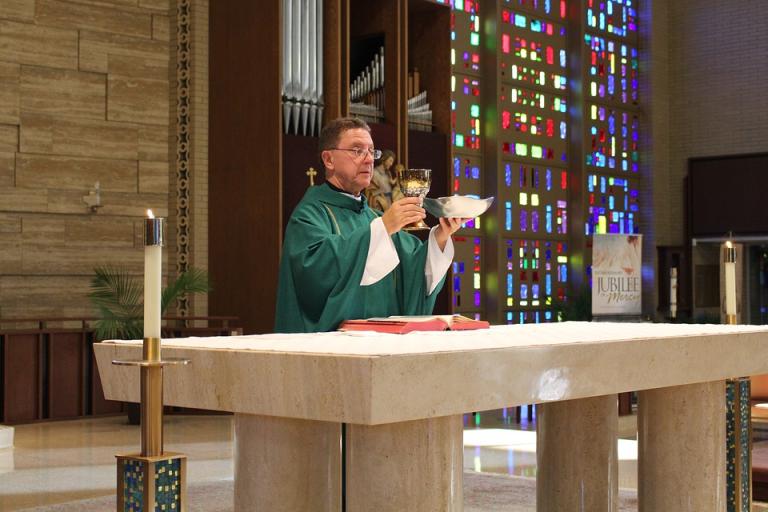
image from pixabay: https://pixabay.com/en/priest-catholic-mass-host-chalice-1588892/; public domain
Previous Post
June 16, 2017
About the age of majority, anyway
Next Post

June 18, 2017 So in 14 days, my husband will be the pop-buyer of the family
Browse Our Archives
Select a Category Actuarial/Retirement Issues Politics Uncategorized
Select a Month September 2026 August 2026 July 2026 June 2026 April 2026 March 2026 February 2026 January 2026 December 2025 November 2025 October 2025 July 2025 June 2025 May 2025 April 2025 March 2025 February 2025 January 2025 December 2024 November 2024 October 2024 September 2024 August 2024 July 2024 June 2024 May 2024 April 2024 March 2024 February 2024 December 2023 November 2023 October 2023 September 2023 August 2023 July 2023 December 2022 September 2022 August 2022 July 2022 June 2022 May 2022 February 2022 January 2022 December 2021 August 2021 June 2021 April 2021 February 2021 January 2021 December 2020 November 2020 October 2020 September 2020 August 2020 July 2020 June 2020 May 2020 April 2020 March 2020 February 2020 January 2020 December 2019 November 2019 October 2019 September 2019 August 2019 July 2019 June 2019 May 2019 April 2019 March 2019 February 2019 January 2019 December 2018 November 2018 October 2018 September 2018 August 2018 July 2018 June 2018 May 2018 April 2018 March 2018 February 2018 January 2018 December 2017 November 2017 October 2017 September 2017 August 2017 July 2017 June 2017 May 2017 April 2017 March 2017 February 2017 January 2017 December 2016 November 2016 October 2016 September 2016 August 2016 July 2016 June 2016 May 2016 April 2016 March 2016 February 2016 January 2016 December 2015 November 2015 October 2015 September 2015 August 2015 July 2015 June 2015 May 2015 April 2015 March 2015 February 2015 January 2015 December 2014 November 2014 October 2014 September 2014 August 2014 July 2014 June 2014 May 2014 April 2014 March 2014 February 2014 January 2014 December 2013 November 2013 October 2013 September 2013 August 2013 July 2013
Follow Us!
TAKE THE
Religious Wisdom Quiz
What major prophet often used object lessons, such as a ruined loincloth?
Select your answer to see how you score.
Habakkuk Malachi Isaiah Jeremiah
Related posts from Jane the Actuary
Portland Parish Protests POC Priest
Happy Elizabeth Ann Seton Day! (with discussion questions)
Pope, Bishops to Catholics: You're on your own
TRENDING AT PATHEOS Catholic

When Halloween Unmasks Married Hearts
Written by Dr. David K. Ewen from Eternal Truth Bible College Behind...

Aristotle. He’s been called the father of logic, the father of the...

Methodist Central Hall and Westminster Abbey
Situated on the same square is Methodist Central Hall and Westminster Abbey. ...

57th Dove Awards Honor Dolly Parton, Crown New...
On gospel music’s biggest night, the 57th annual GMA Dove Awards honored...

The First Eucharistic Controversy: Christ’s Real Presence
For Catholics, the Eucharist is the source and summit of the Christian...

What a Stop Sign Can Teach Us About...
How to Make a Decision When You Can't Hear God Main point:...
view all Catholic blogs
Ad-Free & Subscriber Log-In Subscription Support
- About Us
- 2026 Calendar
- Videos
- Podcasts
- Library of World Religions
- Faith In Media Tracker
- Advertise With Us
- Write for Us
- Privacy Policy
- Terms of Service
- Do Not Sell My Data
- Contact Us
- Radiant Digital
- Manage Newsletter Subscriptions
- Unsubscribe From Notifications
- Sitemap
Copyright 2008-2026, Patheos. All rights reserved.
Subscription Support Ad-Free & Subscriber Log-In
Follow Patheos