
BuddhistCatholicContemplativeEvangelicalGeneral ChristianHinduJewishLatter-day SaintMuslimNew VisionsProgressive Christian
Beliefs
- Buddhist
- Catholic
- Contemplative
- Evangelical
- General Christian
- Hindu
- Jewish
- Latter-day Saint
- More Voices
- Muslim
- New Visions
- Pagan
- Progressive Christian
Topics
- Religion News
- Food and Religion
- Sports and Religion
- Religious Art
- Religious Music and Entertainment
- Religious Events
- History and Religion
- Style and Religion
- Politics and Religion
- Women in Religion
- Recreation Outdoors and Religion
- Business Finance and Religion
- Careers Workplace and Religion
- Education and Religion
- Family Parenting and Religion
- Health Fitness and Religion
- Home and Religion
- Relationships and Religion
- Technology and Religion
- Travel and Religion
Columnists
- Buddhist Columnists
- Business Finance and Religion Columnists
- Careers Workplace and Religion Columnists
- Catholic Columnists
- Contemplative Columnists
- Education and Religion Columnists
- Evangelists Columnists
- Family Parenting and Religion Columnists
- General Christian Columnists
- Health Fitness and Religion Columnists
- Hindu Columnists
- History and Religion Columnists
- Home and Religion Columnists
- Jewish Columnists
- More Voices Columnists
- Latter Day Columnists
- Muslim Columnists
- New Visions Columnists
- Nonreligious Columnists
- Pagan Columnists
- Politics and Religion Columnists
- Progressive Columnists
- Recreation Outdoors and Religion Columnists
- Relationships and Religion Columnists
- Religion News Columnists
- Religious Art Columnists
- Religious Events Columnists
- Religious Music and Entertainment Columnists
- Sports and Religion Columnists
- Style and Religion Columnists
- Technology and Religion Columnists
- Travel and Religion Columnists
- Women in Religion Columnists
Resource Library
- 2026 Calendar
- Library of World Religions
- The 100 Most Holy Places on Earth
- Patheos Answers
- Podcasts
- Videos
- Faith Leaders Database
- Anglican Episcopalian
- Bahai
- Baptist
- Buddhism
- Christianity
- Confucianism
- Eastern Orthodoxy
- Hinduism
- Holiness and Pentecostal
- ISKCON
- Islam
- Judaism
- Lutheran
- Methodist
- The Church of Jesus Christ of Latter-day Saints
- New Age
- Paganism
- Presbytarian and Reformed
- Protestantism
- Religion Behind the Scenes
- Roman Catholic
- Scientology
- Shia Islam
- Sikhism
- Sufism
- Sunni Islam
- Taoism
- Zen
- See all religions
Research Tools
 Ad-Free & Subscriber Log-In Subscription Support
Ad-Free & Subscriber Log-In Subscription Support
Follow Patheos 

- Trending:
- Forgiveness
- |
- Marriage
- |
- Consciousness
- |
- Death Penalty
- |
- Election
- |
- Halloween

- Home
- Catholic
- Politics and Religion
- ERISA-exempt church plans and the “little guy”
ERISA-exempt church plans and the “little guy”
Last updated on: March 29, 2017 at 9:13 pm by Jane the Actuary
ERISA-exempt church plans and the “little guy” 2017-03-29T21:13:09-06:00 Jane the Actuary
Patheos Explore the world's faith through different perspectives on religion and spirituality! Patheos has the views of the prevalent religions and spiritualities of the world.
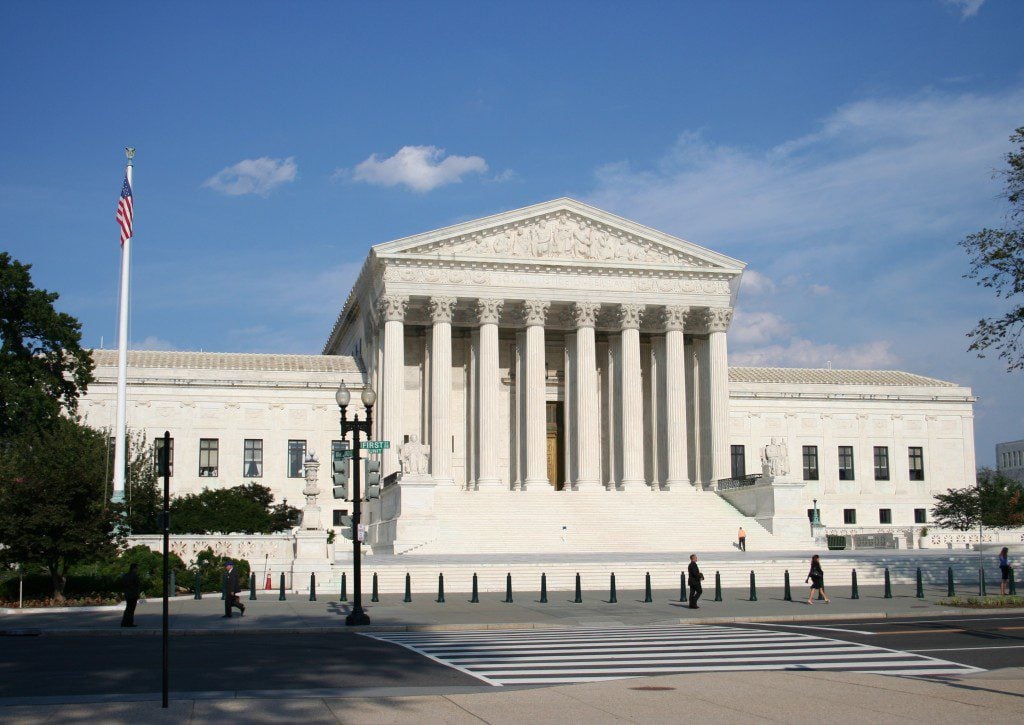
How should the Supreme Court make its decisions? Should they focus on helping the “little guy” seek justice against Big Whatevers? Or should they, y’know, aim to interpret the law?
Pension plans made their way back into the news — well, the business section, anyway, this week with Supreme Court arguments over what constitutes a “church plan”; these are pension plans which are not obliged to follow ERISA and subsequent (e.g., PPA) regulations on funding, government reporting, disclosures to employees, PBGC premiums, etc. The most obvious type of church plan would be a pension plan established by, well, a church directly, say, the pension plan offered by an archdiocese for its employees (e.g., the parish staff, schoolteachers, etc.). And it stands to reason that, in the same way as the state can’t interfere with hiring and firing decisions at a church, they exempted church plans from these regulations as well.
Now, as it happens, not just churches but also organizations which are “church-affiliated” are able to apply for classification as a church plan, and, since significant numbers of American hospitals are church-affiliated, there are significant numbers of “church plans” among those hospitals.
As it happens, I had experience with those church plans back when I was a junior actuary; as I recall, they tended to make pension contributions based on one iteration of the federal funding requirements, but did not attempt to fund to the more burdensome level of more recent updates to federal pension funding legislation.
But after a longstanding consensus that ERISA and its follow-up amendments, which specifically but confusingly addressed the question of “affiliated” organizations’ eligibility, permitted hospitals to classify their pension plans as church plans, there have been a number of lawsuits filed, starting in 2013, demanding that this exemption be removed, and those plans be required to fund based on the usual statutory requirements, and participate in the PBGC fund. See this background article in The Atlantic, from last December, and this list of cases from the Pension Rights Center, which has been supporting these lawsuits.
Earlier this month, the Chicago Tribune reported that Holy Cross Hospital settled its case, and agreed to pay out $4 million to pension plan participants to top up their benefits; this was that usual sort of “continuing to fight in court isn’t cost-effective” decision.
And this past week another case, that of Advocate Health Care, a Lutheran doctors and hospital corporation, has been before the Supreme Court, as described, again, in the Chicago Tribune, and, with more attention paid to the oral arguments, by the SCOTUS blog. Their conclusion:
In the end, then, it seems quite likely that the affiliated organizations will retain their exemptions. The justices might not like the way the amendment is written, but they do not seem likely to reject the IRS’s reading of it.
Now, if you read the SCOTUS blog, a lot of it will seem very arcane, with each of the “factions” pressing the lawyers on the specifics of definitions, potential penalties, and so forth. There are no tales of woe of poor pensioners whose retirement was ruined because the money they thought they’d get, wasn’t available to them. Sotomayor and Kagan were not pontificating about the impacts on retirees but questioning about the meaning of a given paragraph in the law.
And that’s as it should be. It might be obvious, but this seems to me to be a good example of the fact that the Supreme Court is fundamentally not charged with “helping the little guy” but with interpreting the law as written. And if Congress wished now, or at any time in the past, to limit the applicability of church plans, they could now, or could have in the past, passed a law to that effect.
(You might object that Congress can’t be relied on due to gridlock, but I’ll tell you that, if there’s one thing that Congress seems to be able to do even in the midst of the gridlockiest of situations, it’s passing pension legislation; the combination of increasing PBGC premiums and loosening funding requirements, or, more specifically, granting waivers when current economic conditions increase funding requirements too sharply, seems to be a particular favorite right now. Even in the nuttiest of situations, Congress could add a bipartisan amendment restricting the access to church plans to entities that are explicitly churchy, or employ less than X people or have revenues of less than $Y million dollars, if they had wished to.)
Of course, the case of church plans in actual churches is something that could increasingly become an issue, though I’m now removed from this professionally; I could easily imagine that, back at the time that ERISA was first passed in 1974, churches were thought of as, similar to governments, as institutions which would be around forever, and had no real risk of bankruptcy as a private company would, so that there was no real harm in permitting churches to offer their pensions on a pay-as-you-go basis if they wished. Now, of course, we know that it is entirely possible for churches to shrink in size, and to risk legacy costs in the same way as school districts are dealing with. But that’s a whole ‘nother story.
Image: the Supreme Court building, from Wikipedia.
Previous Post

March 28, 2017
About the "fearless girl"
Next Post

April 3, 2017 My latest family history (non-)discoveries
Browse Our Archives
Select a Category Actuarial/Retirement Issues Politics Uncategorized
Select a Month September 2026 August 2026 July 2026 June 2026 April 2026 March 2026 February 2026 January 2026 December 2025 November 2025 October 2025 July 2025 June 2025 May 2025 April 2025 March 2025 February 2025 January 2025 December 2024 November 2024 October 2024 September 2024 August 2024 July 2024 June 2024 May 2024 April 2024 March 2024 February 2024 December 2023 November 2023 October 2023 September 2023 August 2023 July 2023 December 2022 September 2022 August 2022 July 2022 June 2022 May 2022 February 2022 January 2022 December 2021 August 2021 June 2021 April 2021 February 2021 January 2021 December 2020 November 2020 October 2020 September 2020 August 2020 July 2020 June 2020 May 2020 April 2020 March 2020 February 2020 January 2020 December 2019 November 2019 October 2019 September 2019 August 2019 July 2019 June 2019 May 2019 April 2019 March 2019 February 2019 January 2019 December 2018 November 2018 October 2018 September 2018 August 2018 July 2018 June 2018 May 2018 April 2018 March 2018 February 2018 January 2018 December 2017 November 2017 October 2017 September 2017 August 2017 July 2017 June 2017 May 2017 April 2017 March 2017 February 2017 January 2017 December 2016 November 2016 October 2016 September 2016 August 2016 July 2016 June 2016 May 2016 April 2016 March 2016 February 2016 January 2016 December 2015 November 2015 October 2015 September 2015 August 2015 July 2015 June 2015 May 2015 April 2015 March 2015 February 2015 January 2015 December 2014 November 2014 October 2014 September 2014 August 2014 July 2014 June 2014 May 2014 April 2014 March 2014 February 2014 January 2014 December 2013 November 2013 October 2013 September 2013 August 2013 July 2013
Follow Us!
TAKE THE
Religious Wisdom Quiz
Who prophesied a virgin would bear a son called Immanuel?
Select your answer to see how you score.
Isaiah Ezekiel Jeremiah Micah
Related posts from Jane the Actuary

Trust an Actuary: The Social Security Fairness Act...

"Jane the Actuary," the actuary - an update...
An economic relief/stimulus bill rant

An independent commission to discuss retirement security? Yes,...
TRENDING AT PATHEOS Catholic

Letters on Living the Faith by C.S. Lewis
Most of us met C.S. Lewis as a public intellectual. Mere Christianity....

When Halloween Unmasks Married Hearts
Written by Dr. David K. Ewen from Eternal Truth Bible College Behind...

Aristotle. He’s been called the father of logic, the father of the...

Methodist Central Hall and Westminster Abbey
Situated on the same square is Methodist Central Hall and Westminster Abbey. ...

57th Dove Awards Honor Dolly Parton, Crown New...
On gospel music’s biggest night, the 57th annual GMA Dove Awards honored...

The First Eucharistic Controversy: Christ’s Real Presence
For Catholics, the Eucharist is the source and summit of the Christian...
view all Catholic blogs
Ad-Free & Subscriber Log-In Subscription Support
- About Us
- 2026 Calendar
- Videos
- Podcasts
- Library of World Religions
- Faith In Media Tracker
- Advertise With Us
- Write for Us
- Privacy Policy
- Terms of Service
- Do Not Sell My Data
- Contact Us
- Radiant Digital
- Manage Newsletter Subscriptions
- Unsubscribe From Notifications
- Sitemap
Copyright 2008-2026, Patheos. All rights reserved.
Subscription Support Ad-Free & Subscriber Log-In
Follow Patheos