
BuddhistCatholicContemplativeEvangelicalGeneral ChristianHinduJewishLatter-day SaintMuslimNew VisionsProgressive Christian
Beliefs
- Buddhist
- Catholic
- Contemplative
- Evangelical
- General Christian
- Hindu
- Jewish
- Latter-day Saint
- More Voices
- Muslim
- New Visions
- Pagan
- Progressive Christian
Topics
- Religion News
- Food and Religion
- Sports and Religion
- Religious Art
- Religious Music and Entertainment
- Religious Events
- History and Religion
- Style and Religion
- Politics and Religion
- Women in Religion
- Recreation Outdoors and Religion
- Business Finance and Religion
- Careers Workplace and Religion
- Education and Religion
- Family Parenting and Religion
- Health Fitness and Religion
- Home and Religion
- Relationships and Religion
- Technology and Religion
- Travel and Religion
Columnists
- Buddhist Columnists
- Business Finance and Religion Columnists
- Careers Workplace and Religion Columnists
- Catholic Columnists
- Contemplative Columnists
- Education and Religion Columnists
- Evangelists Columnists
- Family Parenting and Religion Columnists
- General Christian Columnists
- Health Fitness and Religion Columnists
- Hindu Columnists
- History and Religion Columnists
- Home and Religion Columnists
- Jewish Columnists
- More Voices Columnists
- Latter Day Columnists
- Muslim Columnists
- New Visions Columnists
- Nonreligious Columnists
- Pagan Columnists
- Politics and Religion Columnists
- Progressive Columnists
- Recreation Outdoors and Religion Columnists
- Relationships and Religion Columnists
- Religion News Columnists
- Religious Art Columnists
- Religious Events Columnists
- Religious Music and Entertainment Columnists
- Sports and Religion Columnists
- Style and Religion Columnists
- Technology and Religion Columnists
- Travel and Religion Columnists
- Women in Religion Columnists
Resource Library
- 2026 Calendar
- Library of World Religions
- The 100 Most Holy Places on Earth
- Patheos Answers
- Podcasts
- Videos
- Faith Leaders Database
- Anglican Episcopalian
- Bahai
- Baptist
- Buddhism
- Christianity
- Confucianism
- Eastern Orthodoxy
- Hinduism
- Holiness and Pentecostal
- ISKCON
- Islam
- Judaism
- Lutheran
- Methodist
- The Church of Jesus Christ of Latter-day Saints
- New Age
- Paganism
- Presbytarian and Reformed
- Protestantism
- Religion Behind the Scenes
- Roman Catholic
- Scientology
- Shia Islam
- Sikhism
- Sufism
- Sunni Islam
- Taoism
- Zen
- See all religions
Research Tools
 Ad-Free & Subscriber Log-In Subscription Support
Ad-Free & Subscriber Log-In Subscription Support
Follow Patheos 

- Trending:
- Forgiveness
- |
- Marriage
- |
- Consciousness
- |
- Death Penalty
- |
- Election
- |
- Halloween

- Home
- Catholic
- Politics and Religion
- The “True Meanings” of Christmas
The “True Meanings” of Christmas
Last updated on: December 25, 2016 at 6:23 pm by Jane the Actuary
The “True Meanings” of Christmas 2016-12-25T18:23:24-06:00 Jane the Actuary
Patheos Explore the world's faith through different perspectives on religion and spirituality! Patheos has the views of the prevalent religions and spiritualities of the world.
Plural.
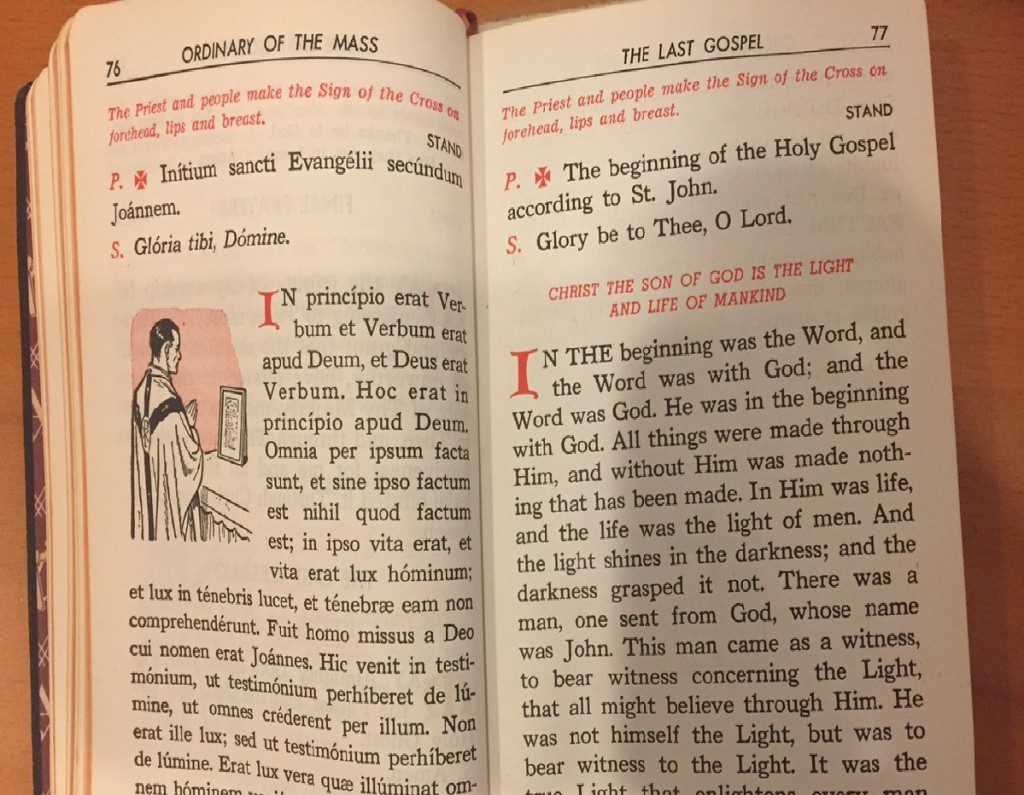
Some years ago, I attended Catholic mass on Christmas Day for the first time, and learned that the readings are not the standard nativity narrative you hear on Christmas Eve, but are instead the opening to John:
In the beginning was the Word,
and the Word was with God,
and the Word was God.
He was in the beginning with God.
All things came to be through him,
and without him nothing came to be.
What came to be through him was life,
and this life was the light of the human race;
the light shines in the darkness,
and the darkness has not overcome it.
The true light, which enlightens everyone, was coming into the world.
He was in the world,
and the world came to be through him,
but the world did not know him.
He came to what was his own,
but his own people did not accept him.But to those who did accept him
he gave power to become children of God,
to those who believe in his name,
who were born not by natural generation
nor by human choice nor by a man’s decision
but of God.
And the Word became flesh
and made his dwelling among us,
and we saw his glory,
the glory as of the Father’s only Son,
full of grace and truth.
This was, once upon a time, the “Last Gospel,” read every Sunday at the close of mass, prior to the Vatican II re-write. And the priest who preached on this talked about what a profound concept the Incarnation is — that the distance between God and man is inconceivably vast (e.g., human vs. a bug), yet bridged with Christ.
This is no mere matter of God giving humanity a “gift” — it’s far deeper than that. It’s not a matter of God looking down on humanity and thinking, “I think I’ll give them a present.” And to say, “we give each other gifts because God gave us the gift of Jesus” — if you think about it, it seems more a rationalization of the gift-giving tradition than a real explanation of the origin of the tradition.
The “real meaning” of Christmas? I dunno. Seems like, from a religious perspective, the feeling Christmas should inspire is simply to be in awe.
But the secular version of Christmas? A year ago, I observed that, shorn of any belief that Christ is indeed the Son of God, this meaning is simply impossible to hold.
At the same time, reflecting a bit more, there is a genuinely meaningful “true meaning” to the secular celebration of Christmas.
Not “peace on Earth” — Christmas really has nothing to do with peace except for the statement of the angels. “Peace” isn’t a fundamental part of the Christmas story, nor in the wider Christian story — after all, Jesus himself says that he did not come to bring peace, but a sword. And Christmas is certainly not the story of refugees or immigrants or the homeless, and anyone who takes the nativity narratives as proof that we should admit more refugees into the United States, or open our borders to more unskilled immigrants, or provide an amnesty for those already here, is trying to score political points that just don’t belong to a religious holiday. And don’t get me started on warm-and-fuzzy messages of “hope in the darkness” — do people really find that meaningful? Do people really find that message in Christmas celebrations, and feel a renewed sense of hope in their lives?
But the Santa Claus story? There is within this a “true meaning” — the celebration of the virtue of generosity. Behind the chaos of buying presents for children (and the demands of said children), and trying to find a satisfactory present for family, friends, and sometimes bare acquaintances, there is an underlying expression of the idea that giving to others is important, not just in a reciprocal fashion, but to help the less fortunate and to share from our plenty.
In fact, the Santa Claus story, and the idea that we should “be Santa” to others, fits in with this “Christmas meaning” a heck of a lot more than with the Incarnation.
And this “Christmas means generosity” — well, you can easily transform this into “December means generosity” or consider Christmas a cultural celebration of generosity, without necessarily any connection to Christ except for the origin of the holiday, and non-Christians, by virtue of living in a country with the national “culture” of Christmas, can share in the celebration of generosity.
But “celebrate generosity” and the Incarnation are two different things entirely, and the latter meaning is disappearing except, of course, for Christmas Day mass. How should we respond? Do we abandon Christmas as a celebration of the Incarnation, and move that to the feast of the Annunciation instead?
Readers, your thoughts?
Previous Post

December 23, 2016
Imagine a country without segregation (more on the election system)
Next Post
December 26, 2016 Three questions on the anti-settlement UN resolution
Browse Our Archives
Select a Category Actuarial/Retirement Issues Politics Uncategorized
Select a Month September 2026 August 2026 July 2026 June 2026 April 2026 March 2026 February 2026 January 2026 December 2025 November 2025 October 2025 July 2025 June 2025 May 2025 April 2025 March 2025 February 2025 January 2025 December 2024 November 2024 October 2024 September 2024 August 2024 July 2024 June 2024 May 2024 April 2024 March 2024 February 2024 December 2023 November 2023 October 2023 September 2023 August 2023 July 2023 December 2022 September 2022 August 2022 July 2022 June 2022 May 2022 February 2022 January 2022 December 2021 August 2021 June 2021 April 2021 February 2021 January 2021 December 2020 November 2020 October 2020 September 2020 August 2020 July 2020 June 2020 May 2020 April 2020 March 2020 February 2020 January 2020 December 2019 November 2019 October 2019 September 2019 August 2019 July 2019 June 2019 May 2019 April 2019 March 2019 February 2019 January 2019 December 2018 November 2018 October 2018 September 2018 August 2018 July 2018 June 2018 May 2018 April 2018 March 2018 February 2018 January 2018 December 2017 November 2017 October 2017 September 2017 August 2017 July 2017 June 2017 May 2017 April 2017 March 2017 February 2017 January 2017 December 2016 November 2016 October 2016 September 2016 August 2016 July 2016 June 2016 May 2016 April 2016 March 2016 February 2016 January 2016 December 2015 November 2015 October 2015 September 2015 August 2015 July 2015 June 2015 May 2015 April 2015 March 2015 February 2015 January 2015 December 2014 November 2014 October 2014 September 2014 August 2014 July 2014 June 2014 May 2014 April 2014 March 2014 February 2014 January 2014 December 2013 November 2013 October 2013 September 2013 August 2013 July 2013
Follow Us!
TAKE THE
Religious Wisdom Quiz
Who said, "I am the voice of one calling in the wilderness"?
Select your answer to see how you score.
Elijah John the Baptist Isaiah Andrew
Related posts from Jane the Actuary
Why was Jesus born in Bethlehem?
Was Jesus a refugee? It doesn't frickin' matter
So about this "Jesus was born in the...
TRENDING AT PATHEOS Catholic

Letters on Living the Faith by C.S. Lewis
Most of us met C.S. Lewis as a public intellectual. Mere Christianity....

When Halloween Unmasks Married Hearts
Written by Dr. David K. Ewen from Eternal Truth Bible College Behind...

Aristotle. He’s been called the father of logic, the father of the...

Methodist Central Hall and Westminster Abbey
Situated on the same square is Methodist Central Hall and Westminster Abbey. ...

57th Dove Awards Honor Dolly Parton, Crown New...
On gospel music’s biggest night, the 57th annual GMA Dove Awards honored...

The First Eucharistic Controversy: Christ’s Real Presence
For Catholics, the Eucharist is the source and summit of the Christian...
view all Catholic blogs
Ad-Free & Subscriber Log-In Subscription Support
- About Us
- 2026 Calendar
- Videos
- Podcasts
- Library of World Religions
- Faith In Media Tracker
- Advertise With Us
- Write for Us
- Privacy Policy
- Terms of Service
- Do Not Sell My Data
- Contact Us
- Radiant Digital
- Manage Newsletter Subscriptions
- Unsubscribe From Notifications
- Sitemap
Copyright 2008-2026, Patheos. All rights reserved.
Subscription Support Ad-Free & Subscriber Log-In
Follow Patheos