
BuddhistCatholicContemplativeEvangelicalGeneral ChristianHinduJewishLatter-day SaintMuslimNew VisionsProgressive Christian
Beliefs
- Buddhist
- Catholic
- Contemplative
- Evangelical
- General Christian
- Hindu
- Jewish
- Latter-day Saint
- More Voices
- Muslim
- New Visions
- Pagan
- Progressive Christian
Topics
- Religion News
- Food and Religion
- Sports and Religion
- Religious Art
- Religious Music and Entertainment
- Religious Events
- History and Religion
- Style and Religion
- Politics and Religion
- Women in Religion
- Recreation Outdoors and Religion
- Business Finance and Religion
- Careers Workplace and Religion
- Education and Religion
- Family Parenting and Religion
- Health Fitness and Religion
- Home and Religion
- Relationships and Religion
- Technology and Religion
- Travel and Religion
Columnists
- Buddhist Columnists
- Business Finance and Religion Columnists
- Careers Workplace and Religion Columnists
- Catholic Columnists
- Contemplative Columnists
- Education and Religion Columnists
- Evangelists Columnists
- Family Parenting and Religion Columnists
- General Christian Columnists
- Health Fitness and Religion Columnists
- Hindu Columnists
- History and Religion Columnists
- Home and Religion Columnists
- Jewish Columnists
- More Voices Columnists
- Latter Day Columnists
- Muslim Columnists
- New Visions Columnists
- Nonreligious Columnists
- Pagan Columnists
- Politics and Religion Columnists
- Progressive Columnists
- Recreation Outdoors and Religion Columnists
- Relationships and Religion Columnists
- Religion News Columnists
- Religious Art Columnists
- Religious Events Columnists
- Religious Music and Entertainment Columnists
- Sports and Religion Columnists
- Style and Religion Columnists
- Technology and Religion Columnists
- Travel and Religion Columnists
- Women in Religion Columnists
Resource Library
- 2026 Calendar
- Library of World Religions
- The 100 Most Holy Places on Earth
- Patheos Answers
- Podcasts
- Videos
- Faith Leaders Database
- Anglican Episcopalian
- Bahai
- Baptist
- Buddhism
- Christianity
- Confucianism
- Eastern Orthodoxy
- Hinduism
- Holiness and Pentecostal
- ISKCON
- Islam
- Judaism
- Lutheran
- Methodist
- The Church of Jesus Christ of Latter-day Saints
- New Age
- Paganism
- Presbytarian and Reformed
- Protestantism
- Religion Behind the Scenes
- Roman Catholic
- Scientology
- Shia Islam
- Sikhism
- Sufism
- Sunni Islam
- Taoism
- Zen
- See all religions
Research Tools
 Ad-Free & Subscriber Log-In Subscription Support
Ad-Free & Subscriber Log-In Subscription Support
Follow Patheos 

- Trending:
- Forgiveness
- |
- Marriage
- |
- Consciousness
- |
- Death Penalty
- |
- Election
- |
- Halloween

- Home
- Catholic
- Politics and Religion
- What’s the purpose of the Electoral College? Plus: a bonus Jane Plan!
What’s the purpose of the Electoral College? Plus: a bonus Jane Plan!
Last updated on: November 12, 2016 at 9:20 am by Jane the Actuary
What’s the purpose of the Electoral College? Plus: a bonus Jane Plan! 2016-11-12T09:20:24-06:00 Jane the Actuary
Patheos Explore the world's faith through different perspectives on religion and spirituality! Patheos has the views of the prevalent religions and spiritualities of the world.
![https://commons.wikimedia.org/wiki/File%3AHamiltontrumbull-crop.jpg; By John Trumbull [Public domain], via Wikimedia Commons](https://wp-media.patheos.com/blogs/sites/533/2016/11/Hamiltontrumbull-crop.jpg)
Why do we have such a convoluted mechanism as the Electoral College?
Here’s how Alexander Hamilton explains the purpose in number 68 of The Federalist Papers:
It was desirable that the sense of the people should operate in the choice of the person to whom so important a trust was to be confided. This end will be answered by committing the right of making it, not to any pre-established body, but to men chosen by the people for the special purpose, and at that particular conjuncture.
It was equally desirable that the immediate election should be made by men most capable of analyzing the qualities adapted to the station and acting under circumstances favorable to deliberation, and to a judicious combination of all the reasons and inducements which were proper to govern their choice. A small number of persons, selected by their fellow-citizens from the general mass, will be most likely to possess the information and discernment requisite to so complicated an investigation.
It was also peculiarly desirable to afford as little opportunity as possible for tumult and disorder. This evil was not least to be dreaded in the election of a magistrate who was to have so important an agency in the administration of the government as the President of the United States. But the precautions which have been so happily concerted in the system under consideration promise an effectual security against this mischief. The choice of several to form an intermediate body of electors will be much less apt to convulse the community with any extraordinary or violent movements than the choice of one who was himself to be the final object of the public wishes. And as the electors, chosen in each State, are to assemble and vote in the State in which they are chosen, this detached and divided situation will expose them much less to heats and ferments, which might be communicated from them to the people, than if they were all to be convened at one time, in one place.
It was thus perfectly natural: in the same way as one chose one’s representative, once chose one’s elector, and in the same way as the decision about all manner of subjects was delegated to that representative via his legislative powers, so, too, the decision of who should be president was delegated to the elector. Electors were expected to have much more information at hand about the possible contenders for the presidency, especially when convening within their states after the election, than the common man, and could deliberate in a more reasoned way than it was expected that an ordinary voter, hearing information second- or third-hand, would do. What’s more, the Founding Fathers had not intended for political parties to establish themselves; hence, the original provision that each elector had two votes, and the second-place finisher would be vice-president.
Was the notion of electors intended to play some role in ensuring that political influence was dispersed across the country rather than concentrated in more populous parts of the country? Not in the least. How else, after all, could the Founders have imagined electing the electors than via districts? And, even then, the actual mechanism of determining the electors was left to the states, and prior to the Civil War, in certain states, it was the state legislature, and not the people, who chose the electors. (Read more at, where else?, wikipedia, though I can’t find the statement that the state legislature sometimes chose the electors, so it must have been in some other pre-reading that I did.)
Besides which, at the time of the ratification of the constitution, it was further expected that each elector would vote as he chose; it was only somewhat later, after the election of 1824 (again, see wikipedia) that the standard practice came to be that electors voted together as a block on a winner-take-all basis.
Which means that our current practice, of statewide winner-take-all elections with electors pledged to candidates, is not at all in line with the Founders’ intentions. The idea of an intermediate group deliberating with care and away from the passions of the people is, in case you haven’t noticed, gone completely.
Now, that being said, are there arguments in favor of the current system, and reasons to keep it despite the occasional situation, as is likely this year (votes are still being counted), in which the Electoral College winner is the popular vote loser?
One claim is that the system forces candidates to campaign throughout the country rather than just in the largest cities. I don’t buy it. What it does, in practice, is advantage voters in “battleground” states, with a more-or-less even split between the parties/candidates, over those from states dominated by one part or the other — and I mean this not in the sense that candidates campaign in one locale and not the other, but in the fact that, in the winner-take-all system, once the candidate has the plurality of votes, any additional votes don’t contribute to an overall margin.
In any case, in a pure popular vote system, it’s hard to see candidates really sticking with just New York City and Los Angeles — these cities (which don’t vote 100% Democrat anyway) are not the only game in town, and, besides, the cost of air time for commercials in smaller cities makes them reasonable choices as well. Besides, even in the current system, the cities dominate the elections in their respective states, and any map of red and blue counties will show a very small number of very populous blue counties. What’s more, consider the 2000 election, the closest in recent history, nearly a tie: for the most part, split very regionally, as Al Gore took the Left Coast, the Northeast, and a patch of rust belt Great Lake states, and Bush took the south and midwest/Great Plains states.
Another claim is that the Electoral College system ensures that, if there were again a situation in which the election were as close as it was with Florida, it could be resolved with a statewide recount. Can you imagine, supporters say, the nightmare of a nationwide recount? But, of course, a nationwide recount is simply too improbable to consider a concern, once your looking at the sheer number of votes cast across the entire country.
So what’s the alternative?
As always, there’s a Jane Plan. Call it the Jane Plan for Presidential Election Reform. And, yes, we keep the electors. But we’ll give them a different role.
Here’s how it works:
First, the election is conducted as usual, with each person choosing the presidential ticket of their choice. Then, on a national basis, electors are allocated, based on the proportion of the vote that each candidate one, with rounding rules to handle fractional electors: the number of electors for top-finishing candidates are rounded up, and the number of electors for bottom-finishing candidates are rounded down, as needed to total the actual number of electors (which, since we’re revising things, can be an odd number to avoid the possibility of ties, and can be any arbitrary number, but should be a sizeable amount so that smaller finishers are more likely to have some electors rather than always round to 0).
Then, if any one candidate has a majority of electors, that individual is the winner of the election.
If no one candidate has a majority, then the electors of a smaller party can change their vote, in a manner similar to the concept of what would have happened had the Republican convention been contested.
In some cases, a minor party candidate might say from the start, “vote for me because I represent all your hopes and dreams, but if I do not get a plurality my electors will vote for X.” This would have been Jill Stein’s message, for instance: “my electors will cast their vote for Hillary if I receive fewer votes than she does.”
In other cases, a minor party candidate might attempt to use their votes as a bargaining chip, seeking cabinet positions, or policy commitments from the major party candidate who best represents their views. How far they push things would be limited by the continuing role of the House of Representatives; if they get greedy and unreasonable, and the process came to a stalemate, then the House would vote in the same manner as is currently prescribed. Consider the Jill Stein scenario: if she/her electors were the difference between a win and a loss for Clinton, but they pushed too hard, some electors from the Trump camp might offer to defect in return for binding promises to govern in a more middle-of-the-road way.
Why is this better than just adopting a winner-take-all method based on the popular vote? Because it makes no sense to complain about a Democratic candidate having a marginally larger vote tally than the Republican candidate, and thus having some kind of “moral right” to be President, if at the same time, a third-party candidate or candidates had significantly more votes than the delta between the two major party candidates. After all, at this point, per wikipedia’s totals, Clinton has about a 200,000 vote popular vote lead over Trump, but even upstart Evan McMullin has double this number of votes.
How would this actually play out? It’s not really possible to look at prior elections and work out their outcomes — more people in one-party-dominated states would vote, rather than feel their vote was lost, and more people, in general, would choose third party/independent candidates, knowing their vote would still be meaningful.
Image: https://commons.wikimedia.org/wiki/File%3AHamiltontrumbull-crop.jpg; By John Trumbull [Public domain], via Wikimedia Commons
Previous Post

November 11, 2016
Repeal and Replace?
Next Post

November 12, 2016 A few words on unity
Browse Our Archives
Select a Category Actuarial/Retirement Issues Politics Uncategorized
Select a Month September 2026 August 2026 July 2026 June 2026 April 2026 March 2026 February 2026 January 2026 December 2025 November 2025 October 2025 July 2025 June 2025 May 2025 April 2025 March 2025 February 2025 January 2025 December 2024 November 2024 October 2024 September 2024 August 2024 July 2024 June 2024 May 2024 April 2024 March 2024 February 2024 December 2023 November 2023 October 2023 September 2023 August 2023 July 2023 December 2022 September 2022 August 2022 July 2022 June 2022 May 2022 February 2022 January 2022 December 2021 August 2021 June 2021 April 2021 February 2021 January 2021 December 2020 November 2020 October 2020 September 2020 August 2020 July 2020 June 2020 May 2020 April 2020 March 2020 February 2020 January 2020 December 2019 November 2019 October 2019 September 2019 August 2019 July 2019 June 2019 May 2019 April 2019 March 2019 February 2019 January 2019 December 2018 November 2018 October 2018 September 2018 August 2018 July 2018 June 2018 May 2018 April 2018 March 2018 February 2018 January 2018 December 2017 November 2017 October 2017 September 2017 August 2017 July 2017 June 2017 May 2017 April 2017 March 2017 February 2017 January 2017 December 2016 November 2016 October 2016 September 2016 August 2016 July 2016 June 2016 May 2016 April 2016 March 2016 February 2016 January 2016 December 2015 November 2015 October 2015 September 2015 August 2015 July 2015 June 2015 May 2015 April 2015 March 2015 February 2015 January 2015 December 2014 November 2014 October 2014 September 2014 August 2014 July 2014 June 2014 May 2014 April 2014 March 2014 February 2014 January 2014 December 2013 November 2013 October 2013 September 2013 August 2013 July 2013
Follow Us!
TAKE THE
Religious Wisdom Quiz
What does the name "Israel" mean?
Select your answer to see how you score.
He struggles with God Father of a multitude Mountain of God The Lord provides
Related posts from Jane the Actuary

Trust an Actuary: The Social Security Fairness Act...
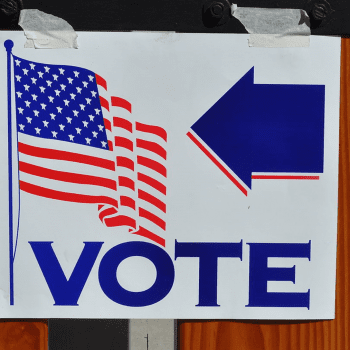
Some words in support of "No Labels"

News from the world of English Language Learning

Week 4: The Flynn leaks, and, when do...
TRENDING AT PATHEOS Catholic

Jad Gillies on New Hillsong Worship Songs and...
For worship leader Jad Gillies, Hillsong Worship’s next chapter is not about...

Looking at the Largest Orthodox Cathedral on Earth
There is often a considerable amount of anger and, shall we...

The Problem with False Prophets
Miller’s Station UMC| 10/18/26| Anchor Verse: Jeremiah 23: 1, 9-23 I...

Emotion in Early Christianity by Andrew Crislip
Andrew Crislip’s Emotion in Early Christianity examines an often overlooked dimension of...

16 Spiritual Touchstones for a More Grounded Life
After decades of spiritual study, here are 16 principles I try...

Catholic Evangelization: Sharing Your Faith Every Day
Welcome back to the Graceful Awakening mini-series called, “From Faith to Mission.” ...
view all Catholic blogs
Ad-Free & Subscriber Log-In Subscription Support
- About Us
- 2026 Calendar
- Videos
- Podcasts
- Library of World Religions
- Faith In Media Tracker
- Advertise With Us
- Write for Us
- Privacy Policy
- Terms of Service
- Do Not Sell My Data
- Contact Us
- Radiant Digital
- Manage Newsletter Subscriptions
- Unsubscribe From Notifications
- Sitemap
Copyright 2008-2026, Patheos. All rights reserved.
Subscription Support Ad-Free & Subscriber Log-In
Follow Patheos