
BuddhistCatholicContemplativeEvangelicalGeneral ChristianHinduJewishLatter-day SaintMuslimNew VisionsProgressive Christian
Beliefs
- Buddhist
- Catholic
- Contemplative
- Evangelical
- General Christian
- Hindu
- Jewish
- Latter-day Saint
- More Voices
- Muslim
- New Visions
- Pagan
- Progressive Christian
Topics
- Religion News
- Food and Religion
- Sports and Religion
- Religious Art
- Religious Music and Entertainment
- Religious Events
- History and Religion
- Style and Religion
- Politics and Religion
- Women in Religion
- Recreation Outdoors and Religion
- Business Finance and Religion
- Careers Workplace and Religion
- Education and Religion
- Family Parenting and Religion
- Health Fitness and Religion
- Home and Religion
- Relationships and Religion
- Technology and Religion
- Travel and Religion
Columnists
- Buddhist Columnists
- Business Finance and Religion Columnists
- Careers Workplace and Religion Columnists
- Catholic Columnists
- Contemplative Columnists
- Education and Religion Columnists
- Evangelists Columnists
- Family Parenting and Religion Columnists
- General Christian Columnists
- Health Fitness and Religion Columnists
- Hindu Columnists
- History and Religion Columnists
- Home and Religion Columnists
- Jewish Columnists
- More Voices Columnists
- Latter Day Columnists
- Muslim Columnists
- New Visions Columnists
- Nonreligious Columnists
- Pagan Columnists
- Politics and Religion Columnists
- Progressive Columnists
- Recreation Outdoors and Religion Columnists
- Relationships and Religion Columnists
- Religion News Columnists
- Religious Art Columnists
- Religious Events Columnists
- Religious Music and Entertainment Columnists
- Sports and Religion Columnists
- Style and Religion Columnists
- Technology and Religion Columnists
- Travel and Religion Columnists
- Women in Religion Columnists
Resource Library
- 2026 Calendar
- Library of World Religions
- The 100 Most Holy Places on Earth
- Patheos Answers
- Podcasts
- Videos
- Faith Leaders Database
- Anglican Episcopalian
- Bahai
- Baptist
- Buddhism
- Christianity
- Confucianism
- Eastern Orthodoxy
- Hinduism
- Holiness and Pentecostal
- ISKCON
- Islam
- Judaism
- Lutheran
- Methodist
- The Church of Jesus Christ of Latter-day Saints
- New Age
- Paganism
- Presbytarian and Reformed
- Protestantism
- Religion Behind the Scenes
- Roman Catholic
- Scientology
- Shia Islam
- Sikhism
- Sufism
- Sunni Islam
- Taoism
- Zen
- See all religions
Research Tools
 Ad-Free & Subscriber Log-In Subscription Support
Ad-Free & Subscriber Log-In Subscription Support
Follow Patheos 

- Trending:
- Forgiveness
- |
- Marriage
- |
- Consciousness
- |
- Death Penalty
- |
- Election
- |
- Halloween

- Home
- Catholic
- Politics and Religion
- One voter, one vote?
One voter, one vote?
Last updated on: November 17, 2016 at 8:47 am by Jane the Actuary
One voter, one vote? 2016-11-17T08:47:35-06:00 Jane the Actuary
Patheos Explore the world's faith through different perspectives on religion and spirituality! Patheos has the views of the prevalent religions and spiritualities of the world.
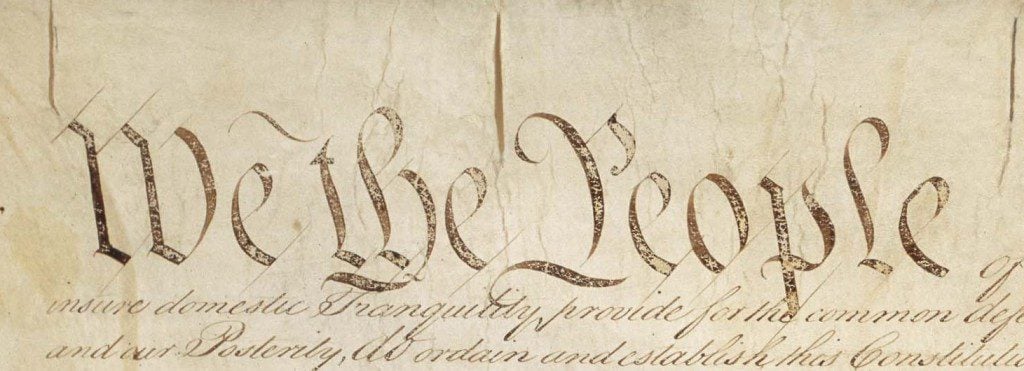
Since I’m thinking about constitutional subjects, and yet do not want to address the stupidity of petitions for the Electoral College to “save” us from Trump:
Should the total population of each state be the basis for determining how many congressional districts, and electoral votes, each state gets?
Or should it be the number of voters, or voting-eligible persons?
In 2016, that’s an issue due to states where there are disproportionately many non-citizens, though the Supreme Court rejected claims of unfairness about current practice – not because they opined on the fairness of the current practice, but because they read the constitution as requiring the established practice. (Or at least it seems to me they did, though I haven’t looked it up; maybe they implicitly opined by refusing to take the case.) One could likewise make a claim that in some states there are disproportionately many, and in others disproportionately fewer children, and that this unfairly impacts the voting strength of adult voters in Congress.
In 1787, the dispute was about the status of slaves. Everyone takes the 3/5ths compromise as signaling that slaves were considered only 3/5ths human, though, of course, the dispute was really centered around how many congressional districts, and, thus, how much voting power the slave states should have. And, after all, slave owners never claimed that the Africans they enslaved weren’t human, but that they were not fully mentally competent and thus needed to be under the custody of a white person – that is, when they cared to rationalize their system in any way other than the notion that people have owned other people for generations, and that it’s just the way life is, in the same way as countries have territorial wars of conquest and take other countries’ land, and it’s just your bad luck to be the victim rather than victor.
So: imagine you’re a Founding Father, engaged in this debate. You know you can’t eliminate slavery. What general principles do you establish for how districts are established?
Or – and this is a bigger leap, should the Founders have agreed from the start on two countries, that is, that the interests of slave and free states were irreconciliable?
And, heck, if we’re throwing around hypotheticals, should the U.S. have given itself a better name than just “United States”? I mean, Canada was a bunch of colonists in different provinces, and they got a proper name for the colony, then country, as a whole. Instead, we’ve got the nationality label “American,” and people who whine that this label doesn’t belong to us in the United States, because everyone from North and South America is an “American.” (Germans sometimes use the term “U.S.-American” and my German is nowhere near good enough to know whether they perceive of this as clumsy or fairly normal-sounding. I mean, it’s German, after all, and my favorite German word is “handschuhe” = mitten, which literally translates as “hand-shoe”!)
And, incidentally, if we’re talking about crummy names for nationalities, when did the U.K. become “the U.K.” – not in its formal name, but in common usage? Or has it always been such (or is it not even now “the U.K.” in common usage) and I just never paid much attention until I started working on international topics?
Image: public domain
Previous Post

November 16, 2016
More effective than the pill. Wait, what?
Next Post
November 20, 2016 The Hamilton kerfuffle
Browse Our Archives
Select a Category Actuarial/Retirement Issues Politics Uncategorized
Select a Month September 2026 August 2026 July 2026 June 2026 April 2026 March 2026 February 2026 January 2026 December 2025 November 2025 October 2025 July 2025 June 2025 May 2025 April 2025 March 2025 February 2025 January 2025 December 2024 November 2024 October 2024 September 2024 August 2024 July 2024 June 2024 May 2024 April 2024 March 2024 February 2024 December 2023 November 2023 October 2023 September 2023 August 2023 July 2023 December 2022 September 2022 August 2022 July 2022 June 2022 May 2022 February 2022 January 2022 December 2021 August 2021 June 2021 April 2021 February 2021 January 2021 December 2020 November 2020 October 2020 September 2020 August 2020 July 2020 June 2020 May 2020 April 2020 March 2020 February 2020 January 2020 December 2019 November 2019 October 2019 September 2019 August 2019 July 2019 June 2019 May 2019 April 2019 March 2019 February 2019 January 2019 December 2018 November 2018 October 2018 September 2018 August 2018 July 2018 June 2018 May 2018 April 2018 March 2018 February 2018 January 2018 December 2017 November 2017 October 2017 September 2017 August 2017 July 2017 June 2017 May 2017 April 2017 March 2017 February 2017 January 2017 December 2016 November 2016 October 2016 September 2016 August 2016 July 2016 June 2016 May 2016 April 2016 March 2016 February 2016 January 2016 December 2015 November 2015 October 2015 September 2015 August 2015 July 2015 June 2015 May 2015 April 2015 March 2015 February 2015 January 2015 December 2014 November 2014 October 2014 September 2014 August 2014 July 2014 June 2014 May 2014 April 2014 March 2014 February 2014 January 2014 December 2013 November 2013 October 2013 September 2013 August 2013 July 2013
Follow Us!
TAKE THE
Religious Wisdom Quiz
Who is the oldest man in the Bible?
Select your answer to see how you score.
Enoch Jared Methuselah Noah
Related posts from Jane the Actuary
ACB, the ACA, and Constitutionalism
Let's talk about natural-born citizens

Remember Marbury vs. Madison? A question for readers
TRENDING AT PATHEOS Catholic

57th Dove Awards Honor Dolly Parton, Crown New...
On gospel music’s biggest night, the 57th annual GMA Dove Awards honored...

The First Eucharistic Controversy: Christ’s Real Presence
For Catholics, the Eucharist is the source and summit of the Christian...

What a Stop Sign Can Teach Us About...
How to Make a Decision When You Can't Hear God Main point:...

Archdiocese Hosts Military Marriage Retreat in Germany
RASTATT, Germany — The transient military lifestyle, with its frequent deployments and...

Nearly every morning, I make the drive to Detroit with my high-school-age...

The Real AI Story Is Adoption Without Trust
Artificial intelligence has crossed a political threshold. It is no longer a...
view all Catholic blogs
Ad-Free & Subscriber Log-In Subscription Support
- About Us
- 2026 Calendar
- Videos
- Podcasts
- Library of World Religions
- Faith In Media Tracker
- Advertise With Us
- Write for Us
- Privacy Policy
- Terms of Service
- Do Not Sell My Data
- Contact Us
- Radiant Digital
- Manage Newsletter Subscriptions
- Unsubscribe From Notifications
- Sitemap
Copyright 2008-2026, Patheos. All rights reserved.
Subscription Support Ad-Free & Subscriber Log-In
Follow Patheos