
BuddhistCatholicContemplativeEvangelicalGeneral ChristianHinduJewishLatter-day SaintMuslimNew VisionsProgressive Christian
Beliefs
- Buddhist
- Catholic
- Contemplative
- Evangelical
- General Christian
- Hindu
- Jewish
- Latter-day Saint
- More Voices
- Muslim
- New Visions
- Pagan
- Progressive Christian
Topics
- Religion News
- Food and Religion
- Sports and Religion
- Religious Art
- Religious Music and Entertainment
- Religious Events
- History and Religion
- Style and Religion
- Politics and Religion
- Women in Religion
- Recreation Outdoors and Religion
- Business Finance and Religion
- Careers Workplace and Religion
- Education and Religion
- Family Parenting and Religion
- Health Fitness and Religion
- Home and Religion
- Relationships and Religion
- Technology and Religion
- Travel and Religion
Columnists
- Buddhist Columnists
- Business Finance and Religion Columnists
- Careers Workplace and Religion Columnists
- Catholic Columnists
- Contemplative Columnists
- Education and Religion Columnists
- Evangelists Columnists
- Family Parenting and Religion Columnists
- General Christian Columnists
- Health Fitness and Religion Columnists
- Hindu Columnists
- History and Religion Columnists
- Home and Religion Columnists
- Jewish Columnists
- More Voices Columnists
- Latter Day Columnists
- Muslim Columnists
- New Visions Columnists
- Nonreligious Columnists
- Pagan Columnists
- Politics and Religion Columnists
- Progressive Columnists
- Recreation Outdoors and Religion Columnists
- Relationships and Religion Columnists
- Religion News Columnists
- Religious Art Columnists
- Religious Events Columnists
- Religious Music and Entertainment Columnists
- Sports and Religion Columnists
- Style and Religion Columnists
- Technology and Religion Columnists
- Travel and Religion Columnists
- Women in Religion Columnists
Resource Library
- 2026 Calendar
- Library of World Religions
- The 100 Most Holy Places on Earth
- Patheos Answers
- Podcasts
- Videos
- Faith Leaders Database
- Anglican Episcopalian
- Bahai
- Baptist
- Buddhism
- Christianity
- Confucianism
- Eastern Orthodoxy
- Hinduism
- Holiness and Pentecostal
- ISKCON
- Islam
- Judaism
- Lutheran
- Methodist
- The Church of Jesus Christ of Latter-day Saints
- New Age
- Paganism
- Presbytarian and Reformed
- Protestantism
- Religion Behind the Scenes
- Roman Catholic
- Scientology
- Shia Islam
- Sikhism
- Sufism
- Sunni Islam
- Taoism
- Zen
- See all religions
Research Tools
 Ad-Free & Subscriber Log-In Subscription Support
Ad-Free & Subscriber Log-In Subscription Support
Follow Patheos 

- Trending:
- Forgiveness
- |
- Marriage
- |
- Consciousness
- |
- Death Penalty
- |
- Election
- |
- Halloween

- Home
- Catholic
- Politics and Religion
- Boys and Math and The Math Myth
Boys and Math and The Math Myth
Last updated on: September 28, 2016 at 8:44 am by Jane the Actuary
Boys and Math and The Math Myth 2016-09-28T08:44:23-06:00 Jane the Actuary
Patheos Explore the world's faith through different perspectives on religion and spirituality! Patheos has the views of the prevalent religions and spiritualities of the world.
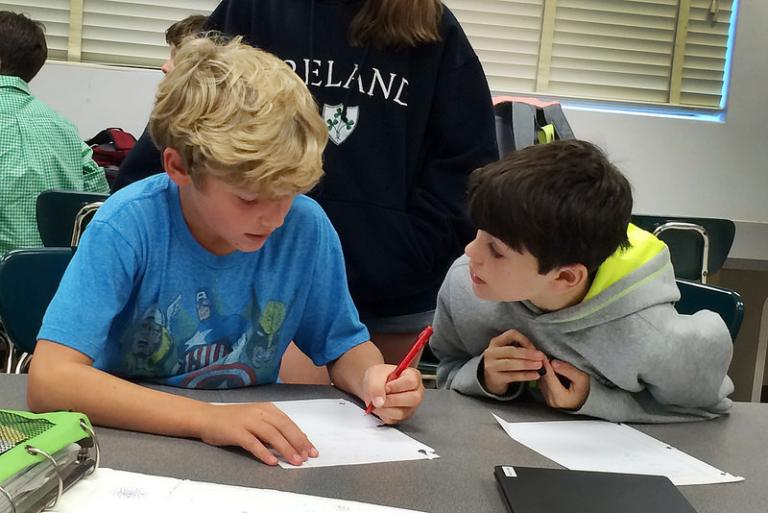
The Math Myth, in italics, that is: the title of a new book by Andrew Hacker, whose last name is not eponymous as he’s a professor (emeritus) in political science. This is that sort of book that has one solid point and then pushes that point too far: we have elevated the place of mathematics too far, with the consequence that good kids, deserving kids, can’t get college degrees because they can’t meet the math requirements that exist even for non-technical degrees, and the reason for this is that it’s mathematics professors at universities who set these standards, for no good reason, but are indifferent to helping students achieve them.
Now, he has a point that not every student can reasonably be expected to do well in an Algebra II-level math class, and to the extent that this is a roadblock in some cases, to getting degrees, well, by all means, let’s discuss this — though he doesn’t provide concrete details on what, exactly, is required for, say, humanities majors, at typical universities. And he suggests that a solid knowledge of arithmetic — the four basic operations, fractions, percents, etc. — is really quite enough for just about everyone, by coming up with nonsensical straw men examples of rather more complex material. In fact, the basic concept of algebra — manipulatng an equation to solve for a variable — is important, as is a general notion of trig and geometry. And, beyond this, all students, even those who are convinced they’ll never use it, should learn math to the greatest degree their innate capabilities enable them to, rather than, as Hacker suggests, discarding math as useless unless there’s a specific need.
Hacker also raises the issue of whether there’s a shortage of tech-trained graduates; it’s the same stories we’ve read before, that tech companies whine about the lack of US graduates, then run off to hire Indians, while firing their US staff, and, lo and behold, paying those Indians wages that are far below what an American could expect. He also notes that large numbers of STEM-trained graduates are not doing STEM work because they’ve discovered that other jobs are more profitable, and pulls out the list of projected-to-grow occupations, which are low in math needs.
And, yes, Hacker has a good point that universities who create math requirements have an ethical obligation to create the right set of conditions so that students can meet those requirements, rather than leaving the teaching of those courses to graduate students who may or may not be able to even communicate in English effectively. And the very notion, which still, he says, exists, of first-level math courses as “weeder” courses, is highly unethical, to create a class (and ask students to pay for it) with the very intention that a large number of students will fail.
What does Hacker want? Classes which emphasize “hands on” math and, it turns out, story problems which call on students to think politically about math-related issues. One bizarre example is a standard early-grades question: “I have X students, and cans of pop come in cases of Y each. How many cases do I need?” He envisions students coming up with answers like: “not everyone will drink a whole can of pop, so let’s pour the pop into paper cups instead, so it stretches farther.” He then describes an idealized college math-for-nonmajors class in which they learn about gerrymandering or looking at the CPI, the “basket of goods,” and spending in income tiers to think about income inequality.
He also questions the very idea that learning math creates “thinking skills” which transfer to other fields of study, but he’s really determined enough to prove this notion wrong that he doesn’t really give the thesis a fair shake, but rather creates a straw man that studying math will make you better at everything, then demolishes this.
But here’s the most interesting claim in the book: he rejects the idea that boys’ consistently higher test score in math sections of tests such as the SAT demonstrate that boys are in some way better at math than girls. (Here’s an article that just popped up in my twitter feed yesterday, “2016 SAT test results confirm pattern that’s persisted for 45 years — high school boys are better at math than girls.“) After all, he notes, as does the linked article, that in classroom performance, girls do better, and what others attribute to girls’ better ability to stay on task and “behave” that gets them better grades and more academic success than boys, in general, and increasingly so lately, he attributes to girls’ inherent ability. Why, then, do boys do better on the SAT? He attributes this to the fact that the SAT is a timed test, and that boys’ propensity to rush through and be aggressive rewards them in the case of a timed test.
Here’s a full paragraph:
Given their affinity for speed, boys start by sizing up multiple-choice questions with a quick glance. The Educational Testing Service, which runs the SAT, found that boys save time by mental strategies “that enable them to see the solution without actually working out the problem.” As a result, they show less hesitation about racing ahead. And this usually pays off, since the SAT format doesn’t ask or care how you got to your answer. Another tactic that comes more readily to boys is to eliminate, say, three of the options as plainly wrong, and then guess between the remaining two. This willingness to gamble shaves the odds in their favor. Another ETS study was even more revealing. It found that because girls spend much more time pondering, they are measurably more likely than boys to leave some questions blank, and hence fail to reach the end. In all instances, girls’ greater penchant for reflection undercuts their scores. (p. 67)
Which is all very interesting, and deserve more attention than one paragraph — though in a different book than this one, because it’s a whole ‘nother topic. And, after all, these same test-taking strategies ought to work just as well for the verbal section of the SAT, but there the boys do not perform as well.
(Full disclosure: I do really well on exams. In fact, my life might have turned out quite differently if I hadn’t had the opportunities exam success brought me.)
At any rate, this is mostly a tangent in his book, and the ultimate aim of this section of his material is to say that it’s unfair that the most highly-selective schools demand high SAT scores in both the verbal and math areas, because this penalizes plenty of otherwise smart people. But if this is the new direction that schools are scholars are taking — that girls are better than boys at everything that counts, and pfffbth to those dumb boys! — then that’ll make the already serious problem of young male drop-outs (e.g., playing video games instead and especially high numbers among young black men) even worse.
And, by the way, we were at the National Honor Society induction at my son’s high school Monday night (ended just before the debate!). I didn’t tally the ratios, but there were a lot, lot more girls than boys, and all of the officers on stage were girls.
Image from flickr: https://www.flickr.com/photos/wwworks/15344079560; by woodleywonderworks
Previous Post

September 27, 2016
A few debate thoughts
Next Post

September 28, 2016 On privilege and pride
Browse Our Archives
Select a Category Actuarial/Retirement Issues Politics Uncategorized
Select a Month September 2026 August 2026 July 2026 June 2026 April 2026 March 2026 February 2026 January 2026 December 2025 November 2025 October 2025 July 2025 June 2025 May 2025 April 2025 March 2025 February 2025 January 2025 December 2024 November 2024 October 2024 September 2024 August 2024 July 2024 June 2024 May 2024 April 2024 March 2024 February 2024 December 2023 November 2023 October 2023 September 2023 August 2023 July 2023 December 2022 September 2022 August 2022 July 2022 June 2022 May 2022 February 2022 January 2022 December 2021 August 2021 June 2021 April 2021 February 2021 January 2021 December 2020 November 2020 October 2020 September 2020 August 2020 July 2020 June 2020 May 2020 April 2020 March 2020 February 2020 January 2020 December 2019 November 2019 October 2019 September 2019 August 2019 July 2019 June 2019 May 2019 April 2019 March 2019 February 2019 January 2019 December 2018 November 2018 October 2018 September 2018 August 2018 July 2018 June 2018 May 2018 April 2018 March 2018 February 2018 January 2018 December 2017 November 2017 October 2017 September 2017 August 2017 July 2017 June 2017 May 2017 April 2017 March 2017 February 2017 January 2017 December 2016 November 2016 October 2016 September 2016 August 2016 July 2016 June 2016 May 2016 April 2016 March 2016 February 2016 January 2016 December 2015 November 2015 October 2015 September 2015 August 2015 July 2015 June 2015 May 2015 April 2015 March 2015 February 2015 January 2015 December 2014 November 2014 October 2014 September 2014 August 2014 July 2014 June 2014 May 2014 April 2014 March 2014 February 2014 January 2014 December 2013 November 2013 October 2013 September 2013 August 2013 July 2013
Follow Us!
TAKE THE
Religious Wisdom Quiz
What famous prayer did Jesus teach his followers?
Select your answer to see how you score.
The Lord's Prayer The Prayer of Jabez The Jesus Prayer The Hail Mary
Related posts from Jane the Actuary
Are 28% of Americans truly functionally illiterate?
Boys, Men, and unsuccessful solutions to the problem
What happens to the rest of us, when...
TRENDING AT PATHEOS Catholic

57th Dove Awards Honor Dolly Parton, Crown New...
On gospel music’s biggest night, the 57th annual GMA Dove Awards honored...

The First Eucharistic Controversy: Christ’s Real Presence
For Catholics, the Eucharist is the source and summit of the Christian...

What a Stop Sign Can Teach Us About...
How to Make a Decision When You Can't Hear God Main point:...

Archdiocese Hosts Military Marriage Retreat in Germany
RASTATT, Germany — The transient military lifestyle, with its frequent deployments and...

Nearly every morning, I make the drive to Detroit with my high-school-age...

The Real AI Story Is Adoption Without Trust
Artificial intelligence has crossed a political threshold. It is no longer a...
view all Catholic blogs
Ad-Free & Subscriber Log-In Subscription Support
- About Us
- 2026 Calendar
- Videos
- Podcasts
- Library of World Religions
- Faith In Media Tracker
- Advertise With Us
- Write for Us
- Privacy Policy
- Terms of Service
- Do Not Sell My Data
- Contact Us
- Radiant Digital
- Manage Newsletter Subscriptions
- Unsubscribe From Notifications
- Sitemap
Copyright 2008-2026, Patheos. All rights reserved.
Subscription Support Ad-Free & Subscriber Log-In
Follow Patheos