
BuddhistCatholicContemplativeEvangelicalGeneral ChristianHinduJewishLatter-day SaintMuslimNew VisionsProgressive Christian
Beliefs
- Buddhist
- Catholic
- Contemplative
- Evangelical
- General Christian
- Hindu
- Jewish
- Latter-day Saint
- More Voices
- Muslim
- New Visions
- Pagan
- Progressive Christian
Topics
- Religion News
- Food and Religion
- Sports and Religion
- Religious Art
- Religious Music and Entertainment
- Religious Events
- History and Religion
- Style and Religion
- Politics and Religion
- Women in Religion
- Recreation Outdoors and Religion
- Business Finance and Religion
- Careers Workplace and Religion
- Education and Religion
- Family Parenting and Religion
- Health Fitness and Religion
- Home and Religion
- Relationships and Religion
- Technology and Religion
- Travel and Religion
Columnists
- Buddhist Columnists
- Business Finance and Religion Columnists
- Careers Workplace and Religion Columnists
- Catholic Columnists
- Contemplative Columnists
- Education and Religion Columnists
- Evangelists Columnists
- Family Parenting and Religion Columnists
- General Christian Columnists
- Health Fitness and Religion Columnists
- Hindu Columnists
- History and Religion Columnists
- Home and Religion Columnists
- Jewish Columnists
- More Voices Columnists
- Latter Day Columnists
- Muslim Columnists
- New Visions Columnists
- Nonreligious Columnists
- Pagan Columnists
- Politics and Religion Columnists
- Progressive Columnists
- Recreation Outdoors and Religion Columnists
- Relationships and Religion Columnists
- Religion News Columnists
- Religious Art Columnists
- Religious Events Columnists
- Religious Music and Entertainment Columnists
- Sports and Religion Columnists
- Style and Religion Columnists
- Technology and Religion Columnists
- Travel and Religion Columnists
- Women in Religion Columnists
Resource Library
- 2026 Calendar
- Library of World Religions
- The 100 Most Holy Places on Earth
- Patheos Answers
- Podcasts
- Videos
- Faith Leaders Database
- Anglican Episcopalian
- Bahai
- Baptist
- Buddhism
- Christianity
- Confucianism
- Eastern Orthodoxy
- Hinduism
- Holiness and Pentecostal
- ISKCON
- Islam
- Judaism
- Lutheran
- Methodist
- The Church of Jesus Christ of Latter-day Saints
- New Age
- Paganism
- Presbytarian and Reformed
- Protestantism
- Religion Behind the Scenes
- Roman Catholic
- Scientology
- Shia Islam
- Sikhism
- Sufism
- Sunni Islam
- Taoism
- Zen
- See all religions
Research Tools
 Ad-Free & Subscriber Log-In Subscription Support
Ad-Free & Subscriber Log-In Subscription Support
Follow Patheos 

- Trending:
- Forgiveness
- |
- Marriage
- |
- Consciousness
- |
- Death Penalty
- |
- Election
- |
- Halloween

- Home
- Catholic
- Politics and Religion
- Coming to a store near you? – “Diaper Stamps”
Coming to a store near you? – “Diaper Stamps”
Last updated on: March 18, 2016 at 8:30 am by Jane the Actuary
Coming to a store near you? – “Diaper Stamps” 2016-03-18T08:30:18-06:00 Jane the Actuary
Patheos Explore the world's faith through different perspectives on religion and spirituality! Patheos has the views of the prevalent religions and spiritualities of the world.
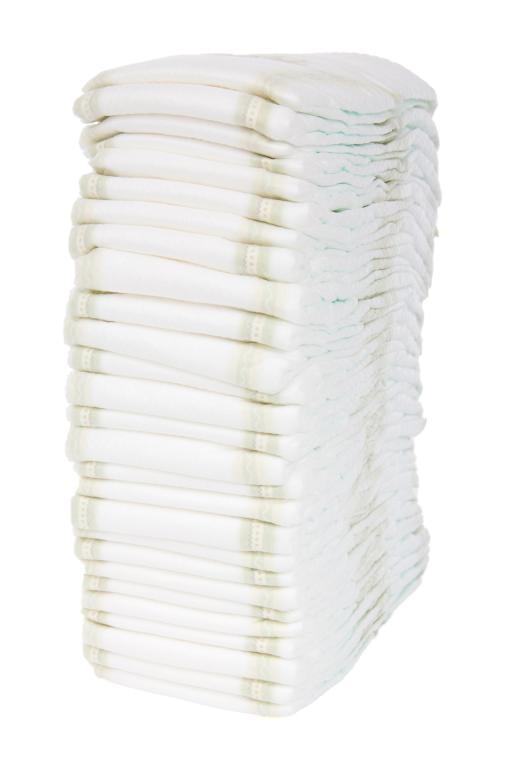
Diapers are in the news lately, due to a new White House initiative in which a Silicon Valley e-commerce startup, Jet, will be working with diaper manufacturer First Quality, to
lower the price of diapers for the low-income families who struggle to afford them. By modifying diaper packaging and streamlining shipping processes along the lines of on-demand models like Amazon Prime, the project will allow nonprofits to quickly buy diapers in bulk online for distribution to families who need the assistance,
as reported by Yahoo. The effort is intended to cut the cost of the diapers themselves, by eliminating aspects of the packaging cost that are driven by the need to market and sell at stores (these are “Cuties” diapers, which seem to be some type of private label manufacturer), and by shipping them in an “on-demand” fashion so that the nonprofits don’t need a large warehouse. This, Yahoo reports, will cut the unit cost from 50 cents to 13 cents.
Now, this is a bit odd — if I look online at Walmart.com, they already sell private-label diapers at 19.77 for a “value” box, of between 160 size 2 diapers (that’s 12 cents each), 124 size 4 diapers (16 cents), or 92 size 6 diapers (21 cents – but size 5 and 6 are really only for the late potty-trainers), which means that the claims of extreme discounts are exaggerated. Perhaps the 50 cent diapers are to be found in high-cost areas, and at convenience stores in those high cost areas, and those diapers are purchased by parents who lack the transportation options to carry diapers from a retailer who sells in bulk, and lacks the cash to pay for a larger purchase at once, or is unbanked and cannot buy online. More likely, most poor families do attempt to purchase their diapers cheaply, but, even at Walmart prices, diapers are still a budget-buster for extremely low-income families — and cloth diapers are not a solution for children in daycare (they don’t accept them) or in places where mothers don’t have access to washing machines (it’s a no-no at a laundromat) or are short on time, especially when those mothers work and have long commutes.
And there have been a spate of reports about this over the past several months — taking a new angle, not just that it causes hardship for families, but that there are health issues: both that the children are at risk of rashes and infections if dirty diapers are kept on for too long, and that it affects the mothers’ mental health. See, for instance, this Atlantic article, and yesterday’s Slate article, which cites a study which hopes to make the case that providing free diapers through Medicaid would be cost-effective, by alleviating health issues. (Personally, I think it’s unlikely that they’d be able to make this case — and I say that as a mom of three who, by the time the third came around, went from changing diapers at the first sign of wetness to taking my time, with no ill effects, and gaining a fair bit of skepticism for instructions to change the baby constantly, especially given modern diapers’ ability to absorb wetness without irritating the skin. So I can believe that rashes are an issue, but not an epidemic, and solved via diaper ointment.)
But here’s the bigger issue: the Slate article linked to describes several legislative and other proposals, and they all center around provision of diapers to the poor, for instance, through daycare centers, via vouchers, or directly, in the same manner as food pantries (except government provided, rather than via charity). It links to a description of a pilot program, in San Francisco — though at the time, the program was new, and there are no more recent reports describing how it’s faring.
Is this the right approach? The bigger question is this: to what extent should government programs for the poor consist of provisions of specific items — food, diapers, housing — rather than general cash assistance? And how far should it go? There’s general agreement that daycare should be funded, for the obvious reason that it enables the poor to work, though there are disputes about whether expensive daycare centers should be covered, or just lower-cost home daycare. It’s also already a given that the poor receive free healthcare, and free contraceptives, but I think it’s hit or miss whether such items as eyeglasses and dental care are funded by the state or not. Heating is covered, and a telephone, though I’m not sure about electricity. There’s now some discussion of free menstrual products. Should poor families get clothing allowances, or shoe allowances? What about free mass transit (one of the biggest holes in everyday needs)? Vouchers for household goods, such as dishes and cookware?
(Of course, for many of the poor, the notion that housing should cost 1/3 of one’s income, is thoroughly upended by the distorted housing markets of high-cost areas, and the fact that our subsidized housing programs are the one type of assistance for the poor that is lottery-based rather than uniformly provided — literally lottery-based, as the norm is to hold a lottery for the chance to be put on a subsidized housing waiting list. And that means that families who should “have enough money” according to the definitions of poverty, spend so much on housing that they are left seeking help for their other needs.)
Or should all of this be replaced by a simple cash benefit, in the form of traditional welfare and/or an enhanced EITC (earned-income tax credit) for the working poor — with the recipients themselves left to decide how to spend it?
Image from http://www.publicdomainpictures.net/view-image.php?image=17551

Next Post

March 20, 2016 My husband, gun owner . . .
Browse Our Archives
Select a Category Actuarial/Retirement Issues Politics Uncategorized
Select a Month September 2026 August 2026 July 2026 June 2026 April 2026 March 2026 February 2026 January 2026 December 2025 November 2025 October 2025 July 2025 June 2025 May 2025 April 2025 March 2025 February 2025 January 2025 December 2024 November 2024 October 2024 September 2024 August 2024 July 2024 June 2024 May 2024 April 2024 March 2024 February 2024 December 2023 November 2023 October 2023 September 2023 August 2023 July 2023 December 2022 September 2022 August 2022 July 2022 June 2022 May 2022 February 2022 January 2022 December 2021 August 2021 June 2021 April 2021 February 2021 January 2021 December 2020 November 2020 October 2020 September 2020 August 2020 July 2020 June 2020 May 2020 April 2020 March 2020 February 2020 January 2020 December 2019 November 2019 October 2019 September 2019 August 2019 July 2019 June 2019 May 2019 April 2019 March 2019 February 2019 January 2019 December 2018 November 2018 October 2018 September 2018 August 2018 July 2018 June 2018 May 2018 April 2018 March 2018 February 2018 January 2018 December 2017 November 2017 October 2017 September 2017 August 2017 July 2017 June 2017 May 2017 April 2017 March 2017 February 2017 January 2017 December 2016 November 2016 October 2016 September 2016 August 2016 July 2016 June 2016 May 2016 April 2016 March 2016 February 2016 January 2016 December 2015 November 2015 October 2015 September 2015 August 2015 July 2015 June 2015 May 2015 April 2015 March 2015 February 2015 January 2015 December 2014 November 2014 October 2014 September 2014 August 2014 July 2014 June 2014 May 2014 April 2014 March 2014 February 2014 January 2014 December 2013 November 2013 October 2013 September 2013 August 2013 July 2013
Follow Us!
TAKE THE
Religious Wisdom Quiz
What currency did Judas receive for betraying Jesus?
Select your answer to see how you score.
Copper Bronze Silver Gold
Related posts from Jane the Actuary
Actually, workers on Food Stamps is a good...

Dream-hoarding? Maybe dream-rejecting. Or, Holy Moly, would you...

What if payday lenders didn't exist?

From the library: Hillbilly Elegy, by J.D. Vance
TRENDING AT PATHEOS Catholic

The Iron Gates and the Lion of the...
Yesterday, I didn't finish my report about, well, yesterday. So I'll...

Dolly Parton’s Last Song Wins Dove Award with...
Bluegrass band The Grascals, speaking on the red carpet at the 57th...

The Image: On the Horror of Capitalism and...
The Image Then went the Pharisees, and took counsel how they might...

We are approaching the date of our new American national holiday: October...

Letters on Living the Faith by C.S. Lewis
Most of us met C.S. Lewis as a public intellectual. Mere Christianity....

When Halloween Unmasks Married Hearts
Written by Dr. David K. Ewen from Eternal Truth Bible College Behind...
view all Catholic blogs
Ad-Free & Subscriber Log-In Subscription Support
- About Us
- 2026 Calendar
- Videos
- Podcasts
- Library of World Religions
- Faith In Media Tracker
- Advertise With Us
- Write for Us
- Privacy Policy
- Terms of Service
- Do Not Sell My Data
- Contact Us
- Radiant Digital
- Manage Newsletter Subscriptions
- Unsubscribe From Notifications
- Sitemap
Copyright 2008-2026, Patheos. All rights reserved.
Subscription Support Ad-Free & Subscriber Log-In
Follow Patheos