
BuddhistCatholicContemplativeEvangelicalGeneral ChristianHinduJewishLatter-day SaintMuslimNew VisionsProgressive Christian
Beliefs
- Buddhist
- Catholic
- Contemplative
- Evangelical
- General Christian
- Hindu
- Jewish
- Latter-day Saint
- More Voices
- Muslim
- New Visions
- Pagan
- Progressive Christian
Topics
- Religion News
- Food and Religion
- Sports and Religion
- Religious Art
- Religious Music and Entertainment
- Religious Events
- History and Religion
- Style and Religion
- Politics and Religion
- Women in Religion
- Recreation Outdoors and Religion
- Business Finance and Religion
- Careers Workplace and Religion
- Education and Religion
- Family Parenting and Religion
- Health Fitness and Religion
- Home and Religion
- Relationships and Religion
- Technology and Religion
- Travel and Religion
Columnists
- Buddhist Columnists
- Business Finance and Religion Columnists
- Careers Workplace and Religion Columnists
- Catholic Columnists
- Contemplative Columnists
- Education and Religion Columnists
- Evangelists Columnists
- Family Parenting and Religion Columnists
- General Christian Columnists
- Health Fitness and Religion Columnists
- Hindu Columnists
- History and Religion Columnists
- Home and Religion Columnists
- Jewish Columnists
- More Voices Columnists
- Latter Day Columnists
- Muslim Columnists
- New Visions Columnists
- Nonreligious Columnists
- Pagan Columnists
- Politics and Religion Columnists
- Progressive Columnists
- Recreation Outdoors and Religion Columnists
- Relationships and Religion Columnists
- Religion News Columnists
- Religious Art Columnists
- Religious Events Columnists
- Religious Music and Entertainment Columnists
- Sports and Religion Columnists
- Style and Religion Columnists
- Technology and Religion Columnists
- Travel and Religion Columnists
- Women in Religion Columnists
Resource Library
- 2026 Calendar
- Library of World Religions
- The 100 Most Holy Places on Earth
- Patheos Answers
- Podcasts
- Videos
- Faith Leaders Database
- Anglican Episcopalian
- Bahai
- Baptist
- Buddhism
- Christianity
- Confucianism
- Eastern Orthodoxy
- Hinduism
- Holiness and Pentecostal
- ISKCON
- Islam
- Judaism
- Lutheran
- Methodist
- The Church of Jesus Christ of Latter-day Saints
- New Age
- Paganism
- Presbytarian and Reformed
- Protestantism
- Religion Behind the Scenes
- Roman Catholic
- Scientology
- Shia Islam
- Sikhism
- Sufism
- Sunni Islam
- Taoism
- Zen
- See all religions
Research Tools
 Ad-Free & Subscriber Log-In Subscription Support
Ad-Free & Subscriber Log-In Subscription Support
Follow Patheos 

- Trending:
- Forgiveness
- |
- Marriage
- |
- Consciousness
- |
- Death Penalty
- |
- Election
- |
- Halloween

- Home
- Catholic
- Politics and Religion
- Obama’s diagnosis and prescription for polarization – eh, not so impressed
Obama’s diagnosis and prescription for polarization – eh, not so impressed
Last updated on: March 26, 2016 at 4:04 pm by Jane the Actuary
Obama’s diagnosis and prescription for polarization – eh, not so impressed 2016-03-26T16:04:00-06:00 Jane the Actuary
Patheos Explore the world's faith through different perspectives on religion and spirituality! Patheos has the views of the prevalent religions and spiritualities of the world.
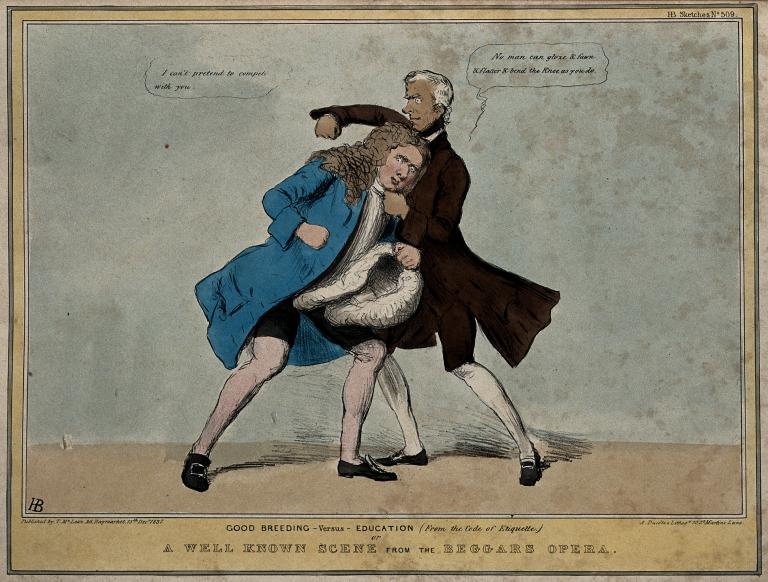
Earlier I wrote out some explanations for why polarization and refusal to compromise appears to be such a significant and growing problem in the United States — the bottom line being that intransigence seems to work, on some level, if not for the country than for individual politicians.
At the time I had intended to dissect Obama’s own prescriptions as well, so let’s have a go at this.
First is to take, or at least reduce, some of the corrosive influence of money in our politics. . . .
And they spend this money based on some ideological preference that really is disconnected to the realities of how people live. . . .
And that’s why I disagree with the Supreme Court’s Citizens United decision. (Applause.) I don’t believe that money is speech, or that political spending should have no limits, or that it shouldn’t be disclosed. I still support a constitutional amendment to set reasonable limits on financial influence in America’s elections.
But amending the Constitution is an extremely challenging and time-consuming process — as it should be. So we’re going to have to come up with more immediate ways to reduce the influence of money in politics. There are a lot of good proposals out there, and we have to work to find ones that can gain some bipartisan support — because a handful of families and hidden interests shouldn’t be able to bankroll elections in the greatest democracy on Earth.
The second step towards a better politics is rethinking the way that we draw our congressional districts. . . .
And while this gerrymandering may insulate some incumbents from a serious challenge from the other party, it also means that the main thing those incumbents are worried about are challengers from the most extreme voices in their own party. That’s what’s happened in Congress. You wonder why Congress doesn’t work? The House of Representatives there, there may be a handful — less than 10 percent — of districts that are even competitive at this point. So if you’re a Republican, all you’re worried about is what somebody to your right is saying about you, because you know you’re not going to lose a general election. Same is true for a lot of Democrats. So our debates move away from the middle, where most Americans are, towards the far ends of the spectrum. And that polarizes us further.
Now, this is something we have the power to fix. And once the next census rolls around and we have the most up-to-date picture of America’s population, we should change the way our districts are drawn.
Now, the more Americans use their voice and participate, the less captive our politics will be to narrow constituencies. No matter how much undisclosed money is spent, no matter how many negative ads are run, no matter how unrepresentative a district is drawn, if everybody voted, if a far larger number of people voted, that would overcome in many ways some of these other institutional barriers. It would make our politics better.
And that’s why a third step towards a better politics is making voting easier, not harder; and modernizing it for the way that we live now. . . .
And I’d encourage this assembly to take the next step. Senator Manar and Representative Gabel have bills that would automatically register every eligible citizen to vote when they apply for a driver’s license. That will protect the fundamental right of everybody. Democrats, Republicans, independents, seniors, folks with disabilities, the men and women of our military — it would make sure that it was easier for them to vote and have their vote counted.
So, in brief, Obama’s problems and solutions are
1) too much “dark money,” from ideological extremists, rectified by placing limits on election spending,
2) gerrymandering producing extremists, rectified by impartial boundary-drawing, and
3) insufficient moderate voters to balance out those who vote due to “extreme” ideological commitments.
Is he right?
Why should “dark money” contributors automatically be ideological extremists? (OK, sure, unions decidedly are.) I’m not convinced of this connection.
In a case where the battle for a House or (state) Senate seat takes place within a party at the primary level, why should the extreme candidate automatically win? The bigger issue is that once a candidate gets elected, they generally have what amounts to a lifetime seat, when they go unchallenged even in primaries.
Obama’s third point is the most interesting, even if I think he’s using this to push for a pet cause (automatic registration, after all, seems like a surefire way to increase fraud as noncitizens register when they get their licenses).
If it all boils down to the most ideologically committed Americans being far more likely to show up at the voting booth that the indifferent lot of the rest of us, then that would tend to produce more ideologically “pure” candidates. But this is more of an issue in primaries, isn’t it? And there it isn’t a matter of insufficient numbers of citizens being registered to vote, but of indifference by those registered voters — or perhaps by the lack of enough activism at the local level for those voters to know who the candidates are in the first place. And perhaps here the tremendous reach of the federal government, and the fact that so much energy is deservedly focused on federal elections as a consequence, has impacted local politics.
In addition, there are two other issues which are not as easy to fix:
First, the rise of the internet as, for many people, the primary way people discuss and share political news and opinion, creates polarization. Consider how different blog comments and facebook shares are than talking politics with your neighbors, and how the more one-sided a meme is, the more likely it is to be shared. (When was the last time you saw a meme or a viral article saying, “calm down; there are two sides to the story”?)
Second (and I think I blogged about this in the past but can’t find it), the increased cynicism about honesty and promises. Consider Obama’s statement that “my faith tells me that marriage is between a man and a woman” and the fact that, when he “evolved” into supporting gay marriage, his supporters pretty much said, “we knew he was always on our side but just wasn’t openly able to admit it in the past or he’d lose the black churchgoing vote.” It feels to me as if the openness and comfort with politicians lying, as long as the lies benefit your political cause, is new. And I think it has a very real consequence: if you believe that politicians are liars, you’re less likely to be comfortable with a “moderate” making compromises and will be more attracted to people who are ideological purists, because you’ll be more convinced that they support what you believe in.
But these explanations don’t have tidy solutions.
UPDATE: Thought about this some more.
Obama’s urging of more voters to dilute the votes of the ideological purists isn’t a sure thing. After all, consider the case of Trump: isn’t his success in the polls due to (a) name recognition and (b) an appeal to those who aren’t otherwise politically aware? Isn’t there a risk that a polarizing, but charismatic candidate, will be most appealing to these infrequent voters, because the polarization isn’t visible to them, only the charisma?
And — I know this is a bit of a pipe dream — a proportional representation, parliamentary coalition-building system would give each of the center-left, center-right, hard-right, and hard-left groups the opportunity to elect their own representatives, rather than being given simply two choices at the ballot booth. Which I think would be a true, if unimplementable, remedy.
(image from Wikimedia Commons, https://commons.wikimedia.org/wiki/File%3AA_fist-fight_between_Lord_Brougham_and_Lord_Melbourne_as_Pea_Wellcome_V0050236.jpg)
Next Post

February 18, 2016 Marco needs a Beer Summit
Browse Our Archives
Select a Category Actuarial/Retirement Issues Politics Uncategorized
Select a Month September 2026 August 2026 July 2026 June 2026 April 2026 March 2026 February 2026 January 2026 December 2025 November 2025 October 2025 July 2025 June 2025 May 2025 April 2025 March 2025 February 2025 January 2025 December 2024 November 2024 October 2024 September 2024 August 2024 July 2024 June 2024 May 2024 April 2024 March 2024 February 2024 December 2023 November 2023 October 2023 September 2023 August 2023 July 2023 December 2022 September 2022 August 2022 July 2022 June 2022 May 2022 February 2022 January 2022 December 2021 August 2021 June 2021 April 2021 February 2021 January 2021 December 2020 November 2020 October 2020 September 2020 August 2020 July 2020 June 2020 May 2020 April 2020 March 2020 February 2020 January 2020 December 2019 November 2019 October 2019 September 2019 August 2019 July 2019 June 2019 May 2019 April 2019 March 2019 February 2019 January 2019 December 2018 November 2018 October 2018 September 2018 August 2018 July 2018 June 2018 May 2018 April 2018 March 2018 February 2018 January 2018 December 2017 November 2017 October 2017 September 2017 August 2017 July 2017 June 2017 May 2017 April 2017 March 2017 February 2017 January 2017 December 2016 November 2016 October 2016 September 2016 August 2016 July 2016 June 2016 May 2016 April 2016 March 2016 February 2016 January 2016 December 2015 November 2015 October 2015 September 2015 August 2015 July 2015 June 2015 May 2015 April 2015 March 2015 February 2015 January 2015 December 2014 November 2014 October 2014 September 2014 August 2014 July 2014 June 2014 May 2014 April 2014 March 2014 February 2014 January 2014 December 2013 November 2013 October 2013 September 2013 August 2013 July 2013
Follow Us!
TAKE THE
Religious Wisdom Quiz
True or False: Paul instructed Titus that the grace of God teaches us to say 'No' to ungodliness and worldly passions.
Select your answer to see how you score.
TRUE FALSE
Related posts from Jane the Actuary

In which Democrats seem to have learned the...
Let me tell you about multiemployer pensions (and...

No, you can't change the 2-Senators-per-state Constitutional provision
TRENDING AT PATHEOS Catholic

'Super Scam Me' Exposes AI Jon Bon Jovi...
Leslie Pickett believed she was in a relationship with Jon Bon Jovi....

The Brazilian Remake of Kendricks' 'Flywheel' Opens in...
“Flywheel,” the story that launched the Kendrick Brothers’ filmmaking career is getting...

The Dangers of Gradual Accommodation (Winking at Sin)
Recently, the “law of gradualness” resurfaced during the opening of a weeklong,...

The Iron Gates and the Lion of the...
Yesterday, I didn't finish my report about, well, yesterday. So I'll...

The Image: On the Horror of Capitalism and...
The Image Then went the Pharisees, and took counsel how they might...

We are approaching the date of our new American national holiday: October...
view all Catholic blogs
Ad-Free & Subscriber Log-In Subscription Support
- About Us
- 2026 Calendar
- Videos
- Podcasts
- Library of World Religions
- Faith In Media Tracker
- Advertise With Us
- Write for Us
- Privacy Policy
- Terms of Service
- Do Not Sell My Data
- Contact Us
- Radiant Digital
- Manage Newsletter Subscriptions
- Unsubscribe From Notifications
- Sitemap
Copyright 2008-2026, Patheos. All rights reserved.
Subscription Support Ad-Free & Subscriber Log-In
Follow Patheos